

More news on this day
Huntingdon’s High Street is facing renewed scrutiny as a mix of vacant units, limited retail choice and uneven transport links raises concerns about the town’s ability to attract visitors and sustain tourism-driven growth.
Get the latest news straight to your inbox!
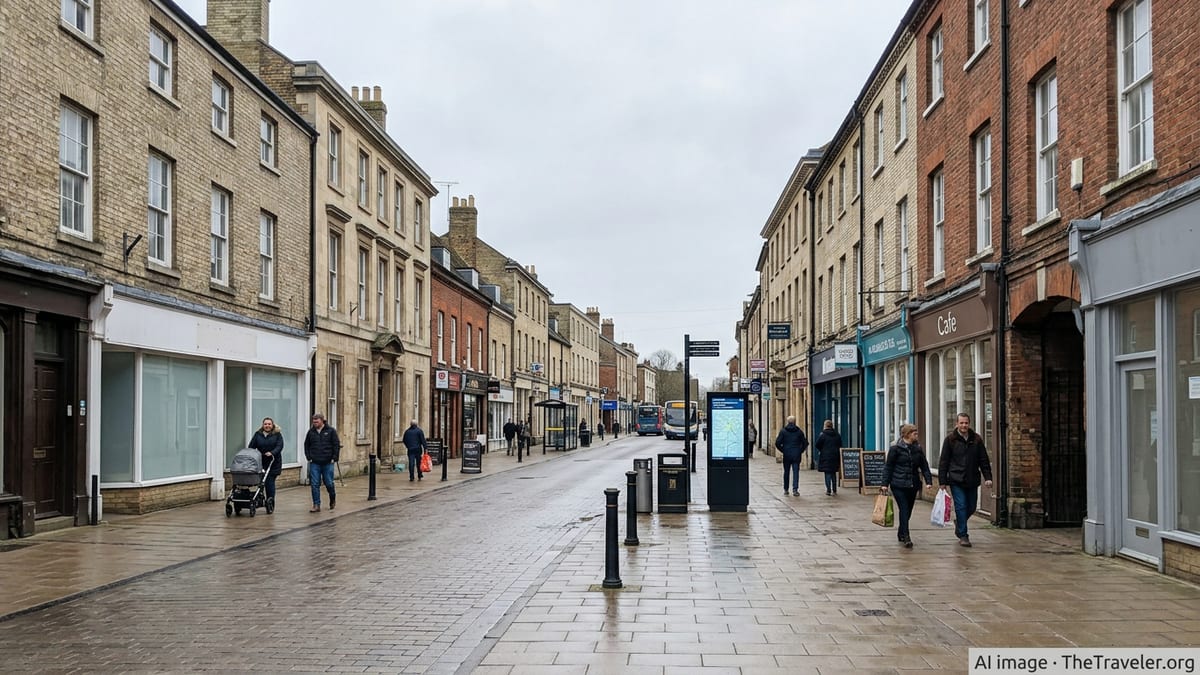
A Market Town Under Pressure
Huntingdon, a historic market town on the River Great Ouse, has long traded on its heritage, weekly market and road and rail connections. Yet recent coverage and public feedback indicate that the town’s core shopping streets are struggling to match residents’ and visitors’ expectations, with some describing the High Street as “lacking” in shops and in need of “a little more love.”
The criticism comes despite the town’s favourable geography. Huntingdon sits close to the A14 and A1 and is on a key rail corridor into Cambridge and London, factors that local planning documents describe as major assets for tourism and investment. However, those same documents also highlight a mismatch between demand and supply in the retail offer, with a significant proportion of residents previously rating the variety of town centre shops as poor.
Published material from local planning work portrays a High Street that is already largely pedestrianised and framed by an improved public realm in its central stretch. But beyond those core blocks, areas such as nearby St Benedict’s Court and secondary shopping parades have been identified as problem spots, reflecting a pattern seen in many British towns where peripheral units are the first to fall vacant.
Vacant Units and a Changing Retail Mix
Like high streets across the UK, Huntingdon has been battered by the twin forces of online shopping and out-of-town retail parks. A district-level growth prospectus and neighbourhood planning evidence point to an ambition to keep the town centre as the primary retail, service and visitor hub, yet vacancy rates and the churn of smaller businesses reveal how difficult that ambition is to deliver in practice.
In response, Huntingdonshire District Council and partners have turned to visual quick wins. In March 2025, the council launched a scheme using graphic “shop wraps” to dress vacant units around the town centre, including those close to the High Street. According to publicly available information, the wraps are designed to improve first impressions, advertise available space and signal that investment opportunities remain, even where windows are currently dark.
These cosmetic measures are complemented by wider place-making efforts, including a district-wide futures strategy and grant funding for events intended to draw people back into town centres. Recent reports highlight family fun days, festivals and heritage activities across Huntingdonshire’s market towns as tools to support local traders, with Huntingdon positioned as a beneficiary of that programme.
Yet national commentary on high street regeneration suggests that visual upgrades alone are unlikely to be enough. Industry analysis argues that successful town centres increasingly rely on a broader mix of uses, from leisure and culture to co-working and residential space above shops, creating all-day activity rather than a narrow nine-to-five retail core.
Transport Links: Strengths and Gaps
Transport is central to Huntingdon’s tourism prospects. Strategic reports repeatedly describe the town’s position at the junction of key road corridors as a major advantage, linking it to Cambridge, Peterborough and the wider East of England. Rail services provide additional connectivity, making day trips feasible for both domestic and overseas visitors.
At the local level, however, the picture is more complicated. Consultation material prepared for improvements to the A141 and the St Ives travel network cites congestion pressures, traffic impacts on town centres and the need for better options for walking, cycling and public transport. According to the Cambridgeshire County Council scheme, proposed measures include new active travel routes, enhanced bus services and a possible bypass, all intended to relieve pressure on existing roads while supporting sustainable growth.
Huntingdon has also featured in district-wide engagement on “active travel,” with sessions on the High Street inviting comments about how easy it is to move around on foot or by bike. Feedback captured in planning documents notes long-standing concerns over car parking provision and on-street parking acting as a barrier to effective movement, indicating that access to the High Street, rather than simply distance, is a live issue for many users.
Digital tools are being added to the mix. In June 2025, new interactive information screens were rolled out across Huntingdonshire’s market towns, including a unit on Huntingdon High Street. Council information states that these screens will eventually display live bus and rail departure boards alongside event listings and a business directory, offering visitors real-time help in navigating both the town and its transport options.
Tourism Potential Versus On-the-Ground Reality
Planning and strategy documents treat tourism as a growth opportunity for Huntingdon, citing its historic core, riverside setting and proximity to national attractions. The town’s neighbourhood plan consultation shows residents supporting efforts to promote tourism, with the expectation that investment aimed at visitors will also improve amenities for locals.
Despite this, the current mix of shops and services on and around the High Street appears to fall short of what many day-trippers now expect. Recent national debates about the future of high streets underline that visitors are increasingly drawn to places that combine distinctive independent retail with food, drink, culture and evening activity. In contrast, a town centre dominated by routine services and standard chains is less likely to become a destination in its own right.
Huntingdon’s challenge is to translate strategic aspirations into visible, street-level change. The town’s growth prospectus envisages a centre that is a social and cultural hub, with an active evening economy extending from the High Street into nearby squares and alleys. Delivering that vision will require filling gaps in the offer, encouraging new types of businesses and ensuring that town-centre residents, commuters and visitors all find reasons to spend more time in the area.
Transport improvements will also play a role in how attractive the town feels to visitors who have a choice of destinations. Easier, more reliable public transport connections and clearer walking and cycling routes from transport hubs into the historic core could help position the High Street as the obvious focal point for anyone arriving in Huntingdon.
What Comes Next for Huntingdon High Street
Ongoing consultations on transport schemes and local planning policy indicate that decisions made over the next few years will shape how Huntingdon’s town centre evolves. The current Preferred Options stage for the district’s new local plan, alongside work on transport corridors and active travel networks, will influence where new housing, employment and infrastructure investment are directed.
For tourism, the stakes are significant. If Huntingdon can pair its transport advantages with a more compelling mix of shops, cafes, cultural venues and evening attractions, it stands to capture more visitor spend and differentiate itself from out-of-town retail parks and larger cities. If not, national trends suggest that the High Street could see further erosion in footfall as people travel elsewhere for both shopping and leisure.
Local strategies already acknowledge that the town centre must function as more than a place to buy everyday goods. Evidence from other UK high streets shows that successful regeneration often hinges on creating spaces where people want to linger, meet friends and attend events, supported by reliable, affordable ways of getting there without a car.
For now, Huntingdon’s High Street sits at a crossroads. The physical improvements, digital information screens and promotional initiatives point to a desire to reverse decline, but residents’ recent criticisms about a lack of variety and vibrancy suggest that more fundamental changes in retail mix and transport experience may be needed if the town is to realise its tourism potential.