

Hwange National Park is the beating heart of Zimbabwean safari. Sprawling over roughly 14,600 square kilometres of Kalahari sandveld and savanna woodland, it is the largest national park in the country and one of southern Africa’s great wildlife strongholds.
For travellers, Hwange offers classic big-game viewing, atmospheric camps overlooking busy waterholes, and a sense of wildness that feels increasingly rare. This guide explains what to expect on safari in Hwange, how to plan your trip, and how to make the most of Zimbabwe’s largest and most storied wildlife reserve.
Why Hwange Belongs on Your Safari Shortlist
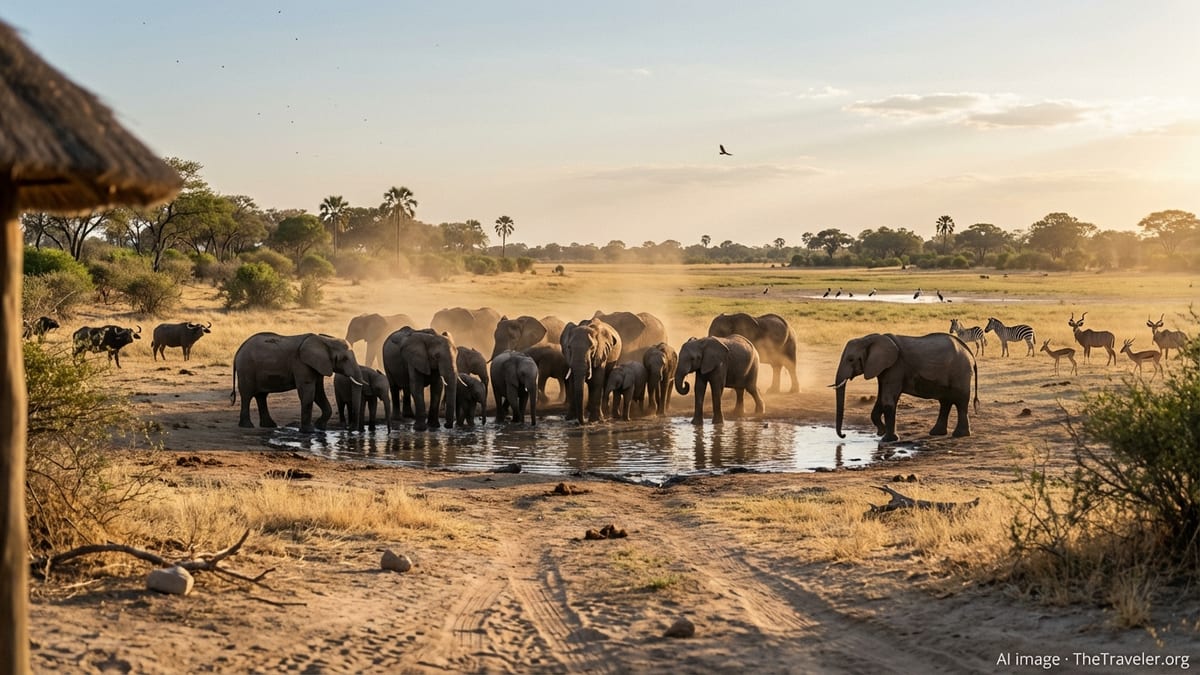
Hwange National Park lies in western Zimbabwe, close to the border with Botswana and about 180 kilometres south of Victoria Falls. Its sheer size and ecological diversity create an extraordinary concentration of wildlife. The park is especially famous for its elephants; in the dry season, thousands gather at waterholes, producing some of the most dramatic elephant encounters anywhere in Africa.
Hwange is also a genuine big-game destination. It supports all of the Big Five, including lion, leopard, buffalo, elephant and rhino, although rhino sightings remain rare and typically require specialist tracking. Lions are a particular highlight and are often seen around the pumped waterholes and open vleis, where they lie in ambush for zebra, buffalo and antelope drawn to drink.
Part of Hwange’s appeal is that it still feels like an old-school African park. Dirt roads, simple picnic sites and floodlit waterholes at the main camps give visitors a taste of classic self-drive exploration, while a network of small, high-quality private lodges and camps adds comfort and expert guiding for travellers seeking a more curated experience.
Landscapes, Wildlife and What You Are Likely to See
Hwange’s landscapes are shaped by the Kalahari sands that underlie much of the park. In the north and east, open grasslands and seasonal pans are punctuated by mopane woodland, acacia scrub and the occasional palm-fringed vleis. To the west and south, the terrain becomes more thickly wooded, with teak and miombo forest giving way to broad, sandy plains and fossil river valleys.
Wildlife viewing peaks in the dry season, typically from July through October, when natural water sources shrink and animals concentrate around artificial pans pumped from underground aquifers. This is when you are most likely to see the classic scenes for which Hwange is famous: massive elephant herds lining up at dusk to drink, dust-bathing buffalo filling the air with haze, and lions waiting patiently in the gathering dark.
Beyond the big cats and elephants, Hwange supports a remarkable variety of antelope and plains game. Sable and roan antelope are specialties, often seen in the park’s more remote areas, while kudu, impala, waterbuck, tsessebe, eland, wildebeest and zebra are widespread. Giraffe are common in many sectors of the park, and spotted hyena are frequent night-time visitors around camps and waterholes.
Birdlife is another of Hwange’s strengths, with more than 400 species recorded. Raptors soar over the plains, summer migrants arrive with the rains, and waterholes attract everything from kingfishers to herons and storks. Serious birders often favour the shoulder and wet seasons, when breeding plumage and song are at their best, although many sought-after species can be seen year-round.
Best Time to Visit: Seasons, Weather and Crowd Patterns
Deciding when to visit Hwange depends on your priorities. For most travellers, the dry winter and early spring months of July to October offer the most rewarding game viewing. During this period, vegetation is sparse, water is limited and wildlife congregates at the park’s pumped pans, making sightings more frequent and dramatic. Days are generally warm and sunny, with cool nights and crisp mornings that are ideal for early game drives.
The shoulder months of May, June and November can be an excellent compromise between value and experience. In May and June, the first winter chill sets in, the bush is thinning out, and wildlife viewing is steadily improving, yet camp rates may be lower and crowds lighter than in peak season. November is a transitional month when the first storms bring relief from the heat and transform the landscape. Game becomes more dispersed as water returns to the bush, but this can be a rewarding time for photography and those seeking fewer vehicles at sightings.
The green or wet season typically runs from about December through March, sometimes extending into April. Heavy afternoon showers and thunderstorms are common, roads can become muddy and, in places, impassable, and some remote tracks may be closed. Wildlife is more scattered and game driving can be more challenging, but the park is lush, newborn animals abound and migratory birds arrive in force. Travellers who are less focused on ticking off species and more interested in scenery, solitude and birding often find the wet season very appealing.
Temperatures in Hwange can be extreme at the height of both summer and winter. October is often the hottest month, with midday temperatures soaring and little shade away from the woodlands. In contrast, June and July can bring very cold nights, and temperatures before sunrise on game drives may drop close to freezing. Packing for a wide temperature range is essential, even if you visit in what is generally considered the “perfect” safari month.
Getting to Hwange and Navigating the Park
Hwange’s location makes it a logical component of a broader Zimbabwe itinerary, especially when combined with Victoria Falls. Most visitors arrive via Victoria Falls town, which is served by regional flights from Johannesburg and other hubs. From Victoria Falls, Hwange’s northern gates and private concessions can be reached by road transfer or light aircraft in a few hours, depending on your camp’s location and the season.
If you are self-driving, the most commonly used access is the turn-off to Main Camp on the paved Bulawayo to Victoria Falls highway. The main gate to the park is about 264 kilometres from Bulawayo and just under 200 kilometres from Victoria Falls. From the highway, a short stretch of tar leads to the park boundary and Main Camp, where you must check in, pay conservation fees and obtain advice on current road conditions before setting out on game drives.
Within the park, a network of approximately 480 kilometres of roads connects Main Camp, Sinamatella, Robins Camp and a series of smaller picnic and camping sites. In the dry season, many of these tracks are accessible in a standard high-clearance vehicle, although a 4x4 is recommended for greater comfort and flexibility. In the wet season, however, heavy rains can quickly turn sandy tracks into thick mud and make some areas temporarily inaccessible; local advice at the reception desks is essential before attempting longer drives.
Road signage in Hwange can be inconsistent, and distances between waterholes and camps are often greater than first-time visitors anticipate. It is vital to carry sufficient water, fuel and a paper map, and to plan your routes so that you return to camp before sunset, when self-driving is typically prohibited. If you are staying at a private lodge, guided game drives are standard and take the pressure off navigation and logistics, allowing you to focus entirely on the wildlife.
Accommodation: From Classic Camps to Exclusive Lodges
Hwange offers a wide spectrum of accommodation, from budget-friendly park chalets and campsites run by Zimbabwe Parks and Wildlife Management Authority to mid-range tented camps and high-end private lodges. Where you stay will shape your experience, as different areas of the park offer distinct landscapes and wildlife patterns.
Main Camp, close to the eastern boundary, is Hwange’s traditional hub. It features simple chalets, cottages and campsites well suited to self-drive travellers. The camp overlooks a popular waterhole, often floodlit at night, where elephant, buffalo and a variety of antelope may appear after dark. From Main Camp, a network of established game drives radiates out to famous pans such as Ngweshla, Kennedy and Nyamandhlovu, making this an excellent base for first-time visitors.
Further north, Sinamatella and Robins Camp provide alternative bases with their own character and game-viewing circuits. Sinamatella sits on an escarpment with big views over the park and access to productive pans and riverbeds, while Robins Camp anchors the less-visited northwestern sector, which is rich in plains game and predators and offers a quieter, more remote feel. Both camps offer basic park accommodation and campsites, and several private operators now manage or adjoin these sites with upgraded facilities.
Scattered around the park’s fringes and in private concessions that border Hwange are a series of intimate safari camps and lodges, many of them focusing on walking safaris, photographic hides and small-group experiences. These range from rustic bush camps with meru-style tents and bucket showers to luxury lodges with en suite suites, plunge pools and extensive wine lists. Rates vary widely, but in peak dry season you can expect higher nightly prices, especially at well-known properties that offer extensive guiding and all-inclusive stays.
Costs, Conservation Fees and Park Practicalities
Budgeting for a Hwange safari depends on your style of travel. Self-drive visitors who stay in park accommodation and self-cater will face significantly lower daily costs than guests at premium private camps, but should factor in expenses such as entry fees, vehicle permits, fuel and occasional guided activities. Fully-inclusive safari lodges, by contrast, typically bundle meals, local drinks, game drives and walking safaris into a per-person nightly rate, leaving only park fees, tips and certain transfers as extra costs.
Zimbabwe Parks and Wildlife Management Authority charges daily conservation fees for all visitors entering Hwange. These are levied per person and differ for local, regional and international visitors, and for day visitors versus those staying overnight in park facilities. Separate fees apply for vehicles, with saloon cars and 4x4s paying a modest entry charge that is valid for several days before re-entry fees apply. If you are staying at a private lodge within or adjacent to the park, conservation fees are often charged separately from your accommodation and may be payable in cash on arrival.
Accommodation in the public camps is generally priced per unit or campsite per night, with different categories for chalets, lodges, cottages and camping pitches. Rates may vary by season, with peak periods often attracting higher tariffs than quieter months. Campsites and exclusive picnic sites usually have a maximum number of people and vehicles per booking, and additional guests above that threshold incur extra charges. Booking ahead is strongly recommended for the dry months of July to October, especially if you plan to secure popular picnic sites or specific lodge categories.
Cash remains important in Zimbabwe, particularly in more remote areas, although many private lodges accept card payments and foreign currency. Before travelling, check with your tour operator or lodge what payment methods they accept, and, if you are self-driving, ensure you have sufficient cash to cover park fees and fuel along the way. It is also worth confirming up-to-date fee structures before you travel, as tariffs can change and are sometimes adjusted seasonally.
Experiences and Activities: Beyond the Game Drive
Game drives are the backbone of any Hwange safari, but the park and its surrounding concessions offer much more than the standard morning and afternoon excursions in open 4x4 vehicles. At public camps, self-drivers can follow marked loops between pans, take picnic breakfasts or lunches at designated sites, and spend evenings at floodlit waterholes watching nocturnal wildlife unfold. Many a visitor has seen more animals in a single evening at a waterhole than during hours on the road.
Guided walking safaris are a highlight at several private camps and with specialist operators working in partnership with the park authorities. Under the watchful eye of an armed professional guide, you will leave the vehicle behind and track wildlife on foot, learning to read spoor, identify plants and understand the finer points of animal behaviour. Walks typically take place in the cooler hours of the early morning or late afternoon and focus as much on the small details of the ecosystem as on big-game encounters.
Some lodges have invested in sunken photographic hides or blinds set at the edge of waterholes, providing low-angle views and exceptional opportunities for close-up photography. Spending a few hours in a hide while elephants, kudu, zebra and birds come and go is an immersive experience that reveals the social lives of animals in a way that quick roadside sightings often cannot match. Night drives, where permitted, add another dimension, with the chance to spot nocturnal species such as genets, civets, porcupines, owls and occasionally big cats on the move.
Cultural visits to nearby communities and conservation projects can also be arranged through some lodges and operators. These experiences vary but may include village walks, school visits, or talks by local conservationists working on human-wildlife coexistence and anti-poaching initiatives. For many travellers, these encounters deepen their understanding of the broader social and environmental context in which Hwange exists.
Health, Safety and Responsible Travel
As with most low-lying safari destinations in Zimbabwe, Hwange lies in a malaria risk zone, particularly during the rainy season from about October through May. Travellers should consult a medical professional well before departure for current advice on prophylaxis and other preventive measures. Regardless of the month, it is wise to use insect repellent, wear long sleeves and trousers in the evenings, and sleep under a mosquito net where provided.
Within the park, animal safety should always be your guiding principle. Hwange is an unfenced, wild ecosystem, and large mammals frequently move through camps, roads and picnic sites. Visitors must remain inside their vehicles except in designated areas, follow the instructions of guides and park staff, and never approach or feed wildlife. Elephants in particular deserve respectful distance, especially bulls in musth and cows with young calves.
Self-drivers should be prepared for variable road conditions, from deep sand to corrugations and, in the wet season, sections of slippery mud and standing water. Travelling with at least one spare tyre, basic tools, ample water and a charged phone or radio is sensible, though in remote sectors you should not rely on mobile coverage. Always inform someone at camp of your intended route and expected return time, and, if in doubt, choose the more conservative option when road conditions deteriorate.
Responsible travel in Hwange also has a financial and ethical dimension. By paying park fees, choosing operators that invest in local employment and community partnerships, and supporting conservation initiatives through your stay and tips, you contribute directly to the long-term protection of the area and the livelihoods of people who live around the park. Avoid buying wildlife products or participating in activities that appear to compromise animal welfare or park regulations, and consider your safari not just as a personal adventure but as a small part of a much larger conservation story.
The Takeaway
Hwange National Park offers one of Africa’s most authentic and rewarding safari experiences. Its combination of immense elephant herds, classic big cats, atmospheric waterholes and varied landscapes gives travellers a powerful sense of immersion in the wild. Whether you journey here as an independent self-driver bedding down in simple chalets, or as a guest of a secluded tented camp, you will encounter a park that still feels rooted in an older, more spacious era of African travel.
Planning is key to getting the most from Hwange. Choosing the right season, understanding the realities of road conditions and distances, and budgeting realistically for park fees and accommodation will help you avoid surprises once you arrive. So too will an openness to the full breadth of what Hwange offers: lingering at waterholes, walking in the bush, spending time in hides, and appreciating the smaller creatures and birds that may initially seem secondary to the Big Five.
Above all, Hwange rewards those who give it time. This is not a park to rush through in a single day. Allowing several nights in one or two distinct areas, returning to favourite pans, and getting to know the rhythms of the bush will deepen your experience and multiply the encounters you remember long after you leave. In an increasingly crowded safari world, Hwange remains a place where patience, curiosity and respect for wild nature are still richly repaid.
FAQ
Q1: How many days should I spend in Hwange National Park?
Most travellers find that three to five nights is the minimum to appreciate Hwange, ideally split between two different areas or camps. A week allows a deeper experience, with time to revisit productive waterholes, take guided walks and adapt to the park’s natural rhythms without feeling rushed.
Q2: Is Hwange suitable for a first-time safari?
Yes, Hwange is an excellent choice for first-time safari-goers. The park combines high-quality wildlife viewing, especially in the dry season, with a good range of accommodation and relatively straightforward logistics from Victoria Falls. Guided drives at lodges and well-signposted routes from the main camps make it accessible even to those new to safari travel.
Q3: Do I need a 4x4 vehicle to visit Hwange?
A 4x4 is strongly recommended, particularly if you plan to explore beyond the main access roads or visit during or shortly after the rainy season. In peak dry months, many of the most popular routes from Main Camp, Sinamatella and Robins Camp can be driven in a high-clearance vehicle, but a 4x4 offers more comfort, safety and flexibility in sandy or rutted sections.
Q4: What is the best time of year to see elephants in Hwange?
The most spectacular elephant viewing occurs in the heart of the dry season, from roughly July to October, when natural sources of water diminish and herds gather at the pumped pans. At this time, it is common to see large groups drinking, bathing and socialising late in the afternoon and into the evening at major waterholes.
Q5: Are walking safaris available and are they safe?
Walking safaris are offered by several experienced operators and lodges around Hwange. They are conducted by licensed professional guides, often accompanied by a tracker, and follow strict safety protocols. While no wildlife encounter is entirely without risk, guided walks are considered safe when participants follow the instructions of their guides and respect the environment.
Q6: Can I combine a trip to Hwange with Victoria Falls?
Combining Hwange with Victoria Falls is one of the most popular itineraries in Zimbabwe. The two destinations are linked by road and light aircraft services, and many travellers spend two or three nights at the Falls before or after a four to six night safari in Hwange. This pairing delivers both iconic scenery and world-class wildlife in a single trip.
Q7: What should I pack for a Hwange safari?
Pack lightweight, neutral-coloured clothing for daytime, a warm layer and hat for cool winter mornings and evenings, sturdy closed shoes, a wide-brimmed sun hat, sunscreen, sunglasses and a good insect repellent. Binoculars, a camera with spare batteries and memory cards, and a small daypack are highly recommended. For self-drivers, add extra water, a paper map, a torch and basic vehicle tools.
Q8: Is Hwange suitable for children and families?
Hwange can be an inspiring destination for families, especially with older children who can handle early starts and long game drives. Some lodges have minimum age requirements for walks or certain activities, so it is important to check policies in advance. Family-friendly camps may offer private vehicles, flexible mealtimes and educational activities tailored to younger guests.
Q9: How likely am I to see all of the Big Five?
Sightings of elephant, buffalo and lion are relatively common in Hwange, especially in the dry months and around key waterholes. Leopard are more elusive but regularly encountered by patient observers and skilled guides. Rhino are present in protected areas but are rarely seen on a standard visit. While there are no guarantees in a wild ecosystem, a well-planned stay with experienced guides offers a strong chance of seeing most of the Big Five.
Q10: Do I need to book Hwange accommodation in advance?
Advance booking is highly recommended, particularly for the main dry season from July to October and for Christmas and New Year. Private lodges and popular park facilities often fill well ahead, especially around school holidays. Travellers visiting in the green or shoulder seasons may find more flexibility, but reserving your preferred camp and room type before arrival remains the safest approach.