

More news on this day
A new collaboration between UK-based Hypermotive and Vanguard Sustainable Transport Solutions on hydrogen-powered shunting locomotives is emerging as a bellwether for how zero-emission technologies could reshape both heritage railways and future passenger services.
Get the latest news straight to your inbox!
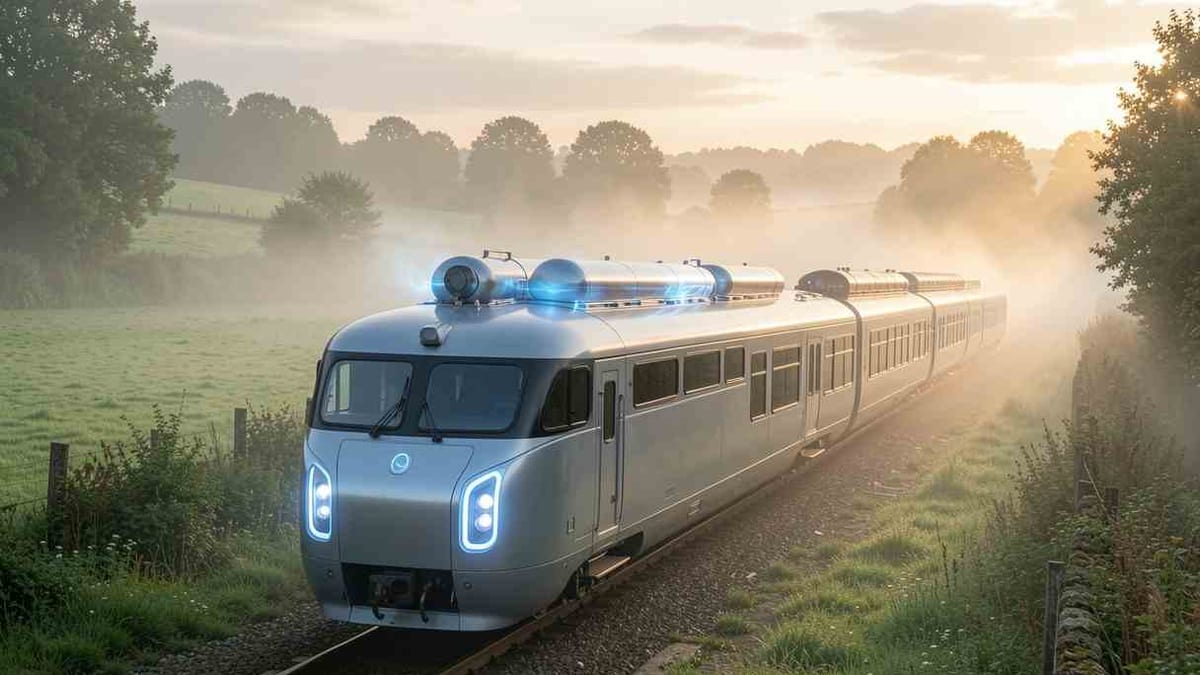
Image by Latest International Railway News, Global Rail Industry News
A Technology Partnership Built Around Hydrogen Power
Publicly available information indicates that Hypermotive, a specialist in hydrogen fuel cell integration, has agreed to supply fuel cell system expertise to Vanguard Sustainable Transport Solutions for use in its HydroShunter platform. Vanguard’s HydroShunter is a deeply modernised version of the classic British Rail Class 08 shunter, retrofitted with a hydrogen fuel cell and traction battery in place of its original diesel engine.
The arrangement brings together Hypermotive’s experience delivering packaged fuel cell systems in demanding sectors and Vanguard’s rail-focused drivetrain and integration capabilities. Hypermotive has recently gained wider recognition for its X-M1 fuel cell marine power system, while Vanguard has positioned itself as a rail decarbonisation specialist through hydrogen and battery solutions tailored to heavy rolling stock.
The HydroShunter concept replaces the locomotive’s diesel engine and generator with modular hydrogen storage, a fuel cell stack and a substantial traction battery. Reports on the project describe a configuration centred on an 80 kilowatt fuel cell feeding a battery of more than 200 kilowatt-hours, providing around 250 kilowatts of traction power. The system is designed so the fuel cell primarily charges the battery, which in turn drives the existing electric traction motors.
By combining Hypermotive’s fuel cell packaging and Vanguard’s NEO1 drivetrain architecture, the partners aim to create a common hydrogen shunter platform that can be adapted for different duty cycles and regulatory environments, from low-speed heritage operations to more intensive industrial and, in time, passenger yard work.
HydroShunter: From Heritage Yard Workhorse to Living Testbed
The most visible expression of this technology is the HydroShunter demonstrator operating at the Severn Valley Railway, frequently described as the United Kingdom’s first hydrogen-powered shunting locomotive. The locomotive began life as a Class 08 built in 1959 and spent recent years as a parts donor before being selected for conversion, turning a near-scrap asset into a high-profile sustainability showcase.
Project updates show that the conversion has been staged. Initial operation used battery-only electric power charged from shore supply, allowing engineers to validate control systems, traction performance and safety procedures before progressively integrating the hydrogen storage and fuel cell hardware. More recent coverage indicates that hydrogen components are being readied for full commissioning, with demonstration running planned through 2025.
For the Severn Valley Railway, a popular tourist and enthusiast destination, the HydroShunter functions as both a practical yard locomotive and an attraction in its own right. The unit handles everyday shunting and engineering moves while giving visitors a tangible look at hydrogen technology in action, set against the backdrop of steam-era rolling stock and preserved diesel locomotives.
The heritage setting provides a controlled environment for testing, with lower speeds, short distances and predictable timetables. That allows Hypermotive and Vanguard engineers to refine everything from refuelling procedures to software strategies for balancing battery and fuel cell output, generating data that can inform later deployments on more demanding networks.
Implications for Passenger Rail and Network Decarbonisation
Although the first HydroShunter is based on a 15 mile-per-hour shunting locomotive, both companies frame the project as a step toward broader hydrogen applications in rail. Vanguard has outlined plans to scale its NEO1 drivetrain concept to larger locomotives and multiple-unit trains, while Hypermotive’s portfolio includes systems engineered for tightly regulated passenger and marine environments.
Shunting and yard duties are widely seen as a logical early use case for hydrogen traction. These operations are typically diesel-intensive, occur at low speed and close to communities, and often take place in locations where electrification with overhead wires or third rail would be expensive to deliver. A hydrogen-battery hybrid shunter can cut local emissions, reduce noise and avoid the capital cost of new fixed electrical infrastructure.
The partnership also intersects with national rail decarbonisation goals. Published policy documents in the United Kingdom emphasise removing diesel-only trains from the network in coming decades, but full electrification of every branch line and freight yard is considered unlikely. Modular hydrogen powerpacks that can be retrofitted into existing vehicles offer an alternative pathway, extending asset life while meeting tightening emissions expectations.
If the Hypermotive–Vanguard platform proves reliable and commercially viable at heritage and industrial sites, it could strengthen the case for hydrogen traction on regional passenger routes where battery-only ranges are constrained and continuous electrification is hard to justify. Industry analysis often highlights short, unelectrified rural lines and freight access routes as possible early beneficiaries.
Commercial Prospects for Heritage Lines and Niche Operators
Beyond technical proof of concept, the deal has potential implications for heritage railways and smaller operators searching for credible sustainability strategies. Many preserved lines operate ageing diesel shunters that remain essential for daily operations but sit uneasily alongside public expectations for low-carbon tourism and leisure experiences.
The HydroShunter demonstrates how a mid-20th-century locomotive can be re-engineered for near-zero local emissions while retaining its historic outline and much of its mechanical fabric. Commentators on the project suggest that such conversions could, over time, provide heritage lines with lower fuel costs, quieter operations in station areas and a marketing narrative built around innovation as well as nostalgia.
The modular nature of the Hypermotive–Vanguard solution is central to those prospects. Standardised fuel cell modules, battery packs and hydrogen storage racks could, in principle, be tailored to different locomotive frames and duty cycles. That approach may appeal to industrial sidings, ports and private freight terminals that rely on small fleets of shunters but lack the volumes to justify bespoke new-build locomotives.
However, cost and infrastructure remain obstacles. Operators must secure reliable hydrogen supplies and manage new safety and training requirements. The collaboration is therefore being closely watched as an indicator of whether aggregated demand from heritage and niche operators can support localised hydrogen production, mobile refuelling solutions or shared depot facilities.
Positioning Within a Wider Hydrogen Technology Landscape
The Hypermotive–Vanguard agreement arrives as hydrogen projects proliferate across transport modes, from buses and heavy trucks to ferries and experimental regional trains. Hypermotive’s recent award for its marine X-M1 system highlights how fuel cell technologies are being repurposed and standardised across sectors, with similar stacks and power electronics adapted for road, rail and maritime use.
For Vanguard, the HydroShunter sits alongside other research initiatives and national demonstration programmes designed to establish engineering rules and safety standards for hydrogen use on and around railways. These efforts include work on ventilation, leak detection, crashworthiness and the integration of high-pressure tanks within constrained loading gauges.
Observers note that cross-sector collaboration is increasingly important as companies seek to reduce development costs and accelerate time to market. By teaming a rail integrator with a multi-sector fuel cell specialist, the Hypermotive–Vanguard partnership exemplifies this trend, aiming to turn one heritage shunter into a reference platform for hydrogen propulsion in rail more broadly.
As testing continues and further deployments are planned, the performance of this hydrogen shunter fleet will be watched not just by enthusiasts on preserved lines, but by railways and regulators assessing how quickly zero-emission technologies can move from experimental status to everyday service.