

Illinois is often treated as the flat expanse you cross on the way to somewhere else. On a recent weeklong road trip looping from Chicago through the center, south, and west of the state before returning along the Mississippi River, I found a more complicated story. Some big-name spots fully lived up to the hype, others felt crowded or overpackaged, and a few quiet corners of the state quietly stole the show. Here is what was worth it, what was not, and what surprised me most on the road through Illinois.
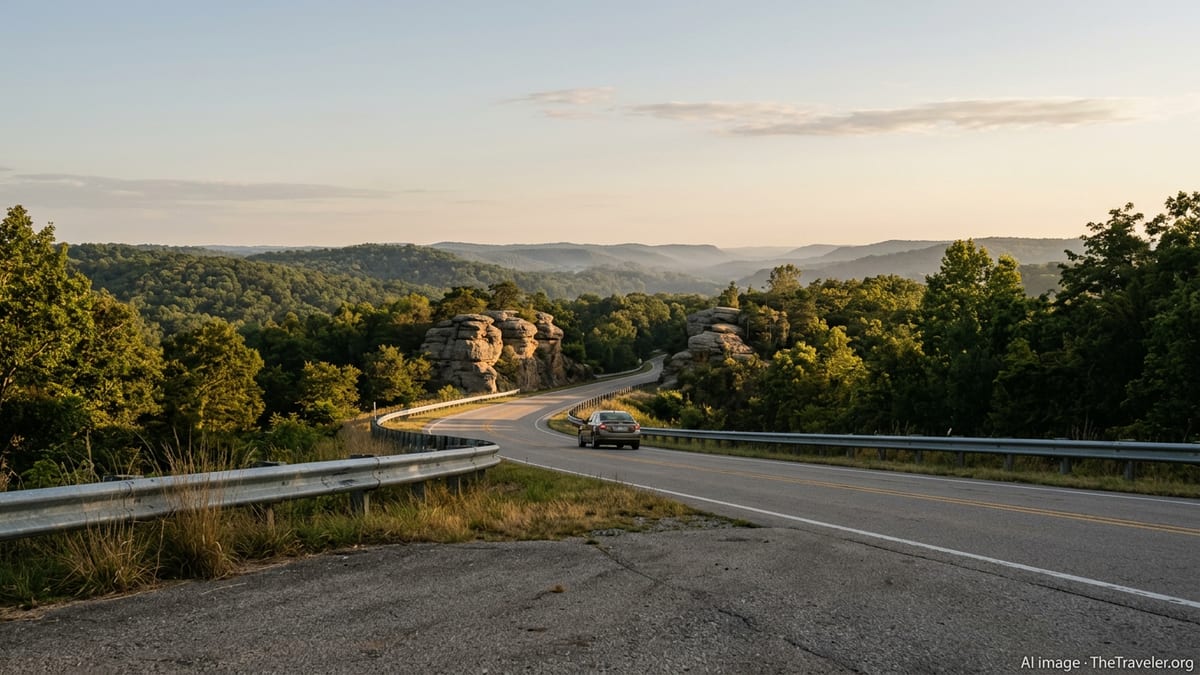
Designing an Illinois Road Trip That Actually Flows
Before leaving Chicago, I assumed an Illinois road trip would be a straight shot on the interstate with a few historic markers tossed in. The reality is that the state is threaded with designated scenic byways, from the historic spine of Route 66 to the Illinois River Road and the Great River Road along the Mississippi. Used thoughtfully, these routes turn what could be a monotonous drive into a sequence of short, varied legs that feel purposeful instead of punishing.
The loop I followed started on historic Route 66 heading southwest from Chicago, cut across to Starved Rock Country for hiking, continued to the sandstone cliffs and forests of Shawnee National Forest in the far south, then traced the Mississippi north on the Great River Road before bending back toward the city through the rolling hills near Galena. It was more miles than a direct there-and-back, but the rhythm of alternating small towns, natural stops, and kitschy roadside attractions kept the days from blurring together.
If you only have a few days, it is worth resisting the temptation to “see the whole state.” Distances look short on the map, but two-lane roads, farm traffic, and frequent small-town speed limits slow travel more than you might expect. Choosing one corridor, such as a Route 66 section paired with Starved Rock Country, or Shawnee National Forest plus a slice of the Great River Road, yields a more satisfying, less frantic trip than trying to stitch everything together.
What surprised me even before I left was how strongly local tourism boards and communities champion these routes and their attractions. Brochures, wayfinding signs, and visitor centers are more robust than in many Midwestern states, which helps first-time visitors make sense of a landscape that at highway speed can seem like an endless grid of fields.
Route 66 Through Illinois: Icons, Letdowns, and Quiet Wins
Driving Route 66 through Illinois is as much about mood as mileage. South of Chicago, the suburban sprawl fades into a corridor of grain elevators, small towns, and a string of classic roadside icons. Some of the headliners deserve every minute you give them. Pontiac, for instance, has embraced its Mother Road identity with a walkable cluster of murals, a Route 66 museum, and historic streets that reward a slow wander without feeling manufactured. The scale is human, the downtown is compact, and you can actually park and explore on foot instead of sprinting from sign to sign.
The giant roadside figures that once advertised mufflers and diners have become informal mascots of the Illinois stretch of the road. Encountering one in person is oddly charming. They are unapologetically oversized and a little absurd, but there is something disarming about watching families detour off the interstate just to take a photo beside a fiberglass giant from the 1960s. If you are already in the area, these stops are worth the five or ten minutes they demand, especially as leg stretchers between longer drives.
Not every Route 66 stop felt essential. A few gas stations, gift shops, and small museums lean so heavily on nostalgia that they border on self-parody, selling the same merchandise you will see at half a dozen other places. Unless you are a devoted Route 66 completist, you can safely skip some of the more generic roadside stores and focus instead on the anchor towns and the more idiosyncratic attractions. The road is long enough that repeating the same experience three towns in a row quickly dulls the magic.
The biggest surprise along this stretch was how rewarding it was to stay overnight in one of the Route 66 towns instead of treating the road as a daytime-only experience. After the day trippers leave, neon signs glow over nearly empty streets, and small diners and taverns become windows into local life rather than just photo backdrops. If Route 66 is on your list, it is worth planning at least one evening off the main highway so you can see this side of Illinois at a slower pace.
Starved Rock Country: Worth It, With Caveats
North-central Illinois is dominated by the Illinois River, and the cluster of parks and small towns around it is marketed as Starved Rock Country. Starved Rock State Park is the undeniable star, and for good reason. Its sandstone canyons, seasonal waterfalls, and forested bluffs are dramatic and unexpectedly rugged for a state better known for cornfields. Boardwalks and well-marked trails make some of the overlooks accessible even for less experienced hikers, and the main lodge sits on a bluff with broad river views that almost feel like the upper Mississippi.
The tradeoff is crowds. On weekends from spring through fall, the park’s main lots often fill early, and some of the signature trails can feel more like a downtown sidewalk than a nature escape. If your schedule allows, aim for weekday mornings or off-season months when leaves are changing or snow dusts the canyon rims. Otherwise, prepare for a social hike with lots of company, music bleeding from portable speakers, and lines at the best viewpoints. For some travelers, the energy is part of the appeal. For others, it undermines the sense of retreat.
What proved absolutely worth it was extending my stay to include neighboring parks. Matthiessen State Park, a short drive away, has similar rock formations, streams, and canyon trails but with noticeably fewer people, especially outside peak holiday weekends. Buffalo Rock State Park, perched on a bluff above the Illinois River, offers quieter overlooks and open space where you can actually hear the wind instead of conversations. Together, these parks offer a three-part experience that justifies at least a full day and a night in the area.
The towns that orbit these parks are a mixed bag. Some historic downtowns have invested in welcoming visitors with independent restaurants, riverfront trails, and small museums, while other nearby strips are little more than chains and service stations. For a road tripper, the lesson is clear: Starved Rock and its neighbors are worth the detour, but so is a bit of advance planning to secure lodging close to the parks and to time your hikes to avoid peak congestion.
Shawnee National Forest and the Southern Cliffs: The Trip’s Biggest Surprise
If there is one region that reshaped my mental map of Illinois, it was the far south. Shawnee National Forest covers a patchwork of public land across a landscape of cliffs, hardwood forests, and rock formations that often feel closer to the Ozarks than the corn belt. The Garden of the Gods area, in particular, is a revelation. Here, sandstone outcrops have been carved into hulking, otherworldly shapes, and a loop trail along the rim delivers sweeping views over an undulating canopy of trees.
Garden of the Gods is well-known among locals and regional hikers, so you will not have it entirely to yourself, but compared with the intensity of Starved Rock on a summer weekend, it feels calmer and more expansive. Pullouts along the access road provide additional viewpoints, and the driving itself, on winding two-lane roads through small towns and past hillside farms, is more varied than much of central Illinois. For serious hikers and photographers, sunrise and late afternoon are ideal, when the low angle of the sun accentuates rock textures and a soft haze settles in the valleys.
Beyond this marquee stop, Shawnee’s other corners reward unhurried exploration. Short detours lead to seasonal waterfalls, climbing areas, and quiet trailheads where you might share the parking lot with only a handful of cars. Camping options range from established campgrounds to primitive sites near trailheads, making it easy to shape the trip around early-morning hikes or late-night stargazing when the sky is clear. If your mental image of Illinois does not include rock arches, secluded pools, and cliff-top vistas, this part of the state will change that.
The only real drawback was driving logistics. Distances between attractions in Shawnee can be deceptive, and cell coverage is patchy in places, so it helps to download maps in advance and build an itinerary that clusters nearby sights on the same day instead of crisscrossing the region. With a little forethought, though, southern Illinois shifts from an afterthought into the highlight of the trip.
The Great River Road: Scenic Wins and Occasional Misses
From southern Illinois, I turned north to follow sections of the Great River Road, which traces the Mississippi along the state’s western edge. The drive ranges from dramatic bluffs and forested hills to flatter stretches where the river seems to disappear behind levees. The most compelling sections hug the base of tall limestone cliffs, with the river just off to one side and small river towns tucked into the gaps between rock and water. When the light is good and barge traffic is moving on the river, it feels like driving through a moving postcard.
Some towns along this route have grown into polished destinations, with restored main streets, riverfront parks, and a cluster of cafes, inns, and galleries. They make excellent overnight stops, especially if you are the type of traveler who likes to park once in the late afternoon and explore on foot until dinner. Other communities are quieter, with more modest services, and a few look at first glance like places you would simply pass by. I found that the most rewarding stops were not always the most heavily promoted. Small historical museums, sometimes staffed by volunteers, told unexpectedly vivid stories about steamboat trade, early settlement, or the shifting path of the river itself.
Not all portions of the Great River Road are created equal. In some segments the official route is forced inland by industrial zones, rail lines, or flood protection works, and the river becomes a distant presence rather than the center of attention. These stretches feel more like typical Midwestern highway driving and are not especially worth lingering over. If your time is limited, it is better to identify the sections known for their bluff-top viewpoints, historic districts, and state parks, and then leapfrog between them instead of doggedly following every mile of the signposted route.
Overall, the Great River Road was worth including in my loop, not as a single, must-drive corridor, but as a string of memorable segments. It provided a westward counterweight to the east bank focus of the earlier Illinois River driving and offered a broader sense of how profoundly big rivers shape both the landscape and the rhythms of daily life in this part of the Midwest.
Small Towns, College Cities, and Where to Actually Stop
Between the named scenic byways and marquee natural areas, much of an Illinois road trip unfolds through small towns and mid-sized cities. The question quickly becomes which of these are worth a proper stop and which are better experienced through the windshield. I found that towns with either a strong historic core or an active college campus tended to be the most rewarding detours. They offer walkable districts, independent restaurants, and an underlying sense of life that keeps them from feeling frozen in time.
Central Illinois college communities bring a different tone to the trip. Their main streets usually feature coffee shops, bookstores, and casual eateries that stay open later than in purely rural towns. A quick stroll through a campus arboretum or downtown square can break up a long driving day without requiring a full city stay. These stops are especially appealing if you are traveling outside peak tourist seasons, when resort towns may feel quiet but college-linked communities remain lively during the academic year.
On the other hand, some roadside towns advertised heavily on billboards turned out to be little more than a cluster of chain hotels and highway-side restaurants. There is nothing wrong with using these as convenient overnight bases when you simply need a bed and a place to refuel, but they rarely add much character to the trip. If time is short, you may be better served driving an extra half hour to reach a town with a preserved main street or riverfront walk.
What consistently surprised me was the hospitality culture in many of these smaller places. Owners of independent motels and bed-and-breakfasts often went out of their way to share local driving directions, favorite hiking trails, or lesser-known roadside stops. Their advice helped me refine each day’s route, avoid unnecessary backtracking, and occasionally discover murals, viewpoints, or diners that never make it into official brochures.
What Was Worth It, What Was Not, and What I Would Do Differently
Looking back at the loop, some decisions felt unquestionably worth the time and mileage. Building the trip around three distinct natural areas, rather than trying to hop between every recommended attraction, made the experience feel grounded. Starved Rock Country provided canyon hikes and river views, Shawnee National Forest delivered unexpected cliffs and rock formations, and the Great River Road added a sweeping sense of the Mississippi’s scale. Each region justified at least one overnight stay and multiple short outings rather than a single rushed visit.
Staying in a few key towns instead of changing lodging every night was also a clear win. Using a walkable Route 66 town as a base for exploring surrounding attractions, or spending two nights near Shawnee to see multiple trailheads without packing and unpacking, brought a welcome sense of calm to what could easily have become a frantic itinerary. In Illinois, where many attractions are within an hour’s drive of one another, this hub-and-spoke strategy works especially well.
What felt less worthwhile were those stops that existed mainly for the checklist. Some roadside gift shops and minor “world’s largest” novelties were amusing for a minute but not memorable a week later. Similarly, forcing long days on the interstate just to add another city to the map proved tiring and cut into the time available for unhurried exploration. The sections of highway where the view did not change for miles served as a reminder that more miles do not necessarily equal more meaning.
If I were to repeat the trip, I would trim the number of brief, look-and-leave stops and spend that time instead on deeper experiences in fewer places: sunrise and sunset hikes in Shawnee, a weekday morning in the quieter canyons near Starved Rock, a full afternoon in a single river town rather than quick passes through three. Illinois rewards depth over breadth far more than its reputation suggests.
The Takeaway
Illinois road trips are often dismissed as necessary crossings, but taken on their own terms they offer a blend of history, river scenery, sandstone cliffs, and small-town hospitality that can anchor a satisfying journey. The key is to be selective. Iconic stretches of Route 66, the trails of Starved Rock Country, the rugged corners of Shawnee National Forest, and the bluff-lined segments of the Great River Road are all worthy of your time. A handful of smaller attractions and overhyped roadside stops are not.
What surprised me most was how frequently Illinois upended my expectations. Landscapes I had imagined as flat opened into canyons and cliffs. Towns I had never heard of became my favorite overnight stops. And drives that on the map looked like filler between coasts turned out to be journeys rich enough to stand on their own. Plan thoughtfully, allow room for detours, and you may find that the most memorable part of your next long drive is not where you are going, but the miles you spend crossing Illinois.
FAQ
Q1. How many days do I need for a meaningful Illinois road trip?
For a focused loop that includes one or two regions, three to five days is enough. To combine Route 66, Starved Rock Country, Shawnee National Forest, and a stretch of the Great River Road, a week allows a more relaxed pace.
Q2. When is the best time of year to road-trip through Illinois?
Late spring and early fall usually offer the best combination of mild temperatures, open trails, and manageable crowds. Summer brings lush foliage but also more visitors and humidity, while winter can be beautiful but requires careful attention to road and trail conditions.
Q3. Is Starved Rock State Park worth visiting if it is crowded?
Yes, but timing matters. Visiting on weekdays, arriving early in the morning, or pairing it with nearby parks like Matthiessen and Buffalo Rock helps you experience the scenery with fewer people on the trails.
Q4. Do I need four-wheel drive for Shawnee National Forest?
No, most main access roads and trailhead approaches are passable in a standard vehicle in normal conditions. However, some gravel roads can be rutted after heavy rain, so checking recent conditions locally is sensible if you plan to explore more remote areas.
Q5. Is it worth driving the entire length of Route 66 in Illinois?
Not necessarily. Many travelers find that choosing a representative segment with a few standout towns, museums, and roadside icons provides a richer experience than trying to follow every mile. Quality of stops tends to matter more than sheer distance covered.
Q6. How does the Great River Road in Illinois compare to other scenic drives?
The best sections, where the road hugs the Mississippi beneath bluffs and passes through historic river towns, easily stand alongside other Midwestern scenic routes. Some inland or industrial stretches are less compelling, so selective routing improves the experience.
Q7. Can I combine city time in Chicago with this kind of road trip?
Yes. Many travelers spend a day or two in Chicago at the beginning or end of the trip, then head out on Route 66 or toward Starved Rock Country. Building in a city segment adds contrast and makes good use of flight connections and car rentals.
Q8. Are accommodations easy to find along these Illinois routes?
In most areas you will find a mix of chain hotels, independent motels, and occasional inns or bed-and-breakfasts. Popular park areas and festival weekends do book up, so reservations are advisable if you are traveling in peak seasons or want specific types of lodging.
Q9. Is Illinois a good road-trip destination for families?
Yes. Short driving distances between parks, small towns, and roadside attractions keep days manageable, and many trails, museums, and riverfronts are suitable for children. Planning regular stops for playgrounds, short hikes, and ice cream breaks helps keep young travelers engaged.
Q10. How can I avoid feeling like I am just driving past endless cornfields?
Building your route around scenic byways, rivers, and specific natural areas breaks up the monotony. Aim for a pattern of one or two short drives paired with walks, hikes, or town stops each day, rather than treating Illinois as a single long push between distant destinations.