

Indiana rarely tops national bucket lists, but that is exactly why I chose it for a one week road trip. I wanted to know what really rewards the miles between the cornfields and what is better left as a quick photo stop on the way to somewhere else. Over seven days I looped from the Lake Michigan shore to the college towns and down through sandstone canyons and river bluffs, seeing both the headline sights and a handful of small detours. What follows is an honest account of what was worth it, what I would skip, and how to design an Indiana itinerary that makes the most of your time on the road.
How I Planned My Week on the Road
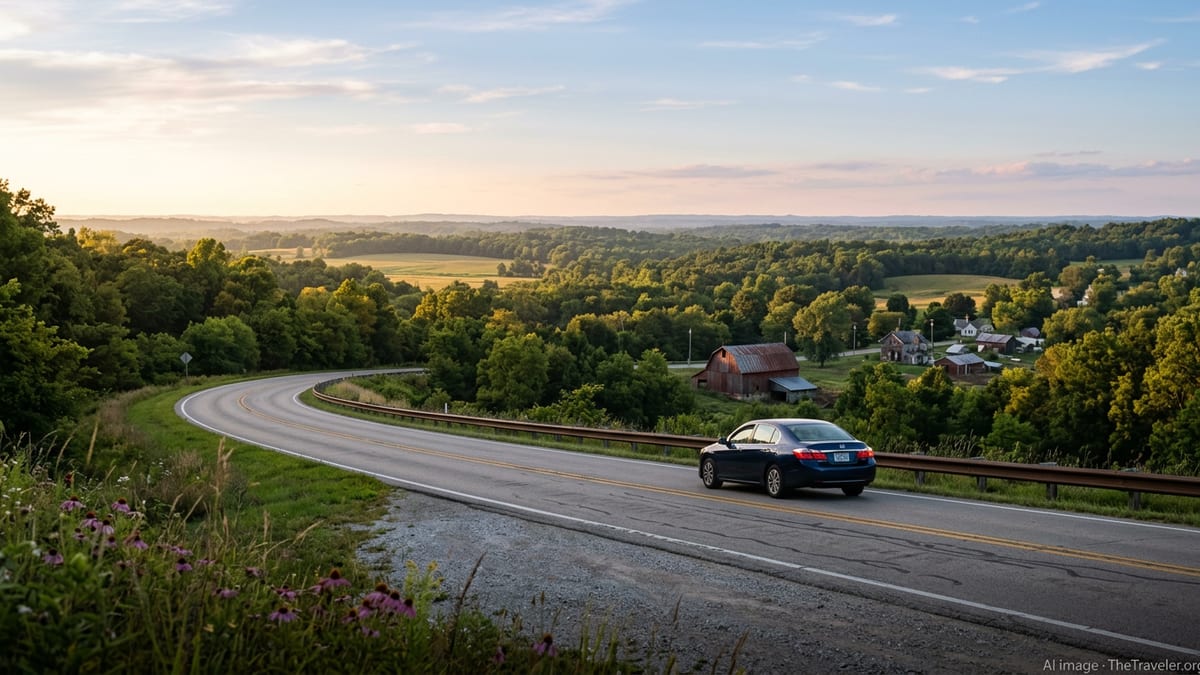
My route began in the northwest at Indiana Dunes National Park before cutting south through Lafayette and Indianapolis, swinging over to Bloomington and Brown County, then dropping to the Ohio River near Madison and looping back via Columbus and some smaller towns. It was a classic Midwestern loop, roughly 800 miles over seven days, with a mix of interstates, state highways, and the occasional unpaved back road. That distance felt ambitious but not punishing, provided I limited long detours and resisted trying to “collect” every attraction along the way.
I planned with a mix of the official Indiana state travel guide, current recreation guides for state parks, and recent roundups of must see Indiana attractions, cross checking with local tourism sites to confirm opening hours and ongoing construction. That research mattered more than usual this year, with several popular attractions undergoing renovation or service changes, especially in and around Indianapolis and at certain museums. I built in flexibility too, leaving buffer blocks in the middle of the day to let the weather or traffic dictate whether I hiked a trail, lingered over lunch, or moved on.
Season matters in Indiana. I traveled in late spring, when Lake Michigan is still chilly but the dunes are hikeable, wildflowers are out in the southern parks, and humidity has not yet turned afternoon walks into endurance tests. A similar route would feel quite different in the gray shoulder season or in peak summer when crowds descend on the lakefront and popular gorges like Turkey Run can feel overrun on weekends.
My priorities were simple. I wanted one day on the lakeshore, meaningful time in at least one city, a couple of college town evenings, and at least two days of real hiking in the state parks that locals rave about. I also wanted to test some of the more hyped stops I kept seeing repeated in “best of Indiana” lists and decide for myself whether they merited a detour on a one week itinerary.
Indiana Dunes and the Lake Michigan Shore: Absolutely Worth It
If you only have one day to spare in Indiana, spend it at Indiana Dunes National Park and the adjoining state park. The contrast between the industrial skyline in the distance and the sweep of pale sand and grass backed dunes is striking. On a clear day the water glows a deep slate blue and you can see the Chicago skyline hovering on the horizon. A short hike on one of the popular dune succession trails delivers real elevation gain, sandy climbs, and pockets of oak savanna that feel far removed from the flat farmland stereotype.
What makes the dunes worth the trip is the variety packed into a small area. Boardwalks and paved paths cater to families or anyone seeking easier access, while sand ladders and ridge walks offer more challenge. In spring and fall the birdlife is impressive and shoreline sections feel relatively uncrowded outside holiday weekends. Parking lots can still fill fast on hot Saturdays, but shoulder season weekdays remain manageable with a bit of planning and willingness to walk from a secondary lot.
What would I skip here? Overplanning. Many visitors try to tackle too many trailheads and viewpoints in a single day and end up spending more time in the car than on the sand. For a one week road trip I would choose one anchor hike plus an hour or two of relaxed beach time instead of chasing every overlook. I would also temper expectations about swimming before high summer. Even in late spring the water is often too cold for more than a quick plunge, and rip current warnings are not unusual when winds kick up.
Nearby towns in northwest Indiana are mostly functional bases rather than destinations in their own right. They provide chain hotels, a few independent cafes, and grocery stores to stock the car, but you are not missing much by skipping extensive exploration. If your goal is atmosphere and walkable historic streets, those rewards lie further south in the trip.
Indianapolis: Pick Your Neighborhoods and Skip the Filler
Indianapolis has been gaining attention in recent travel coverage as a quietly underrated city, and parts of that reputation are deserved. The compact downtown core, Monument Circle, and the Indiana War Memorial district deliver a surprisingly grand urban landscape, especially on a clear afternoon when the limestone facades glow and the tree lined plazas fill with office workers and visitors. The canal walk and nearby White River State Park give the city a softer edge, with paths, public art, and a skyline backdrop that photographs well.
The strongest case for spending time in Indianapolis lies in its cultural institutions and food rather than in generic sightseeing. The Indianapolis Museum of Art at Newfields offers an impressive collection and expansive gardens that easily fill half a day, and recent coverage notes evolving programming and leadership focused on making the campus feel more open and inclusive. The Indiana State Museum, Children’s Museum, and smaller galleries round out the options, and recent restaurant coverage highlights a local dining scene that leans into Indiana produce and creative comfort food rather than chasing coastal trends.
However, not everything in the city justifies a stop on a tight road trip. Some older guidebooks still spotlight attractions that are currently closed for renovation or operating in a limited way. The Indianapolis Motor Speedway Museum, for example, has been undergoing a multi year transformation, with exhibits and tours affected at various points. If you are not scheduling your visit around an actual racing event or a confirmed tour, a quick drive past the oval may be sufficient, and you may want to prioritize other stops where the visitor experience feels more complete.
I would also skip allocating precious time to underwhelming downtown malls or generic nightlife districts that feel interchangeable with many mid sized American cities. Instead, focus on one or two neighborhoods that align with your interests, whether that is independent cafes on Massachusetts Avenue, the historic architecture southeast of downtown, or the green relief of Garfield Park, the city’s oldest park with a conservatory and sunken gardens. Indianapolis rewards travelers who curate rather than simply check off every listing in a brochure.
College Towns and Brown County: Where Indiana Shines
South of Indianapolis, Bloomington and nearby Brown County deliver much of what road trippers hope to find in Indiana but do not always expect: hilly landscapes, forested curves, good music, and food that feels rooted in place. Home to Indiana University, Bloomington has a leafy campus, limestone buildings, and a student energy that keeps restaurants and venues lively even outside peak football weekends. Strolling the campus paths at dusk and then walking to dinner along Kirkwood Avenue made for one of the most satisfying evenings of the week.
From Bloomington it is a short drive to Brown County State Park, repeatedly highlighted in official recreation guides as one of the state’s signature outdoor destinations. The drive in rises and falls over ridges, and while the elevations are modest by mountain standards, the change from flat farmland is dramatic. Overlooks reveal a mosaic of hardwood forest that burns with color in autumn and feels lush in late spring and summer. A network of hiking and mountain biking trails offers options for all abilities, and the park’s scenic drives provide easy access to viewpoints for those with limited mobility.
The nearby town of Nashville caters heavily to visitors, with galleries, craft shops, and cafes clustered along a walkable main street. It can feel crowded on peak fall foliage weekends, and parking fills quickly, but midweek or outside high season it still holds small town charm. This is a place where it is worth lingering: booking a cabin or lodge room inside the park, catching live music in the evening, and waking to fog lifting off the hills makes the extra planning worthwhile.
In this region the main thing I would skip is rushing through. Many itineraries treat Bloomington and Brown County as a simple overnight between bigger cities, but they merit at least a full day and night, preferably two, especially if you enjoy hiking. I would also be selective with roadside attractions that promise rustic charm but deliver little more than dusty gift shops. The real payoff lies in the state park trails and in unhurried hours in town rather than in every advertised overlook or barn sale.
Southern Indiana State Parks and River Towns: Worth the Detour
The stereotype of Indiana as endless cornfields begins to crumble as you head toward the Ohio River. Here the land folds into bluffs, ravines, and waterfalls, and the road begins to twist enough to make driving fun again. Two state parks in particular, Turkey Run and Shades, come up repeatedly in local recommendations and current travel writing as must visit spots for visitors who enjoy hiking and river scenery. Steep sided sandstone gorges, narrow ladders, and creek crossings earn Turkey Run’s most famous trail a reputation as a surprise adventure for a state best known for flatness.
I devoted a full day to Turkey Run and Shades, starting with a guided or self organized paddle on Sugar Creek in the morning and tackling a couple of the more rugged trails in the afternoon. Moving through rocky passages and emerging onto overlooks above the creek feels closer to parts of the Appalachian foothills than to the broad fields seen from the interstate. The parks can be busy on sunny weekends, but midweek in shoulder seasons they retain a quiet, almost hidden feel, especially deeper into the trail networks.
Further southeast, river towns like Madison pair historic districts with access to parks such as Clifty Falls, known for its cascades and rim side hiking trails. Compact main streets lined with nineteenth century buildings, independent shops, and riverfront walks give these towns a sense of place that makes them rewarding overnight stops. They offer an appealing alternative to another night next to a highway interchange, and current small town travel features increasingly highlight them as summer and shoulder season getaways.
In southern Indiana I would skip trying to see every waterfall or overlook in one compressed push. Many viewpoints offer similar angles on the same stretch of creek or forest, and fatigue can set in quickly on humid afternoons. Instead, choose one or two headline trails in each park based on your fitness level and focus on enjoying them fully. I would also skip expecting big city dining; while there are a few standout restaurants and wineries, many meals here are simple affairs, so adjust expectations accordingly and come for the landscapes and architecture first.
Northern Detours and Small Towns: Choose Carefully
Beyond the lakefront and major cities, northern Indiana offers a patchwork of Amish country, industrial towns, and low key lakes. Travel features in recent years have highlighted small towns such as Shipshewana and several lakeside communities as appealing summer bases, particularly for travelers interested in markets, quilt shops, and traditional cooking. These areas can be atmospheric if you slow down, but they do not necessarily deliver big payoff moments on a fast moving one week loop.
On my trip, brief detours into a couple of northern small towns yielded mixed results. Visiting a large flea market on a non market day, for example, meant rows of mostly closed stalls and little to hold attention beyond a quick walk. Some small museums keep limited hours or close midweek outside peak season, something only clear once I dug into local calendars rather than relying on older guidebook blurbs. Without a specific festival, market, or overnight plan, these stops felt more like delays than discoveries.
If you are drawn to Amish country or want a quieter interlude, I would suggest committing to at least one night in a northern town that appeals to you rather than pulling off the highway for half an hour. Give yourself time for a buggy ride, a proper sit down meal, and an evening walk after day trippers leave. Otherwise, on a one week road trip focused on variety and scenic highlights, it may be wiser to invest extra hours in the dunes, Brown County, or the southern parks rather than scattering your attention across multiple similar small town stops.
What I would confidently skip are random roadside attractions and self proclaimed “quirky” stops that heavily market themselves on billboards but offer little context or genuine local connection on arrival. In northern Indiana especially, where long straight stretches of highway invite distraction, it is tempting to pull over at every promised oddity. Most did not justify the lost time compared with simply reaching the next genuine destination before dark.
City Markets, Museums and Construction Surprises: Mixed Experiences
One aspect of this road trip that required more course correction than expected was the state of certain urban attractions. Several markets, museums, and public spaces were either partially closed for renovation or operating under reduced hours during my visit, reflecting an ongoing cycle of investment and renewal in Indianapolis and other cities. In some cases that meant exterior views only, or peering through construction fences at a space touted in older travel guides as a vibrant gathering place.
A good example is Indianapolis City Market, a historic market hall downtown that has long been recommended for lunch and local character. As of 2024 it closed for a major renovation intended to restore and refresh the space, and that work was still influencing access and operations during my visit. Walking past the brick facade and towers is still interesting for architecture fans, but anyone expecting a bustling indoor food hall would leave disappointed. Without current information, it would be easy to plan a meal stop here and arrive to find few or no vendors operating.
Similar caution applies to museum visits. The Indianapolis Museum of Art at Newfields and the Indiana State Museum remain strong draws, but specific exhibits rotate frequently and major projects can alter the visitor flow. The famed motor speedway museum and tour experiences have also been in flux, with upgrades to exhibits and facilities reshaping access. None of this is a reason to avoid the city, but it is a clear warning to verify the current status of any specific venue before building your day around it.
In practical terms, my advice is to prioritize flexible experiences in Indiana’s cities: walks through historic neighborhoods, campus strolls, and parks that do not depend on indoor spaces being open. Use museums and markets as bonuses rather than anchors unless you have checked their latest hours and renovation timelines just before your trip. That approach turns potential frustrations into pleasant surprises instead of trip shaping disappointments.
What Was Truly Worth It and What I Would Skip Next Time
Looking back on the week, the most rewarding days paired a clear geographic focus with a mix of outdoor time and relaxed exploring. Indiana Dunes, Brown County and its surroundings, Turkey Run and Shades, and the river towns along the Ohio stand out as places where the landscape, history, and small town character all came together. They delivered memorable views, satisfying hikes, and evenings that felt distinctively “Indiana” rather than generically Midwestern.
Indianapolis and Bloomington also earned their places on the route. In Indianapolis, a single full day split between Newfields or the downtown cultural district and a good dinner in a locally run restaurant gave a real sense of the city without overwhelming the schedule. Bloomington’s campus and compact downtown, meanwhile, provided one of the trip’s best walkable evenings and made a welcome contrast to nights in more car oriented towns.
On the other hand, a few elements clearly fell into the “skip next time” category. Attempted drive by visits to small northern towns without specific plans left little lasting impression, as did quick stops at overpromoted roadside attractions. Building days around venues undergoing renovation or operating with limited services also proved unwise. In retrospect, I would have spent fewer hours on the interstate between scattered minor stops and more time deepening my experience in two or three key regions.
Indiana rewards travelers who lean into its strengths rather than fighting its limitations. Its standout experiences are not glossy urban spectacles or blockbuster theme parks but layered college towns, evolving midwestern cities, and state parks that reveal far more topographic drama than the map suggests. With that in mind, a smart one week itinerary emphasizes dunes, hills, gorges, and historic riverfronts, using cities as gateways rather than as the entire story.
The Takeaway
A week on the road in Indiana will not deliver the nonstop drama of a western national park circuit or the culinary overload of a coastal metropolis, but it does offer a quieter, more grounded kind of travel. When you align your expectations and your route with what the state does best, the payoffs are real: an afternoon watching waves roll onto a Great Lakes beach, an evening listening to live music in a college town square, a morning threading through sandstone passages that feel unexpectedly wild.
In practical terms, the things I would firmly keep on an Indiana road trip are Indiana Dunes, at least one full day each in Brown County and the southern state parks, and focused time in Indianapolis and Bloomington. I would treat northern small towns as intentional retreats rather than quick stops, and I would scrutinize any plan that depends on specific indoor attractions without double checking their current status. The combination of up to date research and a willingness to pivot on the road is especially valuable here.
If you are debating whether Indiana merits a dedicated week, the answer depends on what you want from the road. If your dream trip is built on towering peaks or world famous museums, it may feel more like an add on to another region. But if you enjoy the rhythm of smaller cities, the satisfaction of discovering landscapes that exceed their reputation, and the freedom of lightly trafficked state highways, a carefully planned Indiana loop can be deeply worthwhile. Curate rather than collect, skip the filler, and the state reveals itself as more than just something to drive through on the way to somewhere else.
FAQ
Q1. Is a one week Indiana road trip enough time to see the main highlights?
Yes, seven days is enough to experience Indiana Dunes, Indianapolis, Bloomington, Brown County, and at least one or two southern state parks, as long as you avoid too many small detours.
Q2. When is the best time of year to road-trip Indiana?
Late spring and early fall are ideal, with milder temperatures, fewer bugs, and good conditions for hiking and walking in cities and parks.
Q3. Do I need a four wheel drive vehicle for this itinerary?
No, standard two wheel drive is fine. Most roads and park access points are paved or well maintained gravel, though heavy rain can temporarily affect some minor routes.
Q4. Is Indianapolis worth a full day on a tight schedule?
Yes, if you focus on one or two neighborhoods, a major museum such as Newfields or the State Museum, and an evening meal, Indianapolis can justify a full day.
Q5. How crowded do Indiana Dunes and popular state parks get?
They can be very busy on summer weekends and holidays, but crowds drop significantly on weekdays and during shoulder seasons like May, September, and October.
Q6. Can I do this road trip using only public transportation?
Not realistically. Limited regional transit means that renting a car is the most practical way to connect cities, small towns, and state parks.
Q7. Are accommodations inside Indiana state parks worth the extra planning?
Often yes. Staying in park lodges or cabins in places like Brown County or Turkey Run allows early trail access and quieter evenings without extra driving.
Q8. How much walking or hiking is involved in the key stops?
You can tailor activity levels, but to fully enjoy the dunes and southern parks expect at least a few miles of walking or hiking on uneven terrain.
Q9. Is northern Indiana worth visiting beyond Indiana Dunes?
It can be, especially for Amish country and lakes, but on a one week trip I would prioritize the dunes, Brown County, and southern parks unless you have specific interests there.
Q10. How far in advance should I book lodging for this route?
Book several weeks ahead for summer weekends, major events, and fall foliage season, especially in Brown County, Bloomington, and popular state park lodges.