

By the time the plane’s wheels touched down in Anchorage, I was certain I had done everything right. I had read the guides, packed the layers, memorized sunrise times and mapped out a tight, ambitious loop that promised glaciers, whales, and the northern lights in one tidy summer week. I was ready for Alaska, I told myself. Within 24 hours, Alaska proved just how wrong I was.
Expecting One Alaska, Meeting Several
On paper, my plan looked solid. I was visiting in mid-July, the heart of summer when much of Alaska enjoys daytime highs around the 60s and low 70s Fahrenheit, weeks of long daylight, and fully open visitor services. I imagined something like a cooler Pacific Northwest stretched over a bigger map. What I met on the ground felt more like several different countries joined by a handful of roads and flight routes, each with its own climate and rhythm.
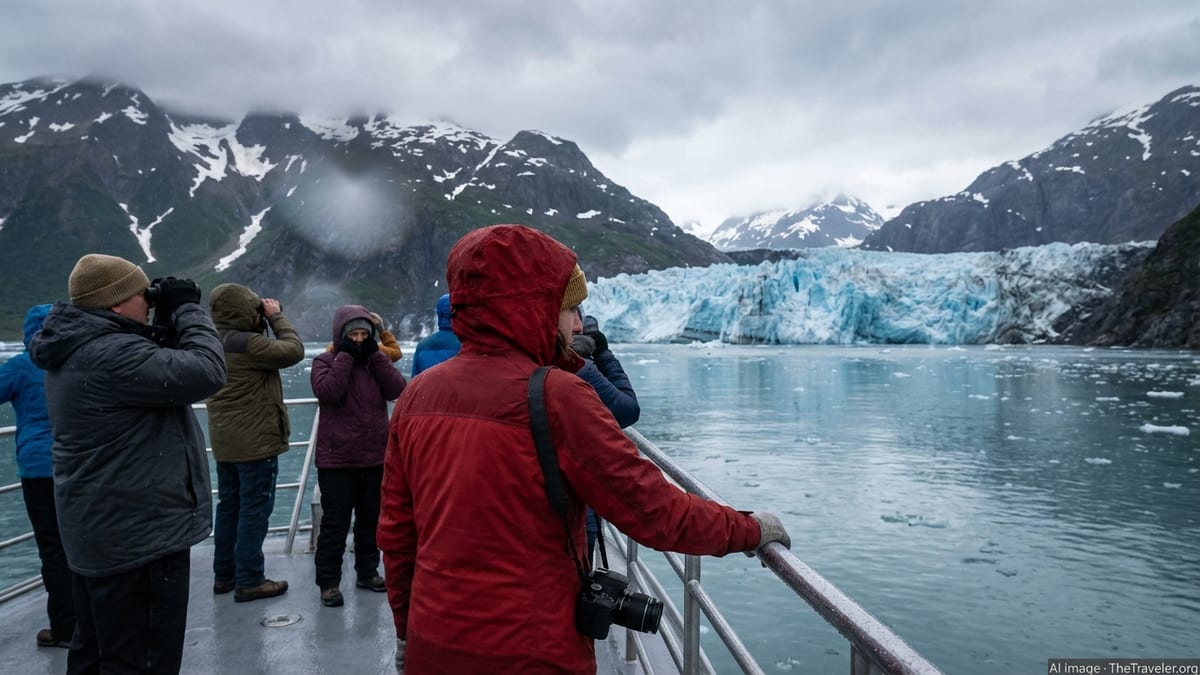
Anchorage introduced itself with drizzle and a low gray ceiling, barely nudging past the mid-50s. A few hours later, on a boat in Prince William Sound near calving glaciers, the air turned bitingly cold. The next day, a train ride north toward Denali passed through pockets of bright sunshine and startling warmth that had other passengers in T-shirts on the observation deck. I had expected variety. I had not expected to move through what felt like three seasons in 36 hours.
What I also underestimated was scale. Alaska covers more land than Texas, California, and Montana combined, with climate zones that range from temperate rainforest to Arctic tundra. Weather patterns shift quickly and differently from coast to interior, lowlands to mountains, and even one side of a fjord to another. Planning as if I were visiting a single region meant I landed constantly off balance, either slightly too cold, a step behind the daylight, or running to catch up with the miles between each stop.
That gap between the tidy version of Alaska in my head and the complex reality under my feet framed every mistake I made on that first trip. It is also what makes the state so compelling. Alaska resists simplification. It demands that you travel slowly, pack thoughtfully, and leave room in your plans for it to surprise you, often in ways that humble more than they inconvenience.
Misreading the Weather and the Midnight Sun
Like many first-time visitors, I clung to averages. Guides told me that coastal towns in summer often see highs around 60 degrees, interior areas like Fairbanks can climb into the 70s, and July is generally the warmest month. That sounded manageable. I glanced at a packing list that said “layers” and mentally translated it to “one fleece and a light jacket.” It took a half-chilled, rain-soaked afternoon near a glacier to understand how incomplete that thinking was.
Alaska’s summer season, roughly May through September, is less about consistent temperatures and more about constant variability. It can feel pleasantly mild one moment and penetratingly cold the next, especially on the water or in the wind funneling off icefields. May is often among the driest months, while late August tends to be considerably wetter. Within that, local conditions can change by the hour. Forecasts struggle with the microclimates created by mountains, fjords, and massive ice. Trusting a single temperature line on a weather app, I discovered, was an invitation to discomfort.
The daylight fooled me just as thoroughly. I knew, abstractly, that around the June solstice Anchorage gets close to 19 hours of daylight, with interior cities having even more. What I did not internalize was how that would feel. In mid-July, it never truly got dark. Evening bled into a lingering twilight, tricking my body into thinking there was always time for one more walk, one more detour, one more photo stop. I stretched my days long past what I would normally attempt on vacation.
Without realizing it, I slept too little, skipped real meals, and underestimated how bright nights would affect my sense of time. It is easy to land in Alaska dreaming about making the most of the Midnight Sun, only to end up exhausted by your own enthusiasm. A simple sleep mask and a stricter personal curfew would have changed the tone of my trip more than any extra excursion could have.
Packing All the Wrong “Right” Gear
What I brought to Alaska would have served me well on a mild, predictable summer road trip. I had quick-dry shirts, one fleece, a packable puffer jacket, running shoes, a pair of hiking boots I had barely broken in, and a thin rain jacket that had never been tested for more than a drizzle. On my first glacier cruise, the shortcomings of that kit appeared one by one.
As the boat eased closer to a tidewater glacier, the temperature dropped and the wind stiffened. Spray from the bow turned fine rain into a steady, needling cold. Locals and repeat visitors around me zipped into substantial waterproof shells, pulled out warm hats and gloves, and layered insulated mid-layers under their outerwear. I, by contrast, was wearing nearly everything I had packed and was still slowly losing heat. What I had missed was that, in Alaska, the difference between “water-resistant” and genuinely waterproof matters, especially near glaciers or on extended boat trips.
I also misjudged the importance of small, easily overlooked items. Thin gloves, a beanie, and a buff or scarf take up almost no space, but they make a disproportionate difference when wind picks up on a boat deck or a viewpoint. On land, I learned quickly that parts of the state, particularly wet coastal forests and certain lowland areas, can have robust mosquito seasons in summer. Repellent and lightweight long sleeves that protect skin while still breathing can mean the difference between a peaceful hike and a short, frustrated retreat.
At the same time, I made the opposite error with footwear. Expecting rugged conditions everywhere, I brought heavy boots for even simple walks in coastal towns and on maintained trails. Many of those paths were well-graded and dry enough that lighter, supportive hiking shoes would have spared my feet some fatigue. Alaska rewards sturdy preparation, but it also demands choices. Overpacking heavy, redundant gear is its own strain, particularly when you are moving often by train, shuttle, or small plane where luggage space is at a premium.
Underestimating Distance, Time, and Fatigue
On a map, my route looked efficient: Anchorage to Seward, back north to Talkeetna, then on to Denali and return. I divided the mileage by average driving times and sketched an itinerary that stacked activities tightly from morning until late evening. What those lines on the map failed to convey was how big and sparsely roaded Alaska really is, and how fatiguing it can be to travel long distances day after day, even on well-maintained highways and comfortable trains.
Alaska has only a handful of main roads tying together its most visited destinations. Distances that seem reasonable in another state can feel longer here, not because the pavement is poor, but because the scenery itself invites constant stops. Pullouts overlooking braided rivers, mountain ranges, and glaciers tempt you out of the car or train seat again and again. A three-hour drive easily expands into five as you detour to watch a beluga surfacing near Turnagain Arm or linger in a small-town bakery you stumble upon along the way.
What I had imagined as “flex time” in my schedule was quickly devoured by construction delays, photo breaks, and the simple desire to sit on a bench and watch the midnight sun hover just above the horizon. I arrived in Denali later than planned, missing the last shuttle I had hoped to catch deeper into the park. The mistake was not in being curious, but in refusing to account for how curiosity expands to fill the daylight you give it, especially when that daylight stretches to nearly 20 hours.
By the middle of the trip, the consequences of that overstuffed schedule showed up in quieter ways: a growing impatience with fellow travelers, a tendency to rush through interpretive centers rather than read anything in detail, and a creeping indifference to views that deserved better attention. Alaska is particularly unforgiving of this mentality because so much of what you come to see requires time, whether that is waiting for wildlife to appear, lingering long enough at a glacier face to hear it calve, or staying put for hours under a darkening sky in hopes of catching the aurora.
Chasing the Wrong Expectations
If my packing and planning mistakes made me cold and tired, my expectations nearly made me miss the joy of what I actually experienced. I came to Alaska with a mental checklist: see the northern lights, watch a bear catch salmon, spot a humpback breach in perfect light. Some of those hopes were simply mismatched to the season. Peak aurora viewing is tied to darker nights, generally from fall through early spring, when long hours of darkness align with clear skies. In high summer, the sky never truly grows dark enough in much of the state for reliable displays.
Expecting to see the northern lights in July was more wishful thinking than reasonable planning. Guides had explained that late August and September, when nights lengthen but many summer activities are still possible, offer a better compromise for visitors hoping to see both vibrant fall colors and aurora activity. Winter, especially February and March, brings even better odds, particularly around interior hubs that sit beneath the auroral oval. I skimmed that advice, then chose dates that worked for my schedule rather than my goals, and paid for it with quiet disappointment every cloudless “night” that never truly darkened.
Wildlife expectations required similar recalibration. Alaska’s bears, whales, and moose are not performers waiting just offstage. Seasonal salmon runs, ice conditions, and weather all shape what you may see, and none of it is guaranteed. On a coastal cruise, we watched harbor seals resting on ice floes and distant mountain goats picking their way along cliffs, but the humpbacks I had imagined stayed elsewhere. In Denali, low clouds concealed the mountain for days. Instead of the classic postcard view, we drew quiet satisfaction from watching caribou cross a gravel bar in the rain and listening to the hush of wind across open tundra.
Letting go of that checklist was not immediate. It came gradually, helped along by conversations with guides and residents who reminded me that even locals do not see everything in a single season, much less a single trip. Alaska invites you to trade certainty for possibility: to board a boat knowing you might see whales or might simply see fog curling around black rock and ice; to drive hours into a national park understanding that the reward may be a fleeting glimpse of wildlife or simply the rare feeling of true remoteness.
Learning to Travel Alaska on Alaska’s Terms
As the trip progressed, my relationship with Alaska shifted from trying to control the experience to learning how to move more in rhythm with the place itself. That started with a humbler approach to planning. Instead of plotting every hour, I began reserving only the essentials: transportation between major hubs, a handful of must-do excursions, and lodging. Between those fixed points, I let longer blocks of time remain open, trusting that weather and local advice would guide how to fill them.
That flexibility paid off quickly. When a drizzly day made mountain views unlikely, a local in Seward suggested a visit to the small sea life center, where rehabilitated marine animals and thoughtful exhibits deepened my understanding of the surrounding ecosystem. In Talkeetna, low cloud cover hid the peaks, but a guide recommended a quiet riverside walk that revealed traces of recent floods and the slow work of glacial rivers reshaping the land. These moments were not what I had come for in the narrow sense, but they are what stayed with me.
I also learned to take local seasonality more seriously. Summer road construction, for example, is a fact of life when the working window is short and winters are harsh. Build extra time into drives and treat delays as part of the story instead of an interruption. Mosquitoes can peak in certain areas during high summer, but tend to fade later in the season, often around the same time that nights grow longer and berries ripen. Shoulder months, like May and September, offer their own trade-offs: fewer crowds and reduced rates, but also cooler temperatures and some services and lodges, particularly in areas around Denali, closing by mid-September.
Traveling on Alaska’s terms also meant accepting that some of the romance comes with real constraints. Ferry schedules in coastal regions may change with conditions. Local flights into small communities or backcountry lodges are weather-dependent, especially when visibility drops. Guides, outfitters, and park rangers do not cancel lightly; when they do, it is because experience tells them to respect conditions that may not look dramatic from a visitor’s perspective. The more I listened instead of pushing back, the safer and more rewarding my days became.
The Takeaway
When I boarded my flight home, I carried a quiet embarrassment about how unprepared I had been, but also a stronger pull to return than I expected. Alaska had exposed gaps in my planning and assumptions, yet it had also offered more than enough beauty to balance every misstep: the blue fracture lines in ancient ice, the low persistent call of a loon across still water at midnight, the way a mountain briefly revealed itself between clouds at sunset and then disappeared again.
If there is a single lesson from that first humbled trip, it is that Alaska rewards the traveler who arrives with curiosity and respect rather than control. Pack more thoughtfully than you think you need to, especially for cold, wet, and windy conditions on water and near ice. Build an itinerary that breathes, with space for weather, construction, and the inevitable desire to linger. Align your expectations with the season, whether that is long golden evenings in June and July, fall colors and the first chances at aurora in September, or stark winter skies in February and March.
Most of all, accept that you will not “finish” Alaska in one visit. The state is too large, too varied, and too alive with seasonal changes to be neatly captured on a single itinerary. Instead, think of each trip as a conversation, one that will go better if you listen as much as you speak. I thought I was prepared for Alaska. I was not. But the lessons that state taught me in that brief, humbling week reshaped not only how I would return, but how I would travel anywhere that asks as much of you as it gives in return.
FAQ
Q1: What is the best time of year for a first trip to Alaska?
For many first-time visitors, mid-June through late August offers the widest range of tours, long daylight, and relatively mild temperatures, though it can also be the busiest and often wettest later in the season.
Q2: How should I pack for Alaska in summer?
Focus on a layered system: a moisture-wicking base, a warm mid-layer like fleece or a light puffer, and a truly waterproof, windproof outer shell, plus hat, gloves, and sturdy walking shoes or hiking footwear.
Q3: Will I see the northern lights in July or August?
In high summer, the sky in much of Alaska stays too bright for reliable aurora viewing. Late August into spring, especially around interior regions, offers better chances as nights grow darker.
Q4: Do I need heavy winter gear in Alaska during July?
You usually do not need full winter parkas in July, but you should bring warm layers, a good rain jacket, and accessories like hat and gloves, particularly for glacier cruises or time spent on the water.
Q5: How much time should I plan for a basic Alaska itinerary?
Many travelers find that 7 to 10 days allows a more relaxed visit to a few key areas such as Anchorage, a coastal town like Seward, and a railbelt destination like Denali, without constant rushing.
Q6: Is renting a car necessary, or can I rely on trains and buses?
You can see popular regions using trains, buses, and tours, particularly along the main railbelt corridor, but renting a car or camper can provide more flexibility and access to smaller stops between major hubs.
Q7: How far in advance should I book lodging and tours?
For peak summer months, it is wise to book accommodations and high-demand activities several months ahead, especially in smaller communities and near national parks where options are limited and can fill quickly.
Q8: Are mosquitoes really a problem in Alaska?
In some areas, particularly wetlands and tundra during peak summer, mosquitoes can be plentiful. Using repellent, wearing lightweight long sleeves, and choosing breezier or coastal locations can reduce their impact.
Q9: What kind of physical condition should I be in for typical Alaska activities?
Many popular excursions, like wildlife cruises and basic sightseeing tours, require only light walking, but hikes, glacier treks, and paddling trips demand more fitness, so be honest about your limits when booking.
Q10: How can I travel responsibly and respectfully in Alaska?
Follow local guidance on wildlife distance, stay on marked trails, pack out your trash, support local businesses, and be mindful that many communities balance tourism with subsistence traditions and fragile ecosystems.