

Idaho rarely makes the front page of American travel wish lists, yet after a full week on the road there, I left with muddy hiking boots, a camera full of alpine lakes, and a much clearer sense of what the Gem State actually offers. This is an honest, detail-rich account of how my seven days unfolded, what it really cost, what exceeded expectations, and what I would do differently next time.
Planning a Realistic One-Week Route Through Idaho
Idaho is bigger than most people realize, and its mountains and canyons mean you cannot treat it like a flat drive-through state. For a first-time, one-week trip I focused on a loop that balanced cities with wilderness: Boise as the base, then north and east toward Stanley and the Sawtooth country, with time along the Salmon River and a return via Sun Valley and smaller high-desert towns. It was not a complete survey of Idaho, but it was enough to understand the rhythm of the state and the trade-offs you make in a short itinerary.
I arrived in Boise on a Saturday afternoon, picked up a rental car at the airport, and gave myself the first evening and full next day to settle into the city and adjust to the slower pace. From there, I headed northeast along the Ponderosa Pine Scenic Byway toward Lowman and Stanley, spent several days based around the Sawtooth Mountains, then returned via Ketchum and Sun Valley before looping back to Boise. Driving days were capped at roughly three to four hours, which kept the trip from turning into a marathon of windshield time.
If you are flying in, Boise is the logical starting point. It has the best flight connections and a range of rental car options, and it places you within reach of multiple distinct landscapes within a day. If you are driving from a neighboring state, be realistic about how much of your week you are willing to spend in the car. Distances look short on the map but mountain roads add time, and you will want room in the schedule to stop for hot springs, short hikes, and viewpoints that barely show up in guidebooks.
Season matters more here than in many places. Winter brings excellent skiing at resorts like Sun Valley and family-friendly hills near Boise, but some high mountain roads and hikes are still snowed in well into June. Late June through September is the most straightforward time for a road trip, with mostly clear passes and warm river temperatures, but it also coincides with wildfire season in some years. I traveled in late summer, when evenings were cool, days were warm, and smoke occasionally softened distant mountain views without shutting anything down.
What My Idaho Week Actually Cost
Travel costs in Idaho are lower than in many western destinations, but they are not rock-bottom, especially in popular mountain towns. For a solo traveler sharing some costs with a companion for part of the trip, my week in Idaho landed in what I would call a mid-range budget. I aimed for comfortable but not luxurious stays, ate a mix of casual sit-down meals and groceries, and chose activities that leaned toward hiking and free natural attractions instead of guided tours and high-fee adventures.
Lodging took the largest share of the budget. In Boise, mid-range hotels in or near downtown commonly sit in the low to mid 100s per night, with prices increasing on major event weekends. Mountain towns such as Ketchum and Sun Valley often command somewhat higher rates, especially in peak summer and winter seasons, while simpler motels or rustic cabins in smaller towns can be noticeably cheaper. Over the week, my nightly cost averaged in the low to mid 100s by mixing a couple of more polished hotels with plainer roadside motels and one cabin-style stay near Stanley.
Transportation was the next major expense, and it can fluctuate based on gas prices and how far you choose to roam. Idaho’s fuel costs have hovered around the high 2 to mid 3 dollar range per gallon in recent months, depending on timing and location, which is slightly above the national average but not in the top tier of expensive states. Factoring in the week’s loop of several hundred miles, I spent noticeably less on fuel than on lodging but more than on any single activity. A compact or midsize rental car is sufficient for most main roads; if you plan to explore rougher forest routes, consider a higher-clearance vehicle, but you can see a great deal without it.
Food and activities rounded out the budget. Restaurant prices in Boise felt comparable to other mid-sized western cities, with casual dinners at independent spots often landing in the mid teens to low 20s per entrée, and coffee and breakfast options in the standard café range. In smaller towns, meals can be slightly cheaper, although choices are limited. Many hikes, lakes, and river access points are free aside from modest state park or day-use fees, so much of your entertainment spending will only spike if you add guided rafting, lift tickets, bike rentals, or spa days. Overall, my total trip cost landed comfortably below what a similar week in coastal California or Colorado resort towns would have required, though it was not a budget backpacking trip.
Boise: First Impressions of Idaho’s Capital
Boise was my introduction to Idaho, and it did a quiet job of recalibrating my expectations. The city is small enough to feel manageable but large enough to sustain a real food scene, a riverfront greenbelt, and the sort of cultural institutions you might not expect in a state better known for its rugged backcountry. I stayed near downtown and was able to reach the Boise River Greenbelt, the state capitol, and several neighborhoods on foot or by a short drive.
What stood out most was how the river shapes local life. The Boise River Greenbelt threads through the city with a string of parks that invite walking, cycling, and quiet people-watching. On summer days, it is common to see locals floating sections of the river or gathering under the large shade trees in established parks. Not every city lets you step from a busy downtown street into an almost pastoral riverside path within a few minutes, and Boise uses that advantage well.
Culturally, the city feels more layered than its size might suggest. Murals brighten corners of the downtown core, there is a visible Basque presence in one historic block, and museum options range from art to regional history. Food-wise, Boise leans into a mix of modern American comfort dishes, regional craft beer, and increasingly diverse cuisines. Prices felt fair rather than inflated, and service across cafés and restaurants was relaxed but generally attentive.
As a starting point for an Idaho road trip, Boise works because it is both convenient and gentle. It eases you into the state without demanding that you immediately lace up hiking boots or study trail maps. A full day or two is plenty to get a feel for the city’s personality, sample a few local specialties, and shake off travel fatigue before driving into the high country. If you skip Boise entirely, you will still find Idaho’s natural drama in the mountains, but you would miss the context of how people actually live here.
Into the Mountains: Sawtooth Country and Stanley
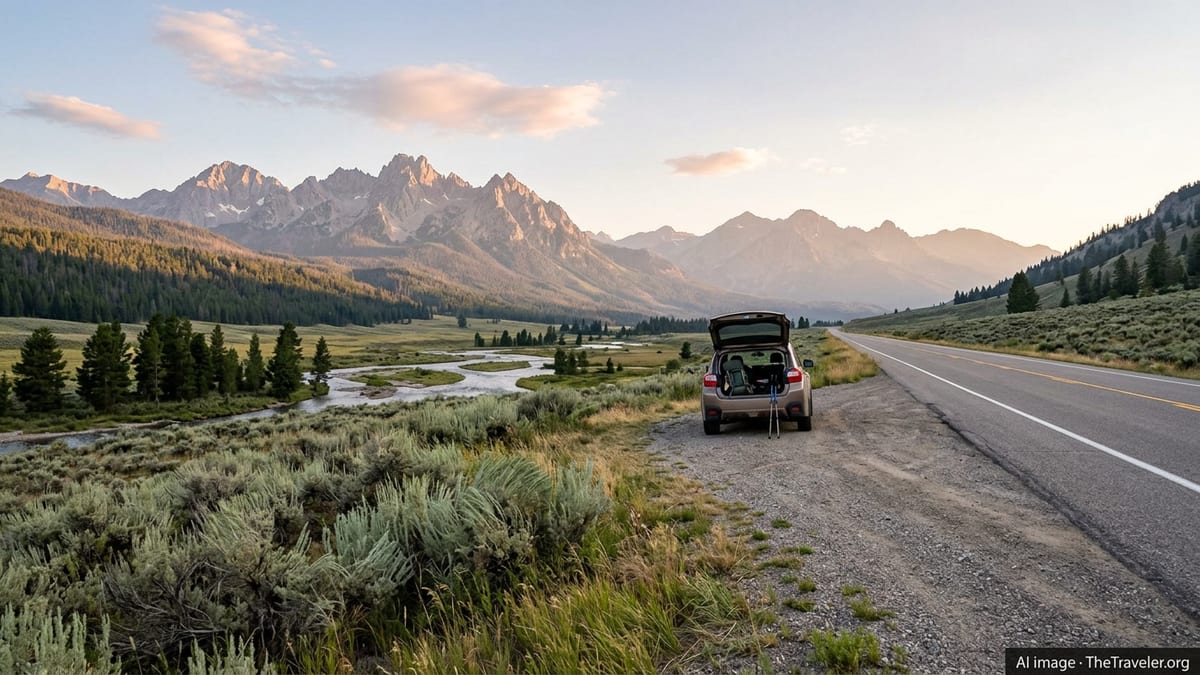
Leaving Boise for the Sawtooth Mountains is when Idaho’s scenery begins to match the mental images that lure hikers and road trippers. The drive toward Lowman and Stanley climbs steadily, following river canyons and passing through pine forests that become increasingly rugged. By the time you approach Stanley, the Sawtooth Range rises in a row of jagged peaks that look almost exaggerated against the meadows and river flats below.
Stanley itself is small, with a handful of lodging options, restaurants, and services scattered along the main road. Prices here can be a touch higher than the size of the town might suggest, reflecting its role as a gateway to some of Idaho’s most beloved wilderness. I split my time between short day hikes to alpine lakes, scenic drives through the Sawtooth National Recreation Area, and long, unhurried evenings watching light shift over the mountains. Even popular trailheads felt less crowded than equivalent destinations in more famous western states, though you will not have the place entirely to yourself in peak season.
The hikes I chose were moderate rather than extreme, often between four and eight miles round-trip, leading to clear lakes or high viewpoints where granite peaks reflected in still water. Trail conditions varied with elevation and recent weather, but signage was generally adequate near major access points. For those less inclined to hike, viewpoints along the main roads and easy strolls near lakes still deliver impressive scenery without demanding big exertion.
One of the best aspects of this part of Idaho is its connection to water. The Salmon River and smaller creeks offer chances for rafting, fishing, and simple riverbank picnics. There are also natural and developed hot springs scattered through the region, some right off the roadside, others requiring short walks. Entry costs range from free for undeveloped pools to modest fees at managed facilities, which can be a pleasant splurge on a cold evening. This mix of mountain peaks, accessible water, and quiet nights under big skies made the Sawtooth segment of the trip the part I would most eagerly repeat.
Sun Valley, Small Towns, and the Character of Rural Idaho
Driving south from Stanley toward Ketchum and Sun Valley shifts the tone from rugged backcountry gateway to polished mountain resort. The valley feels curated in a different way, with neatly kept streets, galleries, and well-established ski infrastructure that has long drawn both serious skiers and casual vacationers. In summer and shoulder seasons, hiking and biking trails replace ski runs as the main draw, and prices in town reflect the area’s reputation and amenities.
I stayed one night just outside the core resort area to keep lodging costs modest, then spent a full day exploring Ketchum on foot. The town offers a dense cluster of restaurants, cafés, and shops, and its trailheads are often just a short drive away. Food prices run higher here than in Boise or smaller towns, especially at higher-end establishments, but there are still lower-key options if you are willing to look slightly off the main streets or embrace more casual fare.
What this section of the trip highlighted most, though, was the contrast between resort-centered Idaho and the many smaller towns that dot the highways. Places with only a few blocks of businesses might have a single café, a hardware store that sells fishing gear, and a modest grocery aisle. Service can be direct and unpretentious, and hours may be limited outside peak seasons, so building flexibility and a bit of patience into your schedule is wise. These towns will not appear in glossy travel spreads, yet they are essential to understanding everyday life in the state.
Driving through them, I was struck by how much Idaho’s identity is still shaped by ranching, logging, and outdoor work alongside growing tourism. Pickup trucks line main streets, community posters advertise rodeos and local festivals, and trailheads can be shared by hikers, hunters, and anglers. For travelers, this means showing respect for local norms, being aware of hunting seasons, and recognizing that many of the places you are passing through are not primarily designed as tourist destinations, even if they welcome visitors.
Practical Costs on the Ground: Gas, Food, and Fees
On the road, certain costs repeatedly surfaced and are worth planning for in advance. Fuel was the most obvious. Recent data shows Idaho’s gas prices fluctuating around the mid to high 2 dollar and low 3 dollar range per gallon in early 2026, often sitting slightly above the national average but below the most expensive states. That may change by season and location, with resort areas and remote stretches sometimes charging a bit more, so it is sensible to fill up when prices look reasonable and not rely on a single small-town station hours away.
Food spending is easier to control if you mix restaurant meals with groceries. Most larger towns, especially Boise and regional hubs, have full supermarkets where you can stock up on snacks, breakfast items, and picnic lunches. In smaller communities, selection may be more limited and prices a bit higher, but you will rarely be entirely without options along main travel corridors. I found it useful to plan roughly one sit-down restaurant meal per day, then rely on simple grocery store staples for the other two, both to keep costs in check and to save time on heavy driving days.
Park and recreation fees in Idaho are relatively modest compared with fees at some national parks elsewhere. State parks and managed recreation areas often charge day-use or parking fees that are small on a per-vehicle basis. If you plan to visit several different sites, it can be worth looking into any available passes or annual permits, but for a single week you may find that individual day fees add up to less than a full pass would cost. Many trailheads managed by federal agencies use standard national passes or modest per-site fees, and numerous river pullouts and informal viewpoints remain free.
Unexpected costs came mostly in the form of seasonal variability. In high summer and during holiday periods, lodging prices rise and availability shrinks, particularly in mountain towns. Winter sports trips will include lift tickets, gear rentals, or lessons if you ski or snowboard, which can dramatically increase your daily budget. Shoulder seasons, while sometimes less predictable for weather, can be a sweet spot for both prices and crowd levels, especially if you are flexible about exact dates and do not require every high-elevation trail to be snow-free.
What Surprised Me: Highlights and Honest Drawbacks
The standout highlight of the week was the sheer quality of the mountain landscapes relative to how little name recognition they have outside regional circles. The Sawtooth peaks, Salmon River corridors, and high meadows felt every bit as impressive as better-known western ranges, yet the atmosphere at trailheads and in small towns was calmer and less commercial. That does not mean Idaho is empty, but it does mean you can still find quiet stretches of trail and unhurried riverbanks in high season if you start early and avoid the most popular weekends.
Another positive surprise was Boise’s livability. The combination of riverfront access, parks, culture, and a growing food scene makes it more than just a launching pad for the outdoors. If I returned, I would consider adding an extra day in the city on either end of the trip to explore neighborhoods beyond the central core, visit more museums, and experience a bit more of the local calendar of events.
There were drawbacks too, and they are worth stating plainly. First, while Idaho is more affordable than some neighboring destinations, the combination of lodging, fuel, and restaurant costs still adds up quickly, particularly in resort towns and during peak months. If you arrive expecting deep-discount prices everywhere, you will be disappointed. Second, cell coverage drops sharply in many rural and mountainous areas, which can complicate navigation and communication if you do not download maps in advance or prepare for offline time.
Finally, wildfire smoke is an increasingly common factor across the American West, and Idaho is no exception. In my case, a few days were affected by a high haze that muted long-distance views and left sunsets more orange than usual. It did not cancel any plans, but it served as a reminder that even the best-planned itinerary must adapt to conditions beyond your control. Being mentally prepared for some flexibility, whether due to fire, late snow, or seasonal closures, will make your trip more enjoyable.
Who Idaho Is (and Is Not) Ideal For
After a week on the road, it became clear that Idaho is exceptionally rewarding for travelers who genuinely like being outside and are comfortable with a bit of logistical independence. Hikers, anglers, paddlers, and road trippers who enjoy planning their own days and do not mind stretches of highway between sights will likely thrive here. Families that value simple pleasures like lake swims, easy river floats, and picnic lunches over structured theme-park-style entertainment will also find plenty to enjoy.
Conversely, if your idea of a perfect trip revolves around walkable big-city neighborhoods, extensive public transit, and late-night entertainment, Idaho will probably feel limited. Boise has pockets of urban energy, and resort towns have evening dining and occasional events, but much of the state settles into a quieter rhythm after dark. Shopping is practical rather than glamorous in most places, and luxury experiences are concentrated in specific resorts rather than spread widely.
The state also demands a certain comfort level with driving and with being in relatively remote areas. Distances between services can be larger than travelers from denser regions expect, and roadside assistance might take longer to reach you if something goes wrong. That does not make Idaho unsafe for cautious travelers, but it does reward those who maintain their vehicles, carry basic supplies, and keep an eye on fuel levels and weather forecasts.
In terms of budget, Idaho fits best for travelers who occupy the middle ground. It offers enough camping, cabins, and modest motels to stay relatively affordable, especially if you are willing to cook some meals and skip pricier guided adventures. At the same time, it provides higher-end resorts and lodges for those who want comfort after days in the mountains. Ultra-budget travelers may find transportation and food costs still higher than expected, while ultra-luxury seekers could feel that options are concentrated in only a few pockets rather than spread across the state.
The Takeaway
Spending a week in Idaho reshaped my understanding of the state from a vague image of open spaces into a specific mosaic of river valleys, jagged peaks, small towns, and a capital city that punches above its weight. It is not a place that tries to impress with spectacle at every turn; instead, it wins you over through a steady accumulation of honest experiences: early-morning light on alpine lakes, easy conversations with locals at roadside cafés, and stretches of road where mountains and sky seem to own the horizon.
From a practical standpoint, Idaho is a manageable and rewarding destination if you plan your route thoughtfully, respect the distances involved, and approach costs with clear eyes. Lodging and fuel will likely make up the bulk of your budget, with food and optional activities adding layers depending on your style. The state offers real value compared with many better-known outdoor destinations, particularly in how much quiet and space you can still find.
If you are considering a first trip, a one-week loop anchored in Boise and the central mountains is enough to experience a cross-section of what Idaho does best. You will not see everything, and you will quickly realize how many side valleys, hot springs, and trail networks still lie unexplored. That, in many ways, is the strongest recommendation. Idaho rewards repeat visits, deeper dives into specific regions, and travelers who are willing to look beyond the most obvious names on the map.
In the end, my honest assessment is that Idaho is not for everyone, but for the right traveler it can quietly become a favorite. If you value uncrowded trails over crowded attractions, clear rivers over curated nightlife, and mountain horizons over skyline views, a week here may only be the beginning of a longer relationship with the Gem State.
FAQ
Q1. How much should I budget for a one-week trip to Idaho?
For a mid-range traveler, a rough estimate is a moderate daily budget that covers a rental car, fuel, lodging in the low to mid 100s per night, plus food and a few paid activities. Costs rise in resort towns and during peak seasons, and can be reduced by camping, sharing lodging, and cooking some meals.
Q2. What is the best time of year to visit Idaho for a road trip?
Late June through September is generally the easiest time for a road trip, with open mountain passes and warm river temperatures. Spring and fall can be beautiful and quieter but may bring lingering snow at higher elevations and cooler nights. Winter is ideal for ski-focused trips but requires additional planning for driving conditions.
Q3. Do I need a four-wheel-drive vehicle to explore Idaho?
For most first-time itineraries that stick to main highways, paved scenic byways, and popular trailheads, a standard two-wheel-drive car is sufficient in good weather. If you plan to explore unpaved forest roads, travel in shoulder seasons, or visit during winter storms, a higher-clearance or all-wheel-drive vehicle provides extra safety and flexibility.
Q4. How expensive are gas and food in Idaho compared with other states?
Gas prices in Idaho often hover slightly above the national average but below the most expensive states, while food costs are comparable to many western regions. Boise and resort towns may feel similar to mid-sized metropolitan areas, while smaller towns sometimes offer simpler, slightly cheaper options. Overall, prices are moderate rather than extreme.
Q5. Is Idaho suitable for families with children?
Yes, Idaho can be very family-friendly, especially for children who enjoy the outdoors. Lakes, rivers, easy hikes, hot springs, and beginner-friendly ski areas provide plenty of low-tech fun. Parents should plan for longer drives between sights, bring snacks and entertainment for the car, and choose accommodations with space for kids to unwind.
Q6. How far in advance should I book lodging in Idaho?
In popular mountain towns and during peak summer or winter periods, it is wise to book lodging several months in advance, especially for weekends and holidays. Boise and larger hubs can sometimes accommodate shorter-notice plans, while shoulder seasons often offer more flexibility. Spontaneous travelers may still find last-minute options but with fewer choices and potentially higher prices.
Q7. Are there any safety concerns I should be aware of?
Idaho is generally safe for travelers who use common sense, but the landscape itself demands respect. Long stretches between services, variable weather in the mountains, limited cell coverage, and wildlife on or near roads are key considerations. Carry water, a basic emergency kit, downloaded maps, and stay informed about conditions such as wildfires, road closures, and winter storms.
Q8. Can I rely on public transportation in Idaho?
Public transportation options are limited outside Boise and a few regional services, so a private vehicle is effectively essential for most itineraries. Within Boise, local transit and rideshare services cover the main urban area, but they will not replace a car for exploring state parks, mountain towns, and rural regions.
Q9. What kind of traveler will enjoy Idaho the most?
Idaho suits travelers who genuinely enjoy the outdoors, are comfortable driving, and appreciate quieter destinations over highly developed tourist hubs. Hikers, anglers, paddlers, road trippers, and families seeking nature-focused experiences will likely find it rewarding. Those who prioritize dense urban culture and nightlife may prefer other destinations.
Q10. Is Idaho a good value compared with other western destinations?
Compared with some high-profile western states, Idaho often provides strong value in terms of scenery, space, and overall experience relative to cost. While resort areas and peak seasons can still be pricey, many smaller towns, state parks, and recreation areas offer memorable experiences at moderate prices, especially for travelers willing to plan ahead and travel in the shoulder seasons.