

I went to Gravenhurst expecting a classic Muskoka escape: quiet lakes, graceful old steamships and a sleepy small town that would let me slow down for a few days. What I found was more complicated.
Gravenhurst calls itself the gateway to Muskoka, and it is that, but my time there was full of small surprises, a few real frustrations and a slower, humbler charm than the glossy tourism photos suggest.
First Impressions of the “Gateway to Muskoka”
Driving in from Toronto, the two-hour stretch up Highway 11 felt straightforward enough. The moment I saw the sign for Gravenhurst and turned off, I expected a busy resort town with the same polished feel I have seen elsewhere in Muskoka. Instead, my first impression was of a fairly ordinary community that just happened to sit beside some very beautiful water. That contrast between postcard scenery and workaday town life set the tone for my whole visit.
The other surprise was scale. On paper, Gravenhurst has multiple lakes, a wharf area, a historic downtown and several attractions. In reality it felt smaller and more compact than I had imagined. That was not necessarily bad, but it meant I recalibrated my expectations from “non-stop experiences” to “slow wandering with a few highlights.” If you arrive expecting something like a busy resort village, you will probably be disappointed.
What I did appreciate almost immediately was how easy it was to reach the water. Within minutes of dropping my bag at my accommodation, I could walk down toward Muskoka Bay and feel that mix of pine-scented air and cool breeze that people romanticize about Muskoka. The town may not look like a luxury destination on every corner, but the natural setting absolutely carries it.
On the flip side, the practical side of the town showed early too. Traffic through the main commercial strip felt heavier than I expected for a place of this size, especially on a summer afternoon, and parking choice mattered. Free spots existed, but I had to pay attention to signed limits and time restrictions. It was not a deal breaker, but it was more logistical thinking than I had imagined needing for a quiet lakeside break.
Muskoka Wharf: Pretty, Commercial, and Sometimes Crowded
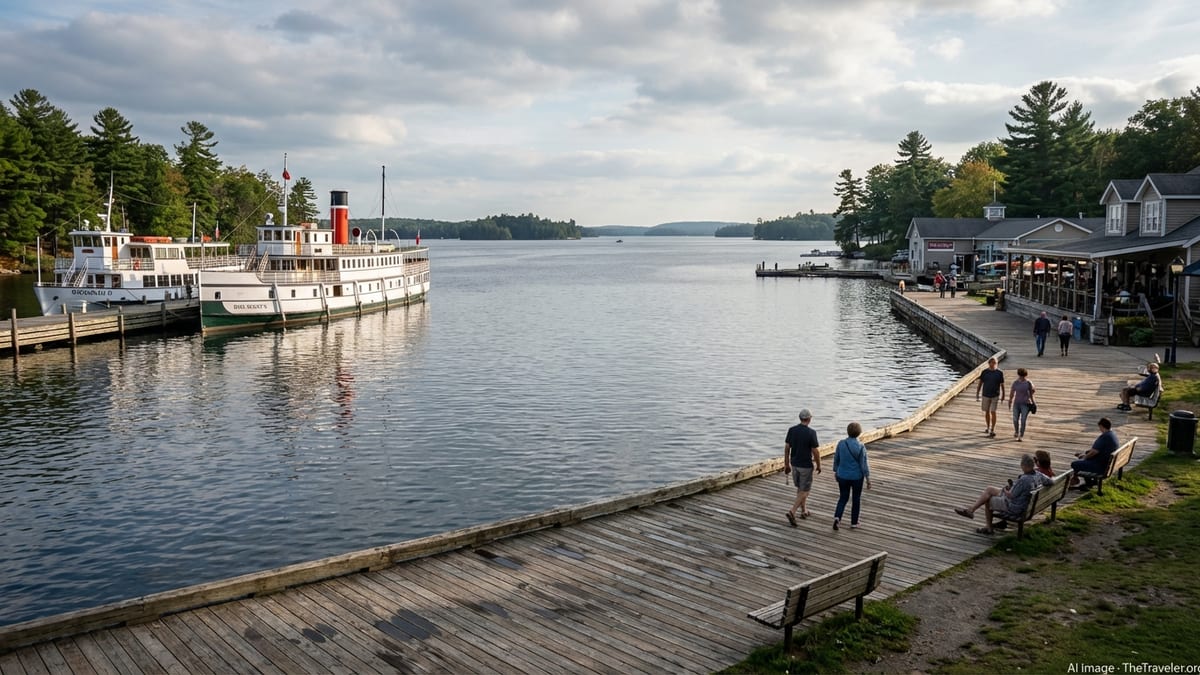
The place I had seen most often in photos before my trip was Muskoka Wharf, and it was also where I spent the most time. The half-mile or so of boardwalk along Lake Muskoka really is attractive. Boats moving in and out of the bay, the silhouettes of islands in the distance and the shoreline lined with low-rise buildings, restaurants and shops created what felt like the curated centerpiece of Gravenhurst.
Walking the boardwalk the first evening, the light was soft, the water calm and the steamships at their berths gave the whole scene an old-world maritime feel. In that moment, the promotional phrases made sense. Families wandered past with ice cream, people sat on benches watching the sunset and there was a genuine, easy atmosphere that felt authentic rather than overly staged.
The less charming side of the Wharf revealed itself the next day. By late morning, the area around the parking lots and launch ramp got noticeably busy, and the whole waterfront adopted a slightly frantic energy: boat trailers backing up, kids zigzagging on scooters, lines forming at the restaurants. It was not chaotic, but it did not feel like the relaxed lakeside stroll I had imagined. If you are sensitive to crowds or noise, the middle of a summer day at the Wharf might feel more like a small marina complex than a peaceful escape.
I also noticed that while the boardwalk is technically public, quite a bit of what you see and do at the Wharf costs money. Between eating out, boat rentals, museum entry and cruises, the area is geared to getting you to spend. That is not unique to Gravenhurst, but it is worth being honest about. You can absolutely enjoy the view and a walk for free, but if you want the full experience here, it adds up quickly.
The Steamships and Discovery Centre: History Meets Reality
One of the big reasons I chose Gravenhurst over other Muskoka towns was the chance to see the classic steamships and the Muskoka Discovery Centre. The idea of boarding a heritage vessel on a lake linked so strongly with Canadian cottage culture really appealed to me. Seeing the RMS Segwun and the larger, more modern Wenonah II tied up at the Wharf was genuinely impressive. The Segwun in particular, with its tall smokestack and narrow profile, looks like something preserved from another era.
Booking a cruise, however, took more planning and more money than I had expected. Schedules were not as frequent as I had imagined for such a flagship attraction, and popular departure times could sell out. On top of that, prices were firmly in the “special outing” category rather than a casual afternoon activity. I went ahead because I had built this into my mental picture of Gravenhurst, but I could see budget-conscious travelers skipping it.
Once on the water, I did get what I had come for: open deck space, the slow movement across Lake Muskoka and that satisfying feeling of being part of a long tradition of lakeside travel. The commentary on the shoreline history and old resorts was interesting, if a little rehearsed, and there were pockets of silence where I could just watch the landscape slip by. The surprise here was more subtle. I had expected something borderline magical; instead I got an enjoyable, slightly crowded, somewhat touristy cruise that I liked but would not necessarily plan an entire trip around again.
The Discovery Centre on the shore behind the Wharf added some needed depth to the experience. Exhibits on boat building, historic wooden boats and the Muskoka watershed helped me understand why this region looks and feels the way it does. It is a good stop if the weather is not cooperating or you need a break from the sun. Still, it felt more like a well-executed regional museum than a destination in its own right. I was glad I went, but an hour or two was plenty.
Downtown Gravenhurst: Character with Gaps
Beyond the Wharf, Gravenhurst’s historic downtown was another area that did not quite match my expectations. Tourism material talks about a vibrant core with shops, restaurants and even an opera house. All of that exists, but walking the main streets, I found a mix of well-kept storefronts, interesting local businesses and some underused or slightly tired-looking spaces that made the area feel a bit uneven.
On the positive side, I enjoyed the feeling that this was a real town first and a tourist destination second. I found independent cafes, a few specialty shops and everyday services that clearly cater to locals as much as visitors. Prices in some of these spots felt more reasonable than down at the Wharf, and service often had a casual, friendly tone that I appreciated. It was easy to duck into a bakery or grab a coffee without feeling like I was being funneled through a resort machine.
On the downside, if you are picturing a polished, historic main street full of boutiques and galleries, you may be disappointed. There were stretches where not much was happening, and depending on the day and time, the area could feel quiet to the point of sleepy. I found myself thinking that downtown Gravenhurst is in transition. There is character and definite potential, but it is not yet the kind of place where you can spend an entire afternoon drifting from one standout shop to another.
The Gravenhurst Opera House deserves a mention. Even just from the outside, it gives the downtown some gravitas and a sense of cultural history. I regret not timing my trip to catch a performance there. If I went back, I would pay more attention to its event calendar and structure an evening around a show, partly to get more out of the town’s cultural side and partly to experience the downtown when it is likely at its most alive.
Lakes, Trails and Beaches: Nature at Its Best and Its Busiest
One promise Gravenhurst keeps firmly is access to water and green space. With Lake Muskoka and Gull Lake hugging the town and many smaller lakes in easy driving distance, it was impossible not to get outside. I found that even brief walks along the shoreline or through nearby parks did more to reset my mood than any of the formal attractions.
What surprised me most was how quickly the experience changed with time of day and season. A lakeside park that felt almost meditative in the early morning could feel heavily used by mid-afternoon. On one warm weekend day, the main beach area filled up with families, coolers and music, which is exactly what many people want from a summer day but not ideal if you are seeking quiet. Visiting earlier or later in the day made a huge difference for me.
Trails around Gravenhurst and in the wider Muskoka region added another dimension. Some routes were well marked and easy for a casual walker like me. Others felt under-signed, and I had to pay attention to maps and trailheads so I did not end up somewhere unintended. The landscape itself, with its rocks, pines and pockets of wetlands, was consistently beautiful, but I did not always feel the sort of curated experience I have had in provincial or national parks. Here, you get something a bit rougher around the edges, which will appeal to some and frustrate others.
I also noticed that certain facilities, like washrooms and changing areas at some smaller beaches and parks, were adequate but not especially inviting. Nothing was unusable, but there were moments when I wondered if the town’s infrastructure was keeping pace with the number of people now using these spaces in peak season. If you are particular about amenities, you may want to plan your outings around the better-served public parks and carry your own basics.
Winter and Shoulder Seasons: A Different Gravenhurst
Most of the images of Gravenhurst you see are summer-centric, but part of my visit brushed against the colder months. Even a short glimpse into the town outside peak summer made it obvious that Gravenhurst wears winter and shoulder seasons very differently. The lakes turn from boating playgrounds into backdrops for skating, ice fishing and snowmobiling, and some of the crowds thin out considerably.
On the plus side, that quieter atmosphere made it easier to enjoy the town at a slower pace. Trails that can feel busy in July took on a more contemplative feel on a cold, clear day. Local events like the winter carnival over the Family Day weekend help fill the seasonal gap with outdoor activities and community energy, and I sensed that this is when you see more of the town’s local character and less of the summer turnover.
The trade-off is that not everything operates at full tilt outside peak season. Some restaurants shorten their hours. Certain water-based activities vanish, for obvious reasons. Even something like a steamship cruise is not an option in the colder months, which changes the equation if that was a key reason for your trip. I caught myself mentally planning a dedicated winter visit centered on cross-country skiing and snowshoeing rather than trying to replicate the summer experience.
If I went back in winter, I would be more intentional about where I stayed and what equipment I had. Being within walking distance of a trail network or a well-maintained skating area would matter more than proximity to the Wharf. I would also temper expectations about dining variety and evening entertainment on weeknights, leaning into the idea of quiet nights rather than being surprised by shuttered patios.
Costs, Logistics and Little Frustrations
One of the less romantic but unavoidable aspects of my time in Gravenhurst was cost. I did not find it outrageously expensive, especially compared with some other Muskoka hotspots, but it was not a budget destination either. Accommodation, particularly in high season and near the water, climbed quickly. Eating at the Wharf or booking activities like a steamship cruise, boat rentals or guided experiences pushed daily spending into territory that would be challenging for a tight budget.
I also ran into a few logistical frustrations. Parking near popular spots sometimes felt like a mini-strategy game: time limits here, marina priority there, unmarked areas that left me wondering if I would return to a ticket. The town does provide parking information, but on the ground, signage could be clearer in some places. At busy times, I found myself circling more than I would have liked, which chipped away at that relaxed-lakeside mindset.
Another small disappointment was the inconsistency in information. Between official tourism pages, regional sites and what individual businesses posted, details on opening hours, availability and seasonal changes did not always line up. Before heading to certain attractions, I found myself double-checking directly or accepting that there might be surprises at the door. This is not unique to Gravenhurst, but it does mean that a spontaneous approach sometimes backfires here.
None of these issues ruined my trip, but they did make me rethink how I would plan a future visit. I would be more deliberate about travel dates to avoid peak congestion, book key experiences ahead of time instead of on arrival, and build in more unscheduled time for simply sitting by the water rather than trying to stack activities that each come with their own costs and logistics.
The Takeaway
Looking back on my time in Gravenhurst, what stands out is not a single, spectacular moment but a collection of quieter impressions: early-morning stillness on the lake, the low hum of families enjoying the Wharf, the slightly worn but genuine feel of the downtown and the sense that this is a town straddling the line between everyday life and tourist destination.
It did not always match the polished picture I had in my mind. The Wharf could feel commercial and crowded. Some experiences, like the steamship cruise, were memorable but not quite as magical as the brochures suggest. Downtown had charm but also gaps. Practical annoyances like parking, costs and occasionally patchy information chipped away at the fantasy of an effortless lakeside escape.
Yet, despite all that, I am glad I went. Gravenhurst gave me real access to Muskoka’s landscape without requiring a private cottage or a high-end resort. When I leaned into its strengths instead of chasing a curated ideal, I found a place that rewards slowing down: sitting on a bench by the bay, walking a trail without a strict agenda, or taking a shorter, less-than-perfect but still beautiful cruise simply to be out on the water.
Who is Gravenhurst worth it for? I would say it suits travelers who want an accessible introduction to Muskoka, who are comfortable with a town that is part working community and part getaway, and who are willing to accept some imperfections in exchange for genuine lake access and small-scale character. If you arrive with flexible plans, realistic expectations and a focus on the simple pleasures of water, trees and unhurried time, Gravenhurst can still surprise you in the best way.
FAQ
Q1. Is Gravenhurst worth visiting if I am not renting a cottage?
Yes. I managed fine without a cottage by staying in town, walking to the Wharf and using public parks and beaches for water access.
Q2. How many days should I spend in Gravenhurst?
I found that two to three days was enough to explore the Wharf, downtown, a trail or two and fit in a steamship cruise without rushing.
Q3. Is Gravenhurst very crowded in summer?
The Wharf and main beaches can feel crowded on warm weekends, especially midday. Early mornings and weekdays felt noticeably calmer to me.
Q4. Do I need a car to enjoy Gravenhurst?
A car made my visit easier, particularly for reaching trails and smaller lakes. You can enjoy the Wharf and downtown on foot if you stay nearby.
Q5. Are the steamship cruises in Gravenhurst really worth the price?
For me, they were a worthwhile one-time experience, but the price felt high. I would not plan an entire trip around the cruise alone.
Q6. What surprised me most about Gravenhurst?
I was most surprised by how ordinary the town felt away from the water. The real magic came from the lakes and simple outdoor time.
Q7. Is Gravenhurst a good destination in winter?
Yes, if you like quiet and outdoor activities like skiing, snowshoeing and skating. Expect fewer dining options and no boat-based attractions.
Q8. How expensive is Gravenhurst compared with other Muskoka towns?
I found it pricey in peak season but generally a bit less intense than some other Muskoka hotspots, especially if I ate and shopped away from the Wharf.
Q9. Is Gravenhurst family friendly?
Very. The Wharf, beaches, parks and events like the winter carnival all felt family oriented, though parents should plan for crowds and parking.
Q10. Would I go back to Gravenhurst?
Yes, but I would return in a shoulder season, focus more on quiet outdoor time and be more selective with paid attractions and dining.