

I went to Port Elgin with a pretty simple picture in my head: a classic Ontario beach town where I could spend a couple of lazy days on the sand, wander a small downtown, and maybe sneak in a hike or two along Lake Huron.
What I actually found was more complicated than that. Port Elgin surprised me in ways I liked and in a few ways I really did not, and by the end of my stay I had a much clearer sense of what this town is and what it is not.
First Impressions: A Beach Town That Feels Half Classic, Half Construction Site
Driving into Port Elgin, I noticed how quickly farmland gave way to subdivisions. The town feels mid-growth, not fully polished but clearly on the upswing. My expectations were of a quaint, slightly sleepy resort village, but the reality was more of a working community with layers: older cottage streets, new housing developments, and a surprisingly busy commercial strip that made it feel less like a hidden gem and more like a place already discovered.
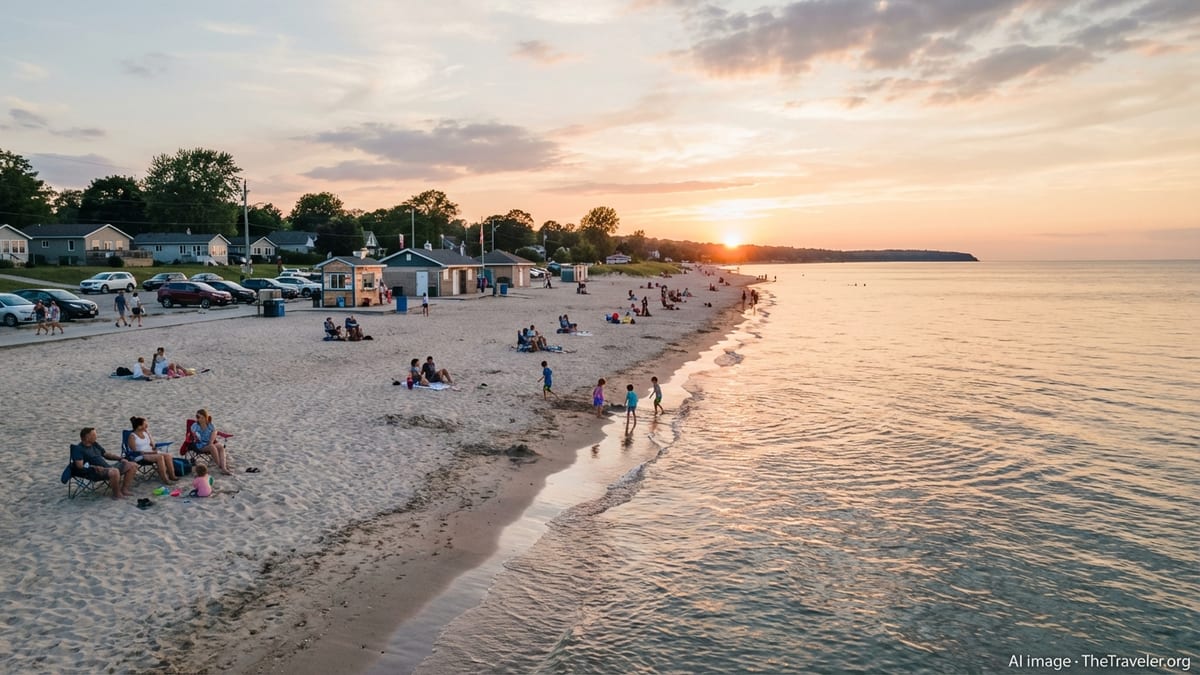
When I first reached the waterfront, I understood why people keep coming back. Port Elgin’s main beach really does have wide, pale sand and those long Lake Huron views that end in nothing but water and sky. The sunset on my first evening was as advertised: the sun dropped into the lake in slow motion, with bands of orange and pink stretching all the way across the horizon. It felt quietly spectacular, without the manufactured drama of bigger resort towns.
That said, the waterfront is clearly in the middle of a makeover. The municipal plans for what is called Cedar Crescent Village, a year-round beachfront complex with restaurants and shops, are ambitious, and during my visit that translated into a patchwork of existing facilities and areas that looked like they were waiting for the next phase of development. It made the beach feel a bit disjointed. On one side, kids were building sandcastles and people were lounging in camp chairs; on another, the parking layout and temporary fencing hinted at a future that is not quite here yet.
My first surprise was that Port Elgin did not feel like a pure getaway bubble. I was always aware that I was in a growing town negotiating what kind of tourist place it wants to be. If you are expecting a perfectly polished waterfront promenade, you might be let down. If you are okay with a bit of rough edge and “in progress” energy, it is interesting to watch a beach town in transition.
The Beach Experience: Sand, Sunsets, and Some Frustrations
The main reason I came to Port Elgin was the beach, so I tried to give it a fair, unhurried test. On a warm, calm day, the shallow water really is inviting. The lake stays reasonably gentle close to shore, which made it comfortable for wading and casual swimming. The sand is not silky-fine, but it is soft enough to walk barefoot without much complaint. As beach towns in Ontario go, Port Elgin holds its own.
Still, the beach experience was not flawless. Parking near the main beach was more stressful than I expected for a town this size. When the weather was good, spots filled quickly and I found myself circling a couple of times, which is not exactly the mood I wanted before going for a swim. I also found the layout slightly confusing: some areas felt pedestrian-friendly, while others were dominated by cars and felt more like an oversized parking lot that happened to end at the lake.
Facilities were a mixed bag. I appreciated having washrooms and basic services nearby, but they were utilitarian rather than pleasant. At busy times, lines formed and the spaces clearly showed their age. It did not ruin my day, but it chipped away at that fantasy of a carefree beach afternoon. I also noticed that food options right at the waterfront felt limited and somewhat generic, especially if you wanted something beyond fried fast-food staples or ice cream.
What redeemed the beach, repeatedly, were the evenings. As the crowds thinned and the sun started its evening performance, the atmosphere changed in the best possible way. Families lingered with strollers, couples walked the shoreline, and the noise of the day softened into low conversation and the sound of water. I found myself timing my days around sunset. No matter what annoyed me earlier, that view reset my mood.
Downtown & Everyday Vibe: More Practical Than Picturesque
Port Elgin’s downtown was not what I had pictured. I had imagined a compact, postcard-worthy main street with heritage storefronts and nothing but little boutiques and cafes. Instead, I found a small commercial core that mixes some independent shops and restaurants with the practical businesses locals actually need. It felt less like a curated tourist strip and more like a typical Ontario town that happens to be near an excellent lake.
On the plus side, that practicality means you are not trapped paying “resort pricing” for every little thing. I could pick up groceries, grab a coffee that was not part of a chain, and find hardware-store odds and ends without a problem. On the downside, if you go in expecting a walkable, endlessly charming downtown with a strong sense of place, you may leave underwhelmed. A few streets are pleasant to stroll and have some character, but they do not compete with the stronger historic towns in the region.
The town’s vibe was friendlier than I expected, though not in an overly performative way. People in shops and cafes were generally warm and patient, especially when I asked basic visitor questions. At the same time, I never quite felt like I had stepped into a full-on holiday atmosphere. The presence of year-round residents, service workers, and commuters gave the place a more grounded feel. This is clearly a real community first and a tourist destination second.
One subtle frustration for me was that Port Elgin lacks a strong, cohesive “walk-about” zone where I could wander for an hour without retracing my steps or dodging traffic. Sidewalks are there, but the urban fabric is spread out in a way that nudged me back into my car more often than I wanted. If you enjoy aimless walking in compact, historic centres, you may find yourself wishing the town were more tightly knit.
Nature Beyond the Beach: MacGregor Point and Coastal Trails
One of the best surprises of my trip was how easy it was to swap the buzz of the main beach for a quieter, more natural setting. A short drive from town took me to MacGregor Point Provincial Park, a stretch of protected shoreline and forest along Lake Huron. The park offers wetlands, boardwalks, and forested trails, and it felt like a different world from the parking shuffle at the main beach. The contrast was sharp and welcome.
Hiking there, I could hear birds and wind more than road noise. Some sections of the shoreline are rugged and marshy, not the tidy, groomed beach many day-trippers might expect, and that is part of its appeal. I followed boardwalks over wetlands and stopped at viewing platforms that opened onto reeds and quiet inlets. It reminded me that Lake Huron is not only about sunsets and swimming; it is also a complex ecosystem that still has wild corners.
The only catch is that if you are not prepared, the park can feel less user-friendly than the beach in town. Trails are marked, but it helps to plan a route ahead of time rather than just wandering and hoping for the best. Some paths can be buggy or muddy depending on the season, so proper footwear and a bit of flexibility go a long way. I met a couple of casual visitors who clearly expected a manicured, urban-park experience and were surprised by how natural it actually was.
Still, I left MacGregor Point genuinely impressed. It added depth to my Port Elgin stay and gave me something more meaningful than just another afternoon of sunbathing. If you come to the area and skip the park, you are missing one of the region’s strongest assets, especially if you enjoy low-key hiking, birdwatching, or simply being near water without a soundtrack of portable speakers.
Events, Crowds, and the Reality of Peak Season
Port Elgin is not just a summer-beach-only town. It has anchored itself to a marquee event: Pumpkinfest, a fall festival that has grown into one of Ontario’s more prominent rural celebrations, complete with giant vegetable weigh-offs, a car show, midway rides, and a craft show. I did not time my visit around Pumpkinfest specifically, but I arrived close enough to see early signs of the transformation: banners, promotional posters, and conversations about schedules and shuttles.
On one hand, I respect how seriously the town takes its big weekend. The festival clearly draws tens of thousands of visitors, injects energy into the local economy, and gives Port Elgin a distinct identity beyond “that place with a nice beach.” On the other hand, if you land in town without realizing how major the event is, the crowd levels and road closures could come as a shock. It is the kind of thing you want to either fully embrace or intentionally avoid, not just stumble into unprepared.
Even outside Pumpkinfest, I found that Port Elgin is very much a peak-season destination. When the weather is good and the calendar is stacked with events, the town feels busy and occasionally crowded in a way that can be fun or frustrating depending on your tolerance. On rainy days or in the shoulder seasons, the energy drops off dramatically. Some businesses reduce hours or feel less active, and the beach obviously loses its appeal when the wind is biting.
If I were to go again, I would be more strategic about timing. I would either arrive fully ready to dive into the festival atmosphere, with patience for lineups and traffic, or choose a quieter week when the weather is still mild but the crowds have eased. My mid-range timing meant I caught hints of both worlds without fully enjoying either.
Food, Drink, and Nightlife: Manage Expectations
Food was one area where Port Elgin did not quite match my hopes. I was not expecting a Michelin-level scene, but I had imagined more variety right at the waterfront, perhaps a small cluster of restaurants and bars where I could eat with a clear view of the lake. In reality, while there are places to grab a meal or an ice cream near the beach, the options felt limited and, frankly, a bit generic for a town that markets itself as a fun, laid-back getaway.
In the broader town, the situation improved slightly. I did find some independent spots with character, as well as the inevitable collection of chains that make it easy to default to something familiar. Prices were mostly reasonable, and I did not feel gouged just because I was in a tourist area. Still, I never had that one standout meal that becomes the story you tell people later. Everything I ate ranged from acceptable to good, but nothing was truly memorable.
Nightlife, at least in the sense of bars and late-night culture, felt low-key. There are places to have a drink, and during special weekends there are themed events and pub crawls, but on an ordinary night the town winds down relatively early. For some travelers that is perfect: you get your sunset, your dinner, maybe a drink, and then you are ready to call it a night. For others, it may feel like the evenings end just when they would prefer to be going out.
If I return, I will adjust my expectations and my planning. I would focus on finding a couple of reliable, well-reviewed local spots beforehand instead of assuming I can wander and stumble into something exceptional. And I would lean into the quieter evenings rather than waiting for a nightlife scene that, for the most part, simply is not there.
Accommodation, Costs, and Practical Trade-Offs
Finding a place to stay in Port Elgin turned out to be more of a puzzle than I anticipated. There are motels, small inns, rental cottages, and short-term rentals scattered around town, but if you want to be walking distance from the water and you are arriving in high season, availability tightens quickly and prices reflect that. I left booking slightly later than I should have and ended up in a place that was functional but uninspiring.
My room was clean and the staff were polite, which matters more to me than decor, but the experience did not match the relaxed, coastal feel I imagined. The property was close to a main road and the view was of a parking lot, not the lake. The room rate, while not extreme by summer-resort standards, felt a bit high for what I actually got. It was a reminder that in any popular waterfront town, you are often paying for proximity as much as for quality.
One surprise was how quickly little things added up. Parking costs, extra snacks, a couple of mid-range dinners, and small admission fees nudged my daily spend higher than I expected for a modest getaway. Nothing felt shockingly overpriced in isolation, but as with many seasonal destinations, it is easy to underestimate your total budget if you only think in terms of the room rate.
If I did this trip again, I would book farther in advance and look harder at places a bit farther from the beach, where you can sometimes get better value and accept a short drive in exchange for more space or a quieter setting. I would also factor in that Port Elgin is a place where you are likely to use your car daily, and build that into both time and fuel costs, rather than fantasizing about a fully walkable escape.
The Takeaway: Who Port Elgin Is Really For
By the time I left Port Elgin, my feelings were mixed but generally positive. The town did not deliver the seamless, charming beach escape I had vaguely imagined, yet it offered enough genuine moments that I was glad I went. The sunsets alone were worth the trip. Watching the sky melt into layers of color over Lake Huron, I understood why people return year after year and why the town is investing so heavily in its waterfront.
Port Elgin is at its best if you like a straightforward, unfussy beach experience and do not mind a town that feels more lived-in than curated. It suits families who want sand and shallow water, couples who value quiet evenings over nightlife, and travelers who are just as interested in a nearby provincial park as they are in boardwalk snacks. It is less ideal if you crave a perfectly walkable, historic downtown with a strong dining scene or if you dislike seeing construction and transition along your main holiday strip.
If you decide to go, I would suggest setting realistic expectations. Do not picture a flawless resort village; picture a friendly, evolving community on the shore of Lake Huron with a good beach, important seasonal festivals, and access to real nature a short drive away. Go for the sunsets, the low-key days in the sand, and a side trip to MacGregor Point. Accept that parking, crowds in peak season, and somewhat ordinary food options are part of the deal.
Would I return? Yes, but I would plan differently: book earlier, choose dates more carefully, and build my stay around both the beach and the park rather than expecting the town itself to provide endless entertainment. Under those conditions, Port Elgin becomes a worthwhile, if imperfect, place to unwind.
FAQ
Q1. Is Port Elgin worth visiting if I only have a weekend?
Yes, a weekend is enough to get a good feel for Port Elgin. You can spend one full day at the main beach and another exploring nearby MacGregor Point Provincial Park or wandering the town. Just be aware that on peak summer weekends or during major events, you will spend more time dealing with traffic and parking than you might expect for a small town.
Q2. When is the best time to visit Port Elgin?
The sweet spot is late spring to early fall, with July and August offering the warmest beach weather. If you prefer fewer crowds, consider June or early September, when the lake can still be pleasant but families are less likely to be on holiday. If you are interested in the Pumpkinfest atmosphere, the early October festival weekend can be lively, but you need to plan for heavier traffic and higher demand for accommodation.
Q3. Is Port Elgin good for families with young children?
Yes, especially because of the shallow water and sandy areas at the main beach. Children can wade and play near the shoreline without immediately getting into deep water, and there are parks and family-friendly activities in town and nearby. The trade-off is that on busy days the beach can feel crowded and parking can be stressful, so families may want to arrive earlier in the day.
Q4. Do I need a car to enjoy Port Elgin?
Realistically, yes. While you can walk some parts of town and the waterfront, many of the area’s highlights, including MacGregor Point Provincial Park and more remote stretches of shoreline, are easier to access by car. The town layout is spread out enough that relying solely on walking can feel limiting, especially if your accommodation is not right at the beach.
Q5. How does Port Elgin’s beach compare to other Ontario beach towns?
Port Elgin’s main beach holds its own for sand quality, sunsets, and shallow swimming areas. Where it falls a bit short is in the polish and cohesion of its waterfront amenities compared with some better-known resort towns. If you value simplicity and fewer high-rise developments, you may find it appealing; if you are looking for a bustling boardwalk and a dense strip of restaurants and bars, you might find it modest.
Q6. Is there much to do on a rainy day in Port Elgin?
Rainy days are not Port Elgin’s strong suit. You can still visit cafes, browse local shops, or drive to nearby communities for more options, but the town’s main appeal is outdoors. If the weather looks unsettled, it is worth planning a backup itinerary that might include short drives to museums or indoor attractions in the broader region.
Q7. What should I budget for a short stay in Port Elgin?
Costs vary by season, but you should expect accommodation rates to climb in summer and during major events. On top of that, factor in meals, parking, fuel, and small extras like ice cream or attraction fees. While Port Elgin is not the most expensive destination in Ontario, it is easy for a modest getaway to add up if you do not keep an eye on daily spending.
Q8. Is Port Elgin suitable for solo travelers?
Yes, as long as you are comfortable with a quieter, low-key atmosphere. Solo travelers who enjoy reading on the beach, walking in nature, and exploring small towns will find enough to do for a couple of days. If you are seeking nightlife or a strong social scene geared toward meeting other travelers, you may find Port Elgin a bit too subdued.
Q9. How accessible is the waterfront for people with mobility issues?
There are paved areas, parking near the beach, and some infrastructure intended to improve access, but the experience is not seamless. Sand, uneven ground, and the spread-out nature of facilities can pose challenges. If mobility is a concern, it is worth contacting local tourism or municipal offices in advance to confirm current accessibility features and any seasonal changes.
Q10. Would I visit Port Elgin again?
I would, but with adjusted expectations and better planning. I would choose dates to either fully enjoy the busy festival or avoid it, book accommodation earlier and possibly a bit farther from the water, and plan around both the beach and nearby nature areas. With those adjustments, I think Port Elgin can deliver a relaxed, satisfying escape, even if it is not a perfectly polished resort town.