

More news on this day
Hundreds of international travelers in Cape Town, Rio de Janeiro, Montreal, and Lisbon were left in confusion and frustration today as a fresh wave of operational disruption at Washington Dulles International Airport led to 149 flight delays and 80 cancellations, scrambling long-haul itineraries across four continents.
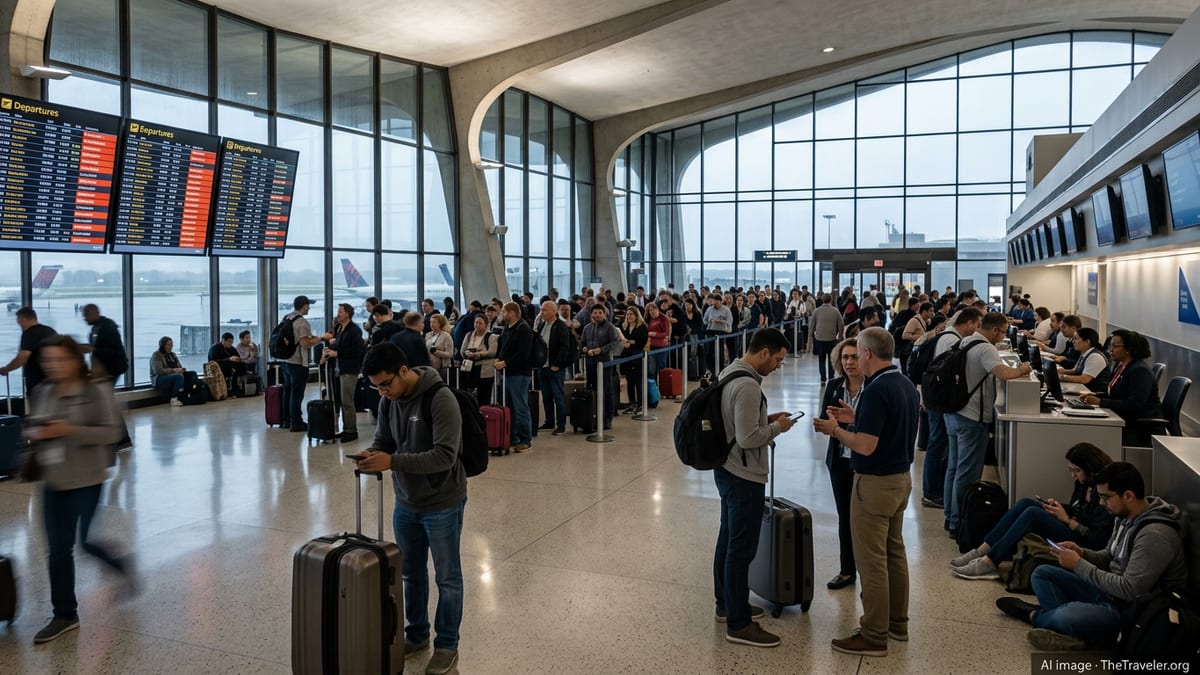
Disruptions at a Key Global Hub Ripple Worldwide
Operational disruption at Washington Dulles, one of the major Atlantic gateways for United States air travel, quickly spiraled into an international problem as delayed departures and last-minute cancellations broke carefully timed connection chains. Flights that were due to carry passengers onward to and from South Africa, Brazil, Canada, and Portugal were suddenly subject to rolling schedule changes, forcing travelers and airlines into a scramble for alternatives.
Airlines using Dulles as a connecting hub rely on tightly coordinated banks of arrivals and departures. Once those banks are disrupted, downline flights often depart with dozens of empty seats while connecting passengers remain stranded elsewhere, or they are held on the ground to wait for late inbound aircraft and crew. The pattern was visible across several major carriers, with aircraft and staff out of position and recovery plans still evolving through the afternoon.
By early evening, airport departure boards at Dulles showed rows of delayed services, alongside canceled flights that had been repeatedly pushed back before being removed from the schedule. For passengers already airborne on long-haul legs from cities such as Cape Town and Rio de Janeiro, the cascading impact was only apparent after landing, when they discovered missed connections, overnight layovers, or diversions to alternative hubs.
Industry analysts note that Dulles, serving the wider Washington metropolitan area, has seen a steady increase in long-haul and transatlantic capacity, making any large disruption there unusually far-reaching. Even a few dozen canceled flights can translate into thousands of disrupted journeys when complex international itineraries are involved.
Confusion From Cape Town to Montreal as Plans Collapse
At Cape Town International Airport, where evening departures connect to North America via a web of European and Gulf hubs as well as direct seasonal services, check-in counters grew increasingly tense as news filtered in about extensive disruption at Washington Dulles. Passengers bound for the United States and beyond reported receiving conflicting messages from airline apps, email alerts, and gate announcements as automated systems struggled to keep up with fast-moving changes.
In Rio de Janeiro, travelers aiming to connect through Dulles onto domestic U.S. and transborder Canadian flights found themselves rebooked at short notice onto alternative routings via hubs such as Houston, Newark, or Miami. For some, this meant the loss of carefully chosen itineraries with short daytime connections, replaced by red-eye flights, extended overnight stays, or transfers through unfamiliar airports.
At Montreal-Trudeau, one of Canada’s key international gateways, the knock-on effects were visible in both directions. Northbound passengers returning from the United States via Dulles encountered missed connections onto regional Canadian services, while southbound travelers were advised to accept routings through other U.S. hubs or to postpone trips altogether. Airline staff reported heavy queues at customer service desks and premium lounges as passengers sought clarity on their options.
In Lisbon, where Dulles-bound services form part of a broader transatlantic network, departure gate agents fielded repeated questions about whether connecting flights in Washington would operate as scheduled. Some passengers chose to travel as planned and take their chances on rebooking upon arrival, while others opted to push back departures by a day in the hope that operations at Dulles would stabilize.
Inside the Numbers: 149 Delays and 80 Cancellations
The latest operational snapshot from Washington Dulles showed 149 delayed flights and 80 outright cancellations across domestic and international services. While these figures represent only a fraction of the airport’s daily movements, the concentration of disruptions within key connection banks amplified their impact on global itineraries.
Delays ranged from modest schedule slippages of 30 to 45 minutes to severe cases stretching beyond three hours. In a growing number of instances, repeated rolling delays were followed by last-minute cancellations once aircraft or crew timing limits were reached. Such patterns are particularly disruptive for long-haul travelers, many of whom require at least one additional connection to reach their final destination.
The disruption cut across multiple carriers operating at Dulles, affecting everything from high-frequency shuttle routes to major long-haul services linking Washington to Europe, Africa, and South America. While airlines moved to consolidate lightly booked departures and protect the most heavily used routes, the resulting schedule reshuffle created new pockets of confusion for passengers trying to interpret changing departure times.
Airport operations teams at Dulles continued to adjust gate assignments and ramp usage in real time to cope with the irregular flow of aircraft. Ground handlers reported periods of relative calm punctuated by sudden surges of activity as delayed flights arrived in clusters, further complicating efforts to return to a normal operating rhythm.
Travelers Scramble for Alternatives and Overnight Beds
For affected passengers, the immediate challenge was less about understanding the scale of the problem and more about finding practical solutions. With 80 flights canceled, hotel rooms in the vicinity of Washington Dulles and in key connecting cities quickly became scarce, pushing some travelers to book accommodation far from the airport and rely on ride-hailing services or limited late-night public transport.
At the same time, airline call centers and digital channels came under intense pressure. High hold times were reported on customer service lines as travelers sought to secure scarce seats on remaining flights, while mobile apps and websites intermittently struggled to display up-to-date information. In airport terminals from Montreal to Lisbon, many passengers resorted to lining up at service counters, hoping that face-to-face conversations might yield faster solutions than overburdened digital tools.
Families traveling with children and older passengers were particularly hard hit, as rebooked itineraries sometimes required long overnight waits or multiple additional connections. Some travelers described being offered routings that involved zigzagging across the continent or backtracking through hubs they had deliberately avoided when booking their original tickets, highlighting the limited flexibility left in the system once large-scale disruption takes hold.
Despite the frustration, airport staff and front-line airline employees in all four affected cities were seen distributing meal vouchers, handing out bottled water, and helping passengers rebook. However, the sheer volume of disrupted itineraries meant that many travelers still faced extended uncertainty about when they would finally depart or arrive.
What Passengers Should Do as the Situation Evolves
With operations at Washington Dulles still in recovery mode, travel experts are urging passengers with upcoming flights via the airport to take a proactive approach. The first step, they say, is to monitor flight status frequently using both airline apps and departure boards, paying close attention to any gate changes or creeping delays that could jeopardize tight connections.
Passengers whose itineraries depend on a same-day connection at Dulles are being advised to consider earlier first legs where possible, creating additional buffer time, or to discuss re-routing options through alternative hubs with their airlines. In cases where flights have already been canceled, travelers may be eligible for refunds or rebooking at no additional cost, subject to each carrier’s policies and applicable consumer protection rules.
Travelers stranded in origin cities such as Cape Town, Rio de Janeiro, Montreal, or Lisbon are also encouraged to contact airlines before heading to the airport if their connecting flight at Dulles appears significantly delayed or canceled. Securing an alternative plan while still at home or in a hotel, rather than after check-in, can reduce time spent queuing at crowded service desks and increase the odds of finding an acceptable new itinerary.
As airlines work to realign aircraft and crews over the coming hours and days, further schedule changes remain possible, especially on routes involving complex international connections. For now, passengers across four continents continue to watch the situation at Washington Dulles closely, hoping that the latest wave of disruption will subside before their travel plans are once again thrown into disarray.