

More news on this day
International Airlines Group has surged to the top of Europe’s airline league table in 2025, reporting record profits and widening its lead over Air France-KLM and Lufthansa even as wars, trade tensions and route disruptions weigh on global aviation.
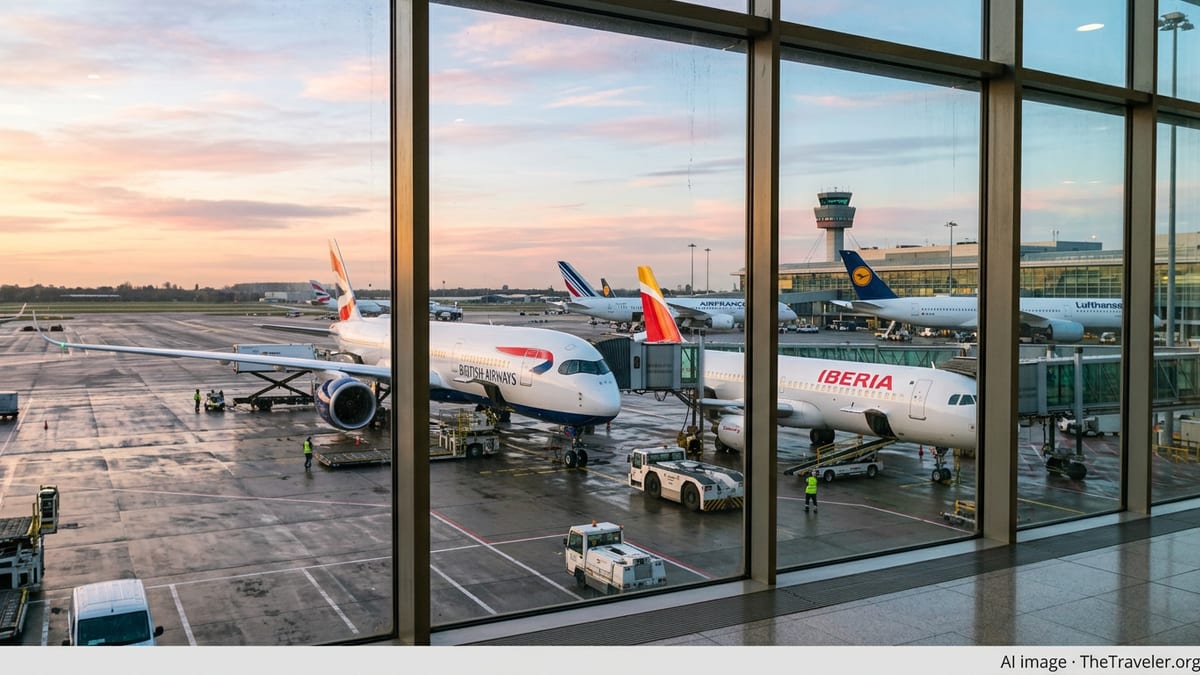
IAG’s Record 2025 Results Put It Ahead of European Rivals
International Airlines Group, the parent of British Airways, Iberia, Aer Lingus and Vueling, has reported its strongest financial performance since the pandemic, cementing its position as Europe’s most profitable airline group. For the year to 31 December 2025, IAG delivered operating profit before exceptional items of just over €5 billion, up about 13 percent year on year and building on a robust 2024. That translated into an operating margin north of 15 percent, a level that rivals in the region have yet to match.
The results extend a trend already apparent in 2024, when IAG’s profitability and cash generation began to outpace peers. Management has pointed to disciplined capacity deployment, a focus on premium long haul markets such as North Atlantic and Latin America, and the contribution of high-margin units like IAG Loyalty and IAG Cargo as key drivers. Net cash from operations remained strong, helping the group reduce leverage and restore shareholder distributions after the pandemic-era freeze.
Analysts say the scale of the 2025 outperformance matters. IAG enters 2026 with more financial firepower to invest in fleet renewal, lounges and digital systems, while retaining the flexibility to withstand shocks from oil prices or demand swings. That stands in contrast to some Continental competitors still working through cost inflation, labor disputes and balance sheet repair.
Air France-KLM and Lufthansa Improve, But Trail IAG on Margins
Air France-KLM and Lufthansa Group both posted improved results for 2025, yet their profitability remained a step behind IAG’s, underscoring diverging fortunes among Europe’s big three flag-carrier groups. Lufthansa reported record revenue of around €39.6 billion and an adjusted operating profit of roughly €2 billion, yielding an operating margin just under 5 percent. The German group benefited from strong demand across Europe and North America and better unit revenues, but margins are still constrained by cost pressures and the lingering impact of 2024 strikes.
Air France-KLM, for its part, has delivered modest earnings growth off a much thinner margin base. The group previously reported a 2024 operating result of about €1.6 billion with a margin just above 5 percent and has since been wrestling with higher French aviation taxes, airport fee increases and labor costs. While Air France’s premium network has held up relatively well, KLM has been hit by congestion and regulatory constraints at Amsterdam Schiphol as well as weak cargo revenues, all of which crimp earnings.
Investors and industry observers note that these financial gaps shape strategy. Lufthansa is pushing hard on restructuring, including plans to trim thousands of administrative roles by 2030 and to lift midterm margins through automation and fleet modernization. Air France-KLM is leaning into partnerships and equity stakes, such as its increasing involvement in SAS and its interest in the partial privatization of TAP Air Portugal, to expand reach and defend key hubs. But both groups still lack the consistently double-digit margins that now characterize IAG’s performance.
Geopolitical Tensions Reshape Routes and Cost Structures
IAG’s profits have risen against a backdrop of mounting geopolitical challenges that have forced airlines worldwide to redraw route maps and assume higher costs. Conflicts in the Middle East and Ukraine, along with Red Sea security risks, have led carriers to reroute some Asia-bound services away from traditional corridors, adding flight time, fuel burn and crew expenses. Insurance premiums and security costs have also climbed, while sanctions continue to limit access to certain markets and overflight zones.
European groups remain highly exposed to these shifts because of their role as connectors between North America, Europe, Africa and Asia. Lufthansa, with its large exposure to Central and Eastern Europe and the Middle East, has warned that its 2026 outlook is clouded by regional tensions and potential demand weakness, even after an earnings beat for 2025. Air France-KLM has highlighted the impact of new or higher ticket taxes in core home markets and changing travel patterns after an unusually warm northern European summer, which dampened some leisure flows to the Mediterranean.
By comparison, IAG has benefited from a network weighted toward transatlantic and South Atlantic routes that have remained resilient and in some cases capacity constrained. Strong demand from North America to southern Europe and Latin America through hubs in London and Madrid has allowed the group to sustain high load factors and premium yields. That geographic mix does not insulate IAG from global shocks, but it has provided a buffer as other corridors become harder to operate profitably.
Capacity Discipline and Ancillary Businesses Boost IAG’s Edge
Beyond network geography, IAG’s relative outperformance reflects a strategy built around tight capacity discipline and diversified earnings streams. Since demand rebounded from the pandemic, the group has been cautious about adding seats on competitive intra-European routes, focusing instead on higher-yield long haul services and carefully timed seasonal capacity to leisure destinations. That approach has helped protect fares even as low cost rivals pour capacity back into sun markets.
Ancillary and non-flight businesses have become another pillar of IAG’s profit story. The IAG Loyalty program, which includes the British Airways Executive Club and Iberia Plus, continues to post high-margin growth as co-branded credit cards and points sales expand in the United Kingdom, Spain and key international markets. IAG Cargo, meanwhile, has stabilized after the post-pandemic airfreight correction, with 2025 revenue driven by strong flows from Latin America into Europe and a focus on premium products.
The combination of robust core flying profits and these additional revenue streams has given IAG more resilience than peers whose earnings are still dominated by point-to-point passenger traffic. As global uncertainty persists, investors are rewarding business models that can generate cash even when specific routes or regions come under pressure.
What It Means for Travelers and the Outlook to 2026
For travelers, IAG’s financial strength is likely to translate into continued investment in premium cabins, lounges and digital services on routes touching London Heathrow, Madrid-Barajas and Dublin. The group has already been rolling out new long haul business class products and refreshed short haul cabins, betting that demand for comfort and flexibility will remain robust among both leisure and corporate customers despite economic jitters.
On fares, the picture is more mixed. Strong demand and capacity discipline on transatlantic and popular leisure routes give all three groups room to hold pricing, especially during peaks. While competitive pressure from low cost carriers and Gulf and US rivals will cap some increases, geopolitical rerouting, higher taxes and labor settlements across Europe are likely to keep a floor under ticket prices in 2025 and into 2026.
Looking ahead, the key question is whether IAG can maintain its lead as the cycle matures and geopolitical risks evolve. The group plans only modest capacity growth of around low single digits in 2026, emphasizing margin protection and free cash flow generation over rapid expansion. Lufthansa and Air France-KLM, meanwhile, are under pressure to close the profitability gap through restructuring, partnerships and selective growth.
For now, though, the balance of power in European aviation is clear. Despite operating in one of the most volatile geopolitical and regulatory environments in decades, IAG has emerged as the region’s profit leader, reshaping competitive dynamics across key long haul and intra-European markets and setting a high bar that its rivals will struggle to match in the year ahead.