

More news on this day
The International Air Transport Association’s newly released 2025 assessments paint a picture of an industry that is safer and more profitable, yet increasingly constrained by airport infrastructure gaps and a shifting risk landscape that could test the resilience of global air travel in the years ahead.
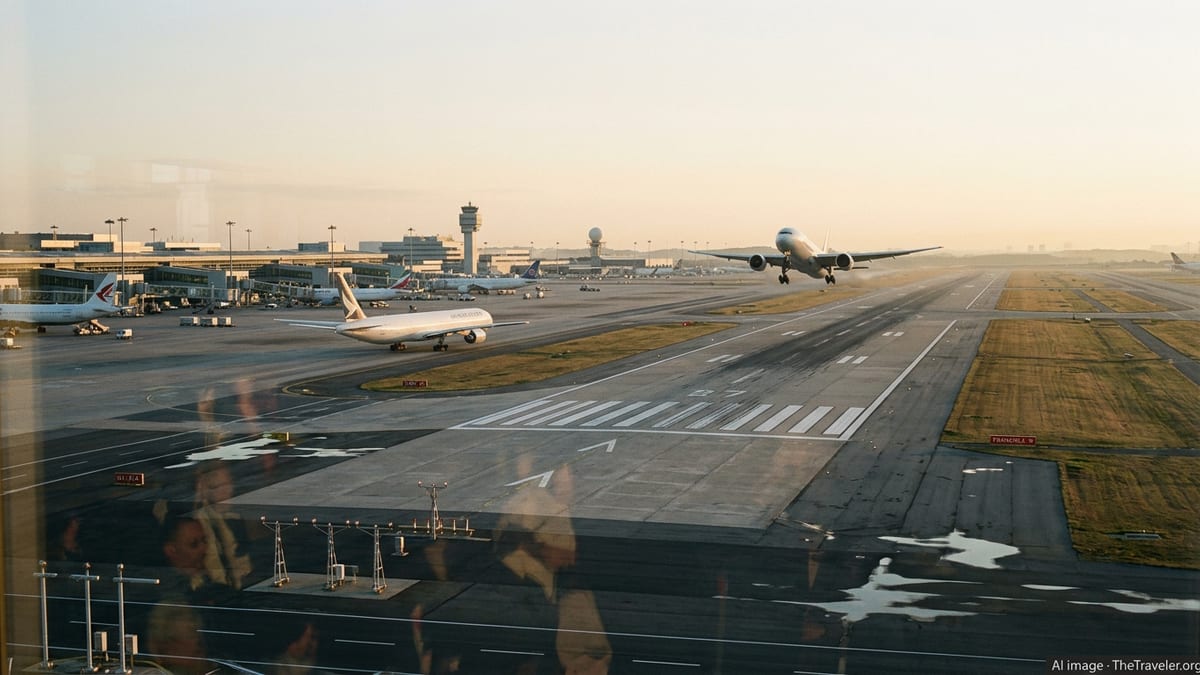
Safety Metrics Improve but Fatal Risks Concentrate
IATA’s 2025 Annual Safety Report shows that commercial aviation remains one of the safest modes of transport, with the overall accident rate per million flights continuing its long-term downward trend. The report highlights that accidents remain extremely rare relative to the roughly 40 million flights operated worldwide each year, underscoring the effectiveness of data-driven safety programs and global standards.
Yet beneath the positive headline figures lies a more complex story. IATA notes that the fatality risk indicator, which measures the potential for loss of life per million flights, rose compared with both 2024 and the five-year average. A small number of catastrophic events, including large passenger jet crashes that each caused more than 60 fatalities, accounted for the vast majority of deaths in 2025, concentrating risk in a handful of severe accidents rather than a wider pattern of smaller events.
IATA attributes much of the improved baseline safety performance to its operational audit programs, including the IATA Operational Safety Audit, where member airlines significantly outperform non-member and non-audited carriers on accident rates. The organization stresses, however, that strong airline-level performance cannot fully offset weaknesses elsewhere in the aviation system, particularly at airports and in ground infrastructure that fall short of international standards.
Safety specialists within IATA warn that as traffic continues to grow back beyond pre-pandemic levels, the challenge is shifting from preventing traditional operational accidents to managing more complex and interconnected risks. These range from runway overruns on constrained airfields to cyber incidents that could disrupt critical airport and air traffic systems.
Airport Infrastructure Under Scrutiny
One of the most pointed findings in IATA’s 2025 safety analysis is the role of airport infrastructure in accident outcomes. The association reports that airport-related factors, including runway surfaces, safety areas and obstacles near runways, contributed to roughly one in six accidents worldwide in 2025, a proportion that it says is unacceptably high for a mature global industry.
Investigations cited by IATA show cases in which rigid structures close to runways, inadequate runway end safety areas and poor surface conditions appear to have turned otherwise survivable overruns or veer-offs into far more serious events. The report calls on regulators and airport operators to re-examine compliance with global runway safety criteria, including obstacle-free zones, frangible installations and proper drainage to reduce standing water and contamination.
The physical constraints of many legacy airports, especially those hemmed in by urban development or challenging terrain, are increasingly apparent as traffic rebounds. Some airports have embarked on major runway and taxiway upgrade programs, including the installation of engineered arrestor beds and resurfacing to cope with heavier and more frequent aircraft movements. Others, particularly in emerging markets where demand is surging fastest, are struggling to finance and deliver capacity and safety upgrades in time.
Regional disparities are becoming more pronounced. While hubs in North America, Europe and parts of the Middle East are moving ahead with multi-billion-dollar airfield modernizations, IATA and other industry bodies continue to flag significant infrastructure gaps across parts of Africa, South Asia and smaller island states. These gaps can limit connectivity, create operational bottlenecks and, in some cases, pose elevated safety risks when basic runway and lighting standards are not consistently met.
Financial Outlook Balances Profitability and Capacity Limits
Complementing the safety findings, IATA’s latest financial outlook for 2025 shows airlines on track for another year of aggregate profitability, with net margins in the low single digits. The association estimates industry net profit in the tens of billions of dollars on revenues approaching one trillion, reflecting solid demand, disciplined capacity management and relatively benign fuel prices compared with earlier in the decade.
However, IATA warns that the benefits of this financial recovery risk being eroded by inefficiencies and higher costs tied to outdated or underbuilt infrastructure. Airport charges, air navigation fees and the expense of operating around bottlenecks and airspace closures continue to weigh on airline balance sheets. Airlines increasingly complain that they are paying more for facilities that often fail to deliver the punctuality, resilience and passenger experience that travelers expect.
Capacity limits at key hubs are also reshaping network planning. Slot-constrained airports in Europe, North America and parts of Asia are forcing carriers to prioritize higher-yield routes and larger aircraft, while some secondary airports struggle to attract enough traffic to justify expansion projects. IATA reiterates its longstanding view that infrastructure development must be guided by transparent economic regulation and close consultation between airports, governments and airlines to avoid both underinvestment and overbuilding.
Looking beyond 2025, the association sees a narrow path between maintaining healthy profitability and funding the next generation of upgrades in runway systems, terminals and digital air traffic management. Without coordinated investment, IATA argues, the risk grows that future demand will outstrip safe and efficient capacity, leading to increased delays, higher fares and more stress on already stretched facilities.
Emerging Risks: Weather, Cyber and Navigation Disruptions
Alongside traditional accident metrics, IATA’s 2025 reporting and its separate annual security review devote growing attention to systemic risks that could disrupt airport operations or undermine safety margins without necessarily resulting in classic accidents. Chief among these are extreme weather events, navigation signal interference, geopolitical airspace closures and cyberattacks on aviation infrastructure.
The association notes that climate-related disruptions, from intense storms to heatwaves, are already forcing major schedule adjustments at airports worldwide. Heavy rainfall and flooding can compromise runway friction and drainage, while extreme heat can reduce aircraft performance, especially at high-altitude or short-runway airports, leading to payload restrictions and diversions that strain network resilience.
Signal interference, including deliberate and accidental disruptions to satellite-based navigation systems, remains a growing concern in several regions. IATA has documented an uptick in reported incidents involving degraded or misleading GPS data near key air corridors and airports, prompting contingency procedures and, in some cases, reversion to conventional navigation and surveillance methods. These events can increase controller workload, complicate approaches and departures and add to fuel burn and emissions.
Cybersecurity is another focus of IATA’s 2025 security analysis, which highlights the growing digitalization of airport and airline operations, from baggage systems to airfield lighting, passenger processing and air traffic control support tools. While the industry has so far avoided a major safety event directly linked to cyber compromise, the association stresses that the potential consequences of a coordinated attack on airport systems could be severe, and urges continued investment in detection, resilience and incident response capabilities.
Regulators and Industry Seek Coordinated Responses
Against this backdrop, regulators and industry bodies are seeking new ways to align safety, infrastructure and financial policy. IATA emphasizes that aviation’s safety record has historically improved fastest when governments, airports and airlines collaborate on data sharing and common standards rather than pursuing fragmented national approaches or short-term revenue goals.
Recent moves by national authorities to update airport compliance manuals, strengthen safety management system requirements for larger airports and review runway safety areas are broadly welcomed by airlines. At the same time, carriers warn that regulatory changes must be matched by realistic timelines and funding mechanisms, especially for smaller or state-owned airports that lack easy access to capital markets.
IATA is using its 2025 findings to argue for a more strategic approach to airport investment, prioritizing critical safety-related works such as runway rehabilitation, obstacle removal, drainage and navigation aids ahead of purely commercial terminal expansions. It also advocates accelerating modernization of air traffic management, including more flexible use of airspace and better integration of real-time data to optimize flows into constrained hubs.
For travelers, the near-term outlook remains reassuring in one key respect: flying continues to be extraordinarily safe by any statistical measure. But the 2025 reports make clear that maintaining and improving that record will require more than incremental change. As traffic grows and pressures on infrastructure mount, the aviation system’s ability to anticipate and manage emerging risks around airports may determine whether today’s gains in safety and reliability can be sustained through the next decade of global travel growth.