

More news on this day
Global air travel is on course for another transformational surge, with new long-term projections from the International Air Transport Association indicating that annual passenger numbers could more than double by 2050, even as the industry pursues an ambitious net zero emissions goal.
Get the latest news straight to your inbox!
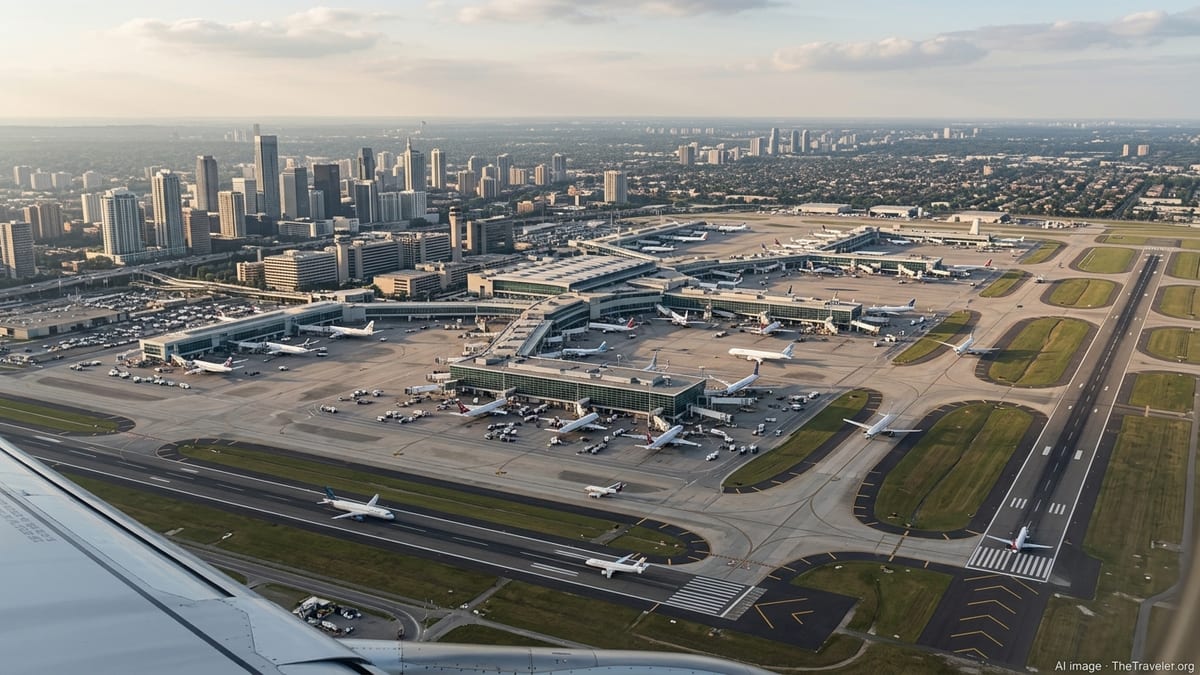
New IATA Projections Signal Historic Growth Curve
The latest long-term passenger demand projections released by the International Air Transport Association in early 2026 outline one of the most dramatic growth curves in commercial aviation’s history. Publicly available material referencing the forecast suggests that total air passenger journeys could rise from roughly 9.5 billion in 2024 to around 22 billion by 2050, implying that the number of trips taken by air each year will more than double in just over a quarter of a century.
This growth is broadly consistent with earlier traffic outlooks from industry and intergovernmental bodies that anticipated air passenger demand tripling between 2015 and 2050 when measured in passenger-kilometres. The new IATA projections, presented as part of its long-term demand and net zero roadmaps, effectively update that picture with post-pandemic data and a revised economic backdrop, while still pointing to a structurally expanding market for global mobility.
IATA’s 20-year passenger forecast framework continues to highlight several persistent demand drivers: population growth, rising incomes in emerging markets, an expanding global middle class and the enduring preference for air travel on long and medium-haul routes. Analysis within and around the new projections also points to a strong recovery in leisure and visiting-friends-and-relatives travel, complemented by resilient premium and business segments in certain long-haul corridors.
At the same time, the association’s own commentary on industry financials underscores that this expansion is taking place in a sector where average margins remain thin and highly sensitive to fuel prices, geopolitical risk and macroeconomic cycles. That combination of booming volumes and modest profitability is shaping a more cautious, data-driven approach to fleet and network planning for the decades ahead.
Regional Shifts: Asia Leads, Mature Markets Evolve
The IATA 2050 projections imply a significant geographic rebalancing of global air travel, reinforcing trends that were already emerging before the pandemic. Previous long-term outlooks from organizations such as the OECD’s transport forum and regional air navigation bodies have underscored that Asia and the Pacific are set to account for the largest share of incremental passenger growth, driven by rising incomes, urbanization and large domestic markets in China, India and Southeast Asia.
Industry commentary around the new IATA forecast indicates that Asia is expected to consolidate its position as the world’s largest air travel market by mid-century, both in absolute passenger numbers and in passenger-kilometres flown. Domestic and intra-Asian routes are set to dominate this expansion, although long-haul links between Asian hubs and North America, Europe, the Middle East and Africa are also projected to deepen.
In Europe and North America, where air travel markets are comparatively mature, the forecast points to slower but still meaningful growth. Data referenced in public reporting for individual markets, such as the United Kingdom, suggest gains in total passengers between now and 2050, but at rates below those in many emerging economies. Within these regions, capacity growth is expected to focus on replacing older aircraft with more efficient models, optimizing networks around major hubs and selectively expanding point-to-point services.
Elsewhere, aviation stakeholders note that parts of Africa, Latin America and South Asia could see some of the fastest relative growth rates, albeit from a lower starting base. Improvements in connectivity, liberalization of air service agreements, and investment in airport infrastructure are cited as critical enablers if these regions are to capture their share of the forecast demand and avoid capacity bottlenecks.
Infrastructure, Fleet and Airspace Under Pressure
The prospect of air passenger journeys more than doubling by 2050 raises pressing questions about how global infrastructure will keep pace. Commentaries drawing on IATA’s long-term projections stress that many major hubs are already operating near capacity in peak periods, and that the combination of traffic growth and tighter environmental constraints will demand substantial investment in airports, air traffic management and ground transport links.
Airport operators and planning bodies are increasingly using IATA’s demand scenarios as reference points for decisions on new terminals, runway expansions and satellite facilities. In some regions, expansion plans have been scaled or sequenced to reflect both local political debates and the need to align with net zero commitments, including requirements for more efficient ground operations and cleaner energy sources for airport systems.
On the fleet side, aircraft manufacturers and leasing companies are aligning order books, delivery schedules and retirement profiles with traffic expectations that stretch into the 2040s and beyond. Publicly available industry analysis highlights a substantial global backlog of aircraft orders, indicating that airlines anticipate sustained demand and see fleet renewal as a key lever for improving fuel efficiency and lowering operating costs over the next two decades.
Airspace management is emerging as another potential pinch point. European forecasts to 2050, for example, show that optimizing flight paths, reducing holding patterns and deploying advanced air traffic management technologies can unlock capacity while lowering emissions per flight. Similar modernization programs in North America, Asia and the Middle East are being framed as essential complements to physical airport expansion if the system is to handle the projected volumes safely and reliably.
Net Zero 2050: Growth and Climate Goals in Tension
The same projections that point to booming passenger traffic also intensify scrutiny of aviation’s climate impact. IATA’s member airlines have committed to reaching net zero carbon emissions by 2050, a target later mirrored by governments through the International Civil Aviation Organization’s long-term aspirational goal. Industry roadmaps describe this as a challenging trajectory, particularly in a scenario where total passenger journeys continue to climb sharply.
According to IATA’s net zero documentation, sustainable aviation fuel is expected to provide the majority of the emissions reductions required by mid-century, supplemented by fleet efficiency gains, operational improvements, new propulsion technologies and market-based measures such as the global CORSIA carbon offset and reduction scheme. However, recent progress reports note that sustainable aviation fuel production remains far below levels implied in 2050 pathways, highlighting a widening gap between demand and available supply.
Analyses from independent research bodies and consultancies echo this concern, pointing out that even under optimistic assumptions about aircraft efficiency and sustainable fuel adoption, rapidly rising traffic volumes make it harder for the sector to reduce absolute emissions. Some scenarios suggest that achieving net zero while allowing demand to more than double would require aggressive policy support for sustainable fuels, large-scale carbon removals and continued advances in aircraft technology.
These tensions are already filtering into national policy debates, especially in Europe, where discussions of flight caps, taxation, and modal shifts to high-speed rail coexist with industry calls for technology-focused approaches. The IATA projections add another layer of context to those debates by quantifying the scale of expected demand and illustrating what will be required to align growth with climate commitments.
Implications for Travelers, Tourism and Destinations
For travelers and tourism economies, the projected doubling of global passenger journeys opens both opportunities and challenges. Industry and tourism board analyses suggest that more frequent flights, expanded route networks and the continued growth of low-cost carriers could improve connectivity to secondary cities and emerging destinations, spreading the benefits of visitor spending more widely than today.
Destinations that rely heavily on international tourism are likely to view the IATA 2050 outlook as supportive of long-term growth strategies, particularly in regions such as Southeast Asia, the Mediterranean and parts of the Caribbean. However, these same locations may face mounting pressure to demonstrate that future visitor growth is compatible with local climate plans, environmental protection goals and community expectations.
For individual travelers, the interplay between demand growth and climate policy could shape the cost and character of flying. Analysts note that broader adoption of sustainable aviation fuel, the potential expansion of emissions pricing and continued investment in new aircraft types are all factors that may influence ticket prices over time. At the same time, improvements in aircraft efficiency and competition on major routes may mitigate some cost increases.
As airlines, airports, governments and manufacturers digest the latest IATA demand projections, a central message emerges for the travel sector: by 2050, flying is expected to be more common, more globally distributed and more tightly bound to environmental objectives than ever before. For travelers and destinations alike, the coming decades will be defined not only by how often the world flies, but by how successfully that growth can be reconciled with the climate constraints that now frame global mobility.