

More news on this day
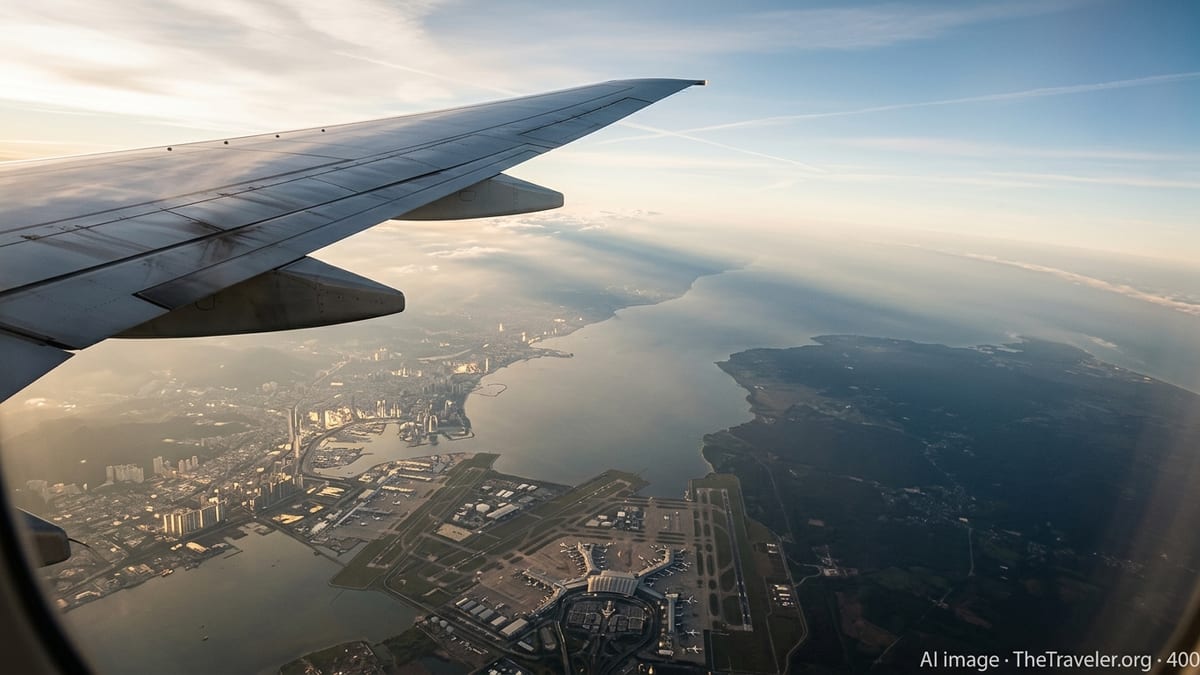
Global air travel demand is on course to double by 2050, according to recent long-term projections from the International Air Transport Association, a trend that is expected to redirect the center of gravity of world tourism toward fast-growing markets in Asia and Africa while intensifying the sector’s climate and infrastructure challenges.
Get the latest news straight to your inbox!
A Long-Term Surge in Passengers and New Tourism Flows
The latest IATA long-term air transport demand projections point to sustained traffic growth through mid-century, with global passenger volumes expected to roughly double compared with current levels. Industry and policy analyses indicate that air passenger numbers could approach three times 2019 levels by around 2050 under high-growth scenarios, driven by rising incomes, urbanization and a rapidly expanding middle class in emerging markets.
Forecasts suggest that the strongest impulse will come from the Asia Pacific region, which is already close to regaining or surpassing pre-pandemic traffic. Longer-term projections compiled by multilateral aviation bodies indicate that Asia Pacific is set to account for the largest share of incremental passengers worldwide over the next two decades, followed by Africa and the Middle East. This shift is likely to redraw global tourism routes, with more travelers originating in cities such as Delhi, Jakarta, Manila, Lagos and Nairobi.
For established destinations in Europe and North America, industry analyses point toward more diversified source markets, as tour operators and national tourism boards increasingly court visitors from emerging economies. At the same time, intra-regional tourism within Asia and within Africa is expected to expand as new city-pair connections and low-fare offerings bring shorter leisure trips within reach for millions of first-time fliers.
Asia’s Expanding Aviation Networks and Tourism Hubs
Across Asia, governments and airport operators are racing to keep pace with traffic projections that see the region outgrowing the global average. Policy papers from regional aviation forums highlight passenger growth rates for Asia Pacific that outstrip worldwide trends to at least 2040, underlining the need for new runways, terminals and air traffic management upgrades to accommodate rising demand.
Countries such as Vietnam and India are frequently cited in industry reporting as emblematic of this shift. Vietnam has set ambitious targets for airport accessibility across its territory, while India’s domestic and international markets continue to expand with new low-cost carriers and secondary city routes. Aircraft manufacturers’ market outlooks similarly anticipate that Asia will absorb the largest share of new aircraft deliveries in the coming two decades, largely to serve intra-Asian and Asia-to-Africa leisure and business travel.
Tourism strategies in the region increasingly align with these aviation plans. Coastal resort corridors in Southeast Asia, cultural circuits in South Asia and urban short-break destinations in North Asia are being promoted around improved air connectivity. Travel industry reports suggest that the combination of visa liberalization, digital visas and competitive airfares is encouraging multi-country itineraries, particularly among younger and more mobile travelers.
Africa’s Rising Connectivity and Visitor Economy Potential
Africa, long constrained by limited air links and high fares, is also projected to record some of the world’s fastest passenger growth rates through 2050. Forecasts compiled by international aviation and development agencies point to annual traffic growth in Africa that exceeds the global average, driven by demographic expansion, economic diversification and new aviation partnerships.
Flag carriers and new entrants on the continent are expanding fleets and networks to capture this opportunity. Publicly available information on major African airlines’ strategies shows plans to scale passenger numbers several-fold by the mid-2030s, backed by investments in large hub airports designed to handle tens of millions of travelers per year. Such hubs aim to channel both intercontinental flows and a growing volume of intra-African tourism.
Tourism organizations highlight strong potential in safari circuits, coastal getaways and cultural tourism, particularly as improved connectivity reduces travel times between African capitals and secondary cities. However, reports also underscore that realizing this potential will require coordinated investments in airports, ground transport and hospitality infrastructure, as well as streamlined visas, to convert projected air traffic growth into broad-based visitor economy gains.
Infrastructure, Capacity and Traveler Experience Pressures
The prospect of passenger numbers doubling by 2050 raises pressing questions about infrastructure and capacity. Aviation outlooks from regional air navigation service providers describe a need for extensive modernization of air traffic management systems to safely handle denser flight volumes, reduce delays and optimize routes for fuel efficiency.
Airport capacity is a particular concern in many Asian and African cities, where current terminals and runways already operate near saturation at peak times. Industry briefings point to large-scale expansion programs, including new terminals, satellite concourses and entirely new greenfield airports, as central to national development plans. These projects aim not only to accommodate more flights but also to upgrade the traveler experience with faster security screening, multimodal ground links and expanded retail and hospitality facilities.
Analysts note that without timely investment, the mismatch between demand and capacity could result in more congestion, higher operating costs and diminished service quality. That risk places additional pressure on regulators, investors and airport operators to align long-term planning decisions with the passenger growth trajectories signaled by IATA and other forecasting bodies.
Climate Commitments and the Sustainability Challenge
The expected doubling of air travel demand by 2050 coincides with a timeline in which the global aviation industry has publicly committed to reach net zero carbon emissions. IATA’s net zero roadmap and related analyses by think tanks and international organizations emphasize the scale of the challenge, noting that if passenger numbers grow as projected, the sector will need to mitigate or abate well over a billion tonnes of carbon dioxide annually by mid-century.
Decarbonization plans concentrate on several pillars, including efficiency gains in aircraft and flight operations, large-scale deployment of sustainable aviation fuel and, over the longer term, the introduction of new propulsion technologies. Reports on the industry’s transition scenarios suggest that sustainable aviation fuel is expected to deliver the majority of emissions reductions by 2050, although current production volumes cover only a small fraction of global jet fuel demand.
For tourism in Asia and Africa, this creates a complex backdrop. On one hand, air connectivity is a powerful enabler of economic development, employment and international exchange. On the other, rising traffic intensifies scrutiny of aviation’s climate footprint and the resilience of popular destinations to climate-related impacts. Sector observers note that how quickly policies, finance and technology scale up low-carbon solutions will influence not only the cost and availability of flights but also the long-term perception of air travel’s environmental acceptability.