

More news on this day
Iberia is set to expand its North American footprint with a new daily nonstop service between Madrid and Newark Liberty International Airport from March 29, 2026, further strengthening the airline’s presence in the New York market and broadening transatlantic options from its Spanish hub.
Get the latest news straight to your inbox!
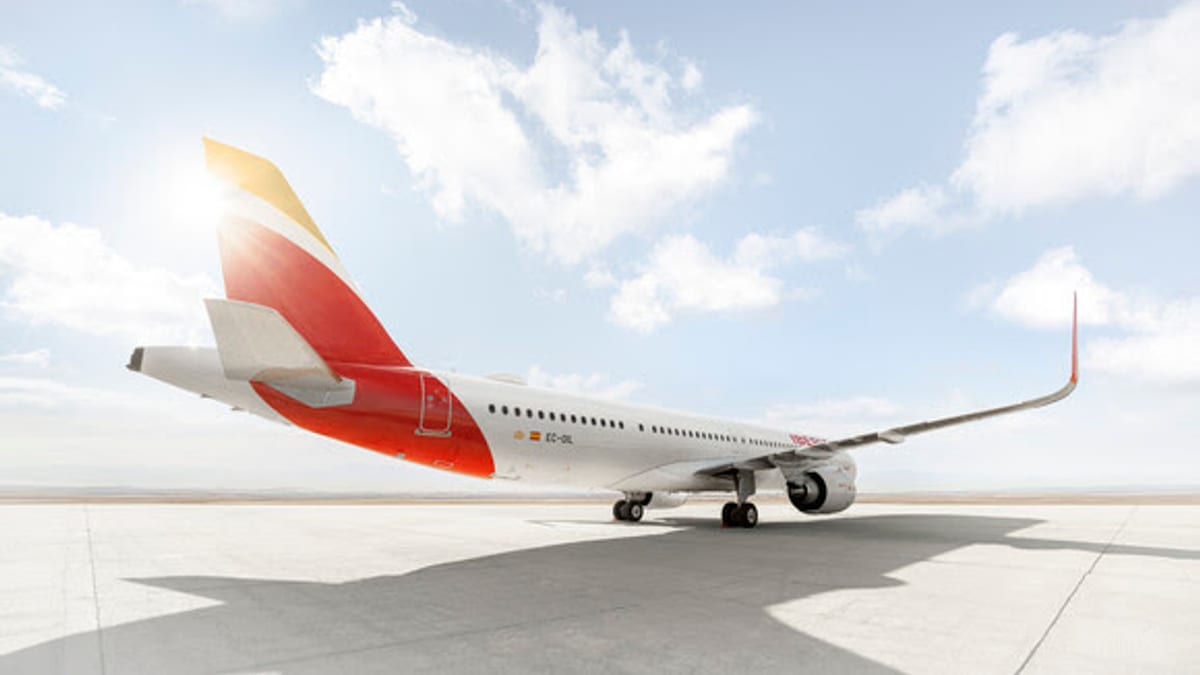
Image by Travel And Tour World
New Daily Link Between Madrid and Newark
Publicly available information shows that Iberia will inaugurate flights between Adolfo Suárez Madrid Barajas Airport and Newark Liberty International Airport on March 29, 2026, to coincide with the start of the aviation summer season. The route is planned as a daily service, adding a second direct Iberia option to the New York metropolitan area alongside the carrier’s existing Madrid to John F. Kennedy International Airport operations.
Reports indicate that the new service will increase Iberia’s overall capacity to the New York area by more than 40 percent during the 2026 summer season compared with 2025. With the additional Newark flights, the airline expects to offer more than 350,000 seats between Madrid and the greater New York region over the peak months, underlining the strategic importance of this transatlantic corridor.
The Madrid to Newark sector is scheduled at close to nine hours flying time westbound and just over seven and a half hours eastbound, according to schedule data published by industry trackers. The timings position the service to appeal to both business and leisure travelers seeking daylight arrivals and overnight returns that connect efficiently with onward flights.
Schedule filings suggest that Iberia will face competition primarily from United Airlines, which already operates a nonstop Madrid to Newark route. The additional European flag carrier presence at Newark is expected to give travelers more choice on departure times, fares, and onward connectivity on both sides of the Atlantic.
Part of Iberia’s Wider Transatlantic Growth Strategy
The Madrid to Newark launch is aligned with Iberia’s broader Flight Plan 2030 roadmap, which emphasizes long haul expansion from Madrid toward North America and Latin America. In recent seasons, the airline has added or reinforced routes such as Madrid to Orlando and several Brazilian destinations, gradually building a denser long haul network anchored at its Barajas hub.
Public documents and company presentations describe Flight Plan 2030 as a growth program aimed at consolidating Madrid as a leading European gateway to the Americas. The Newark addition fits that objective by responding to sustained demand between Spain and the United States, a market where Iberia already offers close to 2 million seats annually and around 150 weekly flights across multiple gateways.
Industry analysis suggests that focusing on New York, including both JFK and Newark, allows Iberia to tap into one of the most important transatlantic city pairs while dispersing traffic between two major airports. This dual airport strategy can help balance slot constraints, improve operational resilience, and give travelers more flexibility in choosing the airport that best matches their ground transport or accommodation plans.
At the same time, additional capacity to the New York area is seen as a way to reinforce Iberia’s position within the International Airlines Group portfolio, complementing other IAG carriers that also serve the northeastern United States. By strengthening Madrid’s role as a long haul hub, the group aims to channel more connecting traffic from Europe and beyond through the Spanish capital.
Efficient Airbus A321XLR to Operate the Route
According to published coverage and fleet information, Iberia plans to operate the Madrid to Newark flights with the Airbus A321XLR, a single aisle aircraft designed for long range missions. The model has become central to the airline’s strategy on thinner transatlantic routes where demand supports daily service but does not necessarily require a widebody’s seating capacity.
The A321XLR is configured to offer a full service long haul experience, typically including a business class cabin with lie flat seating and an economy cabin equipped with individual entertainment and power outlets. Industry reports note that its fuel efficiency and range make it attractive for routes such as Madrid to Boston, Washington, Toronto, and now Newark, where operating economics are critical to sustaining year round or seasonal daily frequencies.
Using a narrowbody aircraft on a nearly nine hour sector reflects a broader trend among European and North American airlines, many of which are deploying similar long range single aisle jets on transatlantic services. For Iberia, this approach allows it to open or reinforce routes that might be more challenging to support with larger A330 or A350 aircraft, while maintaining schedule consistency that appeals to frequent travelers.
From an environmental perspective, the choice of aircraft is also presented in public materials as a contribution to reducing per seat emissions compared with older widebody types. The combination of modern engines, optimized aerodynamics, and a cabin tailored to demand is positioned as part of Iberia’s efforts to modernize its fleet on key long haul markets.
New Connections for Spain, New York, and Beyond
The Madrid to Newark service is expected to create new travel options not only between the Spanish capital and northern New Jersey, but also for passengers connecting onward in both directions. Madrid’s role as a hub means that travelers from cities across Spain, Portugal, and much of Europe will be able to connect to Newark with a single stop, often within coordinated connection windows.
On the other side of the Atlantic, Newark offers direct access to the New York metropolitan area, including Manhattan and business centers in New Jersey, as well as onward connections across the United States and Canada on partner and interline airlines. Travel industry commentary notes that some passengers prefer Newark for its road and rail links to key corporate districts, while others view it as a convenient alternative to JFK when planning multi city itineraries.
For leisure travelers, the additional capacity is likely to support tourism flows in both directions. Visitors from the United States gain more options to reach Spain’s cultural destinations, coastal resorts, and regional cities through Madrid, while Spanish and European travelers gain a new nonstop gateway to the New York area and connecting points across North America.
Travel agencies and tour operators have highlighted in trade publications that the new route can facilitate more flexible package offerings, especially during peak summer months when demand for transatlantic travel traditionally spikes. The daily pattern gives wholesalers and corporate travel managers a predictable structure to build around, from weekend getaways to longer itineraries encompassing multiple stops.
Competitive Landscape at Newark and in the New York Market
The arrival of Iberia at Newark adds another European flag carrier to an already competitive transatlantic environment at the airport. Newark is a key hub for United Airlines, which maintains an extensive route map across Europe and already serves Madrid directly, meaning the new Iberia flights will enter a market with established demand and existing capacity.
Aviation analysts writing in sector publications note that the incremental capacity is likely to increase choice and could influence pricing dynamics on the Madrid to New York corridor. With Iberia splitting its New York capacity between JFK and Newark, and United maintaining its own services, passengers may benefit from additional fare options, loyalty program opportunities, and schedule combinations.
In the wider New York area, Iberia’s move aligns with a pattern of multiple carriers serving both JFK and Newark to capture different segments of local and connecting traffic. Some travelers prioritize alliance links or frequent flyer benefits, while others focus on ground access, immigration processing times, or the availability of specific premium services at each airport.
The decision to position Madrid as a connecting hub into Newark also feeds into broader competition among European gateways for transatlantic flows. Airports such as London Heathrow, Paris Charles de Gaulle, Frankfurt, and Amsterdam Schiphol all compete to attract passengers traveling between North America and Europe or onward to other regions. By reinforcing its New York presence, Iberia is signaling that Madrid intends to remain firmly in that contest for long haul traffic in the years leading up to 2030.