

More news on this day
Iberia is expanding its U.S. footprint for the 2025 summer season by adding Newark Liberty International Airport to its New York network, a move that helps lift the Spanish carrier’s capacity in the United States and Canada to more than 1.28 million seats.
Get the latest news straight to your inbox!
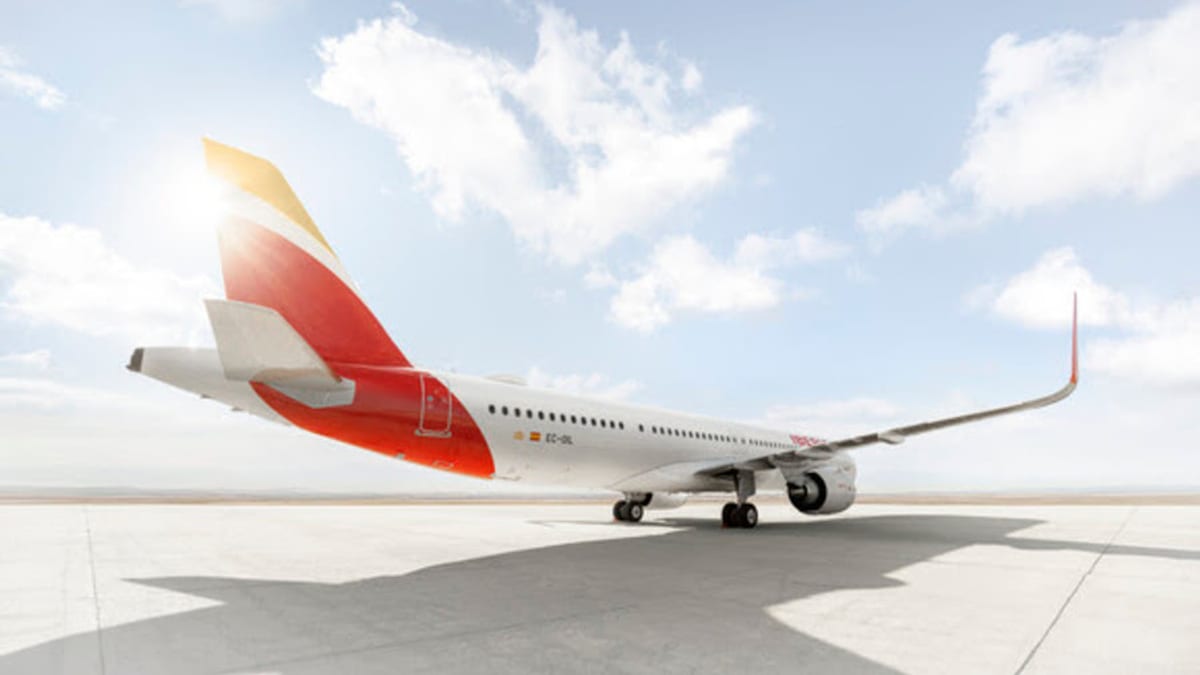
Image by Travel And Tour World
Newark Joins Iberia’s Growing New York Gateway
Publicly available information from Iberia’s latest network update shows that Newark Liberty will become the airline’s second New York–area airport alongside John F. Kennedy International. The new daily Newark service operates to Madrid and is scheduled to start from March 29, creating three daily flights between the Spanish capital and the New York metropolitan area.
The additional Newark route is designed to complement Iberia’s existing New York schedule rather than replace capacity at JFK. By offering departures from both Newark and JFK, the carrier is positioning itself to serve a wider catchment area across New Jersey, New York City, and nearby states, reflecting the region’s status as one of the most important transatlantic markets.
Industry schedules data indicates that Newark Liberty continues to attract more long haul airlines aiming to tap demand from both leisure and corporate travelers. Iberia’s entry on the Madrid route adds another European carrier into a competitive field that already includes major U.S. and transatlantic operators across the New York market.
The Newark launch also fits within Iberia’s broader strategy of offering multiple access points to Madrid from key North American cities. The airline has been steadily reinforcing its transatlantic portfolio, with particular focus on markets where one-ticket connectivity to Spain and onward to Europe, Africa, and Latin America can generate additional traffic.
More Than 1.28 Million Seats Across the U.S. and Canada
Iberia’s latest seasonal plan points to a significant uplift in its transatlantic offering, with more than 1,280,000 seats scheduled across the United States and Canada for the peak summer period. Publicly available figures indicate this represents an increase of about 19 percent compared with the previous summer season.
The growth is not limited to New York. The airline has recently invested in additional capacity to North America through a mix of new routes and higher frequencies. A new Toronto service, also planned as part of the summer buildup, and strengthened operations on existing U.S. routes contribute to the overall seat total.
Analysts note that Iberia’s expansion mirrors a wider trend among European carriers, which are adding capacity to North America as demand for transatlantic travel remains resilient. Strong inbound tourism to Spain, rising interest in city breaks, and robust visiting friends and relatives traffic are all supporting factors for the higher number of seats.
The 1.28 million seat figure also underlines the strategic importance of the U.S. and Canadian markets within Iberia’s network. These routes support premium cabin demand, cargo flows, and connections onto the airline’s extensive Latin American network from its Madrid hub.
Madrid Hub Connectivity and Fleet Deployment
By adding Newark to its transatlantic map, Iberia is reinforcing Madrid Barajas as a key connecting hub between North America and destinations in Europe, North Africa, and Latin America. The schedule is built to align with Iberia’s bank of departures from Madrid, allowing passengers arriving from Newark and JFK to connect onto onward flights with relatively short transfer times.
Network and fleet planning information suggests Iberia continues to rely on a mix of Airbus A330 widebodies and newer generation aircraft for its North American services. This mix allows the airline to match capacity and range to route performance while offering a consistent onboard product for travelers choosing between Newark and JFK departures.
For connecting passengers, the dual New York gateways can provide more itinerary options. Travelers based in New Jersey and parts of Pennsylvania, for example, may find Newark a more convenient starting point than JFK, while Manhattan and Long Island passengers retain the option of Iberia’s established presence at JFK.
The emphasis on connection-friendly timing is particularly relevant for itineraries linking North America with Latin America via Madrid. Iberia’s long established focus on Latin American destinations means that incremental seats from Newark can help feed routes to markets such as Mexico, Argentina, and Brazil through coordinated schedules.
Competitive Landscape in the Transatlantic Corridor
The move into Newark positions Iberia more directly in competition with U.S. and European carriers that already operate extensive schedules from the airport. Transatlantic services from Newark have traditionally been dominated by large U.S. network airlines, with European partners and rivals offering a combination of nonstop and seasonal routes.
Industry observers point out that Iberia’s advantage lies in its role as the main Spanish flag carrier with a strong Madrid hub and membership in a major transatlantic joint venture. The additional Newark flight feeds into a broader alliance structure that coordinates schedules and fares on key routes between North America and Europe.
The New York to Madrid market itself has long supported multiple daily services, reflecting strong business ties, tourism demand, and connecting traffic. By adding a third daily flight in the region through Newark, Iberia is signaling confidence that demand will continue to support higher capacity through the 2025 summer season.
At the same time, the airline’s capacity increase is occurring in a market where fuel costs, aircraft availability, and competitive pricing pressures remain important considerations. Industry data shows carriers are carefully balancing growth with yield management, and Iberia’s Newark entry is expected to be closely watched by competitors and analysts.
Implications for Travelers in the New York Region
For travelers, Iberia’s Newark service provides additional nonstop choice to Madrid from the New York region and a new way to access the airline’s wider network. Passengers will be able to select an airport based on convenience, schedule, and ground transport options, without sacrificing access to onward Iberia connections.
The additional flight is likely to be particularly attractive to travelers based west of the Hudson River, who can avoid the need to cross into Queens to reach JFK. The presence of Iberia at both major New York–area airports may also encourage competitive fares and broader availability across the Madrid market.
Travel planners note that the Newark route can also benefit corporate accounts with offices in northern New Jersey and Lower Manhattan, which often view Newark Liberty as their preferred international gateway. The new option adds to the mix of transatlantic capacity available to these customers alongside existing services by other carriers.
As airlines finalize their schedules for the coming peak season, Iberia’s Newark launch and its expanded 1.28 million seat transatlantic program highlight how carriers are continuing to bet on sustained demand between North America and Spain. The development reinforces Madrid’s position on the transatlantic map and gives travelers in the wider New York region another nonstop path to one of Europe’s most visited capitals.