

More news on this day
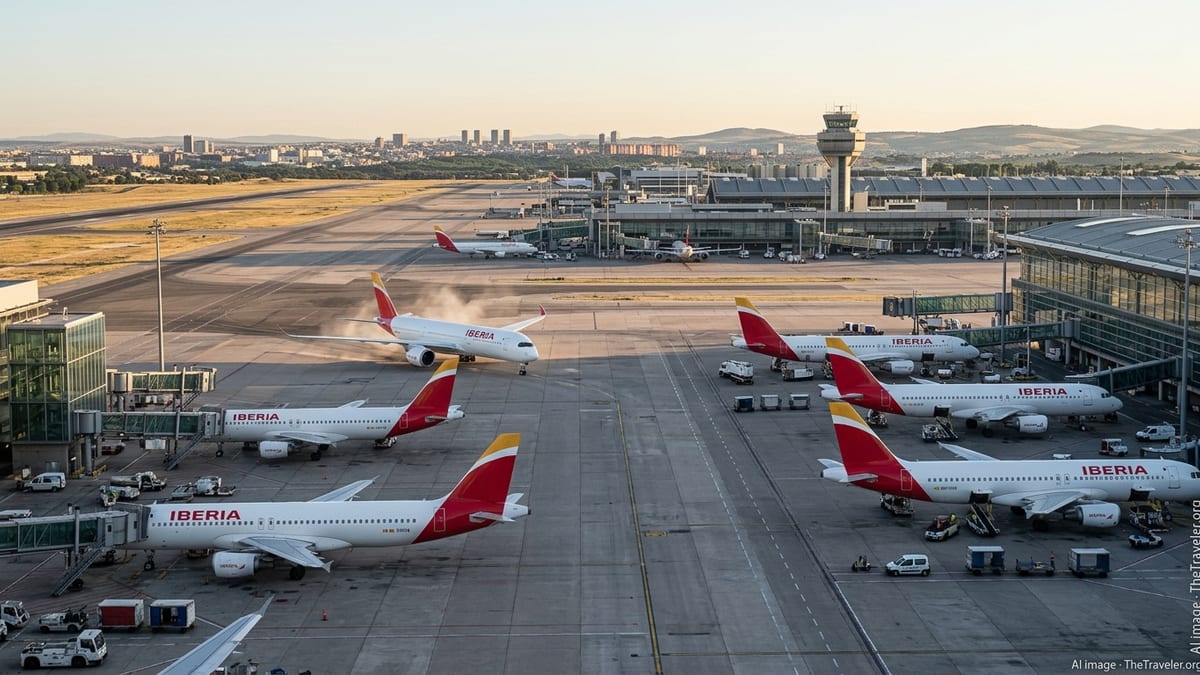
Spain’s flag carrier Iberia is gearing up for a record-breaking summer 2026, with publicly available information indicating a planned 21 million seats across its global network and an aggressive expansion of routes connecting Spain with North America, Latin America and key European cities.
Get the latest news straight to your inbox!
Historic Capacity Surge Across Iberia’s Network
The 21 million seats planned for summer 2026 would represent the largest seasonal schedule in Iberia’s history, reflecting both sustained post-pandemic recovery and a strategic push to consolidate Madrid as a leading transatlantic hub. The summer season, which in aviation terms typically runs from late March to late October, is being positioned as a showcase for the airline’s long-haul growth and new-generation aircraft.
Recent corporate presentations and network updates describe a steady ramp-up of capacity through 2024 and 2025, culminating in this record summer. Iberia’s broader Flight Plan 2030 strategy, which includes multi‑billion‑euro investment in fleet renewal and digital services, underpins the decision to deploy significantly more seats in 2026, particularly on high-demand leisure and visiting‑friends‑and‑relatives routes.
Although the 21 million figure covers the entire network, the emphasis is clearly on routes that either originate in or connect through Spain. Analysts note that Iberia’s capacity growth is closely aligned with strong inbound tourism flows into Spain and with increasing demand from both Europe and the Americas for nonstop links to Madrid and other Spanish destinations.
Transatlantic Growth: United States, Canada and Latin America
Publicly available information shows that Iberia is planning its largest-ever summer schedule to North America in 2026, with more than 1.2 million seats to the United States and Canada alone. The season is set to begin on March 29, 2026, with up to 166 weekly flights to these markets, a double‑digit increase in both seat capacity and frequency compared with summer 2025.
To the south, Iberia is also preparing a record summer program for Latin America, with more than 3.3 million seats between Europe and the region. Coverage from airline publications and industry media highlights capacity increases on core routes such as Buenos Aires, Mexico City, Lima and destinations in the Caribbean, consolidating Iberia’s status as one of the main European carriers to Latin America.
The combined effect of these transatlantic increases is a substantial rise in connectivity between Spain and major cities across the Americas. For travelers, this translates into more nonstop options from Madrid and improved opportunities for one‑stop itineraries linking North America and Latin America via Spain, especially during peak holiday months.
New and Enhanced Routes Shaping Summer 2026
Several route launches and enhancements are central to Iberia’s 21 million‑seat summer. Among the most notable is the introduction of a new Madrid–Toronto flight, scheduled to begin in June 2026 with multiple weekly frequencies. Published information indicates that this route will add tens of thousands of seats over the course of the season, strengthening Iberia’s presence in Canada and offering an additional gateway to Spain for travelers from eastern North America.
In the United States, Iberia plans to expand capacity to the New York area with the addition of a Madrid–Newark service from March 29, 2026. Aviation industry coverage describes this as a daily operation, using new long‑range narrow‑body aircraft and resulting in a sharp increase in total seats between Madrid and the New York metropolitan region during the summer period.
Beyond the Atlantic, Iberia is also enlarging its European footprint. New seasonal connections from Madrid to Bucharest and Tivat are planned for the 2026 summer timetable, complementing existing services to established leisure destinations around the Mediterranean and in northern Europe. These additions help feed long‑haul flights through Madrid while also appealing to Spain‑based travelers seeking new short‑haul options.
Fleet, Aircraft and Onboard Experience
The record seat count for summer 2026 is closely linked to Iberia’s fleet modernization program. The airline has been introducing new fuel‑efficient long‑haul aircraft and planning to expand its wide‑body and long‑range narrow‑body fleet through to 2030. These aircraft allow Iberia to open thinner long‑haul routes, such as Newark and Toronto, while maintaining or increasing capacity on trunk lines to major Latin American capitals.
Industry reports highlight that Iberia’s newer aircraft types are configured with updated cabins, including redesigned economy, premium economy and business class products. For travelers heading to or from Spain during the 2026 summer season, this may mean a higher likelihood of flying on aircraft equipped with newer seats, improved in‑flight entertainment systems and enhanced connectivity services.
At the same time, the airline has been refining its schedule to optimize aircraft utilization across time zones. The record seat deployment for summer 2026 therefore reflects not only more flights, but also more efficient use of the fleet on both daytime and overnight services, especially on long‑haul routes that connect Madrid with the Americas.
What Travelers Need to Know for Booking Summer 2026
For travelers planning trips to or from Spain in summer 2026, the expanded capacity offers several practical advantages. More seats typically translate into greater choice of departure dates and times, particularly on popular routes to cities such as New York, Miami, Mexico City, Buenos Aires and major European capitals. The addition of new destinations, including Toronto, Bucharest and Tivat, also broadens the range of itineraries that can be built around a Spanish holiday or business trip.
However, demand is expected to remain strong, especially in peak months such as July and August. Travel media and booking platforms commonly advise early planning for these periods, particularly for non‑stop long‑haul flights and for travelers seeking specific cabin classes or seat types. The record number of seats does not eliminate the seasonal peaks that characterize Iberian and Mediterranean travel.
Passengers connecting through Madrid should also factor in the hub’s growing role as a bridge between Europe and the Americas. With more banks of departures and arrivals planned during the summer schedule, minimum connection times and airport wayfinding become important considerations. While increased capacity can ease availability, it may also contribute to busier terminals at peak hours.
Overall, Iberia’s 21 million‑seat summer 2026 underscores Spain’s position as a major global travel destination and transit hub. For leisure and business travelers alike, the record schedule means more options to reach Spanish cities directly or to use Madrid as a convenient connection point between continents.