

More news on this day
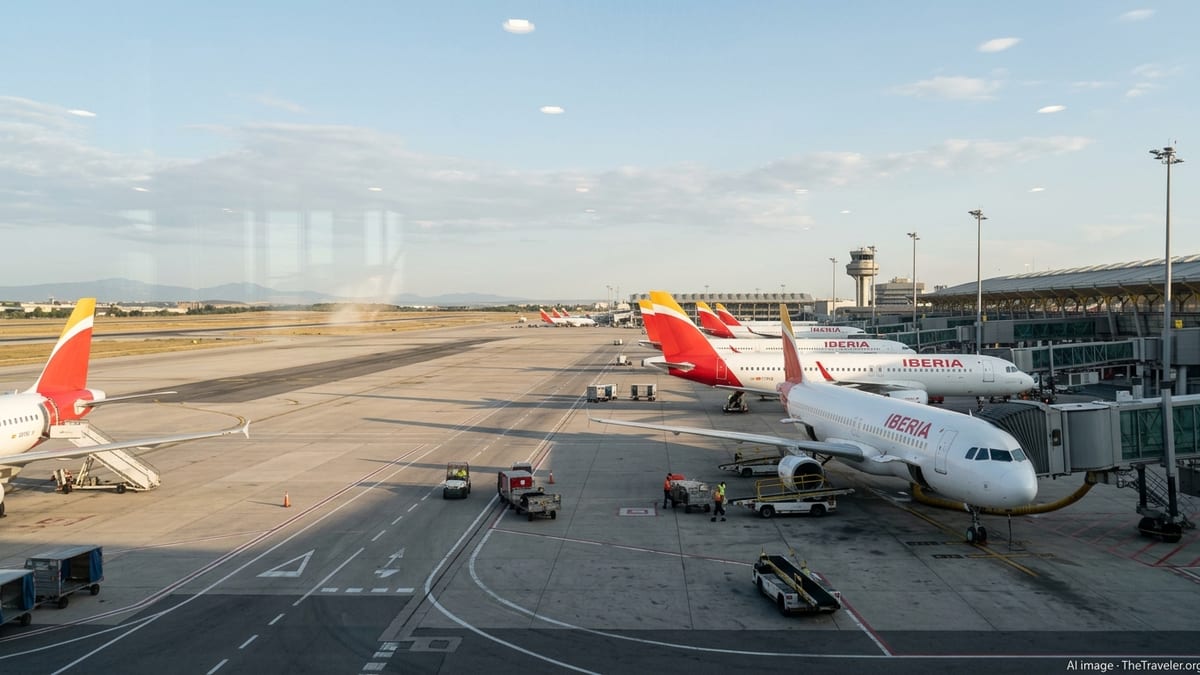
Spain’s flag carrier Iberia is preparing for its biggest summer on record in 2026, with publicly available planning data and industry reports indicating around twenty-one million seats across its network as the airline leans into strong transatlantic demand and booming Mediterranean leisure travel.
Get the latest news straight to your inbox!
Record-Breaking Capacity for a Peak Travel Season
Industry scheduling data and recent capacity reports point to Iberia targeting roughly twenty-one million seats for the northern summer 2026 season, marking one of the largest single-summer programs ever mounted by a Spanish airline. The planned offering spans flights operated by Iberia and its Iberia Express and Iberia Regional partners, feeding an expanded Madrid hub and a dense web of European and long-haul routes.
The projected 2026 program builds on successive years of growth in Iberia’s long-haul network, particularly between Europe and Latin America, where the carrier has already been adding millions of seats and restoring or surpassing pre-pandemic levels. For summer 2026, available information suggests a sharper focus on both transatlantic connectivity and high-frequency links to southern Europe’s beach destinations, responding to resilient leisure demand.
The timing aligns with broader increases in capacity across Spanish airports, where traffic forecasts for 2025 and 2026 already show strong double-digit growth on some long-haul corridors and continued expansion of intra-European frequencies. Iberia’s twenty-one million seat target positions the airline to defend and grow its share of this surging market.
Where the Extra Seats Are Going
Publicly available planning for summer 2026 indicates that Iberia is concentrating much of its additional capacity on routes linking Madrid with key European capitals, major North American gateways, and its traditional strongholds in Latin America. The Madrid hub is expected to see more banks of connecting flights, giving travelers additional options for one-stop itineraries between secondary European cities and destinations in the Americas.
Reports highlighting Iberia’s recent growth point to substantial increases on services to countries such as Mexico, Colombia, and the United States, where the airline has been progressively boosting frequencies and deploying larger aircraft. For summer 2026, this pattern is expected to continue, with more weekly flights and upgauged aircraft on selected routes where demand has remained consistently strong.
Within Europe, capacity is likely to rise on high-volume leisure routes from Madrid and other Spanish cities to island and coastal destinations, including the Balearic and Canary Islands as well as popular Mediterranean resort regions. The aim is to capture both inbound tourism and outbound Spanish holiday traffic, particularly during school holidays and long weekends when demand traditionally spikes.
What This Means for Travelers
For passengers, a program of around twenty-one million seats could translate into more choice, better connection times, and potentially more competitive fares on certain routes. With additional frequencies to popular cities, travelers may find improved options for early-morning and late-evening departures, allowing for more flexible weekend trips and smoother long-haul connections through Madrid.
Greater capacity often coincides with promotional activity, especially in shoulder periods such as late spring and early autumn. While pricing always depends on demand and broader market conditions, a larger number of available seats can create pockets of value for travelers prepared to be flexible on dates or airports of departure.
The expanded schedule may also open new one-stop combinations that were previously less convenient, particularly for passengers connecting between smaller European airports and cities in Latin America. Shorter minimum connection times and coordinated banks of arrivals and departures at Madrid are expected to be part of Iberia’s strategy to maximize use of the additional capacity.
Fleet, Network Strategy, and Sustainability
A record summer schedule of this scale is closely tied to Iberia’s evolving fleet mix, which has increasingly incorporated new-generation aircraft with lower fuel burn and extended range. Industry documents and fleet updates over the past seasons indicate a gradual shift toward more efficient long-haul jets on key transatlantic routes, alongside high-density narrowbodies for European and domestic services.
These newer aircraft types typically allow airlines to add seats while reducing emissions per passenger compared with older models, an important factor as European carriers face tightening environmental regulations and growing consumer scrutiny. Iberia’s strategy for summer 2026 appears aligned with this trend, using capacity growth to support both commercial and sustainability objectives.
At the network level, the twenty-one million seat plan fits into a broader effort to consolidate Madrid as a leading European hub for traffic between Europe and Latin America, while also strengthening Iberia’s position on competitive North Atlantic routes. A denser schedule can improve aircraft utilization and create operational efficiencies, though it also requires careful planning around airport slots, ground handling capacity, and air traffic flow management during the busiest months.
How to Prepare if You Plan to Fly Iberia in Summer 2026
Travelers considering Iberia for trips between late March and late October 2026 can expect schedule adjustments and capacity refinements as the season approaches, a normal part of airline planning. Seats typically appear in reservation systems many months in advance, but small timing changes and occasional aircraft swaps are common as demand patterns become clearer.
Those aiming for peak summer dates in July and August or for long-haul premium cabins may benefit from booking early, as higher demand cabins can still sell out even in a record-capacity season. For travelers with flexibility, monitoring prices in the weeks leading up to departure may reveal opportunities as Iberia fine-tunes loads on individual flights.
Passengers relying on connections through Madrid should pay attention to minimum connection times and aircraft changes when selecting itineraries. With more frequencies in the system, there may be options to select slightly longer layovers that provide greater buffer during busy operational days while still making the most of Iberia’s expanded network for summer 2026.