

More news on this day
Iberia is preparing for its biggest summer season on record in 2026, with publicly available schedules showing a significant expansion of capacity from Madrid to key long-haul markets such as Buenos Aires and New York, alongside added frequencies across Latin America, North America, and Europe.
Get the latest news straight to your inbox!
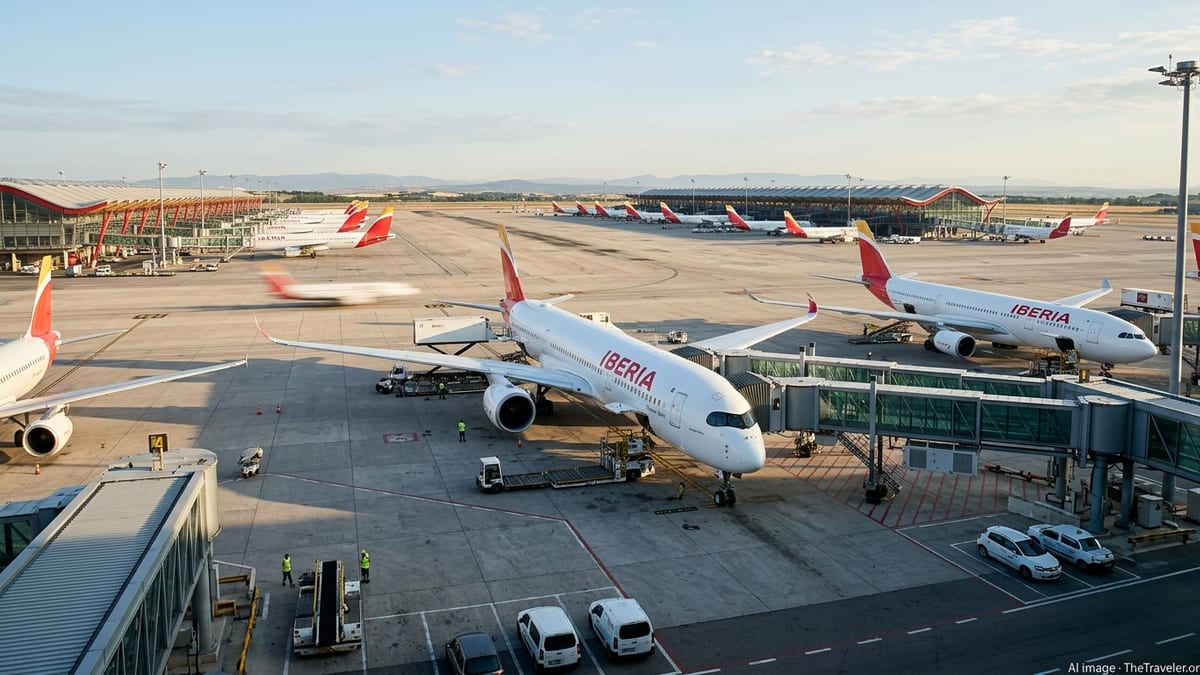
Historic Capacity Boost for Summer 2026
Summer 2026 schedules indicate that Iberia is shaping its largest-ever operation from its Madrid hub, measured in available seats and frequencies across both long-haul and medium-haul networks. Industry timetable data and company publications point to a year-on-year increase compared with summer 2025, consolidating the airline’s position as a major connector between Europe and the Americas.
Capacity growth is being driven primarily by demand on transatlantic routes and by Iberia’s strategic focus on Latin America, where the airline has steadily expanded in recent years. Internal group reports highlight that overall capacity between Europe and Latin America has been trending upward, and the summer 2026 schedule continues that trajectory with more flights, larger aircraft on selected routes, and denser weekly patterns.
The airline’s planning reflects broader market trends identified by aviation analysts, who note that scheduled capacity from Latin America and North America is rising as carriers restore and surpass pre-pandemic flying. Within that context, Iberia’s build-up in Madrid is designed to capture transfer traffic as well as strong point-to-point demand to Spain.
Publicly available planning documents also indicate that summer 2026 will feature a higher share of long-haul available seat kilometres, underscoring Iberia’s tilt toward high-yield intercontinental markets. The combination of more flights and sustained widebody deployment forms the backbone of what is being described in airline literature as a record summer operation.
Madrid to Buenos Aires: A Flagship Latin American Corridor
The Madrid to Buenos Aires route remains one of Iberia’s flagship Latin American services and is central to the airline’s summer 2026 strategy. Company magazines and corporate material emphasize that Argentina is among the markets where Iberia is reinforcing capacity, building on several years of growth in connectivity between Europe and South America.
Published information suggests an increase in weekly frequencies on Madrid–Buenos Aires compared with previous summers, maintaining the route among the busiest in Iberia’s long-haul portfolio. The service is planned with widebody aircraft, supporting both premium and economy demand and allowing the airline to capture growing leisure and visiting-friends-and-relatives traffic between Spain and Argentina.
Analyst assessments of regional capacity patterns show that demand between Europe and Latin America has recovered strongly, encouraging airlines to consolidate key trunk routes while adding secondary city pairs. For Iberia, Buenos Aires continues to function as a major gateway for southern South America, feeding connecting traffic across Argentina and neighbouring countries via interline and partner arrangements.
This concentration of capacity also reinforces Madrid’s role as a primary European entry point for Argentine travellers during the Southern Hemisphere winter, which coincides with the Northern Hemisphere summer peak. The timing supports strong bidirectional seasonal flows and underpins the decision to schedule record seat numbers on the corridor.
New York and a Stronger North Atlantic Network
On the North Atlantic, Iberia’s New York operations are set for a notable step-up in summer 2026, aligning with wider transatlantic growth. Timetable and airport data show Iberia operating from Madrid to New York John F. Kennedy, with capacity increases compared with prior seasons, and the group has also highlighted developments linked to New York area services in its communications.
Information contained in recent Iberia publications points to a sharp increase in total seats offered between Madrid and New York during the 2026 summer peak, with some internal figures referencing growth of around forty percent versus earlier baselines. The expansion reflects robust demand in both premium and leisure segments, supported by tourism to Spain and connecting traffic beyond Madrid into Iberia’s European and Latin American networks.
Industry reports on transatlantic flying note that European and North American carriers are using the busy summer period to deploy more capacity into large coastal markets, especially New York. Iberia’s decision to grow its New York operation fits that pattern and strengthens its competitive position against both European rivals and US carriers active on Spain–US routes.
New York also functions as a key gateway for onward travel within the United States through partnerships and codeshares, so additional Iberia-operated frequencies from Madrid expand options for travellers seeking one-stop itineraries to and from secondary US cities. That network effect helps justify the record capacity being scheduled on the route.
Beyond the Big Two: Wider Long-Haul and Regional Growth
While Buenos Aires and New York are central to Iberia’s message around summer 2026, the planned capacity increase extends across a broader portfolio of destinations. Madrid–Barajas schedules list an extensive long-haul network including cities such as Mexico City, São Paulo, Lima, Santiago de Chile, Bogotá, and several US gateways including Miami, Chicago, Boston, Los Angeles, and Washington, alongside growing Central American and Caribbean coverage.
According to publicly available company and airport data, Iberia is layering additional frequencies on several of these routes for the peak months, in some cases paired with the use of higher-capacity aircraft. The strategy is consistent with earlier statements that Latin America is a core market and with documented growth in North American flying as the airline seeks to reinforce Madrid as a transatlantic hub.
On the short- and medium-haul side, Iberia’s summer schedules show a dense web of flights within Spain and across Europe, feeding long-haul departures from Madrid. Destinations such as London, Paris, Rome, and a range of Spanish and regional capitals are being operated at high frequency during the peak, providing connectivity for passengers travelling onward to Buenos Aires, New York, and other long-haul points.
Sector analyses of European capacity suggest that Iberia is not alone in increasing short-haul flying to support long-haul growth, but the airline’s position at Madrid, a primary gateway to Latin America, gives it particular leverage. High-frequency feeder services help support consistent load factors on the enlarged long-haul programme planned for summer 2026.
Fleet, Market Context, and Competitive Landscape
Iberia’s record summer 2026 capacity is enabled in part by fleet developments across the wider airline group. Industry filings and fleet reports describe continued deliveries of new-generation aircraft, as well as the deployment of fuel-efficient long-range narrowbodies on selected transatlantic routes. This mix allows the airline to adjust capacity with more precision while keeping operating costs under control.
Aviation market forecasts for 2026 highlight continued recovery and growth in both Latin American and North Atlantic segments, with scheduled capacity up versus 2025 in many markets. Within that environment, Iberia’s decision to mount its biggest summer schedule from Madrid reflects confidence in sustained demand and in the resilience of Spain’s inbound tourism sector.
Competitive pressure remains strong, with other European and US carriers also announcing expanded summer programmes. However, Iberia’s published plans underscore a clear focus on leveraging its traditional strengths: deep coverage of Latin America, growing direct links to major US cities, and a dense European feeder network anchored at Madrid–Barajas.
For travellers, the outcome is a wider choice of departure dates, schedules, and connection possibilities, particularly on the Madrid to Buenos Aires and Madrid to New York corridors. With summer 2026 shaping up as the airline’s largest season to date in capacity terms, the Spanish flag carrier is positioning itself for an intense period of transatlantic competition and high passenger volumes.