

More news on this day
Ibiza is tightening its vehicle limits again for summer 2026, reducing the overall quota of cars allowed on the island and further constraining the number of rental vehicles available to holidaymakers at the height of the season.
Get the latest news straight to your inbox!
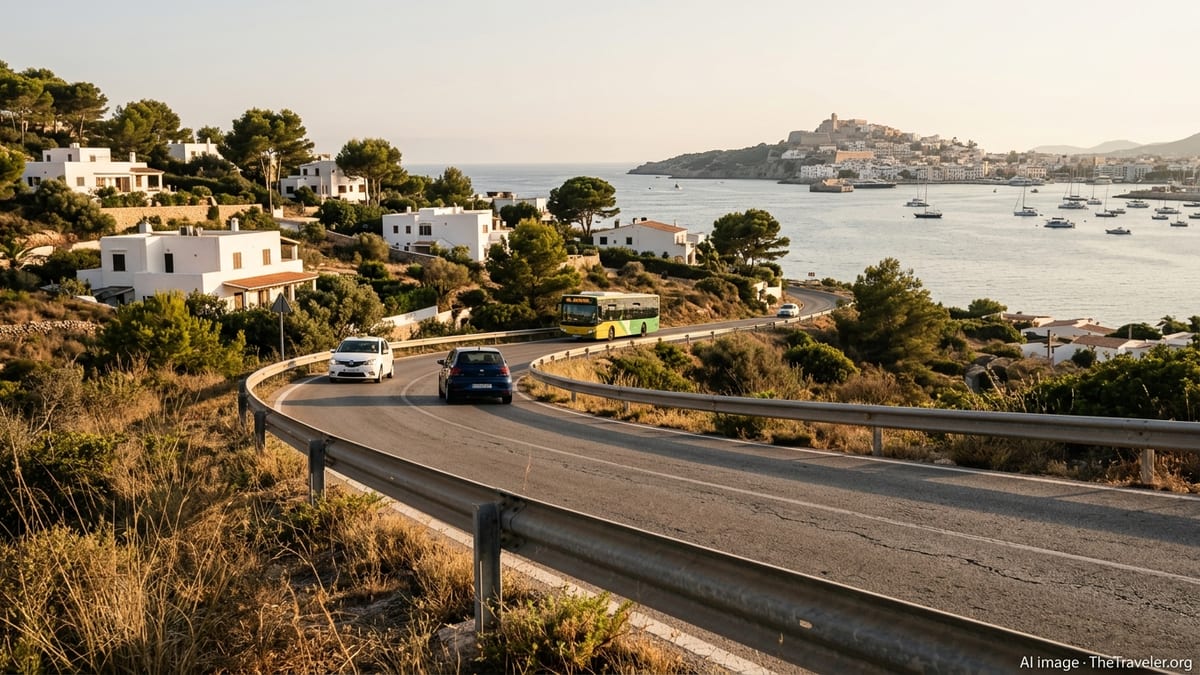
What Is Changing With Ibiza’s 2026 Vehicle Quota
Publicly available information from local media in Ibiza indicates that the island’s governing council has agreed to lower the maximum number of vehicles authorised to circulate during the 2026 high season to around 17,668. This follows the launch of a traffic control law in 2025 that introduced a ceiling on vehicles between June and September and required advance authorisations for many visitors.
Within this overall cap, a substantial share is typically allocated to rental cars, although the precise breakdown for 2026 has not yet been fully detailed in public documents. Earlier reporting on the 2025 rules suggested that about 16,000 of the authorised vehicles were linked to existing rental fleets, with the remaining quota divided among private vehicles arriving by ferry and other categories. The new, lower ceiling for 2026 points to a further squeeze on rental availability relative to prior years.
The adjustment for summer 2026 is presented in local coverage as a continuation of a progressive reduction model, mirroring the approach already taken on the smaller neighbouring island of Formentera. On that island, annual percentage cuts to the vehicle ceiling have been used as a tool to steadily reduce congestion, rather than relying on a single, abrupt restriction.
Authorities in the Balearic Islands have framed these measures in official texts as part of a broader sustainable tourism strategy responding to years of growth in visitor numbers and car registrations. Data highlighted in earlier reports show that Ibiza’s vehicle fleet has risen sharply over the past two decades, with more vehicles than residents and heavy overloading of the road network at peak times.
Why Ibiza Is Reducing Rental Cars and Traffic
The reduction in the summer 2026 quota is closely tied to local concerns about overtourism, traffic jams and environmental pressures. Reports and policy papers on the Balearic Islands describe a pattern in which summer visitor numbers far exceed the resident population, putting intense pressure on limited road infrastructure. In Ibiza’s case, publicly available figures cited in earlier sustainability reports suggest millions of visitors share road space with roughly 150,000 residents during peak months.
Car hire has been a particular focus, as large seasonal rental fleets multiply the number of vehicles in circulation even when average occupancy per car remains low. Local tourism and environmental strategies in the region point to road congestion, noise, air pollution and carbon emissions as key reasons to tackle fleet size, as well as the impact of traffic on natural areas and small villages inland from Ibiza’s beaches.
The Ibiza measures also sit within a wider political and social context. Across Spain’s major destinations, including the Balearic Islands, there has been a visible rise in resident protests and policy debates about how to manage tourism growth. Publicly available coverage of these discussions highlights calls to rebalance the local economy, protect housing for residents and ensure that tourism does not overwhelm infrastructure, with vehicle caps seen as one of several tools under consideration.
Regional initiatives in Formentera, now in place for several years, have provided a template. That island has combined a hard cap on vehicles with enforcement through licence-plate checks, as well as incentives for electric or low‑emission cars. Ibiza’s 2026 quota reduction can be read as the next step in applying a similar approach on a larger and more complex island.
How the 2026 Quota Could Affect Rental Car Availability
For visitors, the most immediate effect of the reduced 2026 ceiling is likely to be tighter availability and potentially higher prices for rental cars, especially in July and August. Car rental associations quoted in regional and national outlets have repeatedly raised concerns that the vehicle entry caps will constrain their fleets, warning of fewer units available for hire at peak demand.
These industry groups argue that the restrictions disproportionately affect car hire compared with other forms of tourism spending and could push some visitors to choose alternative destinations. At the same time, tourism analysts note that limiting vehicle numbers is one of the clearest ways to reduce congestion without directly capping the number of people arriving by air or sea. The net effect for individual travelers in 2026 is likely to depend on how early they book and how flexible they are on vehicle size and rental dates.
Some of the latest reporting from Ibiza indicates that there are carve‑outs in the rules for certain vehicle types. For example, privately owned cars with recognised eco labels and zero‑emission vehicles in rental fleets may not count fully against the quota, or may benefit from more favourable treatment. Details of these exceptions are technical and subject to refinement in future seasons, but they provide an incentive for rental companies to accelerate the shift towards electric and low‑emission models.
Travelers should be aware that enforcement is expected to continue through digital systems and checks upon arrival, as already seen in Formentera. Companies operating rental fleets on Ibiza are required to respect the authorised quotas, and publicly available reports from late 2025 show that enforcement actions have already been taken against firms operating outside the established limits.
What Drivers Need to Do Before Arriving in Ibiza
Anyone planning to drive on Ibiza in summer 2026 will need to navigate a more regulated environment than in the past. Visitors who intend to bring their own car by ferry are expected to continue using the permit system introduced when vehicle caps were first applied in 2025. This typically involves registering the vehicle, dates of stay and reason for travel through an online platform before arrival, and ensuring that the planned visit falls within the daily quota.
Holidaymakers who prefer to hire a car on the island will mainly encounter the new rules indirectly, through limited stock and potentially stricter rental conditions set by car hire companies. Because rental operators must stay within their authorised fleet numbers, last‑minute bookings may be more difficult in busy weeks. Families and groups relying on larger vehicles or automatic transmissions may find that these categories sell out earliest.
Travel information from local institutions stresses that some groups, such as island residents and key service providers, benefit from exemptions or more flexible conditions, which means not all vehicles count equally towards the cap. However, these exemptions do not typically extend to standard tourist rentals. Visitors are therefore advised, in publicly available guidance, to plan well ahead, keep documentation for their vehicle or rental contract handy while driving, and respect any roadside checks that verify compliance with the quota system.
Travelers who do not wish to drive at all can still move around the island using a combination of public buses, licensed taxis, organised transfers and, on certain routes, boats. The tightening of car quotas may prompt some visitors to adjust their accommodation choices, choosing to stay closer to main towns or beaches with stronger public transport links instead of more remote countryside properties that traditionally depended on car access.
Alternatives to Driving and What This Means for Ibiza Tourism
The rental car quota reduction is likely to influence how Ibiza is experienced in summer 2026, nudging more visitors toward alternatives to individual car use. Local tourism promotion materials already highlight bus routes connecting the airport to Ibiza Town, San Antonio and key resort areas, along with seasonal night buses serving popular nightlife districts. Strengthening these services is widely seen in policy discussions as essential if car restrictions are to succeed without undermining the visitor experience.
There is also growing emphasis on cycling, walking and water‑based transport as complementary options. Some coastal resorts are expanding promenades and bike‑friendly infrastructure, while boat connections to beaches and to Formentera remain an important part of the mobility puzzle. The combined effect is a gradual shift away from a model in which every traveler automatically hires a car for the entire stay.
From a tourism‑market perspective, analysts following the Balearic Islands suggest that mobility policies such as the Ibiza vehicle quota form part of a broader attempt to prioritise higher‑value, longer‑stay visitors who are less dependent on constant road use. By reducing peak‑season traffic and improving air quality, policymakers hope to make the island more liveable for residents while preserving the natural landscapes and coastal areas that attract travelers in the first place.
How the summer 2026 season unfolds will be closely watched by other Mediterranean destinations wrestling with similar challenges. If the reduced quota manages to ease congestion without significantly denting visitor satisfaction or local business revenue, Ibiza’s model of progressive vehicle and rental car limits may become a reference point for future tourism management policies elsewhere.