

More news on this day
Regional carrier Ibom Air is preparing a fresh wave of international services linking its Uyo hub with Douala in Cameroon, Sao Tome and additional points in Ghana, a move industry watchers say could stimulate competition in West Africa’s airline market and reinforce Nigeria’s ambitions as a tourism and business gateway.
Get the latest news straight to your inbox!
Expanding Beyond Ghana to a Multi‑point Regional Network
Ibom Air, owned by Akwa Ibom State in southern Nigeria, first entered the regional arena with scheduled flights between Lagos and Accra. Publicly available route data and airline schedules now indicate that the carrier is working toward a broader international footprint, with new links planned from Uyo to Douala in Cameroon, Sao Tome and expanded services to Ghana. The strategy positions the airline to serve short regional sectors that have traditionally been dominated by foreign carriers or left underserved.
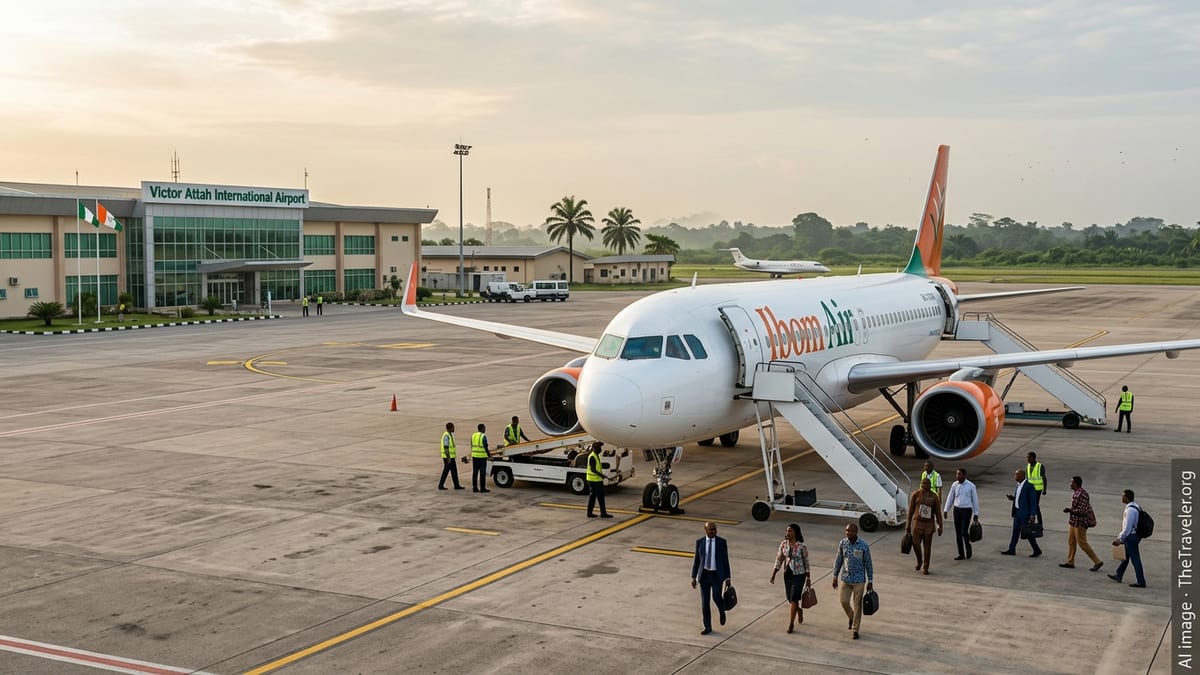
The airline’s growth comes as Victor Attah International Airport in Uyo secures full approval for international operations, creating a new Nigerian gateway outside the country’s congested hubs. Regulatory clearance granted in late 2025 enables carriers such as Ibom Air to schedule cross‑border flights directly from Uyo, avoiding the need for passengers from Akwa Ibom and neighboring states to route through Lagos for regional trips.
Industry analysts note that the air distance between Uyo and major regional cities such as Douala is relatively short, with flight time estimates of under one hour. That profile fits Ibom Air’s fleet of regional jets and Airbus A220 aircraft, which are optimized for high‑frequency, short‑haul services and can support competitive fares while maintaining schedule flexibility.
Available network information also shows that Accra remains a cornerstone of Ibom Air’s international strategy. The airline currently operates direct flights between Lagos and the Ghanaian capital, and additional connectivity from Uyo is expected to deepen links between Nigeria’s oil‑rich southeast and Ghana’s financial and tourism hub.
New Competition in a Crowded West and Central African Market
The planned routes to Cameroon and Sao Tome place Ibom Air in a regional market where flag carriers and established operators such as Camair‑Co and various Gulf and European airlines have long provided the bulk of capacity. By adding point‑to‑point services from Uyo, Ibom Air is seeking to capture demand that previously funneled through larger hubs or relied on indirect routings.
Douala, Cameroon’s economic capital, has become a focal point for regional connectivity, with airlines leveraging its role as a commercial and logistics center. Direct flights from Uyo to Douala would shorten travel times for business travelers engaged in oil and gas, shipping, agribusiness and services, sectors that link Nigeria’s Niger Delta to Cameroon’s coastal economy.
Sao Tome presents a different profile, with tourism and niche trade at the forefront. A nonstop route from Uyo to Sao Tome would be among the relatively few direct connections between Nigeria and the island nation, diversifying options for leisure travelers and small business operators moving between the Gulf of Guinea states.
In Ghana, Ibom Air’s presence adds another competitor on the Nigeria–Ghana corridor, one of West Africa’s busiest intra‑regional markets. Additional capacity from a Nigerian carrier could pressure fares, encourage schedule improvements and expand choices for passengers who previously relied largely on larger regional or intercontinental airlines for their cross‑border trips.
Tourism and Investment Prospects for Akwa Ibom and Nigeria
Tourism officials and aviation observers view the new routes as a potential catalyst for visitor growth into Akwa Ibom State and Nigeria more broadly. With Victor Attah International Airport now cleared for international services, direct links to Douala, Sao Tome and Ghana could draw more regional tourists to the state’s beaches, cultural sites and emerging conference facilities.
Akwa Ibom has promoted itself as a domestic leisure destination, and accessible air connections from neighboring countries are expected to support niche segments such as weekend city‑break travel, meetings and incentives, and diaspora visits. Travel publications and industry briefings highlight that travelers in Douala and Accra increasingly seek short‑haul getaways within a one‑ to two‑hour flight radius, a segment where Uyo’s proximity offers a clear advantage.
For Nigeria as a whole, more regional connectivity from secondary hubs aligns with broader efforts to diversify the economy beyond oil. Improved air access can help channel investment into hospitality projects, small and medium‑sized enterprises, and cross‑border trade in goods and services. State‑backed carriers such as Ibom Air are often seen as tools to unlock these opportunities by lowering transport barriers and bringing new visitor flows into previously under‑served regions.
Industry reports also suggest that better regional air links can support outbound tourism by making it easier for Nigerian residents in Akwa Ibom and neighboring states to reach nearby destinations without first transiting Lagos or Abuja. This two‑way flow of visitors is seen as critical to sustaining year‑round flight schedules and ensuring that new routes remain commercially viable.
Hub Development at Victor Attah International Airport
The approval of Victor Attah International Airport for international operations has set the stage for Uyo to evolve from a domestic spoke into a regional hub. Airport infrastructure developed in recent years, including runway upgrades and terminal enhancements, has been aimed at handling larger aircraft and cross‑border traffic.
With Ibom Air as the anchor tenant, Uyo is being positioned as a connecting point between Nigerian cities such as Lagos, Abuja, Calabar and Enugu and regional destinations in Ghana, Cameroon and Sao Tome. Schedules already show dense domestic frequencies between Uyo and Lagos, providing the feed necessary to support onward international services.
Aviation analysts point out that hub development outside traditional centers can relieve pressure on Nigeria’s busiest airports while bringing economic benefits closer to regional populations. For Akwa Ibom, that could translate into new jobs in ground handling, catering, maintenance and airport retail, alongside increased demand for hotels and transport services in and around Uyo.
There is also an expectation that improved connectivity will encourage more airlines to consider codeshare arrangements or interline partnerships with Ibom Air on specific routes, further integrating Uyo into the regional air transport system and potentially expanding options for passengers traveling beyond West and Central Africa.
Opportunities and Challenges Ahead for Ibom Air
While the launch of international routes from Uyo signals confidence in demand, market conditions in West and Central Africa remain challenging. Currency volatility, high operating costs, infrastructure constraints and regulatory complexity have weighed on regional carriers for years. Analysts note that successful expansion will depend on careful route planning, efficient fleet utilization and disciplined cost management.
Ibom Air’s relatively young fleet and focus on short‑haul operations may offer advantages in managing fuel and maintenance expenses compared with older aircraft types commonly used in the region. The adoption of modern jets such as the Airbus A220, already in the airline’s lineup, is expected to support lower unit costs and improved passenger comfort on routes to Douala, Sao Tome and Ghana.
Demand patterns will also be closely watched. Business travel tied to oil and gas, maritime services and construction tends to be resilient but cyclical, while leisure travel can fluctuate in response to economic conditions and currency movements. Travel industry coverage suggests that balanced traffic from both segments will be important to sustaining year‑round frequencies.
Even with these uncertainties, the move to open new international routes from Uyo is widely viewed as a significant step in reshaping Nigeria’s regional aviation map. By linking its home state directly with neighboring markets, Ibom Air is contributing to a more connected Gulf of Guinea and reinforcing the role of air travel in supporting tourism, trade and economic diversification across Nigeria.