

More news on this day
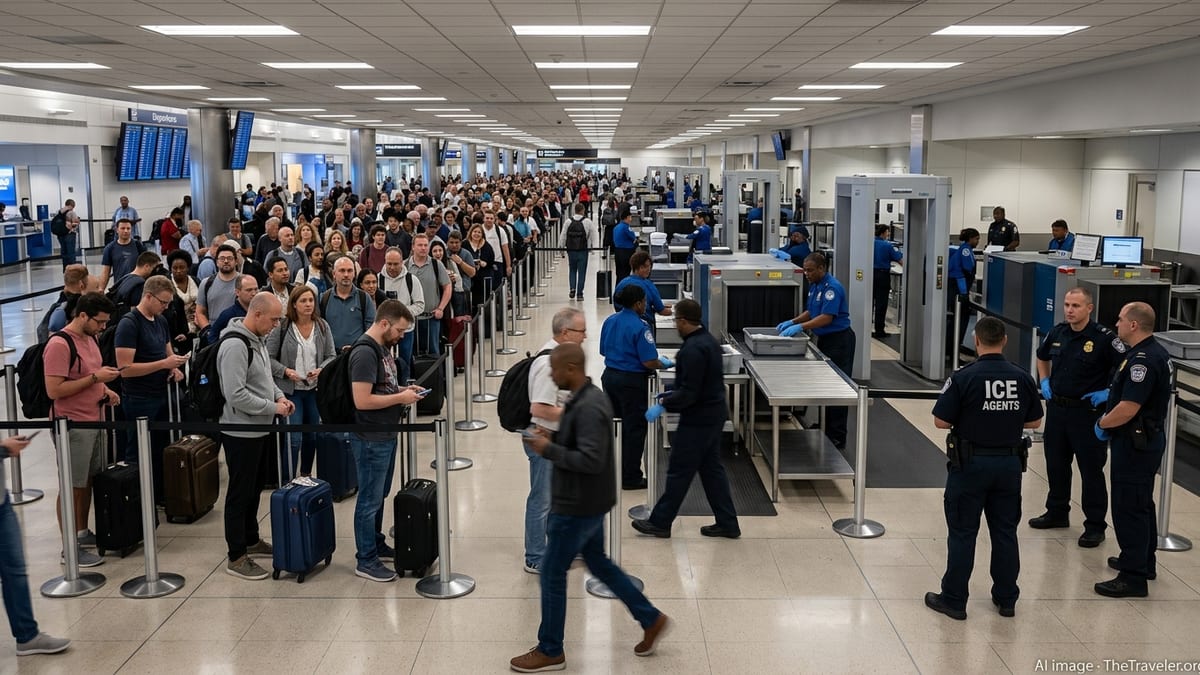
Security lines at some U.S. airports have become the latest flashpoint in the ongoing Department of Homeland Security shutdown, as Immigration and Customs Enforcement agents are sent into terminals to support an overstretched Transportation Security Administration workforce that is still working without pay.
Get the latest news straight to your inbox!
How a DHS Shutdown Pushed Airports to the Brink
The current Department of Homeland Security funding lapse, which began on February 14, 2026, has left tens of thousands of TSA officers and other DHS employees working without pay while core security operations are legally required to continue. Publicly available budget documents and contingency plans describe airport screening as an “excepted” function, meaning checkpoints must remain open even when paychecks stop.
As the shutdown has stretched into its sixth week, reports indicate that more TSA officers are calling out, taking second jobs or leaving altogether rather than continuing indefinitely without pay. Coverage from national outlets and aviation industry briefings describes growing strain on checkpoints in several major hubs, including Houston, Atlanta and parts of the New York area, where travelers have faced lines stretching well past the usual peak-hour congestion.
In previous nationwide funding lapses, TSA largely managed to keep lines moving, albeit with longer waits at some airports. The current disruption is compounded by a tight labor market, ongoing air traffic control staffing challenges and a busy spring travel season, leaving less slack in the system when large numbers of officers are unavailable.
Security experts quoted in recent coverage have warned that chronic understaffing at checkpoints can create both operational headaches and potential vulnerabilities, even if actual screening standards are not formally relaxed. With unpaid officers asked to absorb overtime, morale is becoming a central concern for airport managers and unions alike.
ICE Agents Enter the Checkpoints, But Not as Screeners
In recent days, the White House and DHS leadership have turned to Immigration and Customs Enforcement, one of the department’s best-funded components, to bolster airport operations. According to published coverage, ICE agents, whose budget is insulated from the current DHS appropriations dispute, are being deployed to more than a dozen major airports, including Houston’s George Bush Intercontinental Airport and other large hubs that have reported hours-long waits.
Available information indicates that the agents are not replacing TSA officers at the X-ray machines or full-body scanners. ICE personnel are not trained or certified under federal aviation security standards, and union statements highlight that only credentialed Transportation Security Officers are authorized to make screening decisions about passengers and baggage. Instead, ICE staff are generally being positioned in crowd-management and support roles, such as monitoring queues, directing passengers and providing a law-enforcement presence near congested checkpoints.
Early accounts from travelers and airport employees suggest the impact on actual wait times has been mixed. Some airports report modest improvements as ICE personnel free up TSA officers to remain on the lanes. Others, including Houston, have continued to see lines reported at up to four hours, even with ICE contingents visible in the terminals. Public commentary from labor groups argues that placing non-screening officers into crowded lobbies risks creating confusion without addressing the underlying shortage of trained TSA staff.
The optics of paid ICE agents working alongside unpaid TSA officers have also drawn pointed criticism in editorials and on social media. Commenters note that both agencies sit within the same department, yet their funding situations during the shutdown are markedly different, heightening tensions over fairness and priorities in federal budgeting.
Uneven Airport Impacts and Where Delays Are Worst
The effect of the shutdown on travelers has been highly uneven. Larger coastal hubs with already heavy passenger volumes have reported the most dramatic lines, while many mid-sized and regional airports continue to report screening times close to normal. Airport statements in cities such as Seattle and Sacramento emphasize that ICE agents are either not being used for TSA functions or remain on standby while operations proceed normally.
By contrast, published coverage of conditions in Houston describes only a fraction of available checkpoints operating during peak periods, leading to multi-hour queues that snake through concourses. Passengers in some cities have reported missing flights despite arriving well ahead of the usual two-hour domestic guideline, prompting airlines to quietly advise customers to build in extra time where local conditions warrant.
Professional associations representing airports and aviation workers have circulated internal briefings warning that extended shutdowns can force more airports to scale back operating hours or consolidate checkpoints. In extreme cases, some smaller facilities have discussed temporarily suspending commercial service if they cannot maintain minimum staffing, although most have not yet taken that step.
Because conditions are changing day by day, experts caution against assuming that any single city’s experience reflects the national picture. Some airports have seen lines spike one day and ease the next as staffing shifts or flight schedules change, making real-time information from individual airports and airlines especially important for anyone planning a trip in the coming weeks.
What Travelers Should Know Before Booking or Flying
For travelers trying to decide whether to book flights during the shutdown, publicly available guidance from airports, airlines and travel industry groups focuses on preparation and flexibility rather than outright avoidance. Many carriers are encouraging customers to allow significantly more time at the airport if traveling through hubs that have featured prominently in recent delay coverage, particularly during early-morning and late-afternoon peaks.
Reports also indicate that some common speed-through options are being disrupted or adjusted. TSA PreCheck and similar programs continue to operate, but some travelers have encountered longer queues even in dedicated lanes when overall staffing is thin. Separate trusted-traveler programs such as Global Entry, run by Customs and Border Protection, have experienced intermittent pauses in new enrollments and interview availability during periods of constrained staffing.
Travel planners recommend monitoring airport social media feeds and airline notifications in the days leading up to a flight, as many airports are now posting checkpoint wait estimates and operational updates throughout the day. Same-day rebooking options and more flexible change policies, offered by some carriers during the shutdown, may provide a measure of protection if security delays cause missed connections.
For those still in the planning stage, industry analysts note that routes connecting through less congested hubs or flying at off-peak times can reduce exposure to bottlenecks, though no itinerary is entirely immune from the broader effects of the shutdown.
Security, Civil Liberties and the Future of Airport Staffing
The sudden appearance of ICE agents in civilian airport checkpoints has reopened long-running debates about the proper balance between security, immigration enforcement and civil liberties in U.S. air travel. Advocacy organizations have raised concerns that the presence of immigration officers in screening areas could discourage some travelers from flying or create confusion about whether routine security checks might evolve into immigration questioning.
Publicly available commentary from current and former security officials underscores that federal law still restricts how passenger screening data can be used, and that TSA’s primary role remains detecting threats such as weapons and explosives rather than enforcing immigration statutes. Nonetheless, the visual prominence of ICE uniforms in line with TSA badges has become a powerful symbol of how deeply immigration politics have become entwined with everyday travel.
Looking ahead, congressional research and DHS budget analyses prepared before the shutdown warned that repeated funding crises could erode the ability of agencies like TSA to recruit and retain skilled officers. Some lawmakers have floated proposals to give certain transportation security functions more insulated funding streams, similar to those that currently protect air traffic control and parts of ICE from immediate shutdown effects.
For now, travelers are left navigating an evolving patchwork of airport experiences shaped by local staffing, national politics and an unprecedented reliance on unpaid frontline security workers. Whether the current crisis leads to long-term reforms in how airport security is funded and staffed will likely depend on how long the shutdown continues to disrupt the routine act of getting on a plane.