

More news on this day
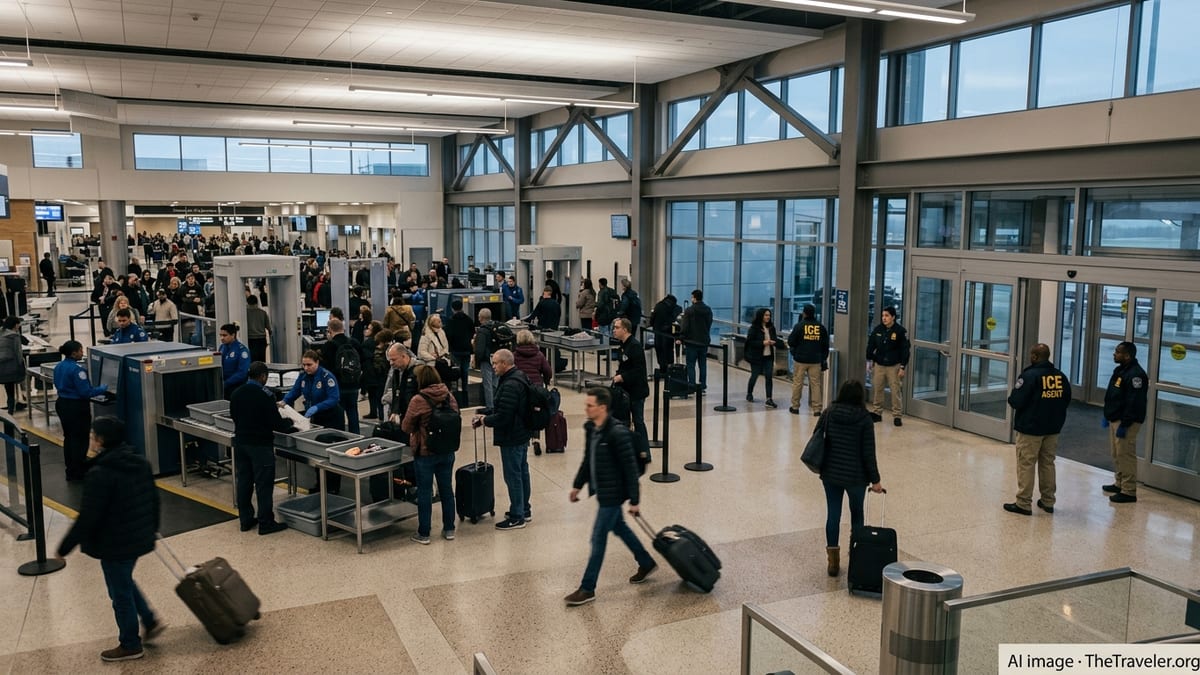
Airport security lines at major U.S. hubs are beginning to ease after the federal government moved Immigration and Customs Enforcement personnel into key roles alongside Transportation Security Administration staff during the ongoing shutdown, according to multiple news and government reports.
Get the latest news straight to your inbox!
Shift in Strategy as Shutdown Disrupts Air Travel
The latest redeployments follow weeks of disruption linked to the partial federal government shutdown, which has left hundreds of thousands of Department of Homeland Security employees working without full pay. TSA officers have been among those most visible to the traveling public, with growing absenteeism contributing to long waits at screening checkpoints in cities including Atlanta, Houston and New York, according to published coverage of the shutdown’s impact.
Reports from national and local outlets indicate that congestion at some security checkpoints reached several hours at peak periods earlier in March, prompting airlines and airports to urge passengers to arrive even earlier than the usual two-hour domestic guideline. Industry associations and travel groups have issued advisories suggesting travelers build additional buffer time into itineraries and monitor airport communications closely for evolving queue conditions.
In this environment, federal planners turned to ICE as an available pool of law enforcement personnel who could assume non-screening duties around checkpoints. Publicly available information describes the move as a way to free up specialized TSA screeners to focus on operating X-ray machines, body scanners and explosive detection systems while other trained officers handle crowd management and access control.
Early accounts from several large hub airports suggest that the reallocation is beginning to stabilize operations, with reports of somewhat shorter lines and more lanes kept open during busy morning and evening banks of departures.
How ICE Agents Are Being Used at Airports
According to recent national news coverage, ICE officers arriving at airports are primarily assigned to tasks that do not require TSA’s certification in passenger and baggage screening. These duties can include guarding exit lanes so passengers do not re-enter secure areas unchecked, checking identification documents at terminal entry chokepoints, and monitoring access doors and sterile-area perimeters traditionally supported by other law enforcement partners.
Statements in televised interviews and subsequent written reports emphasize that ICE personnel are not being placed in front-line roles such as reading X-ray images or patting down passengers, positions that demand specialized TSA training and recertification. Instead, the agents are intended to backfill functions previously covered by local police or TSA officers who can now be reassigned inside the checkpoints.
Aviation security specialists quoted in public analyses note that this kind of role-sharing can be effective in the short term, because many law enforcement agencies already cooperate in the airport environment. However, they also underscore that ICE’s core mission and training are focused on immigration enforcement and criminal investigations, not the aviation-specific threat detection protocols used by TSA.
Despite those caveats, operations updates from several airports indicate that having additional uniformed personnel positioned around queues and exit corridors has helped maintain order during peak crowds and allowed TSA to keep more screening lanes open even as some officers call out or seek temporary transfers.
Visible Impact on Travelers and Airport Operations
Travelers at some of the country’s busiest hubs are beginning to report modest improvements in wait times, particularly during early morning rush periods that had previously seen severe backups. Social media posts and local broadcast segments from airports in the Northeast, South and West Coast describe lines that are still long but moving more consistently than just days earlier.
Airport operations updates referenced in these reports show that, with ICE agents and other federal officers helping to manage access points and exits, TSA has in some cases reopened lanes that had been closed due to staffing gaps. That has translated into more predictable throughput at checkpoints, reducing the risk of missed flights for passengers who arrived early.
Airlines have continued to warn customers that conditions can vary significantly from one airport to another and from day to day as the shutdown drags on. Carrier advisories collected by travel industry groups recommend that passengers keep mobile devices charged, stay alert for gate changes or rolling delays, and build extra connection time into itineraries where possible.
Behind the scenes, airport managers are reported to be recalibrating staff schedules, voluntary overtime and terminal traffic flows to take advantage of the additional federal law enforcement presence while still planning for further disruptions if the budget impasse continues.
Concerns Over Mission Creep and Passenger Experience
The integration of ICE officers into visible airport roles has drawn a mixed reaction from civil liberties advocates, immigrant rights organizations and some local community leaders, according to national and regional coverage. These groups express concern that the increased presence of immigration enforcement personnel in terminals could heighten anxiety for non-citizens and mixed-status families, even if the agents are nominally assigned to security support rather than immigration checks.
Analysts quoted in published commentary note that airports are already sensitive spaces for travelers who may worry about visa status, documentation or previous encounters with immigration authorities. The sight of ICE-branded uniforms near security lines, they argue, may discourage some people from flying or create uncertainty about whether routine travel could lead to additional questioning.
Federal agencies, in their public-facing materials and prior policy guidance, typically draw a distinction between aviation security screening and immigration enforcement functions at ports of entry. Observers point out that maintaining that separation in practice will be essential to avoid mission creep during the shutdown response, especially if ICE agents remain a fixture in terminals for an extended period.
From the passenger-experience perspective, travel advisors and consumer groups cited in recent articles are encouraging flyers to carry all required travel documents, allow extra time for check-in and screening, and stay informed about any changes to identification and security procedures issued through official channels.
Uncertain Timeline as Shutdown Negotiations Continue
With the federal shutdown tied to a broader dispute over Department of Homeland Security funding, the duration of the ICE deployment remains unclear. Coverage from Washington-based outlets indicates that negotiations in Congress have yet to produce a durable compromise, raising the prospect that temporary measures at airports could stretch into weeks.
Travel industry organizations have warned in public statements and guidance documents that prolonged disruption at TSA checkpoints risks eroding traveler confidence and inflicting economic damage on airlines, airports and surrounding tourism-dependent businesses. Past shutdowns have provided a rough template, showing that while aviation systems can continue operating, cumulative delays and staffing fatigue can quickly strain safety margins and customer patience.
For now, the combination of ICE support, local law enforcement collaboration and internal TSA staffing adjustments appears to be stabilizing security operations at many major airports, even if conditions remain far from normal. Observers note that these improvements are fragile and heavily dependent on continued cooperation among agencies that are themselves grappling with the financial and operational pressures of the shutdown.
Until a funding agreement is reached, passengers are likely to continue encountering more visible federal law enforcement personnel in and around security checkpoints, a reminder of how deeply the budget stalemate has penetrated the everyday experience of air travel in the United States.