

More news on this day
Travelers heading into the busy spring season are being urged to build extra time into their airport plans as a visible uptick in Immigration and Customs Enforcement activity at major U.S. hubs converges with staffing strains and a Department of Homeland Security funding standoff, creating fresh uncertainty around wait times and potential flight disruptions.
Get the latest news straight to your inbox!
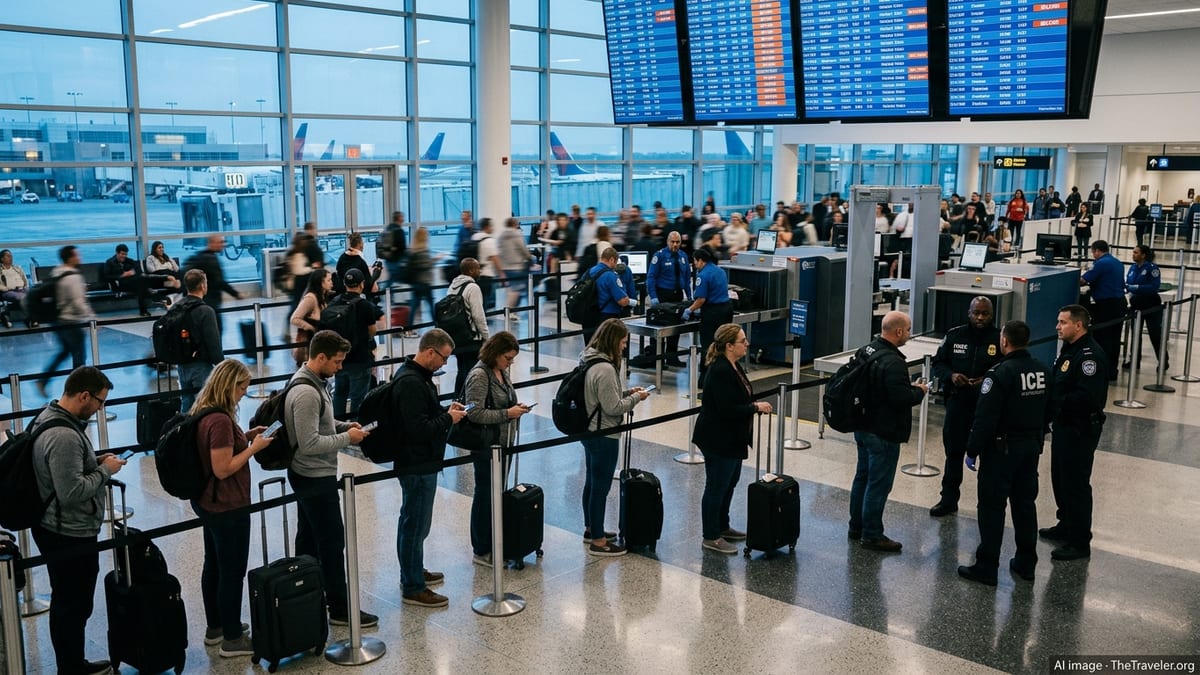
Enforcement Operations Intensify as DHS Funding Fight Drags On
Publicly available reporting over the past several months points to a marked expansion of immigration enforcement by air, with ICE Air charter flights and domestic transfer operations reaching record levels between January 2025 and January 2026. Advocacy monitors tracking flight data describe thousands of enforcement flights in that 12 month window, including new charter partners and expanded routing through key hubs, underscoring how central aviation has become to immigration operations.
This ramp up is unfolding against the backdrop of a Department of Homeland Security shutdown that began in February 2026 and remains unresolved as of late March. Aviation industry outlets report that the lapse in funding has pushed Transportation Security Administration officers to work without pay while passenger volumes remain near or above pre pandemic records. That mix, they note, is putting pressure on security screening and increasing the risk that even routine bottlenecks can ripple into wider flight delays.
Policy disputes over the scope and tactics of immigration enforcement are at the center of the budget impasse. Congressional debates have focused in part on limiting or reshaping certain ICE operations, while the administration has continued to defend aggressive initiatives that include large scale arrest sweeps and high volume deportation flights. The result for travelers is a more heavily policed airport environment layered on top of a fragile security staffing system.
Experts who study aviation delay patterns say security queues, which historically acted as an internal buffer at the biggest hubs, are now more likely to function as a driver of downstream delays across the network. Research released in March 2026 highlights that in the post pandemic era, disruptions at security checkpoints and adjacent touchpoints can more easily cascade into missed connections and rolling schedule knock on effects, particularly when airports are operating close to capacity.
Reports from the Terminals: ICE Presence at Major Hubs
While there is no nationwide public list of current operations, a patchwork of traveler accounts, local coverage, and legal alerts points to heightened ICE visibility at several large U.S. airports since late 2025. Posts shared from Los Angeles International Airport in January 2026, for example, describe plainclothes officers meeting an arriving domestic flight at the gate and asking every passenger to present a passport or proof of lawful status before exiting the jet bridge area. Those reports suggest that at least some encounters are occurring inside the secure side of terminals rather than at traditional immigration checkpoints.
In the Midwest, immigration focused outlets have documented an incident in Utah where an airport arrest became a reference point for attorneys advising noncitizen clients by early 2026. Commentary from those legal practitioners indicates that the event shifted perceptions of risk around domestic air travel for people with pending cases or past removal orders, with some now being told to avoid non essential flights altogether. Although such cases remain relatively rare compared to overall passenger numbers, they have an outsized impact on how immigrant communities experience air travel.
More recently, community alerts circulating in late March 2026 point to a surge of ICE deployments at multiple major airports, including large coastal and interior hubs. Messages shared with travelers emphasize that ICE encounters can occur not only at international arrivals halls but also at airline check in counters, TSA checkpoints, boarding gates, jet bridges and baggage claim. In some cities, airport users have also reported seeing ICE officers near security lines during periods of extended TSA wait times linked to the DHS shutdown.
Despite the heightened visibility, there is still limited verified information about how systematically passenger data is being used to drive arrests at airports. Earlier analyses from late 2025 found no clear evidence that commercial booking records were being mined on a large scale for deportation purposes, even as collaboration between TSA and immigration databases expanded. For now, travelers appear to face a patchwork landscape in which local practices, individual cases, and ongoing policy changes can all shape the likelihood of an enforcement encounter.
How Enforcement and Staffing Strains Can Disrupt Your Flight
For most passengers, the immediate concern is less about direct interaction with immigration officers and more about how layered security and enforcement activity can translate into missed departures. When ICE teams set up operations close to TSA checkpoints, boarding gates or jet bridges, secondary questioning and document checks can slow the flow of passengers just as airlines are trying to board on schedule. Even a small number of extended interactions at the gate can push back departure times if crew members need to hold doors or recheck manifests.
The timing of the enforcement surge coincides with widely reported staffing shortages at TSA and air traffic control facilities. Analyses released in March 2026 describe more than a quarter of the TSA workforce having left since 2024, leaving over 100 airports facing shortfalls. During the DHS shutdown, travel news outlets and airport authorities have warned of security lines stretching into baggage claim areas at some hubs and recommended arriving up to four or five hours before departure during peak periods. When enforcement operations overlap with these already strained checkpoints, the margin for keeping flights on time narrows further.
The risk is especially acute at the busiest connecting hubs, where even slight delays at one bank of departures can cause missed connections down the line. Airlines have some capacity to hold flights or rebook travelers, but during seasonal peaks that flexibility diminishes. Weather, crew availability and congestion in surrounding airspace can all compound the effects of enforcement related slowdowns, turning what might have been a brief delay at security into a day long disruption for passengers moving through multiple airports.
Airports with private contractors staffing screening lanes under TSA oversight have, in some cases, reported less severe impacts from the shutdown, but they are not insulated from immigration operations occurring elsewhere in the terminal. Travelers moving between different concourses or switching from domestic to international flights within the same airport can still encounter enforcement checkpoints that add unpredictability to their journey.
Practical Steps Travelers Can Take Before Heading to the Airport
In this environment, travel planners are advising passengers to treat immigration enforcement as another variable, much like weather or traffic, when assessing how early to arrive. For domestic flights out of major hubs, many advocates now recommend padding the traditional two hour rule by at least 30 to 60 minutes, especially during school holidays or weekend peaks. International travelers or those connecting through multiple hubs may want to build in even more time, as security and immigration touchpoints multiply along the way.
Travelers who are not U.S. citizens or permanent residents are being urged by legal aid organizations to carry their passports, proof of lawful status and any relevant immigration paperwork in their personal item rather than checked luggage. Public guidance highlights the importance of having key phone numbers stored and devices charged, so that individuals with pending cases can quickly reach legal counsel if they face questioning beyond routine security screening. People with complex immigration histories are often told to seek individualized legal advice well before booking tickets.
Even for citizens, basic preparation can reduce the risk of getting caught in bottlenecks triggered by simultaneous TSA shortages and enforcement activity. Checking airport and airline apps for real time security wait estimates, terminal changes and gate assignments allows travelers to adjust their route through the airport and avoid known chokepoints when possible. Keeping identification documents readily accessible at multiple stages of the journey can also speed interactions if officers are present near checkpoints or boarding areas.
Families and groups may want to discuss in advance how they will respond if one member is pulled aside for additional questioning. Advocates recommend agreeing on rendezvous points past security, sharing itinerary details, and ensuring that everyone knows how to contact one another if separated. While most trips will proceed without incident, having a simple plan can prevent confusion in the unlikely event that enforcement activity intersects with a particular flight.
Watching the Policy Landscape as Spring and Summer Travel Near
Looking ahead, the trajectory of immigration enforcement at airports will depend heavily on developments in Washington. The current DHS budget standoff, driven in part by disagreements over ICE tactics and oversight, has already produced visible consequences at some terminals in the form of extended lines and intermittent delays. If the shutdown continues deeper into the spring and summer travel seasons, industry analysts warn that both staffing and morale among frontline security personnel could erode further, heightening the system’s vulnerability to additional stressors such as targeted enforcement operations.
Data from civil society flight monitors indicates that the infrastructure to sustain high volumes of deportation and transfer flights is now firmly in place, with ICE Air operations using a mix of government and charter aircraft to move people through domestic and international routes. That capacity gives the government significant flexibility to route enforcement activity through different hubs with limited public notice, making it difficult for travelers to predict where and when airport sweeps might occur.
At the same time, business and travel associations continue to push for policy changes that would insulate aviation workers and critical security functions from political funding disputes. Their proposals range from protecting TSA pay during shutdowns to restructuring how key aviation activities are financed. While these efforts focus primarily on keeping the system running smoothly, they also intersect with broader debates about how much immigration enforcement should occur in spaces designed for civilian travel.
For now, the practical message for passengers is straightforward: until the funding impasse is resolved and the scope of airport enforcement operations becomes clearer, anyone flying through major U.S. hubs in 2026 should expect a more heavily policed, potentially slower moving experience at every stage from curbside to gate and plan their travel time accordingly.