

More news on this day
Long security lines, unpaid screeners and a controversial plan to deploy Immigration and Customs Enforcement officers into airport roles are converging to create a volatile start to the spring travel season across the United States, leaving thousands of passengers facing hours of uncertainty before they even reach the gate.
Get the latest news straight to your inbox!
How a Funding Standoff Brought Airports to a Breaking Point
U.S. airports are entering one of the busiest travel periods of the year just as a partial shutdown of the Department of Homeland Security disrupts routine passenger screening. Publicly available information indicates that core Transportation Security Administration operations continue, but many front line officers have been working without pay for weeks, and reported sick-outs and attrition are beginning to translate into visible strain at major hubs.
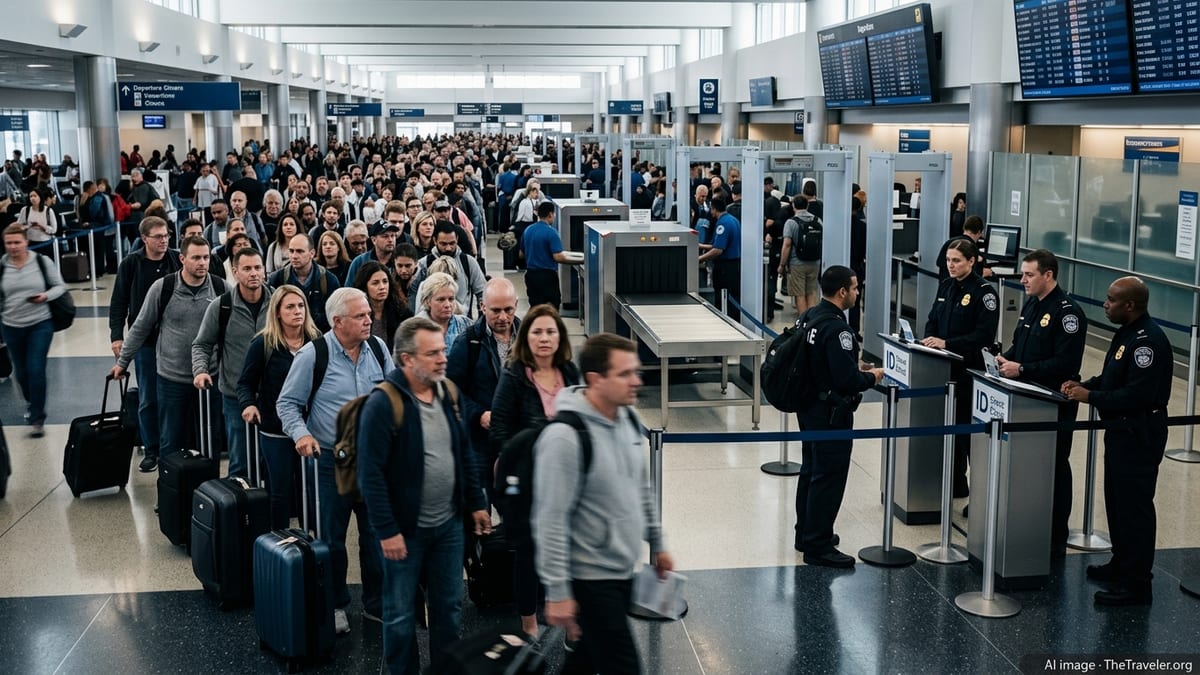
Travel and aviation coverage over the past week has highlighted scenes of serpentine lines at checkpoints and frustrated passengers missing flights after queuing for two to three hours at some airports. Reports indicate that Houston’s Bush Intercontinental and several busy East Coast hubs have already seen peak wait times stretch well beyond typical norms, even before the latest policy move from the White House.
The pressure point is timing. The shutdown hit just as spring break schedules push passenger volumes toward record territory, with millions of leisure travelers crowding airports on Fridays, Saturdays and Sundays. Airlines are attempting to keep flight operations on schedule, but understaffed checkpoints mean many flights are departing with empty seats simply because passengers are stuck on the landside of security.
Industry analysts note that this dynamic is particularly damaging for connecting itineraries. When an initial departure is missed because of security gridlock, rebooking options can be limited on already full routes, amplifying the disruption throughout the network and turning a long morning in line into an overnight stay in an unfamiliar city.
Trump’s ICE Airport Gambit: What Has Been Announced
Against this backdrop, President Donald Trump has confirmed that Immigration and Customs Enforcement agents will begin deploying to U.S. airports as soon as Monday, portraying the move as an emergency measure to relieve TSA staffing shortages. According to widely circulated coverage of statements by senior homeland security officials, ICE officers will not operate X-ray machines or advanced imaging equipment, but may be assigned to tasks such as guarding exit lanes, monitoring checkpoints and checking travel documents.
The policy shift follows days of public threats from the White House to “flood” airports with ICE personnel if Congress fails to approve a broader DHS funding package that includes additional money for immigration enforcement. Commentators across major outlets describe the move as both a tactical response to visible travel chaos and a pressure tactic in an ongoing political confrontation over border and interior enforcement priorities.
ICE, unlike TSA, is fully funded under separate appropriations and is not directly affected by the current lapse in DHS funding for aviation security. That asymmetry has become central to the political fight. Travel industry voices and labor advocates argue that redirecting immigration officers into airport roles underscores the degree to which unpaid TSA officers are being used as leverage in a budget stalemate rather than as a neutral safety workforce.
Operationally, there are open questions about scale. Public data suggests TSA employs more than 60,000 screening officers nationwide, compared with roughly one third of that number for ICE. Analysts caution that even a substantial ICE deployment would only partially offset TSA shortfalls at a limited number of large airports, leaving smaller and medium sized facilities vulnerable to persistent delays.
What Travelers Are Experiencing on the Ground
For passengers, the policy nuance matters less than the immediate reality at the checkpoint. Social media feeds and local broadcast segments this weekend are filled with images of winding queues stretching deep into terminal lobbies and even out toward curbside drop off zones. Travelers describe arriving the standard two hours before departure for domestic flights, only to find that recommendation insufficient.
Some accounts from Houston, Atlanta and New York area airports describe security waits approaching three hours during peak morning and late afternoon bank times, particularly at terminals serving high volumes of leisure routes. Reports indicate that families with small children and elderly travelers are among those most severely affected, as long periods of standing in congested, slow moving lines prove especially taxing.
Despite the growing number of viral clips, conditions are not uniform nationwide. Data aggregated from airport and government wait time tools suggests that many mid sized and smaller airports remain close to normal, with security checks under 20 minutes outside of traditional rush periods. However, flight consolidations and shifting passenger demand could quickly change that picture if the situation at larger hubs remains unstable.
Travelers with trusted traveler status are also feeling the impact. With TSA PreCheck and Global Entry programs temporarily curtailed as part of broader resource reallocations, dedicated lanes that once served as a pressure valve are either closed or significantly reduced at many locations. Publicly available guidance indicates that even those who have paid fees and passed background checks should not count on expedited screening during the shutdown period.
Security, Civil Liberties and Industry Concerns Around ICE at Checkpoints
The decision to introduce ICE officers into the airport security mix is drawing intense scrutiny from civil liberties groups, travel advocates and some aviation experts. Commentary in national and regional outlets emphasizes that ICE personnel are primarily trained for immigration enforcement and detention operations, not for high throughput passenger screening in a commercial aviation environment.
Critics argue that assigning officers with a mandate to identify and detain immigration targets into crowded terminals could have a chilling effect on international and immigrant communities, discouraging lawful travel and potentially prompting confrontations in already tense spaces. There is particular concern about how ICE will use its presence in secure areas of airports, where international arrivals, visa holders and mixed status families are concentrated.
Travel industry observers also question whether the move will meaningfully improve efficiency. Tasks such as exit lane monitoring and basic ID checks are only one component of the checkpoint process, and any missteps or uncertainty around roles could slow operations further. Coverage in trade publications points out that airport security badges, local training and coordination with airport police and airlines are all prerequisites before new personnel can be integrated into daily operations.
There is an economic dimension as well. Airlines, airports and tourism boards are all highly sensitive to perceptions of hostility or unpredictability in the U.S. entry process. If the presence of ICE at checkpoints or boarding areas is perceived as aggressive or intimidating, analysts warn that it could dampen inbound tourism at a moment when international visitor numbers are only slowly recovering in some markets.
Practical Advice for Travelers Navigating the Turmoil
While the situation remains fluid, several consistent themes are emerging from publicly available guidance and on the ground reports that can help travelers reduce the risk of major disruption. The most important is timing. For the coming days, many aviation commentators recommend arriving at least three hours before domestic departures and four hours before international flights at major hubs, particularly during early morning and late afternoon peaks.
Passengers should closely monitor airport and airline communication channels on the morning of travel for any updates on checkpoint closures, terminal changes or unusually long waits. Some airports provide live security wait estimates through apps or terminal screens, though observers caution that these tools may lag real conditions when lines build rapidly.
For connecting itineraries, travel experts suggest allowing longer layovers than usual, especially when transiting through currently stressed hubs. When possible, rebooking to less congested airports or off peak flight times may reduce exposure to the worst gridlock, even if it adds a stop or slightly lengthens the overall journey.
Finally, travelers are being reminded to prepare for more visible immigration enforcement activity within the airport environment. Those carrying passports, visas or other documentation should keep them easily accessible, and advocates advise that passengers take time to understand their rights in encounters with immigration officers. For now, the combination of unpaid TSA staff, an unfolding ICE deployment and unresolved political negotiations means that anyone flying in the coming days should expect a slower, more heavily policed experience from curb to gate.