

More news on this day
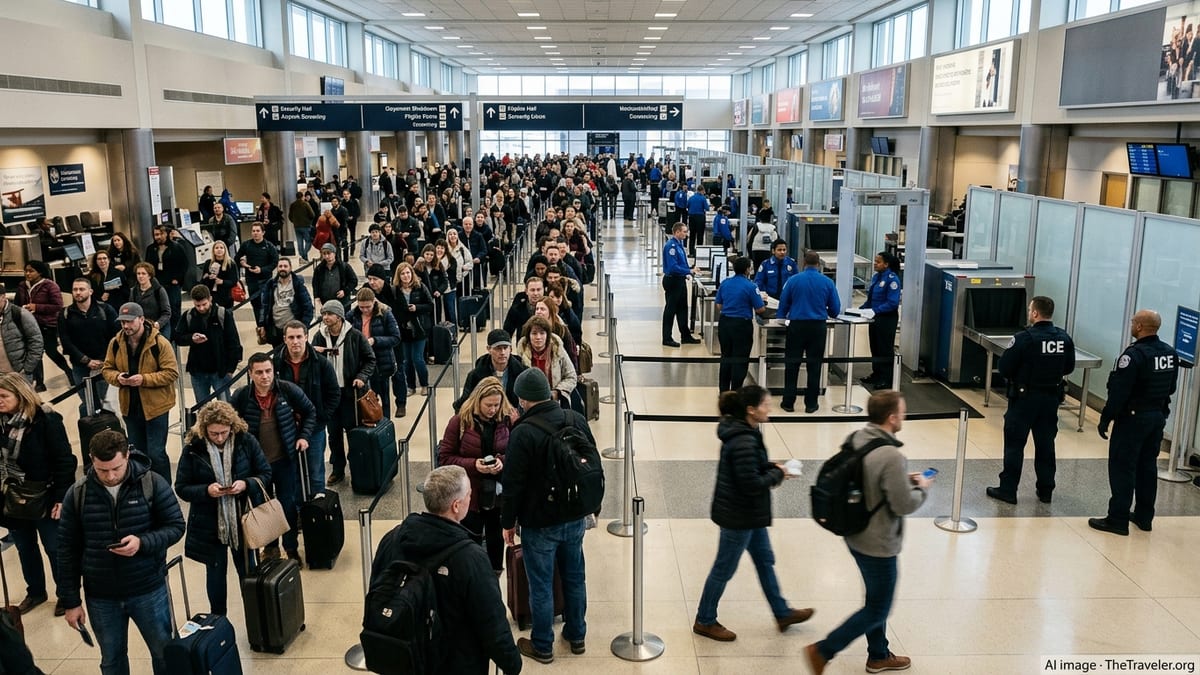
Major U.S. airports are grappling with a new layer of turbulence as Immigration and Customs Enforcement agents move into security zones during an ongoing federal government shutdown, intensifying debate over traveler rights while Transportation Security Administration staffing shortages fuel growing delays and anxiety.
Get the latest news straight to your inbox!
Shutdown Strains Turn Airports Into Flashpoints
The latest partial shutdown of the federal government has again pushed the nation’s aviation system to the brink, with TSA officers and air traffic personnel working without pay and reporting heightened fatigue and financial stress. Publicly available information shows that extended lapses in funding have previously driven spikes in sick calls among screeners and controllers, slowing security lines and forcing the Federal Aviation Administration to trim traffic at major hubs to preserve safety.
Recent shutdowns in 2025 created rolling disruptions across large markets, with flight delays and cancellations mounting as staffing gaps widened at checkpoints and in control towers. Industry analyses and congressional briefings describe an aviation network operating closer to its limits, where even modest staffing shortfalls can cascade into hourslong queues and missed connections for travelers.
Travel advocacy groups and airport operators are now warning of a similar pattern as the current funding impasse drags on. According to published coverage, some airports are advising passengers to arrive at least three hours early, even for domestic flights, in anticipation of slower screening, unstaffed lanes, and intermittent closures of security checkpoints.
At the same time, airline and airport trade organizations are pressing lawmakers to insulate critical aviation workers from future shutdowns. Campaigns calling for guaranteed back pay or automatic funding for TSA and FAA operations during budget standoffs are gathering support within parts of the travel industry, which argues that predictable security staffing is essential infrastructure rather than a negotiable budget item.
ICE Moves Into TSA Lanes Amid Political Showdown
The White House directive sending ICE agents into airport terminals has added a stark new dimension to the shutdown story. Reports from outlets including the Associated Press and Axios indicate that ICE officers in tactical gear have begun appearing near TSA security checkpoints at major airports such as Phoenix Sky Harbor, Pittsburgh International, and New Orleans’ Louis Armstrong airport, with the stated goal of assisting overwhelmed screeners.
These deployments come as many TSA officers, designated essential workers, continue to report for duty without pay. Administration officials have framed the move as a way to keep passengers moving despite attrition and low morale among front-line security staff. However, publicly available information also shows that ICE personnel are not trained in aviation security procedures to the same standards as TSA officers, raising questions about how much relief they can realistically provide inside the checkpoint environment.
The presence of armed immigration agents in public screening areas has unsettled some travelers and airport communities, particularly in regions with large immigrant populations. Civil rights advocates argue that mixing immigration enforcement with routine security screening risks blurring legal lines and could discourage vulnerable travelers from flying, even when they possess valid documents.
Local airport authorities are navigating a delicate balance. While ICE has broad legal authority to operate in public areas of airports, internal memoranda and policy statements at some facilities emphasize that any additional federal presence must not impede passenger flow or create an atmosphere of intimidation inconsistent with their customer-service obligations.
Traveler Rights at the Checkpoint and Beyond
The deployment of ICE agents during a shutdown is also reinvigorating a long-running legal debate over the scope of traveler rights at airports. TSA’s screening mandate is narrowly focused on aviation security, primarily detecting weapons and explosives. ICE and Customs and Border Protection, by contrast, are tasked with enforcing immigration and customs laws, and operate within a broader “border zone” where their inspection authority is more expansive than that of typical domestic law enforcement.
According to civil liberties organizations and legal advocacy groups, this convergence of agencies in and around checkpoints can create confusion for passengers about what they must comply with and what remains voluntary. For example, travelers are generally required to submit to security screening and identity verification in order to fly, but they may have more discretion when it comes to answering questions unrelated to flight safety, consenting to searches of digital devices, or engaging in immigration interviews away from the gate.
Recent lawsuits, including challenges to electronic device searches at ports of entry, underscore that federal authority is not unlimited, even in airports that are treated as border inspection points. Courts have increasingly scrutinized prolonged or highly intrusive searches that are only loosely connected to customs or security objectives, signaling that agencies must balance enforcement priorities against constitutional protections.
Advocates for traveler rights are using the current shutdown as a teaching moment, circulating plain-language guides that explain the difference between TSA screening, immigration questioning, and local police activity. These materials emphasize that passengers can generally ask whether they are free to leave, may request legal counsel in certain situations, and can file complaints if they believe they were targeted based on race, religion, or national origin.
The TSA Crisis: Paychecks, Policy and Public Trust
Beneath the immediate drama of long lines and visible ICE patrols lies a deeper structural strain on TSA itself. The agency has faced persistent staffing shortages, high turnover, and a demanding workload even in normal budget years. Testimony submitted to Congress in early 2026 describes how the most recent 43 day shutdown left frontline officers dealing simultaneously with missed paychecks, heightened public scrutiny, and a mandate to maintain normal throughput and security standards.
Shutdowns magnify longstanding concerns about morale and retention. With many screeners earning modest wages and facing irregular hours, even a single missed paycheck can trigger cascading financial pressures, leading some to seek other employment. Every departure lengthens training pipelines and exacerbates the experience gap at checkpoints, prompting warnings from aviation safety specialists about the cumulative impact on threat detection and incident response.
Policy debates over TSA’s technological tools further complicate the picture. Programs such as facial recognition for identity verification and expanded use of mobile driver’s licenses aim to streamline screening, but they also raise privacy and civil liberties questions. Watchdog groups argue that passengers already struggling to navigate shutdown disruptions may feel even less empowered to opt out of emerging screening technologies that are technically voluntary.
Public trust is emerging as a crucial metric. Travel surveys and anecdotal reports suggest that while most passengers continue to view airport security as necessary, frustration grows when they perceive political brinkmanship as directly responsible for missed flights, lost pay for federal workers, and the introduction of additional enforcement agencies into the airport mix.
What Travelers Can Expect in the Coming Weeks
As negotiations over federal funding continue, aviation analysts expect a period of heightened unpredictability at U.S. airports. Flight schedules remain subject to disruption if the FAA is forced to again meter traffic in congested corridors, while TSA screening capacity could fluctuate day to day based on staffing, overtime availability, and the evolving impact of unpaid work on employees’ personal finances.
Travel industry advisories recommend that passengers during a shutdown build extra time into their itineraries, prepare for longer lines at both standard and PreCheck lanes, and stay alert to changing guidance from airlines and airport operators. Some airports are publishing shutdown-specific frequently asked questions, clarifying that while TSA operations continue, service levels and wait times may not match typical expectations.
Legal advocates, meanwhile, encourage travelers to remain informed but not alarmed by the increased visibility of ICE and other federal personnel. Guidance materials emphasize carrying valid identification, keeping digital devices backed up and locked when crossing borders, and calmly asserting rights when appropriate. These groups stress that most trips will proceed without incident, even in a period of elevated tension.
For now, the convergence of a partisan budget standoff, an overstretched security workforce, and an expanded immigration enforcement footprint has turned airports into a visible arena for larger national debates. What happens in the coming weeks at security lanes from Phoenix to Pittsburgh will help determine not only the pace of travel but the contours of traveler rights and expectations in the years ahead.