

More news on this day
Hartsfield-Jackson Atlanta International Airport is again under intense scrutiny as reports of extraordinary security wait times, rolling delays and weather-fueled disruptions collide with a new element: federal immigration officers stepping in on the front lines of passenger screening, underscoring how fragile the U.S. aviation system has become for Delta customers and other travelers nationwide.
Get the latest news straight to your inbox!
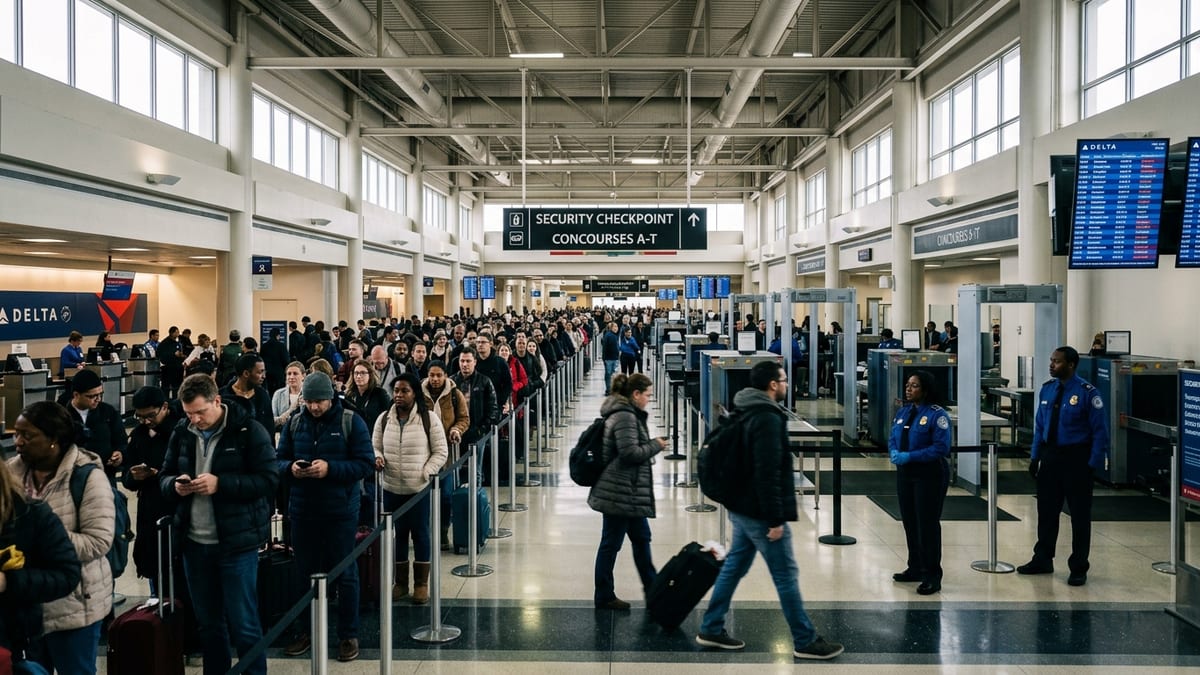
ICE Joins Front-Line Efforts at Atlanta Security Checkpoints
According to recent public discussion threads and local coverage, Immigration and Customs Enforcement personnel have been observed supporting security operations at Atlanta’s Hartsfield-Jackson airport, the world’s busiest passenger hub and Delta Air Lines’ primary base. The reports describe ICE officers assisting Transportation Security Administration teams during peak surges, particularly in the international terminal, as passenger volumes and staffing mismatches push wait times to extremes.
Accounts shared publicly on social platforms in recent days describe scenes ranging from routine passage through security to lines stretching out of the terminal, with some travelers reporting wait times measured in multiple hours. One widely shared account referenced waits approaching nine hours at the height of the recent crunch, although more recent posts indicate conditions fluctuating by time of day and checkpoint. The visible presence of ICE personnel inside the screening area has generated debate about the shifting boundaries between immigration enforcement and passenger-processing support.
Publicly available information suggests that these deployments are framed as a short term reinforcement aimed at easing bottlenecks rather than a permanent structural change in how airport security is administered. However, the optics of immigration officers stepping into a role that many travelers associate primarily with TSA have raised broader questions about how far federal agencies will go to keep aviation moving when the system is under acute strain.
At the practical level, the most immediate impact for travelers is an unpredictable security experience at Atlanta. While some flyers currently report clearing checkpoints within minutes, others recount being stuck in slow moving queues for hours, illustrating how quickly conditions can swing during staff or weather related shocks.
Winter Weather and a Strained System Push Delta and Peers to the Brink
The turbulence at Atlanta’s security lanes comes on the heels of a punishing winter for U.S. aviation. A series of ice and snow events across the Southeast and East Coast, including Winter Storm Fern in late January, triggered hundreds of cancellations and thousands of delays at Hartsfield-Jackson alone. Publicly available data and coverage show that Delta, which concentrates much of its network through Atlanta, absorbed the bulk of the disruption, with knock-on effects for partner and competitor airlines sharing the same runways and airspace.
Industry analyses and academic research highlight how weather shocks now interact with a system already stretched by staffing constraints, dense schedules and aging infrastructure. When Atlanta’s operations slow because of ice on runways, frozen jetways or deicing backlogs, traffic backs up across Delta’s domestic and international network, and delayed aircraft arrive late to other hubs from New York to Los Angeles. This cascading pattern has been documented repeatedly over the past two winters, with one severe storm in January pushing U.S. cancellations to their highest point since the pandemic era.
Compounding the weather stress is the long tail of earlier technology failures and operational crises. The 2024 Delta disruption tied to a major software incident is still cited by analysts as a warning about the fragility of tightly banked hub operations. Although that specific event is in the past, it left airlines more cautious about recovery windows and spare capacity, even as they continue to sell ambitious schedules that leave little margin when storms hit.
As a result, a single day of freezing rain or an unplanned ground delay program can tip the balance from manageable inconvenience into a multi day ordeal for passengers. Atlanta’s central role in U.S. air travel means these local shocks can quickly translate into missed connections, rolling cancellations and crowded rebooking queues far beyond Georgia.
Security Bottlenecks Reveal Deeper Federal Staffing Challenges
While weather events are highly visible, the Atlanta situation also reflects a quieter crunch in federal staffing that has been building for years. Trade groups and policy papers have pointed to persistent shortages among customs and border personnel at major U.S. gateways, including Atlanta, leading to long waits at immigration halls and, increasingly, congestion that spills back into domestic departure areas.
Recent research on aviation performance indicates that security-related delays are becoming a more statistically significant contributor to overall flight disruption than in the decade before the pandemic. As passenger volumes rebound and exceed earlier peaks, federal screening and inspection resources at many large airports have not grown at the same pace, creating a structural gap that airlines and airports struggle to fill with their own staff or new technology.
The reports of ICE officers augmenting TSA and airport teams at Atlanta can be seen as an improvised response to this gap. However, observers note that relying on personnel reassigned from other missions does not fully address the underlying need for sustainably staffed checkpoints and modernized screening systems. Policy documents from industry coalitions continue to call for increased congressional funding for both TSA and customs operations, as well as more flexibility for airports to co invest in staffing and infrastructure.
In the meantime, passengers are left navigating a security landscape that can change from day to day. A morning departure might breeze through in 15 minutes if additional lanes are open and federal reinforcements are in place, while an afternoon rush backed up by weather diversions or inbound international traffic can push waits into hours, even when flight operations themselves appear normal on the departure boards.
How the Atlanta Crisis Ripples Across the Country
Because Hartsfield-Jackson is the primary hub for Delta and an important connecting point for other carriers, operational trouble in Atlanta rarely stays local. When security lines swell, passengers miss flights that technically depart on time, forcing airlines to scramble for later seats and overnight accommodations. When storms or staffing issues trigger mass cancellations, Delta’s tightly interconnected schedule sends delays outward along every spoke of its network.
Publicly available performance tables and on time data illustrate how a relatively small proportion of disrupted flights at a mega hub can translate into widespread delays across the national system. A canceled departure from Atlanta to a regional city can mean that aircraft never reaches its next assignment, causing a downstream cancellation in another state hours later. Likewise, transcontinental and transatlantic routes that depend on connection flows through Atlanta may depart with empty seats or depart late as crews hold the door for still clearing passengers.
Other airlines are not immune. Carriers that rely on code share agreements or schedule coordination with Delta can be dragged into the same web of missed connections and rebookings. Even unaffiliated airlines may be forced to adjust as air traffic control reroutes traffic around Atlanta’s airspace or contends with congestion in sectors serving the Southeast. For travelers, the practical effect is that disruption headlines centered on Atlanta can foreshadow a rough day at the airport thousands of miles away.
These dynamics also complicate recovery. Once airports across the network are full of displaced passengers, crews out of position and aircraft awaiting maintenance checks, returning to normal operations can take days, even if the original cause, whether a storm or a security staffing crunch, lasted only a few hours.
What Travelers Should Do Right Now
For travelers with upcoming trips through Atlanta, the recent turmoil carries several concrete implications. First, experts who track airport performance increasingly advise building in far more buffer time than pre pandemic norms, particularly for morning and midday departures when banks of flights converge. For domestic flights, arriving at least two and a half to three hours early is becoming common guidance at Atlanta on high traffic days, with even more time recommended for international departures.
Second, passengers are urged to pay close attention to the specific terminals and checkpoints they will use. Public posts over the past week show that conditions can differ sharply between general screening lanes, PreCheck, CLEAR and dedicated international checkpoints. Some travelers have reported clearing one set of lanes in under 15 minutes while another part of the airport struggled with multi hour queues at the same time. Monitoring airline apps, airport alerts and real time wait time tools can help travelers adjust their route to the gate.
Third, travelers connecting through Atlanta during periods of winter weather should be prepared for rolling schedule changes, even if their origin and destination cities have clear skies. Building longer layovers, packing medications and essentials in carry on bags and reviewing airline rebooking and hotel policies in advance can make a significant difference if an overnight stay becomes necessary. Publicly accessible advisories show that major carriers, including Delta, have been issuing travel waivers more frequently in recent storms to give customers flexibility to move trips away from peak disruption windows.
Finally, observers note that the presence of ICE officers alongside TSA teams should not change the basic rules for passengers but may alter the feel of the security checkpoint for some. Travelers are generally advised to ensure travel documents are in order, follow posted instructions carefully and factor in the possibility of additional identity checks or secondary screening during peak surges. With the system under visible strain, building extra time and patience into any itinerary touching Atlanta has become a necessary part of flying through the world’s busiest airport this season.