

More news on this day
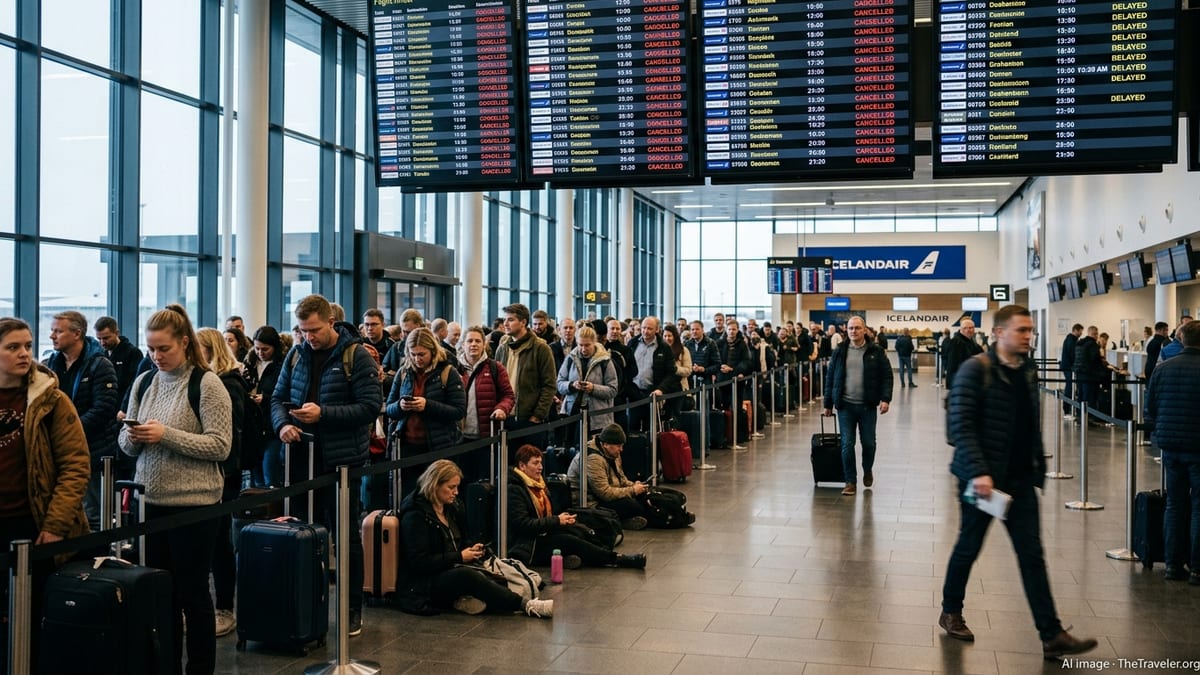
Travel across Iceland was heavily disrupted as 93 flights operated by Icelandair, British Airways, SAS, Finnair and Air Iceland Connect were grounded, affecting major domestic and international routes through Keflavík Airport, Reykjavík Airport and the regional hubs of Akureyri, Egilsstaðir and Ísafjörður.
Get the latest news straight to your inbox!
Wide-Ranging Cancellations Hit Iceland’s Main Gateways
Published airport data and airline information indicate that the disruption affected both international and domestic traffic, with grounded flights concentrated at Keflavík International Airport, the country’s primary gateway, and at Reykjavík Airport, which handles a large share of domestic services. Regional airports at Akureyri, Egilsstaðir and Ísafjörður also reported multiple cancellations, leaving communities in the north and east with sharply reduced connectivity.
The 93 affected flights spanned a typical mix of transatlantic services, European routes and internal connections. Icelandair, which operates the majority of movements at Keflavík, accounted for a significant share of the grounded schedule, while British Airways, SAS and Finnair services between key European hubs and Keflavík were also interrupted. Air Iceland Connect branded domestic services, now operated under the Icelandair umbrella, saw flights linking Reykjavík with Akureyri, Egilsstaðir and Ísafjörður temporarily pulled from the boards.
According to publicly available timetables and traffic statistics, Keflavík normally sees several hundred weekly flights by Icelandair alone during the busy season, supplemented by a smaller but strategically important presence from British Airways, SAS and Finnair. The grounding of 93 flights in a short window therefore represents a sizeable portion of daily and short-term capacity, with ripple effects across onward connections in Europe and North America.
Real-time flight boards showed clusters of cancellations through the morning and afternoon, particularly on high-frequency links serving Reykjavík and onward European hubs. Travelers arriving to check-in areas in Keflavík and Reykjavík encountered departure screens dominated by red “cancelled” notices, with airport bus operators and nearby hotels rapidly absorbing a surge in stranded passengers.
Domestic Links Severed Between Reykjavík and Regional Towns
The disruption was acutely felt on Iceland’s domestic network, where flights fulfill a lifeline function for communities distant from the capital. Available route information shows that Akureyri in the north, Egilsstaðir in the east and Ísafjörður in the Westfjords all experienced grounded services on routes typically flown under the Air Iceland Connect brand and now integrated into Icelandair’s operations.
Schedules published for recent seasons highlight that Reykjavik–Akureyri and Reykjavik–Egilsstaðir are among the busiest domestic legs, with multiple daily rotations in normal conditions. With several of these flights removed in quick succession, travelers reported missed medical appointments, disrupted business trips and delayed tourism itineraries, as overland alternatives on long-distance roads remain slow, especially in poor weather.
Ísafjörður, served by a more limited number of daily flights due to its short, coast-hugging runway and challenging approach, appeared particularly exposed. Grounded services there meant residents and visitors had few immediate alternatives other than long drives on mountain roads or waiting for spare seats on later flights once operations resumed. Regional tourism operators in the Westfjords, already operating within a short season, were left to rearrange guest arrivals and departures at short notice.
Publicly accessible commentary from recent seasons shows that delays and cancellations on Iceland’s domestic routes tend to cascade quickly, as small aircraft and tight turnarounds leave little room for recovery. The grounding of multiple flights on the same day therefore created a pronounced backlog of passengers at Reykjavík Airport and regional terminals, with airport staff working to rebook travelers on the next available departures.
International Travelers Face Missed Connections and Overnight Stays
The impact extended far beyond Iceland’s borders as international passengers missed onward connections in both directions. Keflavík’s role as a transatlantic hub, heavily used by Icelandair and partner airlines to connect North America and Europe, meant that each cancelled departure risked breaking a chain of multiple connecting itineraries.
Public discussion on travel forums and social media in recent disruptions highlights the typical pattern faced by passengers: overnight stays near Keflavík, rebooking onto later flights with limited availability, and complex rerouting via other European hubs. The simultaneous grounding of flights from Icelandair, British Airways, SAS and Finnair increased pressure on remaining seats, with some travelers reportedly offered itineraries leaving a full day later than planned.
Travelers already en route to Iceland found their trips abruptly altered, with inbound segments operating while onward domestic legs to Akureyri, Egilsstaðir or Ísafjörður were cancelled. In such cases, passengers often ended up unexpectedly overnighting in Reykjavík or the Keflavík area, arranging short-notice accommodation while awaiting confirmation of new departure times.
According to publicly available guidance, airlines generally respond to this type of disruption by offering rebooking at no additional fare and, in some cases, hotel and meal vouchers where applicable. However, anecdotal reports from previous events suggest that travelers may still face out-of-pocket costs and lengthy waits at customer service desks or call centers during periods of heavy disruption.
Airlines Activate Contingency Measures as Passengers Seek Clarity
In line with established practice during major schedule disruptions, the affected airlines moved to adjust their operations and manage passenger flows. Publicly accessible information about recent irregular operations indicates that Icelandair typically consolidates lightly booked departures, deploys larger aircraft where feasible, and arranges additional services once conditions allow, in order to clear backlogs from Keflavík and Reykjavík.
British Airways, SAS and Finnair, which serve Iceland primarily from their main hubs in London, Copenhagen, Oslo, Stockholm and Helsinki, rely on those hubs for onward connections across Europe, Asia and North America. Grounded flights on the Iceland legs not only stranded travelers in Iceland but also triggered knock-on effects for passengers expecting to join flights in those hubs later in the day.
Information available from airport operations reports shows that ground handling teams, air traffic coordinators and airlines typically collaborate to prioritize flights based on factors such as connection banks, crew duty limits and aircraft positioning. In practice, this can mean that some routes resume more quickly than others, leaving certain regional destinations such as Ísafjörður or Egilsstaðir waiting longer for restored service than higher-volume international legs.
Passengers attempting to rebook used a mix of airline apps, websites and call centers, along with on-site ticket desks at Keflavík and Reykjavík. Publicly shared experiences from former disruptions suggest that digital tools can speed up rebooking for some travelers, although system overloads and rapidly changing seat availability often complicate the process on the busiest days.
What the Disruption Means for Future Travel to Iceland
The grounding of 93 flights across multiple carriers underlines the sensitivity of Iceland’s aviation network, where a small number of airlines and airports handle a concentrated volume of traffic. With Icelandair operating an extensive connecting network and international brands such as British Airways, SAS and Finnair feeding visitors through Keflavík, any broad-based disruption quickly acquires an international dimension.
Recent schedule expansions, including additional transatlantic and Nordic routes into Keflavík and the continued integration of domestic services once marketed as Air Iceland Connect, have increased reliance on tight connections between international and regional flights. Industry observers note that this model offers attractive travel options in normal conditions but can magnify the effect of large-scale cancellations when they occur.
For travelers planning upcoming trips, publicly available advice from travel experts and consumer organizations stresses the value of allowing extra connection time, carrying essential items in hand luggage and maintaining flexible itineraries where possible. Travel insurance policies that explicitly cover missed connections and extended delays may also prove useful in the event of similar disruptions.
As operations normalize after the latest wave of cancellations, airlines are expected to review their contingency planning and passenger communication strategies. Publicly reported experiences from earlier disruptions suggest that clear, timely updates and straightforward rebooking options remain among the most important factors in how travelers perceive their journey through Iceland’s skies.