

More news on this day
Severe late-winter weather and ongoing volcanic unrest have triggered a wave of flight cancellations across Iceland, disrupting transatlantic and European travel on Icelandair, British Airways, Finnair, and several other carriers and affecting routes to Boston, New York, Toronto, Vancouver, London, Copenhagen, Paris, Berlin, Amsterdam, Dublin, and beyond.
Get the latest news straight to your inbox!
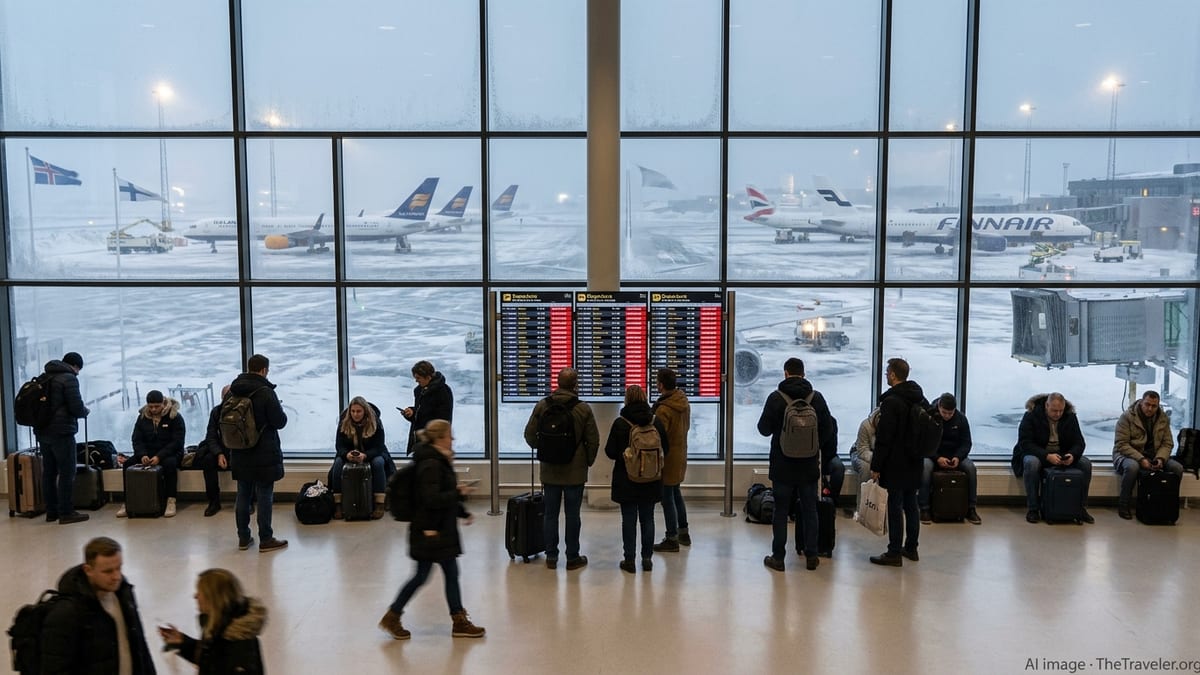
Storm System and Volcanic Unrest Paralyze Keflavík Operations
Publicly available information from Icelandic media and traveler reports indicates that more than 80 flights to and from Keflavík International Airport have been cancelled over the past 24 to 48 hours, as airlines halt operations in the face of powerful winds, heavy precipitation, and unstable conditions on the Reykjanes Peninsula.
A strong low-pressure system has brought prolonged high winds and blowing snow to much of southwest Iceland, creating periods of severely reduced visibility and crosswinds that exceed safe operating limits for takeoffs and landings. At the same time, continued magma intrusion beneath the Sundhnúkur crater row near Svartsengi has kept the region on elevated alert, adding to operational caution even though the airport itself remains open.
While Keflavík has technically stayed operational, airlines have chosen to cancel a large portion of their schedules rather than attempt to operate in marginal conditions. This combination of adverse weather and a fragile geologic situation has had an outsized impact on Iceland, which functions as a major North Atlantic hub linking Europe and North America.
The result has been a rapid build-up of stranded passengers in Reykjavik and in departure cities across Europe and North America, stretching airline call centers and digital rebooking tools far beyond normal capacity.
Wide Network Impact from North America to Major European Hubs
The cancellations are rippling across a network that relies heavily on Iceland as a connecting point. Icelandair’s transatlantic schedule has seen extensive disruption, with flights to and from Boston, New York, Toronto, and Vancouver among those most affected. Reports from passengers describe last-minute notifications, overnight delays, and difficulty securing seats on the next available services.
European routes have also been hit. Flights linking Keflavík with London, Copenhagen, Paris, Berlin, Amsterdam, and Dublin have been cancelled or significantly delayed, complicating onward connections across the continent. Carriers such as British Airways and Finnair, which operate seasonal or regular services into Iceland, have had to trim their schedules or temporarily suspend specific rotations as conditions worsened.
Because many travelers use Iceland for same-day onward connections between Europe and North America, one cancellation can cascade into multiple missed flights. In practice, this means that a grounded departure from London or Copenhagen does not just strand passengers there, but also eliminates their onward link to North American cities and vice versa.
With aircraft and crews out of position, airlines are warning that knock-on effects could linger even after weather conditions improve, as timetables are rebuilt and aircraft are gradually returned to their normal rotations.
Travelers Report Long Waits, Mixed Rebooking Experiences
Accounts shared on travel forums and social media describe travelers facing multi-hour waits to reach customer-service agents, both by phone and via online chat, as thousands seek new itineraries at the same time. Some passengers report being automatically rebooked within hours, while others say they have waited much longer with limited information about alternative flights.
In some cases, travelers have secured rebookings for the following day or later in the weekend, while others have been offered itineraries several days out, particularly from heavily affected gateways such as Boston and New York. A number of passengers in Iceland have also reported difficulties finding last-minute hotel rooms near the airport, as local capacity tightens during peak disruption.
Public information about airline policies suggests that, where cancellations are weather-related, carriers are generally providing rebooking at no additional fare but more limited assistance with extra expenses. Travelers transiting the European Union or United Kingdom are checking their entitlements under local passenger-rights rules, though compensation typically does not apply when disruptions are caused by severe weather or safety-related concerns.
Travel insurance providers are also seeing increased inquiries, as some policies cover additional accommodation, meals, or alternative transport when flights are cancelled for reasons outside the airline’s direct control.
Airlines Adjust Schedules While Monitoring Conditions
Operational data and airline communications show that schedules into Iceland are being adjusted day by day as carriers track weather forecasts and seismic updates. Icelandair, which operates the largest network to and from Keflavík, has consolidated flights, added select extra services where possible, and used automated tools to reassign passengers to remaining departures.
British Airways and Finnair, along with other European airlines serving Reykjavik, appear to be favoring cancellations on the most weather-exposed rotations and overnight services, while attempting to preserve a core schedule that can be reliably operated when wind speeds and visibility allow. Low-cost and leisure-focused carriers have also trimmed frequencies, particularly on routes where alternative dates or nearby airports offer some flexibility.
Airlines are emphasizing that safety remains the primary factor in deciding whether to operate a flight, especially in an environment where strong crosswinds and shifting volcanic activity can rapidly change operating conditions. Even once the current storm system moves away from Iceland, carriers are expected to rebuild their schedules cautiously to avoid further large-scale disruption.
Aviation analysts note that Iceland’s role as a connecting hub means that any significant operational pause there will inevitably be felt across multiple time zones, as airlines work to reposition aircraft and crews and protect the most critical segments of their networks.
What Current and Future Travelers Should Expect
For travelers scheduled to fly through Iceland this weekend and early next week, publicly available guidance from airlines and travel organizations highlights the importance of monitoring booking tools and notifications closely. Many passengers are being rebooked automatically, but seat availability on certain transatlantic and European routes remains tight until operations fully stabilize.
Passengers are being urged to arrive early at airports, keep boarding passes and confirmation numbers accessible, and prepare for the possibility of extended waits at check-in or transfer desks if additional schedule changes occur. Those with fixed-time commitments, such as cruises or tours, are being advised to contact their operators as soon as possible to discuss contingency plans.
Looking ahead, forecasts suggest that weather conditions should gradually improve after the current system moves through, but the underlying volcanic unrest on the Reykjanes Peninsula means that the aviation environment around Iceland is likely to remain closely monitored for the foreseeable future. While the chance of repeated mass cancellations on this scale may diminish as the storm clears, airlines and travelers alike are expected to maintain a heightened level of caution.
For now, the disruption underscores how quickly a combination of North Atlantic weather and geologic volatility can upend even well-planned travel itineraries, particularly on routes that rely on a single hub to connect continents.