

More news on this day
Newly compiled crime and safety indicators from Eurostat, the United Nations Office on Drugs and Crime and the latest Global Peace Index place Iceland firmly alongside Switzerland, Finland, Denmark, Norway, Austria, Malta and Slovenia in a select group of European countries with the world’s lowest crime rates, reinforcing the continent’s reputation as a global benchmark for safety and security.
Get the latest news straight to your inbox!
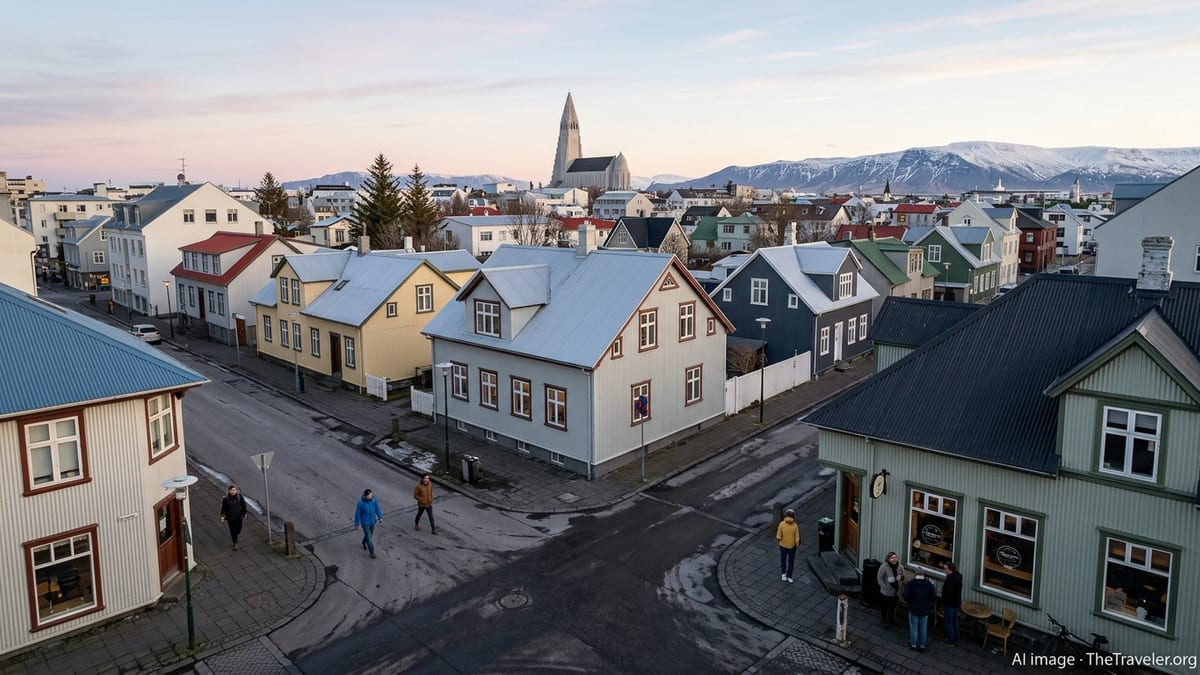
New Statistics Confirm a Low-Crime Core Across Europe
Recent releases drawing on Eurostat crime and criminal justice statistics and UNODC homicide data indicate that a cluster of European countries continues to record some of the lowest levels of violent crime worldwide. Long-term figures for intentional homicide, often described by researchers as a key barometer of serious criminality, show Iceland, Switzerland, Norway, Austria, Malta and Slovenia consistently below one or around one homicide per 100,000 inhabitants in most recent reporting years. Finland and Denmark record slightly higher but still notably low rates by global standards, keeping them within Europe’s safest tier.
These findings are echoed in comparative analyses that combine homicide, assault, robbery and other offences into broader indices. European overview work based on UNODC and Eurostat inputs portrays much of Northern and Central Europe at the bottom end of global criminality rankings, while a 2026 update on organized crime in Europe places countries such as Iceland and Switzerland among those with the lowest overall criminality scores on the continent. Together, these sources present a picture of structurally low crime rather than a short-term statistical fluctuation.
In parallel, global composite indicators that track conflict levels and personal safety continue to underline the same pattern. The 2025 edition of the Global Peace Index again ranks Iceland as the most peaceful country in the world, with Switzerland, Austria, Denmark, Slovenia and Finland all appearing in the top tier of the table. Although the index is broader than crime alone, its safety and security components rely heavily on long-term crime and violence data derived from official statistics, reinforcing the convergence between criminal justice figures and wider peace metrics.
For travelers and residents alike, these overlapping datasets suggest that much of Northern and Alpine Europe operates with a baseline of everyday safety that remains unusual at a global level. While individual incidents and yearly fluctuations still occur, the long-run indicators point to enduring structural advantages in these societies when it comes to exposure to violent crime.
Iceland’s Quiet Streets and a Long Record of Safety
Iceland’s prominent position in the latest figures is less a new development than a reaffirmation of a long-standing trend. Official crime records compiled over several decades show that the country has experienced very low levels of serious violence relative to its population, with homicide counts often in the low single digits each year. When translated into rates per 100,000 people, these figures place Iceland among the safest countries in Europe in UNODC comparisons, rivaled only by a handful of other small, high-income states.
Publicly available information on Iceland’s justice system and policing practices points to a landscape characterized by high social trust, relatively low income inequality and widespread confidence in institutions. International travel risk assessments and safety rankings produced for 2025 repeatedly describe Iceland as a low-crime environment where violent offences are rare and most reported incidents involve non-violent infractions or property-related disputes. This reputation is reflected in travel-focused safety indices that place Iceland at or near the top of global rankings for secure tourism.
Researchers caution that small populations can experience notable percentage swings from a single incident, and Iceland has not been immune to years with unusually high case numbers in statistical terms. Nevertheless, when averaged over longer periods, the pattern remains one of very limited exposure to lethal violence and a comparatively modest volume of recorded offences overall. This background helps to explain why both crime-specific databases and broader peace indices continue to highlight the country as an outlier for safety.
For the tourism economy, the reinforcement of Iceland’s status as one of the world’s most peaceful and low-crime destinations arrives at a time when international travelers are placing heightened emphasis on security and predictability. The alignment between UNODC, Eurostat and independent peace and travel indices strengthens the perception that Iceland offers a reliably safe backdrop for nature-based and urban trips alike.
Nordic and Alpine Neighbours Share Similar Crime Profiles
The latest datasets also underline how closely Iceland’s profile aligns with several Nordic and Alpine neighbours. UNODC homicide tables and historic Eurostat comparisons show Denmark, Norway, Finland, Switzerland and Austria clustered together at the low end of the European scale, often recording homicide rates of around one victim per 100,000 inhabitants or less. Slovenia and Malta, though smaller and located further south, display similarly modest rates for lethal violence and comparatively low levels of recorded serious crime.
Cross-country analyses point to a series of shared characteristics in these states. High levels of social welfare provision, broad access to education and healthcare, and relatively cohesive societies are frequently cited as contributing factors when researchers interpret why Nordic and Central European countries record less violent crime than many peers. Robust legal institutions and relatively effective law enforcement systems are also described as elements that reinforce deterrence and increase crime reporting confidence.
Travel risk reports and safety indices produced in 2024 and 2025 consistently group these countries together. Publications summarizing the safest destinations highlight Iceland alongside Switzerland, Austria, Denmark, Finland, Slovenia and Malta as examples of places where tourists are statistically less likely to encounter violent crime than in many other parts of the world. While petty theft and other minor offences still occur, particularly in larger cities and during peak tourist seasons, the overall probability of serious victimization remains low.
For European policymakers, this shared profile has shaped a loose community of practice around crime prevention and social policy. Comparative studies by European research bodies regularly examine how these countries structure policing, social services and community-based interventions, offering a reference point for states seeking to reduce crime and improve public confidence in safety.
Data Quality, Caveats and What Crime Rates Really Show
Despite the positive indicators, statisticians and criminologists warn that crime figures, even when sourced from Eurostat and UNODC, require careful interpretation. Variations in legal definitions, reporting practices and police recording standards can influence the number of offences captured in each jurisdiction. Some countries invest heavily in encouraging victims to report crime and in digitizing police records, which can temporarily raise recorded incident counts without reflecting a real-world increase in offending.
To address these issues, international comparisons often prioritize homicide statistics because they are less sensitive to reporting behavior and legal thresholds. The latest UNODC compilations give a particularly clear picture of how countries such as Iceland, Switzerland, Finland, Denmark, Norway, Austria, Malta and Slovenia stand out even when measured on this narrow but robust indicator. Analysts then layer additional data, such as assault and robbery rates, survey-based perceptions of safety and indices of organized crime, to build a more complete understanding of public security.
Another caveat concerns the impact of short-term events. Economic downturns, social unrest or isolated high-profile incidents can temporarily alter crime figures in any country, including those traditionally regarded as safe. Recent public discussions in Iceland, for example, have noted that an unusual cluster of serious cases in a single year can noticeably alter per-capita rates because of the country’s small population base. Longer time series compiled in UNODC and Eurostat datasets help smooth out these spikes, demonstrating whether they represent a lasting shift or a short-term anomaly.
For travelers and residents reading these numbers, experts recommend focusing on multi-year trends and cross-checked indicators rather than single-year fluctuations. The sustained performance of Iceland and its European peers across homicide data, wider crime categories and multi-variable peace and safety indices suggests an underlying resilience that short-term variations have not yet dislodged.
Implications for European Travel and Perception of Safety
The continued appearance of Iceland and its low-crime peers in the upper ranks of international safety tables has direct implications for tourism and mobility across Europe. Travel insurers, tour operators and booking platforms increasingly incorporate crime and safety indicators into their own risk models, influencing product design, pricing and marketing narratives. Destinations with consistent records of low violent crime often benefit from lower perceived risk among consumers, which can support steady visitor numbers even when global conditions are uncertain.
For European city tourism, the reputational halo extends beyond national averages. Capital cities such as Reykjavik, Zurich, Vienna, Helsinki, Copenhagen, Oslo, Ljubljana and Valletta are frequently profiled in international media as examples of urban environments where serious crime is comparatively rare. Coverage in travel sections and lifestyle publications points out that visitors in these cities typically face fewer security concerns than in many other global hubs, even as they enjoy extensive cultural and natural attractions.
At the same time, local authorities and safety experts stress that low crime does not mean the total absence of risk. Advisories aimed at visitors to Iceland and other low-crime countries continue to encourage basic precautions, particularly around road safety, weather conditions and outdoor activities, which can pose greater hazards than crime in some destinations. In Alpine and Nordic regions, environmental factors such as winter storms, icy roads and remote hiking trails feature prominently in safety briefings.
Nevertheless, the alignment of Eurostat, UNODC and global peace indicators confirms that, as of the latest updates, a band of European countries featuring Iceland, Switzerland, Finland, Denmark, Norway, Austria, Malta and Slovenia remains among the lowest-crime environments worldwide. For a travel industry increasingly attentive to safety metrics, these findings reinforce Europe’s image as a region where high-quality cultural and nature experiences coincide with consistently low levels of serious criminal risk.