

More news on this day
A fresh wave of flight cancellations involving Icelandair, Vueling and associated regional operations has disrupted travel on several key transatlantic and European routes, with services touching Baltimore, Seattle, Copenhagen, Barcelona and other major gateways affected as airlines adjust schedules in the wake of severe winter weather and operational pressures.
Get the latest news straight to your inbox!
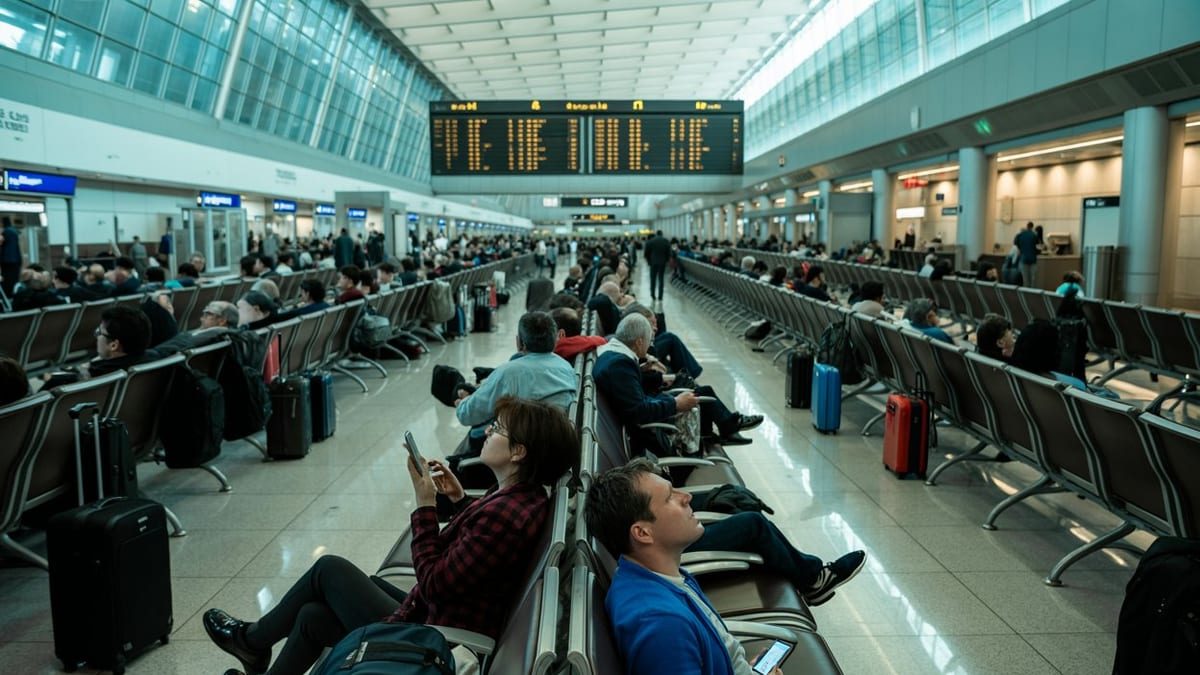
Image by Travel And Tour World
Six High-Impact Flights Pulled From Schedules
Publicly available schedules and tracking data indicate that at least six prominent services have been withdrawn or cancelled on short notice, affecting passengers on both sides of the Atlantic. The disruptions involve Icelandair services linking Iceland with North America, Vueling routes in and out of Scandinavia and Spain, and regional flights historically marketed under the Air Iceland brand within the broader Icelandair Group.
The cancellations have been most visible on corridors connecting to Baltimore and Seattle in the United States and to Copenhagen and Barcelona in Europe, where recent timetable changes and same-day operational cancellations have left travelers facing missed connections and unplanned stopovers. While individual flight numbers vary by day, the current pattern shows pressure on thinly served routes where even a single lost rotation can strand hundreds of passengers.
In several cases, replacement options have been limited to next-day or multi-stop alternatives, extending journey times well beyond original itineraries. For travelers using Reykjavik and Barcelona as through-hubs, these missing flights have created knock-on effects across onward connections, from U.S. domestic links to intra-European segments.
Industry observers note that the scale is far smaller than the mass cancellations seen during major holiday disruptions, but the impact is magnified because many of the affected flights are among only a handful of weekly services on their routes. That can turn one cancellation into a multi-day delay for those unable to secure seats on competing airlines.
Weather and Operational Strain Behind Disruptions
Recent winter storms across North America and northern Europe have placed additional stress on already tight airline operations. Large-scale snow and ice events in January and March led to thousands of cancellations at major U.S. and Canadian airports, with ripple effects that continued as airlines repositioned aircraft and crews in the following weeks. In this context, Icelandair’s transatlantic network and Vueling’s European operations have been exposed to repeated bouts of disruption.
Schedule data and reporting on the January and March winter systems show widespread delays and cancellations across the Mid-Atlantic and Northeast, regions closely linked to transatlantic traffic flows. As aircraft and crews fall out of position, carriers often respond by trimming lower-frequency flights, particularly on routes that rely on complex connections or seasonal demand.
For Icelandair, which uses Keflavik as a connecting hub between North America and Europe, any prolonged weather issue on either side of the Atlantic can jeopardize onward legs to cities such as Baltimore or Seattle. For Vueling, which operates a dense short- and medium-haul network to and from Barcelona and other Spanish airports, strong winds, storms or ground-handling disruptions in northern Europe can cascade into cancellations as aircraft fail to return in time for later rotations.
Operational pressures extend beyond weather. Airlines across Europe and North America continue to face tight crew availability, maintenance bottlenecks and air traffic control restrictions at peak times. When conditions deteriorate, these constraints reduce flexibility and make it harder to recover normal schedules quickly, increasing the likelihood that selected flights will be proactively cancelled rather than allowed to run with severe delays.
Routes Touching Baltimore, Seattle, Copenhagen and Barcelona Hit Hardest
The latest cancellations highlight how vulnerable certain gateway cities can be when disruptions occur on thinner routes. In North America, travelers using Baltimore and Seattle as their access points to Iceland and onward to Europe have reported limited same-day alternatives when non-stop flights are scrubbed. With only a few weekly departures on some of these routes, missing one flight can mean a long wait or complicated rerouting via other hubs.
In Europe, Copenhagen and Barcelona have emerged as focal points for the recent wave of disruptions. Copenhagen’s role as a major Nordic hub and Barcelona’s position as a primary base for Vueling mean that cancellations on specific Icelandair or Vueling services can quickly affect a broader web of connecting flights to secondary cities. This is particularly challenging for passengers relying on carefully timed connections between European and long-haul segments.
Regional services historically marketed as Air Iceland have also played a role in the current picture. While the Air Iceland Connect brand has been consolidated under Icelandair in recent years, domestic and regional links feeding into Reykjavik remain essential to keeping longer-haul flights viable. When those feeder flights are delayed or cancelled due to weather in remote parts of Iceland or Greenland, passengers can miss onward connections to North America or mainland Europe, further inflating disruption statistics on high-profile routes.
Travel agents and passenger-rights specialists point out that secondary airports and less frequent routes tend to bear the brunt when airlines must quickly rebalance networks. Larger hubs with multiple daily flights usually retain more service, while outlying or seasonal connections see a greater share of cancellations even if demand is strong.
What the Latest Update Means for Travelers
The emerging pattern around these six key cancellations points to a more cautious operational stance by airlines as they move through the tail end of the winter season. Rather than stretching resources to keep every scheduled flight running, carriers appear more willing to cut individual frequencies early, providing time to manage rebooking and limit the buildup of late-night delays.
For travelers, this means that itineraries involving Icelandair connections through Reykjavik or Vueling links through Barcelona and Copenhagen may remain vulnerable to short-notice changes over the coming weeks. Passengers on routes serving Baltimore and Seattle in particular may face longer total journey times if they need to be rebooked through alternative hubs such as New York, Boston, London or Paris.
Consumer advocates emphasize that affected passengers should review their rights under applicable regulations in both North America and the European Union, especially on routes starting or ending in the EU or operated by EU-based airlines such as Vueling. Depending on the cause and timing of the cancellation, travelers may be entitled to assistance at the airport, rebooking at no extra cost, and in some cases financial compensation.
With schedules still in flux, many experienced travelers are opting to build extra buffer time into itineraries involving winter travel through northern hubs, particularly when onward cruises, tours or events are time-sensitive. Flexible booking options, travel insurance that covers cancellations and delays, and close monitoring of airline communications in the 48 hours before departure remain key tools in navigating the current phase of disruption.
Ongoing Monitoring of Network Changes
The current set of cancellations affecting Icelandair, Vueling and related regional operations appears to be part of a broader pattern of rolling adjustments across global airline networks. Carriers continue to publish timetable changes in response to weather patterns, demand shifts and operational constraints, and these updates can occur repeatedly within a given season.
Public data from airports, airline timetable updates and flight-tracking platforms show that schedules to and from key hubs such as Reykjavik, Copenhagen and Barcelona are still evolving as airlines fine-tune capacity. New seasonal routes, such as additional Icelandair services planned for later in 2026, are being layered on top of a network that remains sensitive to disruption from both weather and infrastructure limitations.
Travel-news monitoring suggests that further small clusters of cancellations on less frequent routes are possible as airlines balance load factors against reliability. While the total number of affected flights remains a tiny fraction of daily global operations, the impact on individual travelers on routes like Baltimore, Seattle, Copenhagen and Barcelona can be significant.
As the situation develops, passengers are encouraged to keep a close eye on booking references and to verify departure times directly with their airline or travel provider before heading to the airport, particularly when traveling through weather-prone regions or on routes that operate only a few times per week.