

More news on this day
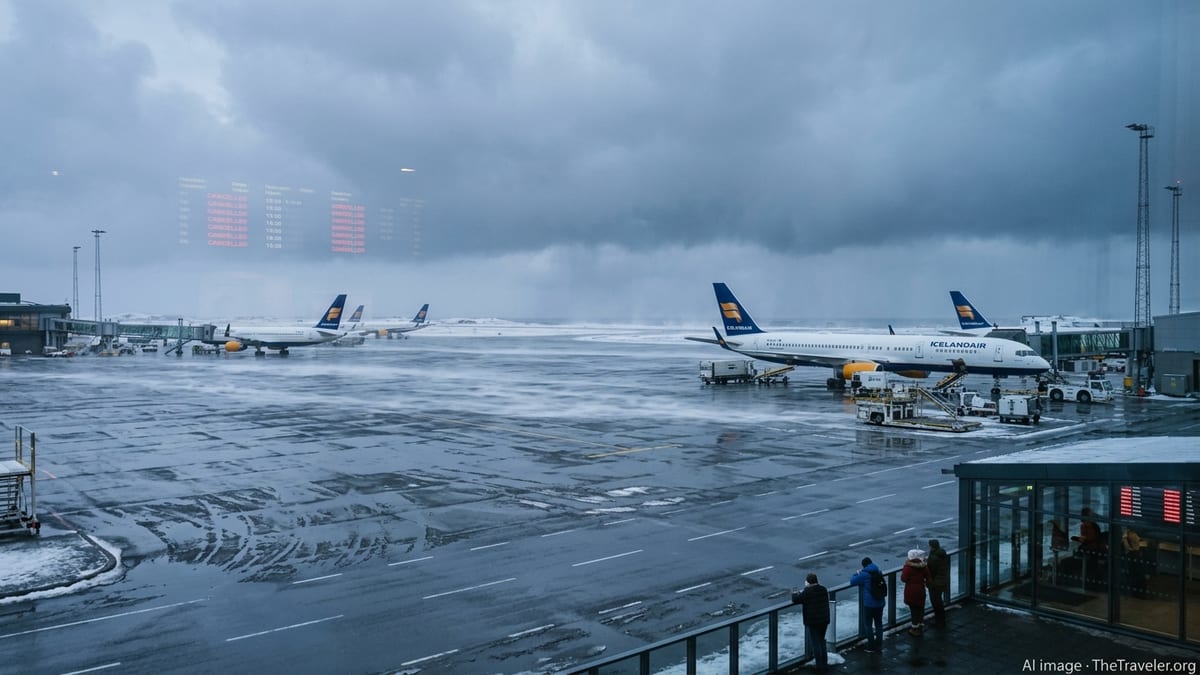
More than 80 flights operated by Icelandair and its regional arm Air Iceland Connect have been cancelled this week, disrupting connections between Reykjavik and major hubs including London, New York, Amsterdam, Berlin, and Paris, according to publicly available schedules and airport information screens.
Get the latest news straight to your inbox!
Severe Weather Triggers Widespread Disruptions
Weather alerts covering large parts of Iceland have coincided with a sharp spike in flight cancellations, with publicly accessible departure boards at Keflavik International Airport and Reykjavik Airport showing dozens of grounded services across March 25 and March 26. The majority of affected flights are understood to involve high winds, heavy precipitation, and reduced visibility, conditions that routinely challenge operations across the North Atlantic in late winter.
The cancellations affect both transatlantic and intra-European services, interrupting Icelandair’s role as a connecting carrier between North America and mainland Europe via its Reykjavik hub. Routes linking Reykjavik with London, New York, Amsterdam, Berlin, Paris, Copenhagen, and other key destinations have seen multiple frequencies removed from the schedule, in some cases leaving passengers with limited same-day alternatives.
Airport information suggests that some services have been preemptively cancelled, while others have been withdrawn closer to departure as forecasts intensified. The pattern reflects how airlines increasingly rely on detailed meteorological data and operational modelling to decide when to consolidate flights, prioritizing safety and minimizing the risk of extended airborne holding or diversions.
While disruption of this scale is unusual, Iceland’s volatile weather patterns mean that carriers serving the country are accustomed to making rapid changes to their schedules, particularly in the shoulder seasons when storms can form quickly over the North Atlantic.
Impact on Key Transatlantic and European Hubs
The majority of cancelled flights involve services between Keflavik and major European cities, but several departures to and from North America are also affected. Connections to New York and other US gateways are particularly important for Icelandair, which has built a network around offering stopover opportunities in Iceland on itineraries between North America and Europe.
Passengers traveling between Europe and the United States via Reykjavik have reported online that missed connections and overnight delays are common as multiple legs in a single journey are removed from the timetable. Trip reports and discussion threads indicate that affected travelers are being rebooked on later Icelandair flights where possible, or in some cases rerouted via alternate European hubs operated by partner or competitor airlines.
The cancellations are also being felt on high-frequency routes to cities such as London, Amsterdam, Berlin, and Paris, which normally have several daily options. The removal of select rotations compresses demand into fewer remaining departures, increasing the likelihood of fully booked cabins and more limited rebooking possibilities for those whose original flights have been scrapped.
For travelers originating in Iceland, the situation can mean postponed vacations, missed business meetings, or disrupted onward connections, while inbound visitors may face shortened stays or abandoned itineraries outside the capital if domestic links are also affected.
Domestic and Regional Services See Knock-On Effects
Icelandair’s regional operations, historically marketed as Air Iceland Connect, are also experiencing disruption, according to domestic airport boards and traveler accounts. Services linking Reykjavik with regional destinations such as Akureyri and Egilsstadir, along with flights further afield to Greenland and the Faroe Islands, are particularly vulnerable when poor weather affects both departure and arrival airfields.
Domestic routes play a vital role in connecting remote communities and tourism hubs with Reykjavik, and cancellations can have an outsized impact given the relatively low frequency of flights compared with larger international markets. When multiple round trips are cancelled in a short window, residents and visitors alike may need to wait at least another day for an available seat.
Regional cancellations also complicate long-haul journeys that rely on timed domestic connections into or out of Keflavik. In some cases, travelers arriving on transatlantic services find their onward domestic flights cancelled after departure from North America or mainland Europe, forcing unplanned overnight stays in the capital and increasing pressure on hotel capacity during peak disruption.
Reports from recent weather events suggest that some travelers are turning to road or bus transport where conditions allow, though widespread alerts and intermittent road closures limit reliable overland alternatives during the most severe storms.
What Affected Travelers Are Experiencing
Social media posts and online travel forums in recent days describe long hold times on customer service phone lines and difficulty securing new itineraries on preferred dates. Some passengers report that automated notifications arrive close to scheduled departure, leaving limited time to adjust plans or reach the airport to discuss options in person.
Accounts shared publicly indicate a mix of experiences: some travelers manage to secure same-day or next-day alternatives at no additional fare, while others describe multi-day delays before new flights become available. In some instances, travelers report being rebooked through different hubs or even on other carriers when Icelandair’s own network cannot accommodate them quickly enough.
Information from consumer advice outlets emphasizes the importance of checking whether cancellations are attributed to extraordinary circumstances such as severe weather, which can influence eligibility for cash compensation under European passenger rights rules. Even when additional compensation does not apply, airlines may still be responsible for providing care such as meals, refreshments, and hotel accommodation during extended delays, depending on the circumstances and ticket type.
Travelers are also being reminded by online travel communities to keep all receipts for out-of-pocket expenses and to document communications with airlines and travel agents, as these records can be important when submitting claims after the disruption has ended.
Guidance for Upcoming Trips Via Reykjavik
Given the scale of cancellations affecting Icelandair and its regional operations, travelers scheduled to fly via Reykjavik over the coming days are being advised by travel advisors and frequent flyers to monitor their bookings closely. This includes checking airline apps and airport departure boards regularly, as well as enabling push notifications and email alerts for schedule changes.
Publicly available information on Icelandair’s customer service policies indicates that the carrier aims to rebook passengers on the next available flight when services are cancelled and, where possible, may also place travelers on other airlines to complete their journeys. The extent of such assistance can depend on ticket conditions, availability, and the cause of the disruption.
Experts in consumer travel rights generally recommend that passengers avoid making irreversible arrangements, such as non-refundable hotel bookings or time-sensitive excursions, for the same day as planned arrival when traveling through weather-prone regions. Building in buffer time can reduce the impact of unexpected schedule changes, particularly during late winter and early spring when storms are more frequent in the North Atlantic.
As conditions evolve, travelers heading to or connecting through Iceland are encouraged to stay flexible, keep essential items and medications in carry-on bags in case of unexpected overnight stays, and maintain regular contact with their airline or travel provider to secure the best available alternatives if their flights are among those cancelled.