

More news on this day
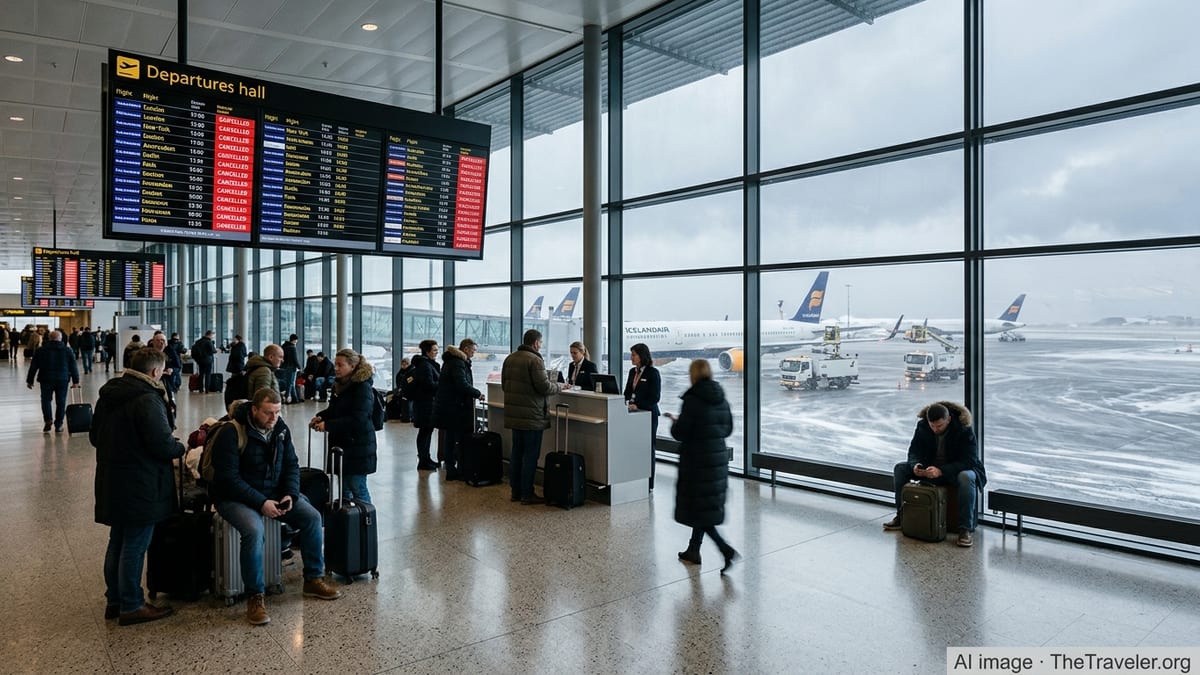
More than 80 flights operated by Icelandair and its regional partner Air Iceland Connect have been cancelled in recent days, disrupting travel across transatlantic and European networks linking Reykjavik with major hubs including London, New York, Amsterdam, Berlin and Paris.
Get the latest news straight to your inbox!
Widespread Disruption Across Iceland-Centric Networks
Publicly available flight tracking data and media reports indicate that Icelandair and its regional operations have cancelled over 80 flights within a short period, centering much of the disruption on Keflavik and Reykjavik airports. The cancellations span a mix of transatlantic and intra-European services, as well as select regional routes that feed into Iceland’s hub system.
The affected schedule includes flights connecting Keflavik with major cities such as London, New York, Amsterdam, Berlin and Paris, alongside services to other European and North American destinations. Passengers using Iceland as a connecting point between Europe and the United States have been particularly exposed, with many itineraries involving tight transfer windows through Keflavik’s banked departures and arrivals.
While Icelandair has long marketed Reykjavik as a convenient midpoint between continents, the recent wave of cancellations has underscored how concentrated traffic through a single hub can amplify the impact of operational disruptions. Travellers with through-tickets have reported missed onward connections, forced overnight stays and significant rebooking challenges as capacity on alternative departures quickly filled.
Regional operations that historically traded under the Air Iceland Connect brand have also been affected, interrupting links between the capital area and domestic or near-regional destinations that normally funnel passengers into Icelandair’s international network. This has added an additional layer of complexity for residents and visitors moving between Reykjavik and more remote communities.
Weather and Operational Strain Behind Flight Cancellations
The cancellations follow a period of severe winter weather impacting Iceland and surrounding North Atlantic air corridors, with strong winds, snow and challenging ground conditions reported at and around Keflavik. According to published coverage and traveller accounts, transport links to the airport have at times been constrained, creating knock-on effects for airline operations, staffing and aircraft positioning.
In addition to weather, airlines across Europe and North America have been operating under a tight resource environment, with aircraft and crews often scheduled intensively during peak seasons. When storms or safety-related constraints arise, carriers can be forced to cancel or consolidate flights to keep the remainder of the schedule manageable. For a hub carrier such as Icelandair, this can mean a cascade of adjustments across interconnected routes.
Observers note that airlines serving northern latitudes typically build some resilience into their operations for winter disruption, but sequences of strong storms or prolonged adverse conditions can still overwhelm contingency plans. In such circumstances, carriers may prioritise certain trunk routes while temporarily reducing or suspending others, which appears consistent with the pattern of cancellations affecting a mix of long-haul and feeder services.
Industry analysts also point to the broader backdrop of fluctuating travel demand, cost pressures and evolving fleet plans for Icelandic carriers, factors that can limit the operational flexibility available when conditions deteriorate. The recent pattern of disruption has reignited debate about the balance between efficiency and resilience on heavily banked hub schedules.
Passengers Face Rebooking Challenges and Long Waits
Travellers caught up in the cancellations have reported difficulties securing new itineraries, particularly on popular transatlantic legs between Reykjavik and hubs such as London, New York and Amsterdam. With many flights already operating close to capacity, rebooked passengers have in some cases been offered departures several days later than originally planned.
Accounts shared on public forums describe extended waits at service desks and call centres, with some passengers struggling to receive timely updates on revised schedules, hotel arrangements or meal support. In several instances, travellers have reported having to manage their own accommodation and transfers while seeking reimbursement after the fact, adding financial strain to the disruption.
Consumer advocates note that passenger rights depend heavily on where a journey begins and which legal framework applies. Flights departing European Union or European Economic Area airports, or operated by European carriers into those regions, may fall under EU261-style rules that set out entitlements to re-routing, care and, in some cases, compensation. However, severe weather and other extraordinary circumstances can limit eligibility for financial compensation while still preserving rights to assistance and alternative transport.
Experts advise affected travellers to keep detailed records of expenses and all communication with airlines, and to check both airline policies and applicable regulations carefully. Credit card protections and travel insurance policies can also play an important role where statutory rights are limited or where passengers incur additional costs beyond what airlines are prepared to cover.
Impact on Tourism and Iceland’s Role as a Transit Hub
The timing of the cancellations has raised concerns among tourism operators in Iceland and partner markets who depend on reliable air links to support winter travel, city breaks and nature-focused itineraries. While the country’s visitor season peaks in summer, demand for northern lights experiences and geothermal spas has made late winter and early spring an increasingly important period for international arrivals.
Disruption on routes to and from cities such as Berlin, Paris and Amsterdam, alongside transatlantic links from New York and other North American gateways, risks deterring some prospective visitors who value predictability on relatively short holiday windows. Industry commentary suggests that repeated episodes of large-scale cancellations could influence booking behaviour, pushing some travellers toward alternative routings or competing carriers with more diversified hub structures.
At the same time, the cancellations highlight Iceland’s central role in connecting secondary European cities with North American destinations through a single-stop model. When that model functions smoothly, it offers competitive travel times and fares; when it falters, the concentration of passengers into narrow connection banks can magnify disruption. Observers will be watching how quickly operations stabilise and how airlines adjust their schedules, contingency planning and passenger communication strategies in response.
Tourism stakeholders are expected to monitor load factors, booking trends and onward cancellations over the coming weeks to assess whether the episode has a lasting effect on demand or remains a short-term shock largely attributed to severe weather and operational strain.
What Travellers Should Do If Their Flight Is Affected
For passengers holding tickets on Icelandair or itineraries that include regional connections historically associated with Air Iceland Connect, travel specialists recommend proactively checking flight status before leaving for the airport and monitoring airline notifications closely. When severe weather is forecast, many carriers introduce flexible rebooking policies that allow changes in advance, which can be easier than seeking assistance after a cancellation is announced.
In the event of a cancelled flight, travellers are generally advised to seek written confirmation of the disruption, ask for clear documentation of any rebooking or refund options, and inquire about hotel and meal support where overnight delays are unavoidable. Keeping receipts for reasonable out-of-pocket expenses can be important for later claims, whether through the airline, travel insurance or card benefits.
Passengers connecting through hubs such as Keflavik with tight layovers may wish to consider building longer connection times into future itineraries during peak winter months, especially when travelling for events with fixed start dates. While many journeys proceed without issue, additional margin can reduce the risk that a single delay or weather-related restriction unravels a complex multi-leg trip.
As airlines work to restore normal operations, observers suggest that clear, timely communication and a consistent approach to passenger care will be central to rebuilding confidence on affected routes. For now, travellers planning to use Iceland as a bridge between Europe and North America may face a period of heightened uncertainty and are encouraged to plan with flexibility in mind.