

More news on this day
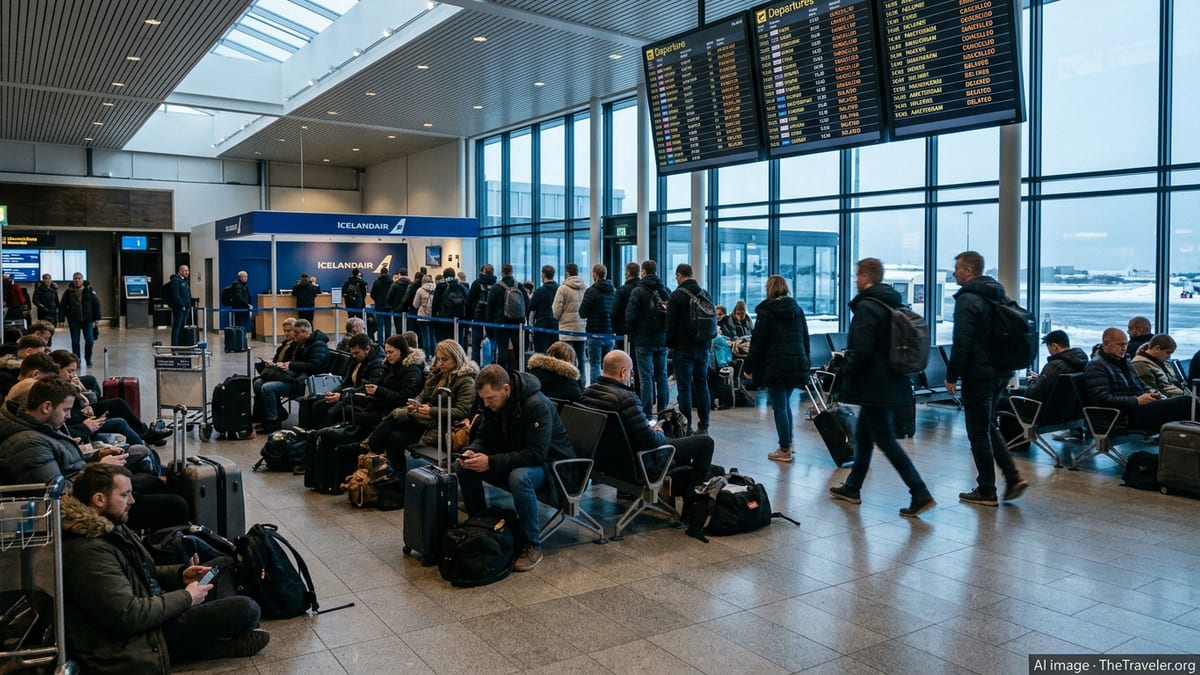
Hundreds of passengers were left unexpectedly grounded in Iceland after a cluster of Icelandair cancellations from Keflavik International Airport disrupted key routes to Paris, Helsinki, Amsterdam and other European hubs this week, compounding an already difficult winter of flight disruption across the continent.
Get the latest news straight to your inbox!
Cluster of Cancellations Hits Key European Routes
The disruption unfolded when four Icelandair departures from Keflavik International Airport bound for major European cities, including Paris, Helsinki and Amsterdam, were cancelled within hours of each other, according to airport and passenger reports. The cancellations affected both early morning and evening departures, severing a set of important connections for travelers heading into mainland Europe and beyond.
The incident came as European aviation continues to grapple with a volatile mix of winter weather, knock-on delays and staffing shortages that have repeatedly rippled through hubs such as Paris Charles de Gaulle and Amsterdam Schiphol in recent months. Industry tracking data from January showed hundreds of cancellations and delays across Europe on multiple days, underscoring the fragility of schedules during peak disruption periods.
While Icelandair did not immediately disclose the precise operational cause of each affected flight, the airline cited a combination of adverse conditions and aircraft rotation issues in messages to some ticketed passengers. Travelers reported receiving cancellation notices with limited explanation and few immediate rebooking options on the same day.
Because Keflavik serves as a vital transatlantic bridge for Icelandair, with many passengers connecting between North America and Europe, the cluster of cancellations had an outsized impact. Some travelers who had already completed long-haul overnight segments into Iceland suddenly found themselves without onward flights and with limited alternatives to reach their final destinations.
Passengers Face Long Queues, Overnight Stays and Rebooking Scramble
Inside the terminal, affected passengers described long lines at Icelandair service desks as travelers tried to secure scarce seats on later departures to Paris, Helsinki, Amsterdam and other cities. With multiple routes disrupted at once, remaining seats on alternative flights quickly filled, leaving some travelers with waits of 24 hours or more for confirmed itineraries.
Under European passenger rights rules, travelers whose flights are cancelled are generally entitled to care, which can include meals, refreshments, accommodation when necessary and transportation between the airport and hotels. Icelandair’s customer-care policy reflects these obligations, outlining meal vouchers, hotel stays and shuttle transport when same-day rebooking is not possible. However, when disruption affects a large number of passengers at once, airlines often ask travelers to arrange their own care and submit receipts for later reimbursement, a process that can add stress and uncertainty to an already difficult situation.
Several stranded travelers reported being advised to secure their own hotel rooms near Keflavik or in Reykjavik when the volume of cases made it difficult for staff to issue vouchers quickly. Others said that by the time they were rebooked, nearby hotels had limited availability or sharply higher prices. For those on tight budgets or complex itineraries, the sudden need to cover out-of-pocket expenses for accommodation, meals and local transport added a financial strain to the disruption.
Families with children and older passengers were particularly affected, with some facing late-night or early-morning transfers between the airport and hotels in wintry conditions. Even travelers who managed to secure same-day rerouting often endured extended layovers in the terminal as they waited for replacement flights to the continent’s already congested hubs.
Knock-on Effects Reach Paris, Helsinki, Amsterdam and Beyond
The cancellations at Keflavik had immediate knock-on effects across Europe’s network. Passengers heading for Paris and Amsterdam reported missing onward connections to destinations elsewhere in France, the Netherlands and other European countries, while those bound for Helsinki faced disrupted links to Scandinavia and the Baltic region.
The timing is particularly sensitive for Amsterdam Schiphol and Paris Charles de Gaulle, both of which have experienced bouts of heavy disruption this winter due to weather and operational pressure. Recent data from airline-compensation analysts show hundreds of cancellations and delays at the two hubs on several separate days, leaving crews and aircraft out of position and amplifying the impact of any additional cancellations upstream.
For Icelandair, Keflavik’s role as a connecting hub means that a cancelled departure is rarely a contained event. When a flight to a European hub is removed from the schedule, passengers on both sides of the Atlantic may be forced into unplanned stopovers or wholesale rerouting across different airlines and airports. Travel agents and airline call centers reported a spike in rebooking requests as travelers sought alternatives via other Nordic and European gateways.
The latest disruption also complicates travel for business passengers and tour groups who rely on Keflavik’s links to Paris, Amsterdam and Helsinki to start or end multi-country itineraries. With limited daily frequencies on some routes, a single cancellation can effectively wipe out a day of travel options on a given city pair.
Passenger Rights and What Stranded Travelers Can Expect
Despite the chaos on the ground, affected passengers do have clear legal protections. Under European rules that apply to Iceland-based carriers and flights departing from Iceland, travelers on cancelled services are entitled to a choice between rerouting at the earliest opportunity or a refund of the unused portion of their ticket. When rebooking is delayed, airlines must offer care in the form of food, drink, hotel accommodation where needed and communication options such as access to phone or email.
Icelandair’s published policies reiterate these commitments, although the airline notes that in large-scale disruptions its staff may not be able to distribute vouchers to every passenger immediately. In such cases, travelers are advised to keep all receipts for reasonable expenses directly tied to the disruption, including meals, hotel stays and airport transfers, and to submit a claim once their journey is complete.
Compensation, distinct from a refund or basic care, may also be available depending on the cause of the cancellation, the length of delay in reaching the final destination and the distance of the itinerary. If the disruption is deemed to stem from extraordinary circumstances such as severe weather or air-traffic control restrictions, compensation may not apply, even though care and rerouting obligations remain. Where cancellations are attributed to factors within the airline’s control, however, many passengers could qualify for additional monetary payments on top of rerouting and reimbursement of expenses.
Consumer advocates urge stranded travelers to document everything, from boarding passes and booking confirmations to photos of airport information screens and written exchanges with airline staff. This documentation can be crucial if initial compensation or reimbursement claims are rejected and passengers choose to escalate their cases through national enforcement bodies or independent claim services.
Advice for Travelers Transiting Through Keflavik
The latest episode at Keflavik serves as a reminder that even well-run mid-size hubs can become chokepoints when several key departures are cancelled at once. Travel planners recommend that passengers connecting through Iceland build in additional buffer time during the winter months, especially when onward flights involve busy European hubs that are themselves vulnerable to weather and staffing issues.
Experts suggest that, when possible, travelers book longer connection windows and avoid last flights of the day on critical legs to minimize the risk of becoming stranded overnight. Those with non-flexible plans, such as cruise departures or time-sensitive events, are increasingly opting to arrive a day early in their final European gateway, rather than relying on tight same-day connections through Keflavik.
Passengers are also encouraged to monitor their bookings closely via airline apps and to ensure contact details are up to date so that cancellation alerts and rebooking options arrive promptly. In major disruption events, heading straight to an airline service desk at the airport can sometimes yield quicker rerouting than waiting on phone lines, although long queues are common when multiple flights are cancelled simultaneously.
For now, operations at Keflavik remain under close watch as airlines navigate the tail end of the winter season. With European hubs from Paris to Amsterdam still experiencing intermittent waves of disruption, travelers on routes through Iceland are being urged to remain flexible, stay informed and prepare for the possibility that even a seemingly routine connection can turn into an unexpected overnight stay on the edge of the North Atlantic.