

More news on this day
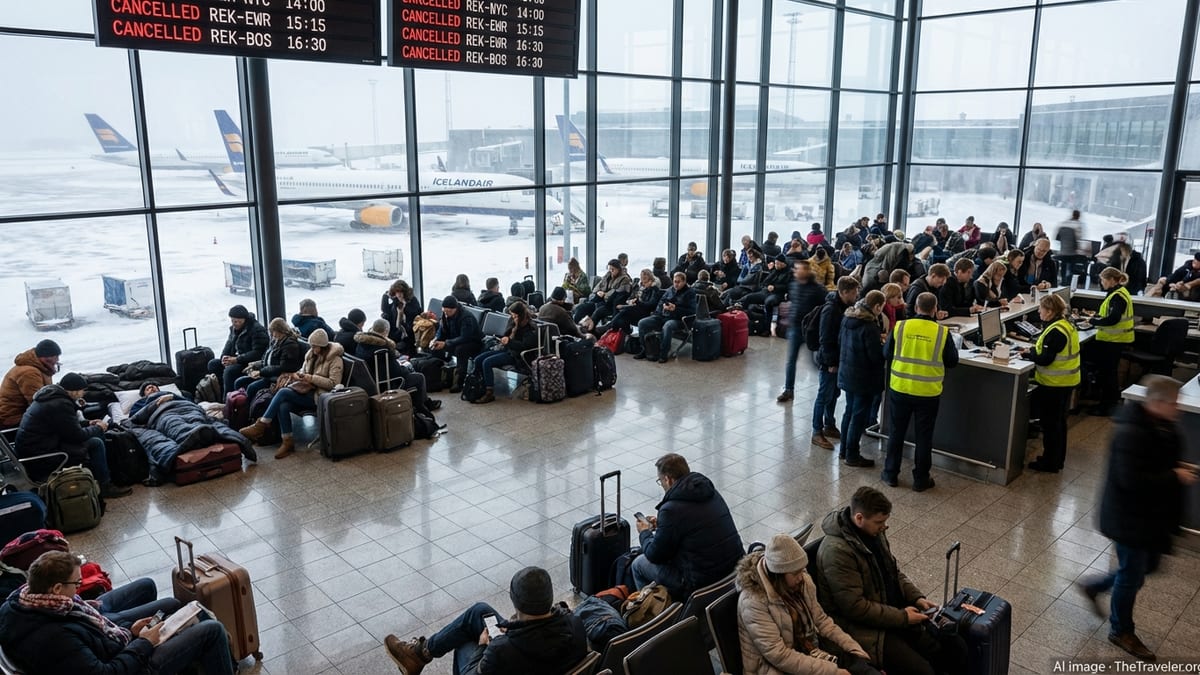
Hundreds of transatlantic passengers were left isolated in Iceland on Monday as Icelandair cancelled at least five key flights linking Reykjavik with major East Coast hubs including Newark, Boston and New York, amid a historic blizzard that has crippled aviation across the northeastern United States.
Severe Nor’easter Ripples Across the North Atlantic
The latest wave of cancellations from Icelandair comes as a powerful winter storm batters the northeastern United States, forcing airlines worldwide to ground aircraft and reshuffle schedules. Flight tracking data on Monday showed more than 5,300 flights within, into or out of the United States cancelled, with New York area airports, Boston and Philadelphia among the hardest hit.
New York’s John F. Kennedy, LaGuardia and Newark Liberty airports, along with Boston Logan, have seen the majority of departures scrubbed as heavy snow, strong winds and poor visibility make operations unsafe. With major hubs effectively at a standstill, carriers have preemptively cancelled long haul services, rather than risk aircraft and crews being stranded on the wrong side of the Atlantic.
For Icelandair, whose transatlantic strategy depends on tightly timed connections through Reykjavik Keflavik Airport, the storm has had an immediate knock on effect. The airline has withdrawn several flights to and from the northeastern United States, including a Boston service listed as cancelled for February 23, as conditions deteriorate along the eastern seaboard.
The result is a growing number of passengers stuck in Iceland with few immediate options to continue their journeys. With other carriers also pulling flights to the same US cities, rerouting via alternative hubs has become increasingly difficult, extending delays and heightening frustration.
Key Icelandair Routes to Newark, Boston and JFK Affected
Icelandair’s cancellations are concentrated on some of its highest profile routes linking Reykjavik with major US gateways. Flight listings on Monday showed the Boston to Keflavik service designated FI630 as cancelled, while services into the greater New York area were also hit as Newark Liberty and John F. Kennedy International saw widespread shutdowns.
Passengers scheduled to connect through Reykjavik to Newark, Boston and New York reported receiving last minute notices of cancellations, with limited clarity on when replacement flights might operate. With airports on the US East Coast still working through a backlog of hundreds of grounded services, airlines are reluctant to commit to new departure times until runway and airspace conditions stabilize.
The disruption extends beyond point to point travel. Icelandair’s hub model allows passengers from Europe to connect through Reykjavik to North American cities in a single itinerary. When downstream flights to Newark or Boston are cancelled, travelers from London, Amsterdam or Copenhagen can find themselves stranded mid journey in Iceland, unable to proceed and with no immediate way to backtrack.
Industry data from US and European tracking services suggests that the full slate of Icelandair’s transatlantic operations has been significantly curtailed for the current storm window. While only a subset of flights are formally listed as cancelled at any given time, operational sources indicate that the number of affected services to the northeastern United States could climb if blizzard conditions persist into Tuesday.
Passengers Face Overnight Stays and Limited Alternatives in Iceland
For travelers caught in the middle of the disruption, the practical consequences are immediate and personal. Many have been advised that they will need to remain in Iceland overnight, or longer, as Icelandair and airport authorities work through rapidly changing schedules. With several US bound departures removed from the board, hotel capacity in and around Keflavik and Reykjavik is tightening.
Some passengers have posted accounts of being escorted off already boarded aircraft as flight crews received updated weather and air traffic control advisories from the United States. Others discovered their cancellations only upon arrival at Keflavik for connecting flights, finding departure halls crowded with travelers clustering around customer service desks for updates.
With so many US airports closed or operating at sharply reduced capacity, rebooking options on other airlines are limited. Major carriers across Europe have cancelled or consolidated services to New York, Newark and Boston as well, sharply reducing the number of available seats on any remaining flights. Even where space exists, constraints on crew duty hours and aircraft positioning mean that departures can still be subject to last minute changes.
Travel agents in Iceland report fielding urgent calls from stranded visitors trying to piece together complex reroutes via secondary hubs in Canada or mainland Europe. However, extensive cancellations at other North American gateways and tight winter schedules on transatlantic routes are leaving many with little choice but to wait in Iceland until their original routes reopen.
US East Coast Aviation Network Near Standstill
The immediate trigger for Icelandair’s cancellations is the broader paralysis of the aviation network along the US East Coast. Data compiled on Monday morning showed that the nor’easter has wiped out the vast majority of flights at JFK, LaGuardia, Newark and Boston Logan, with some airports cancelling more than three quarters of their scheduled departures for the day.
Meteorologists warn that the storm, already delivering more than a foot of snow to some urban areas, is combining intense snowfall with gale force winds and rapidly falling temperatures. These conditions create dangerous crosswinds on runways, reduce visibility below safe instrument landing thresholds and lead to heavy icing, all of which can make takeoffs and landings unsafe or impossible.
Facing these conditions, airlines across the world have opted for proactive mass cancellations from their hubs and overseas gateways, including in Europe and the Middle East. Several long haul carriers have already announced that services to New York, Newark and Boston will be suspended for at least part of the current storm period, keeping aircraft and crews at their home bases until the situation improves.
As airports and airlines slowly restart operations after the brunt of the storm passes, authorities caution that the recovery will not be immediate. Aircraft will be out of position, crews may have exceeded maximum duty hours, and runways and taxiways will need to be cleared and inspected. For transatlantic travelers, that means that even once the weather improves, schedules may remain disrupted for days rather than hours.
Icelandair’s Hub Model Tested by Extreme Weather Shock
The disruption underscores the vulnerability of hub and spoke carrier models to sudden external shocks, particularly in winter. Icelandair’s strategy is built around connecting flows of passengers from multiple European cities through Reykjavik to destinations in North America, using carefully synchronized schedules that minimize layover times.
When a major hub such as Newark or Boston abruptly closes due to weather, those synchronized waves of flights can quickly unravel. Aircraft scheduled to overnight in North America cannot depart, which in turn removes capacity from the following day’s return flights. Connection banks in Reykjavik lose their onward legs, leaving inbound passengers with no continuation options and creating pockets of stranded travelers throughout the network.
Iceland’s own winter climate is historically challenging for aviation, but airlines and airports there are well adapted with deicing infrastructure and experience managing snow and ice. The current crisis differs in that the bottleneck lies thousands of kilometers away in the United States, where airport closures and airspace restrictions are beyond the control of Icelandic authorities.
Industry analysts note that such events highlight the importance for carriers of having flexible recovery plans and clear communication strategies. For a mid sized transatlantic operator like Icelandair, balancing aircraft utilization, crew availability and passenger care obligations during a rolling weather emergency presents a complex operational puzzle.
Rebooking, Vouchers and Passenger Rights
As cancellations mount, attention is turning to what stranded passengers can expect in terms of rebooking and compensation. Icelandair has encouraged customers whose flights are cancelled to work through its rebooking channels, with priority given to placing travelers on the next available services once US airports reopen and slots become available.
In previous large scale disruption events, Icelandic consumer authorities have emphasized that passengers whose flights are cancelled retain the right to refunds if they choose not to travel, as well as care such as meals and accommodation in cases of extended delays. However, the scope of compensation can vary depending on whether the cancellation is deemed within the airline’s control or directly caused by extraordinary circumstances such as severe weather.
Travelers stuck in Iceland are being advised by consumer advocates to keep all receipts related to additional expenses incurred during their enforced stay, including hotels, meals and local transport. These records can prove important when seeking reimbursement from airlines or travel insurers once operations normalize and formal claims processes begin.
Travel insurers, meanwhile, are bracing for a surge in weather related claims. Policy terms differ significantly, with some offering generous coverage for missed connections and extended stays, while others exclude weather events or impose strict financial caps. Passengers are being urged to review their policies carefully and to notify insurers as soon as reasonably possible of any disruptions.
Wider Transatlantic Impact Extends Beyond Iceland
The Icelandair cancellations are one strand in a web of disruptions affecting transatlantic travel more broadly. Airports in Ireland, the United Kingdom and continental Europe have reported multiple cancellations on services to New York, Newark and Boston as the storm’s impact ripples outward. Several European carriers have trimmed or suspended flights on affected routes, citing both weather related safety concerns and the practical reality that destination airports remain closed or severely constrained.
For passengers looking to bypass Iceland and rebook via other hubs, alternatives can be scarce. With so many transatlantic flights scrubbed in the same 48 hour period, spare capacity on remaining services is limited, and some routes have sold out entirely for the coming days. Even travelers willing to accept multi stop itineraries via Canada or southern US cities are finding that schedules there are under pressure as rerouted traffic converges on a shrinking pool of available flights.
Travel industry observers suggest that the current nor’easter is shaping up to be one of the most disruptive winter events for transatlantic aviation in recent years, rivaling earlier storms that forced mass cancellations and left thousands of passengers displaced on both sides of the Atlantic. While Iceland’s geographic position often makes it a convenient bridge between continents, that same position ensures that when the bridge is blocked at either end, disruption can quickly cascade.
For tourism operators in Iceland, the sudden influx of unplanned overnight guests is a mixed blessing. Hotels, guesthouses and restaurants may see short term gains in occupancy and revenue, but they are also grappling with staffing and supply challenges in the middle of winter. Meanwhile, visitors face the emotional and financial strain of being stuck far from home with uncertain timelines for return.
What Travelers Headed to or Through Iceland Should Do Now
With the situation still evolving, travel authorities are urging passengers bound for Iceland or connecting through Reykjavik to monitor their flights closely before heading to the airport. Official guidance stresses that travelers should rely on direct communication from airlines and airport operators, rather than third party schedules that may not reflect last minute changes.
Those whose itineraries involve US East Coast destinations such as Newark, Boston or New York in the coming days are being encouraged to consider flexible options where possible, including voluntary rebooking to later dates or alternative airports if airlines permit. Some carriers serving the United States have begun issuing travel waivers that allow passengers to change flights without change fees during the storm period, though fare differences may still apply.
Experts recommend that travelers build in additional buffer time if their journey involves connections, particularly on transatlantic routes. With aircraft and crew repositioning likely to continue throughout the week, even flights that appear to be operating may be subject to rolling delays. Keeping essential items and one or two days of clothing in carry on luggage can also ease the strain if checked bags become temporarily inaccessible during unplanned layovers.
For now, the message from aviation authorities, airlines and travel professionals is one of patience and preparation. As Icelandair and other carriers work to restart their transatlantic operations once the blizzard recedes, passengers stranded in Iceland and across the network face at least several more days of uncertainty before regular patterns of travel to Newark, Boston, JFK and other key gateways can fully resume.