

More news on this day
Dozens of passengers found themselves unexpectedly stuck in Iceland this week after Icelandair and Finnair cancelled a cluster of key departures from Keflavik International Airport, severing links to Paris, Helsinki, Amsterdam and other major European hubs and compounding already heavy disruption across the continent.
Get the latest news straight to your inbox!
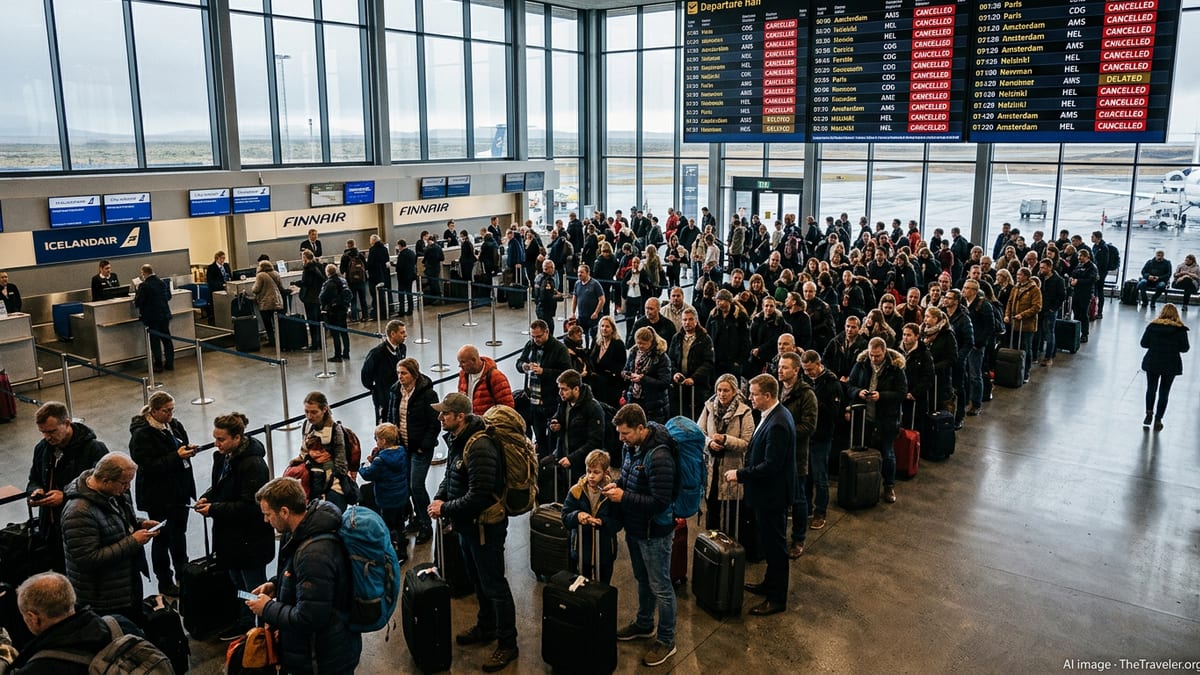
Key Routes From Keflavik Abruptly Scrubbed
According to airport information screens and local aviation trackers, multiple Icelandair and Finnair flights scheduled from Keflavik to key European cities were removed from departure boards with limited advance notice, forcing many travelers into overnight stays and last minute rerouting. The affected services include flights connecting Iceland with Paris Charles de Gaulle, Amsterdam Schiphol and Helsinki, all of which are important transfer points for onward long haul journeys.
The cancellations came as wider European air traffic was under strain, with hundreds of flights across France, the Netherlands, Belgium and other countries delayed or grounded due to a mix of operational bottlenecks and knock on effects from airspace restrictions elsewhere. For travelers relying on Iceland as a stepping stone between North America and mainland Europe, the loss of a few key rotations from Keflavik had an outsized impact.
Passengers at Keflavik reported being informed of the changes only hours before departure, either via text message or app notifications, while some only discovered their flights were no longer operating when they attempted to check in at the airport. For those with tight onward connections in Paris, Amsterdam or Helsinki, the cancellations immediately cascaded into missed tours, cruise departures and business meetings.
Stranded Travelers Face Long Queues and Limited Alternatives
The sudden loss of capacity on these popular routes left Icelandair and Finnair desks at Keflavik crowded with anxious travelers looking for alternatives. Staff worked to rebook passengers onto later flights via other hubs, but with European carriers already operating near capacity during the spring travel period, spare seats were limited and often involved complex multi stop itineraries.
Some passengers were offered rerouting through other Nordic or UK airports, adding hours to journeys and, in some cases, extra overnight connections. Others chose to abandon their original plans altogether, seeking refunds instead and trying to piece together new routes on competing airlines from Reykjavik or nearby European gateways.
Reports from the terminal described snaking queues at service desks and boarding areas, with families and tour groups camped out near charging stations and food courts while they awaited updates. While ground staff distributed meal vouchers and hotel information to some travelers, others said they struggled to secure clear guidance on whether accommodation or compensation would be available in their particular case.
Airlines Cite Operational Pressures Amid Wider European Disruption
Neither Icelandair nor Finnair immediately released a detailed public breakdown of the affected flight numbers, but operational sources pointed to a mix of crew availability constraints, aircraft rotations and knock on delays from earlier sectors within Europe. Industrial action and air traffic control pressures in several European countries in recent days have already led to hundreds of cancellations and delays, ensnaring carriers from low cost operators to major network airlines.
Finnair in particular has been dealing with periodic schedule adjustments tied to industrial disputes and changing long haul demand, while Icelandair continues to balance its transatlantic schedule with strong seasonal peaks in leisure travel. When disruptions ripple through key hubs such as Paris and Amsterdam, tightly timed Keflavik connections are often among the first to be cut to reset operations and avoid wider chaos across the network.
For passengers, however, the reasons matter less than the immediate consequences. Many stranded travelers took to social media to complain about short notice messages, difficulty reaching call centers and a lack of clear information on when replacement flights would operate. Others noted that while online schedules still showed services between Keflavik and major European cities, the specific departures they were booked on had quietly disappeared.
What Impacted Passengers Should Do Now
Travel rights experts advise that passengers affected by cancellations from Keflavik to Paris, Helsinki, Amsterdam and other European destinations should act quickly to secure new arrangements while also documenting costs. The first step is to confirm the official status of the booking in the airline’s app or website and then contact the carrier through its dedicated rebooking channels. Many travelers may be eligible for re routing at no extra cost, or for a full refund if they choose not to travel.
Depending on the cause of the disruption and the jurisdiction under which the flight falls, some passengers may also be entitled to compensation and care such as hotel accommodation, meals and ground transport. Travelers are being encouraged to keep all receipts for unavoidable expenses, as airlines typically require proof of costs when processing claims. It is also wise to notify hotels, tour operators and travel insurers as soon as it becomes clear that original arrival times cannot be met.
Those with tight onward cruises, tours or long haul departures from Paris, Amsterdam or Helsinki should contact downstream providers immediately, as many operators can be more flexible when they receive advance warning. Even when airlines eventually reimburse flights or provide vouchers, separate reservations for trains, hotels and attractions often follow their own cancellation rules and deadlines.
Planning Ahead for Upcoming Trips via Keflavik
The disruption serves as a reminder for future travelers transiting Iceland that connection times and back up options matter as much as the headline fare. While Keflavik remains a popular and generally reliable hub for crossing between North America and Europe, today’s events highlight how quickly operations can unravel when external pressures build across the wider network.
Experts recommend building in slightly longer connection windows when changing planes at Keflavik, particularly when onward flights operate only once daily to key cities like Paris, Amsterdam or Helsinki. Purchasing flexible tickets, or at least ensuring that all segments are on a single booking with the same carrier or alliance, can make it easier to be reprotected if one leg is cancelled.
Travelers with imminent departures through Iceland are being urged to monitor their flight status closely in the 24 hours before travel, using both airline apps and airport information boards. Signing up for alerts, checking in as early as possible and having a backup plan for accommodation in Reykjavik can all reduce stress if another unexpected wave of cancellations hits.