

Idaho is often introduced through its mountains and rivers, yet the most memorable part of the Gem State is its people. From Boise’s renowned Basque community to the long-rooted Native nations, ranch families, and small towns that still gather for rodeos and harvest festivals, Idaho’s culture is a mosaic of stories carried across oceans and held on ancestral lands. This guide looks beyond the postcard scenery to help travelers understand the Basque heritage, Native history, and local traditions that shape everyday life here today.
Understanding Idaho’s Cultural Landscape
Idaho sits at a crossroads of the American West, where Indigenous homelands, immigrant stories, and frontier-era traditions overlap. The state’s cultural identity has been shaped by Native nations such as the Shoshone-Bannock, Nez Perce, Coeur d’Alene, and others whose connections to the land stretch back thousands of years. Later came waves of Euro-American settlers, including a remarkably strong Basque community that helped turn Boise into one of the most distinctive cultural capitals in the region.
Today, Idaho’s culture is visible not just in museums and monuments but also in everyday rituals: small-town parades, county fairs, powwows, Basque dances on summer evenings, and Friday night football games under big western skies. Many locals split their time between outdoor recreation and close-knit community life, passing down customs that link ranch work, food traditions, and faith with a powerful sense of place.
For visitors, engaging with Idaho’s culture means slowing down and recognizing that many familiar western images have deep roots. The rodeo in a high desert town, the petroglyphs along the Snake River, or a crowd gathered under red and green Basque flags in downtown Boise are all part of a living story. With a bit of context and curiosity, you can move beyond surface impressions and connect to the people who keep these traditions alive.
As you explore, remember that Idaho’s cultural sites and events are not theme parks. Basque boarding houses, tribal museums, and rural festivals are community spaces first. Approaching them with respect, asking questions, and supporting local businesses and cultural centers are among the most meaningful ways to experience the state.
Basque Roots in the Heart of Boise
Boise is home to one of the largest and most visible Basque communities in the United States, and many locals are proud to point out that the city has one of the highest concentrations of Basque people outside the Basque Country itself. Basque immigrants began arriving in larger numbers in the late 19th and early 20th centuries, drawn by work as sheepherders and ranch hands in Idaho’s open rangelands. Over time, many settled in the capital city, turning certain streets into hubs of Basque boarding houses, bars, and social clubs.
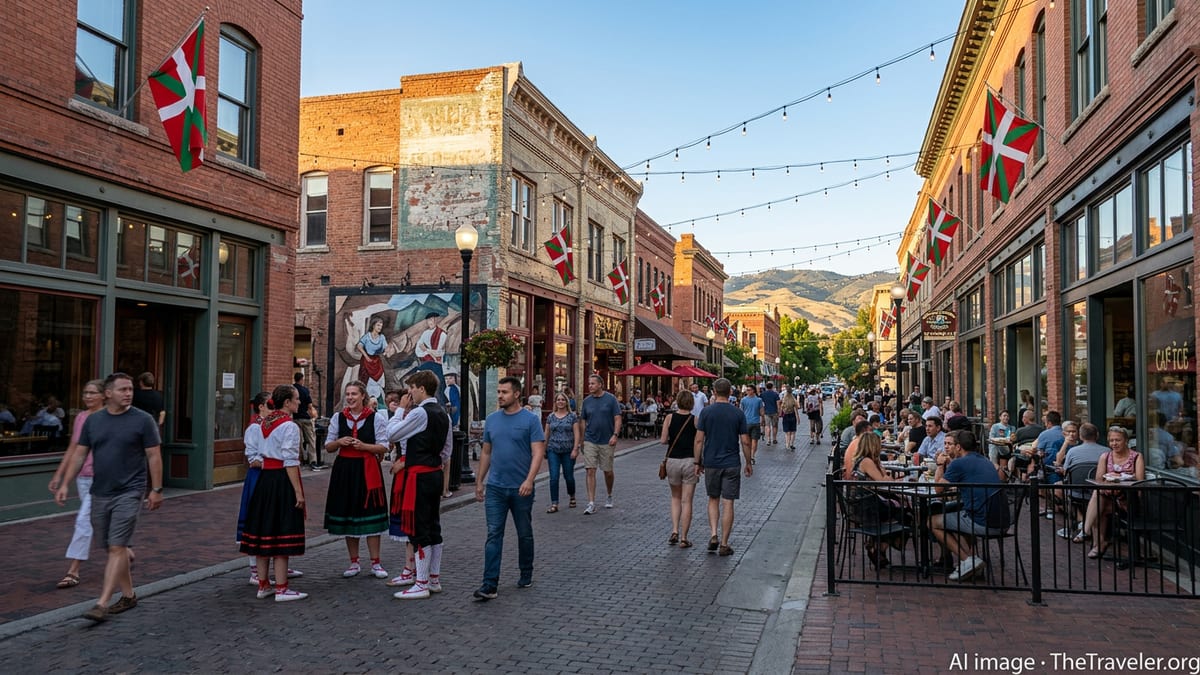
At the center of this story is the Basque Block, a short stretch of downtown Boise where historic boarding houses, cultural centers, and restaurants line a pedestrian-friendly street painted with the green, red, and white of the Basque flag. Here, visitors can see how old brick buildings have been repurposed as gathering places for language classes, dance rehearsals, and community events. Step into the preserved Cyrus Jacobs-Uberuaga boarding house and you get a glimpse of early 20th century immigrant life, with narrow rooms, shared tables, and spaces shaped for people who often spent long months working in remote sheep camps.
The Basque Museum and Cultural Center anchors the block with exhibits on the Basque homeland in northern Spain and southwestern France, the migration to Idaho, and the evolution of Basque-American identity. Oral histories, historic photographs, and displays about sheepherding and music help visitors understand how Idaho’s Basque community has balanced preservation and change. Outside, murals and public art celebrate dancers, farm sports, and the landscapes of both the Old World and the Intermountain West.
What makes Boise’s Basque presence feel particularly vivid is that it is lived, not nostalgic. On any given evening you may see families gathering for a simple plate of croquetas and chorizo, hear Euskara phrases over patio tables, or watch young dancers in traditional costumes heading into the Basque Center to rehearse steps that grandparents once learned. These intergenerational connections are at the heart of the community, and travelers are usually welcomed as long as they are willing to listen and participate with care.
Festivals, Food, and Everyday Basque Traditions
Idaho’s Basque culture comes into sharp focus during festivals, especially in summer. Boise hosts an annual San Inazio celebration on the Basque Block at the end of July, honoring Saint Ignatius of Loyola, a patron figure for many Basques. Live music, traditional dances, public Mass, and late-night socializing turn downtown into a cross between village plaza and western street party. The event draws both local families and visitors who want to experience Basque hospitality firsthand.
Even bigger is Jaialdi, a multi-day Basque festival in Boise that typically takes place every five years and is scheduled to return in late July and early August 2025. Jaialdi brings together Basque dancers, musicians, and athletes from Idaho, across the United States, and often from the Basque Country itself. Events range from farm sport competitions like stone lifting and wood chopping to large-scale concerts and social gatherings. For travelers planning a future trip around culture, Jaialdi is one of the most immersive Basque experiences available in North America.
Culinary traditions are another approachable entry point. Classic Basque boarding house meals were hearty and simple, built around lamb, beans, fresh bread, and seasonal produce. Many Boise restaurants still serve dishes inspired by that heritage, often in communal settings. You might share plates of grilled lamb chops, chicken in garlic and white wine, or cod in tomato sauce, followed by a dense, comforting dessert. The atmosphere is typically informal and family-friendly, with an emphasis on conversation and lingering at the table.
Beyond headline festivals and restaurants, small moments reveal how Basque culture has woven into Idaho’s daily life. A school where children learn Euskara, a local band playing Basque folk tunes at a neighborhood event, or a youth dance troupe performing at a regional fair all point to a culture that is evolving rather than fading. Visitors who attend a dance performance, watch a pelota game, or simply chat with locals about their family histories will often find that Basque identity in Idaho is both proud and welcoming.
Native Idaho: Ancient Homelands and Living Nations
Long before Basque immigrants or other settlers arrived, the land now called Idaho was and remains the homeland of many Native nations. The Shoshone-Bannock Tribes, based at the Fort Hall Reservation, have deep ties to the Snake River Plain and surrounding landscapes. The Nez Perce Tribe’s homeland includes the rolling hills and river canyons of north central Idaho, while the Coeur d’Alene Tribe, Kootenai Tribe of Idaho, and others maintain connections to lakes, forests, and mountains in the northern part of the state.
Archaeological evidence and oral histories suggest that Indigenous peoples have lived in this region for many thousands of years, following seasonal rounds that linked river fisheries, root and berry grounds, and high-country hunting areas. Petroglyphs and pictographs along the Snake River and at sites like Celebration Park, as well as ancient trails that later became wagon routes and highways, testify to a long-standing presence. These landscapes are not simply scenic; they are storied, with place names, spiritual significance, and traditional knowledge attached to them.
The era of westward expansion brought rapid and often violent change. Treaties, broken agreements, forced removals, and conflicts such as the Nez Perce War in the 1870s reshaped Native life across Idaho. Even after reservations were established, policies aimed at assimilation disrupted languages, family structures, and spiritual practices. Many tribal members were sent to boarding schools far from home, where speaking their language or practicing traditional culture could be punished.
Despite these disruptions, Idaho’s Native nations have maintained and revitalized their cultures. Today, tribes operate schools, language programs, museums, and cultural centers that keep traditions visible and accessible. For travelers, understanding this history is essential to appreciating Idaho’s present. Visiting tribal-run sites, learning from interpretive exhibits, and recognizing that much of the state’s public land lies on ancestral territory are meaningful steps toward more respectful tourism.
Experiencing Native Culture Respectfully Today
Many visitors are drawn to Native American culture in Idaho through events, museums, and interpretive sites that welcome the public. Powwows are among the most visible expressions of community life. At these gatherings, which may commemorate historical events, honor veterans, or celebrate seasonal cycles, you will see dancers in regalia, hear drumming and singing, and watch families reconnect across generations. Some powwows are primarily community-focused, while others are explicitly open to the public; always check in advance and follow posted guidelines.
The Shoshone-Bannock Tribes, the Nez Perce Tribe, and other Native nations in Idaho support cultural programming that includes museums, heritage centers, and educational exhibits. These spaces often pair historical artifacts with contemporary art, storytelling, and explanations of ongoing issues such as land stewardship or language revitalization. Even visits to non-tribal institutions, such as regional history museums or state-run interpretive centers, now more often include tribal perspectives and partnerships that help correct earlier one-sided narratives.
Respectful engagement starts with listening. When attending a powwow or public event, follow announcements and emcee instructions about when photography is allowed, which dances are open to visitors, and where you may sit. If you are invited to join a social dance, do so with humility and gratitude. Treat regalia as sacred, not as costume, and avoid touching or photographing people without permission. These small choices communicate that you understand you are a guest in someone else’s cultural space.
Supporting Native-owned businesses and creative work is another important way to participate. When you purchase beadwork, basketry, or other art from tribal artists, or dine at tribally owned enterprises, you help sustain the communities whose cultures you are learning about. Travelers who make the effort to understand contemporary issues, from natural resource management to education, often leave with a more nuanced view of Idaho than what is found in standard guidebooks.
Rodeos, Ranch Life, and Rural Traditions
A drive through Idaho’s small towns reveals another powerful strand of local culture: ranching and rural life. In communities from the Snake River Plain to the panhandle, cattle and sheep operations continue to shape the calendar and the rhythms of daily work. Spring branding, fall roundups, and seasonal moves between winter feeding grounds and summer range still take place in many areas, even as modern equipment and technology alter the details.
Rodeos function as both sport and social gathering. Nearly every region of Idaho has a signature event, ranging from small-town arena shows to larger competitions that draw professional riders and ropers from across the West. These events highlight skills that once were strictly practical, such as roping and bronc riding, and transform them into spectacle. For many families, local rodeo week is as much about seeing neighbors, hosting relatives, and supporting youth competitors as it is about prize money or rankings.
Travelers attending a rodeo quickly see how tradition and modernity intersect. The national anthem and flag presentations reflect a strong sense of patriotism that is common in rural Idaho, while the presence of tribal riders carrying tribal flags or participating in specialty events can underscore overlapping histories. Vendors selling local barbecue, fry bread, or homemade pies, volunteer-run concessions, and 4-H club fundraisers all fold into a distinct small-town atmosphere.
Beyond the arena, rural cultural life includes volunteer fire department breakfasts, grange hall dances, county fairs, and church potlucks. These gatherings might not appear on tourist brochures, but they are where newcomers and visitors often get the clearest view of how Idaho communities function. Asking locally about upcoming events, reading posters at the post office or grocery store, and being open to unpolished experiences often yield some of the most memorable encounters of a trip.
Food, Farms, and Seasonal Celebrations
Idaho’s cultural story is also a culinary one. While the state’s association with potatoes is firmly entrenched, the reality on the ground is much richer. Irrigated valleys and river basins support onion, beet, grain, hop, and dairy production, along with orchards and vineyards that have grown significantly in recent decades. Farmers markets across Idaho showcase this variety, offering everything from heirloom apples and fresh cheese to Basque-inspired sausages and Hmong-grown vegetables.
Seasonal festivals highlight the connection between agriculture and community. Harvest celebrations, often tied to county fairs or individual crops, bring together growers, processors, and families who have worked the land for generations. Parades may feature vintage tractors and FFA students, while music stages showcase local bands. In some places, harvest meals recall specific ethnic traditions, whether that is a Basque-style lamb feed, a community tamale fundraiser, or a church supper with recipes passed down from northern European ancestors.
Idaho’s restaurant landscape reflects this blend of influences. In Boise and other larger cities, you can easily move in a single day from a Basque lunch to Native-inspired cuisine, then to contemporary farm-to-table dining grounded in local produce and game. Chefs increasingly highlight regional ingredients such as trout, morel mushrooms, and huckleberries, offering a modern take on long-standing foraging and fishing practices. Smaller towns may have fewer options, but local cafes and diners often provide an unfiltered taste of community, where servers greet regulars by name and many dishes come from family recipes.
For food-focused travelers, the key is to look for experiences that center local stories rather than generic menus. Ask where ingredients come from, seek out farmers markets, and pay attention to the names and histories behind dishes. In doing so, you participate in a living cultural exchange, where your curiosity and spending help sustain the people whose traditions you have come to explore.
The Takeaway
Idaho’s culture is not a single thread but a tightly woven fabric. Basque heritage, visible in Boise’s downtown streets and in festivals that draw international visitors, sits alongside Indigenous cultures that have shaped this landscape for millennia and rural traditions rooted in ranching and agriculture. Each element adds depth to the state’s identity, and each continues to evolve as new generations reinterpret what it means to call Idaho home.
For travelers, the most rewarding experiences come when you move beyond a checklist of sites and approach Idaho as a place of complex, ongoing stories. That might mean timing your visit to coincide with a Basque festival, accepting an invitation to a small-town rodeo, spending time at a tribal heritage center, or simply asking locals how their families came to live here. The details you encounter in conversation often reveal more than any monument or overlook.
As you plan your trip, consider how your choices can support the communities that make Idaho distinctive. Stay in locally owned lodgings, eat in neighborhood restaurants, pay admission at museums and cultural centers, and buy art and crafts directly from makers whenever possible. These simple steps help ensure that the Basque boarding house repurposed as a museum, the tribal language class in a community center, or the rural festival run by volunteers will still be thriving the next time you return.
Ultimately, engaging with Idaho’s culture is an invitation to look more closely and listen more carefully. Whether you are standing among red and green flags in downtown Boise, watching dancers circle the arena at a powwow, or sharing coffee with ranchers at a café counter, you are encountering history in the present tense. Treat those moments with attention and respect, and the Gem State’s cultural richness will shine through as vividly as its mountains and rivers.
FAQ
Q1. What makes Idaho’s Basque community unique?
Idaho, and Boise in particular, has one of the largest and most visible Basque communities outside the Basque Country, with historic boarding houses, a dedicated Basque Block, and ongoing festivals and language programs that keep traditions alive in daily life.
Q2. How can I experience Basque culture when visiting Boise?
Spend time on the Basque Block, visit the Basque Museum and Cultural Center, eat at Basque restaurants, and, if your timing allows, attend the San Inazio celebration or the larger Jaialdi festival for dancing, music, and farm sport competitions.
Q3. Which Native nations have homelands in Idaho?
Several Native nations have ancestral and contemporary connections to Idaho, including the Shoshone-Bannock Tribes, the Nez Perce Tribe, the Coeur d’Alene Tribe, the Kootenai Tribe of Idaho, and others whose territories overlap modern state lines.
Q4. Are visitors welcome at Native American powwows in Idaho?
Many powwows are open to the public, but some are primarily community events. Always check local information in advance, follow emcee announcements, respect photography rules, and remember that you are a guest in a cultural and often spiritual gathering.
Q5. What is the best time of year to experience Idaho’s cultural festivals?
Summer and early fall are especially active, with Basque events in Boise often held in late July, rodeos and county fairs throughout the warmer months, and many outdoor festivals that showcase music, food, and local traditions.
Q6. How can I learn more about Native history while traveling in Idaho?
Visit tribal museums and heritage centers where available, seek out exhibits at regional and state museums that include tribal perspectives, explore interpretive sites that discuss Indigenous connections to the land, and support Native-led tours or educational programs when they are offered.
Q7. Are Idaho’s cultural sites suitable for families with children?
Yes. Many places, such as museums in Boise, tribal cultural centers, rodeos, and farmers markets, are family-friendly and provide interactive exhibits, performances, and kid-friendly food options that help introduce children to Idaho’s diverse cultures.
Q8. What should I keep in mind when taking photos at cultural events?
Always ask permission before photographing individuals, especially at powwows or spiritual ceremonies, respect any no-photography announcements, and avoid treating regalia or sacred objects as props or backdrops.
Q9. How can I support local communities while exploring Idaho’s culture?
Choose locally owned lodging and restaurants, pay admission to museums and cultural centers, purchase art and crafts directly from makers, and consider contributing to community organizations or cultural programs that you visit.
Q10. Do I need to know any local languages or Basque phrases before I go?
English is widely spoken, but learning a few Basque words like “kaixo” for hello or tribal place names used on interpretive signs can show respect and deepen your experience, even if you only use them occasionally.