

Idaho’s public lands are a major draw for campers, skiers, boaters, and road trippers, but figuring out which pass or permit you need can be confusing. State park passports, daily entry fees, winter Sno-Park style permits, and federal passes all intersect here. Understanding how Idaho’s system works before you go will save you money at the gate and help you plan smoother, more spontaneous adventures across the state.
Understanding Idaho’s State Park Fee System
Idaho manages more than two dozen state parks, from the shores of Lake Coeur d’Alene to the lava fields near Craters of the Moon. Entry to these parks is generally based on a motor vehicle entry fee rather than a per-person charge. If you drive into a state park, you will either pay a daily fee at the entrance station or display a qualifying annual pass on your windshield.
The state’s basic charge is known as the Motor Vehicle Entrance Fee, often abbreviated as MVEF. A standard passenger vehicle that drives into an Idaho state park is usually assessed this fee for day use unless it is covered by a state parks passport or an annual motor vehicle pass. Premium locations and high-demand parks can charge a somewhat higher daily rate, and some parks add separate fees for camping, cabins, moorage, or specialized winter trail grooming.
Importantly, these access fees are dedicated to park operations, maintenance, and improvements. Trails, restrooms, boat launches, interpretive centers, and campground infrastructure all depend on user fees in addition to state funding. For regular park users, buying an annual pass or passport is both a cost-saving strategy and a way to support the long-term health of Idaho’s recreation system.
Visitors should also be prepared for variation by season. In summer, the motor vehicle fee is the main gate charge. In winter, certain parks or trailheads may require an additional permit to support snow grooming and plowing. The overlapping rules can feel complex, but they follow a basic pattern: a vehicle-based entrance fee, with optional add-ons for winter recreation or overnight stays.
The Idaho State Parks Passport for Residents
For Idaho residents, the flagship product is the Idaho State Parks Passport. This is a sticker linked to a specific passenger vehicle or motorhome and sold through the Department of Motor Vehicles together with your registration. When you renew registration for an eligible vehicle, you can opt to add the passport for a modest annual amount per vehicle, typically aligned with your registration term.
The passport covers unlimited day-use access for that vehicle to all Idaho state parks during the life of the registration period. Instead of paying the daily motor vehicle entry fee every time you pull into a park, you simply display the passport sticker on the lower driver-side corner of your windshield and drive in. The program is set up so that the passport expires when your registration expires, and it is not transferable between vehicles.
In addition to basic entry, the passport generally covers state park boat launch fees for the associated vehicle. That makes it especially attractive for boaters who frequent reservoirs and lakes managed as state parks. The passport is valid at every Idaho state park that collects the motor vehicle fee, including mixed-jurisdiction sites like City of Rocks National Reserve, where the state manages access and parking in cooperation with the National Park Service.
Residents who do not opt into the passport can still buy daily entry at park gates or purchase an annual motor vehicle entry sticker through Idaho Parks and Recreation. However, the passport is intentionally priced as the most economical option for locals who visit state parks more than a few times per year. For many households, putting the passport on at least one vehicle becomes a standard part of the registration routine.
Annual Motor Vehicle Passes for Nonresidents and Frequent Visitors
Nonresidents do not have access to the DMV-based passport program but can purchase an annual motor vehicle entry pass directly from Idaho Parks and Recreation or at individual parks. This annual pass is designed for visitors who plan multiple trips to Idaho’s state parks within a year and want to avoid paying the daily fee each time.
The nonresident annual pass takes the form of a windshield sticker similar to the resident passport. Once displayed on the vehicle, it waives the standard daily motor vehicle entrance fee at most state parks for the duration of the pass. Park staff will scan or visually confirm the sticker at entry kiosks and in parking areas. As with the resident passport, the pass is tied to a specific vehicle and is not intended to be moved between cars or loaned to friends.
Pricing for nonresident annual passes is higher than the Idahoan passport rate, reflecting the fact that residents already support the park system through state taxes and registration fees. Even so, frequent out-of-state visitors, second-home owners, and road trippers who plan to base themselves in Idaho for an extended period often find the pass cost-effective after just a handful of park visits.
Short-term visitors who only plan to stop once or twice will typically pay the daily motor vehicle fee instead of pursuing an annual sticker. Because these fees can vary slightly by park and by season, it is wise to check posted entrance rates at the gate or on official park materials before arriving with a tight budget or schedule.
Day-Use Entry Fees and How They Work
For both residents and nonresidents who do not hold an annual pass or passport, day-use entry is assessed per motorized vehicle. When you arrive at an Idaho state park, you will either encounter a staffed entrance booth or a self-service pay station. The posted rate usually shows a standard daily motor vehicle entrance fee for most parks, with higher rates at premium waterfront or destination sites.
Payment methods depend on the park’s facilities. Many staffed entrances accept cash and major credit cards. Self-pay stations often rely on cash or on a payment envelope that you deposit into a fee tube after recording your license plate, campsite, or boat registration information. Some Idaho parks are gradually incorporating digital payment options, but visitors should not assume this is available everywhere and should carry a small amount of cash as a backup.
The daily fee is valid until the posted closing time or, in overnight campgrounds, for a defined 24-hour window. If you move between state parks on the same day, you are expected to pay the entrance fee at each park unless you hold a qualifying annual sticker. The fee is attached to the vehicle visit rather than to individual people, so a full carload of friends or family entering together usually represents good value.
Special considerations apply at certain shared sites. For example, at City of Rocks National Reserve, which is managed jointly by the National Park Service and Idaho Parks and Recreation, vehicles are required to pay the Idaho motor vehicle entry fee or display an Idaho annual sticker. A federal interagency pass such as America the Beautiful does not substitute for the state motor vehicle fee in these circumstances, because the state, not the National Park Service, collects the revenue for basic access and maintenance.
Winter Recreation: Park N Ski and Sno-Park Style Permits
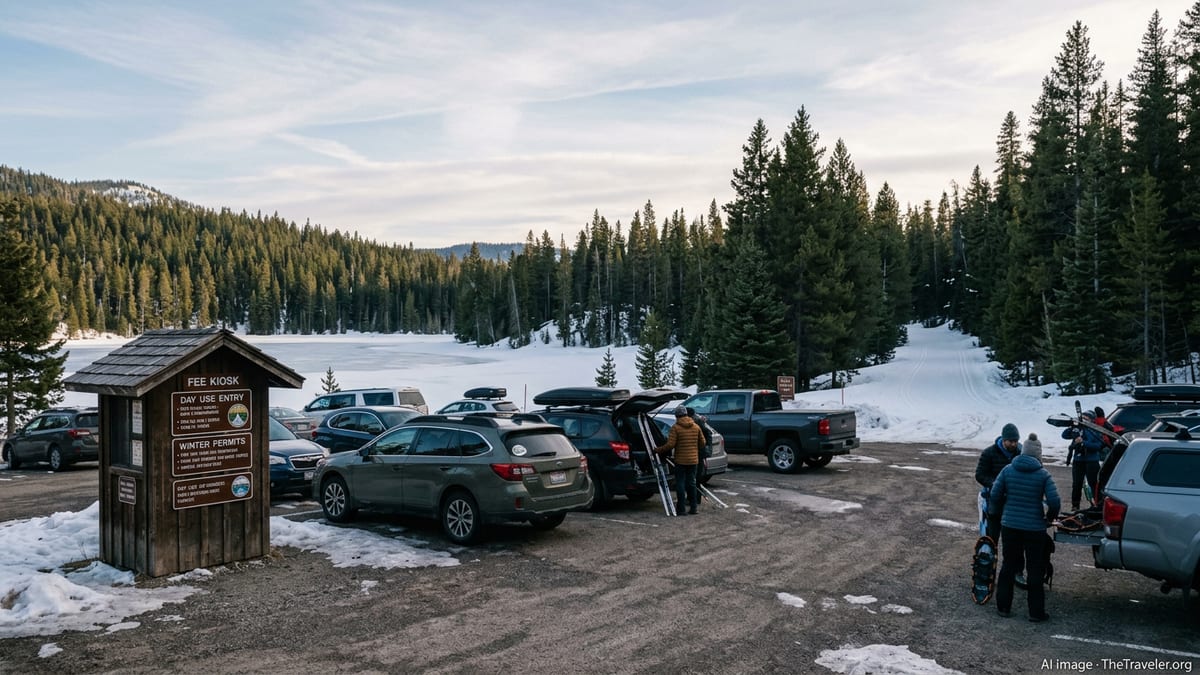
Idaho’s winter recreation system layers additional permits on top of the standard state park entry structure. While the term “Sno-Park” is most widely associated with Washington and Oregon, Idaho offers a similar concept through Park N Ski sites and dedicated winter trailheads. These locations support cross-country skiing, snowshoeing, fat biking, and snowmobiling on groomed or packed routes.
The core product is the Park N Ski permit, an annual pass for designated winter parking areas outside or near state parks. The permit is valid for a winter season and helps fund plowing, grooming, signing, and sanitation at trailheads that would otherwise be difficult to maintain. Park N Ski permits are sold through Idaho Parks and Recreation and at some local vendors in mountain communities.
Idaho’s Parks Passport for residents does not cover Park N Ski locations. Even if you have the passport on your windshield, you still need an appropriate Park N Ski sticker when you park at those signed winter trailheads. Some state parks also charge an additional winter access fee for Nordic trail grooming beyond the base motor vehicle entrance fee, especially where extensive cross-country ski systems or snowshoe networks are maintained.
Another important change in recent years is that neighboring states no longer have reciprocal snow-park arrangements with Idaho. Washington’s Sno-Park permits, for example, are specifically identified as not being valid in Idaho. Winter travelers who are accustomed to relying on one regional snow-park permit across multiple states need to plan for separate Idaho permits if they intend to use groomed trailheads or Park N Ski sites within the state.
Camping, Cabins, and Other Special Permits
Motor vehicle entry fees and winter permits are only part of the picture. Most overnight use at Idaho state parks requires separate reservations and camping fees, which are distinct from entrance charges. Whether you arrive with a tent, trailer, motorhome, or plan to book a cabin or yurt, you will pay a nightly rate that reflects site type, season, and park popularity. These accommodation fees are managed through Idaho’s centralized reservation system, with advance bookings increasingly important during peak summer and holiday weekends.
For many reservations, the motor vehicle entrance fee is either included in the camping rate or discounted when you book through the state’s system, especially if your license plate is already associated with a state parks passport. However, policies can differ by park and site type. Visitors should read the fine print during the reservation process to understand what is covered and what will be charged upon arrival.
Special use permits may be required for organized events, commercial tours, or large group activities in state parks. These permits can involve separate fees and insurance requirements, especially for races, weddings, or large gatherings that use reserved shelters and group camps. Rules are park-specific and may change over time, so organizers should contact park offices well ahead of their event dates.
Beyond parks, Idaho’s other land management agencies issue their own permits for activities such as cutting Christmas trees on national forest lands, grazing livestock, or operating commercial river trips. While these are not directly linked to state park entry, travelers sometimes conflate them. When in doubt, differentiate between state park passes, winter Park N Ski permits, and any federal or special-use permits related to national forests, Bureau of Land Management lands, or wildlife areas.
How Idaho Passes Interact With Federal and Neighboring State Systems
Many visitors bring federal passes or out-of-state snow-park permits to Idaho and understandably hope they will cover multiple types of access. In practice, Idaho’s state park system is separate from federal recreation programs and from neighbor-state Sno-Park models. An America the Beautiful interagency pass, for example, covers entrance fees at national parks, national forests, and other federal sites, but it does not replace Idaho’s motor vehicle entrance fee at state parks.
Complexities arise at joint sites such as Craters of the Moon National Monument and Preserve or City of Rocks National Reserve. Portions of these landscapes may be managed by the National Park Service while access roads, campgrounds, and visitor facilities are operated in partnership with Idaho Parks and Recreation. In those cases, a vehicle may need to display both a valid federal entrance pass and an Idaho state park passport or pay the state motor vehicle fee, depending on which facilities are being used.
Reciprocity with neighboring states is limited. At one time, some western snow-park programs recognized each other’s seasonal permits, but that era has largely ended. Washington’s Sno-Park program now clearly states that its permits are not valid in Idaho. Oregon and California have their own rules as well. The result is that winter travelers who cross state lines for skiing and snowshoeing should plan to purchase separate seasonal or daily permits in Idaho even if they already hold a neighboring state’s snow-park sticker.
For travelers with multi-state itineraries, the cleanest approach is to treat each jurisdiction’s pass system as independent. Use your federal pass for national parks and forests, Idaho’s state passports or annual stickers for state parks, and Idaho Park N Ski or winter access permits for groomed trailheads and Nordic areas. This mindset helps avoid misunderstandings at gates and reduces the risk of citations or unexpected parking issues.
Planning Your Trip: Choosing the Right Pass or Permit
Deciding which Idaho pass or permit you need starts with an honest assessment of your travel style. If you live in Idaho and regularly visit lakes, campgrounds, and historic sites, adding the parks passport to at least one vehicle during registration is usually the best value. The more you use the parks, the more quickly the passport pays for itself compared with paying daily motor vehicle fees.
For nonresidents, the math depends on how many days you plan to spend in Idaho state parks. A short weekend or a single stop near the state line might not justify an annual sticker, so paying daily entrance fees can be the simplest option. On the other hand, if you are planning a road trip that strings together several Idaho state parks, or if you return multiple times a year, the annual nonresident motor vehicle pass is worth close consideration.
Winter enthusiasts should always factor in Park N Ski or winter trail permits separately from state park entry. If your main goal is skiing groomed Nordic loops or accessing snowmobile trailheads, budget for seasonal or daily winter permits alongside any campground or lodging costs. Remember that a state park passport or annual motor vehicle sticker does not typically cover winter grooming fees at dedicated trailheads.
Finally, travelers who mix state and federal lands in one itinerary should map out where each type of pass applies. A day might begin with a hike in a national forest, where a federal pass or modest parking fee applies, and end at a lakeside state park that requires the Idaho motor vehicle fee. Keeping your passes organized in your glove box and clearly visible on your windshield minimizes confusion and speeds up your arrival at each destination.
The Takeaway
Idaho’s patchwork of park passes and permits can seem complicated at first glance, but it follows a clear logic. State parks rely on a vehicle-based entrance fee that can be reduced or eliminated for frequent users through resident passports and nonresident annual stickers. Winter recreation is supported by specialized Park N Ski and grooming permits that operate independently from summer day-use charges.
For most residents, the state parks passport is the foundation of a cost-effective outdoor life, bundling unlimited day-use access into the annual vehicle registration process. For visitors, the choice between daily fees and an annual pass depends on how many state park days fit into the itinerary. Winter travelers, meanwhile, should view Park N Ski permits as an essential part of enjoying groomed trails and plowed trailheads rather than as an added nuisance.
Because fees and conditions can evolve over time, it is always smart to confirm current prices and rules through official Idaho Parks and Recreation information shortly before your trip. With a bit of advance planning and the right combination of passes, you can explore Idaho’s lakes, forests, deserts, and snowy mountains with confidence, knowing that your fees help keep these landscapes open and cared for.
FAQ
Q1. Do I still need to pay a fee if I have the Idaho State Parks Passport?
The passport covers the standard motor vehicle entrance fee for that specific vehicle at Idaho state parks, but separate camping, cabin, and some winter grooming charges may still apply.
Q2. Can nonresidents buy a pass that works like the Idaho Parks Passport?
Nonresidents cannot purchase the DMV-based passport but can buy an annual motor vehicle entry pass from Idaho Parks and Recreation that waives most daily vehicle entrance fees for the covered vehicle.
Q3. Does an America the Beautiful federal pass cover Idaho state park fees?
No. Federal interagency passes apply to national parks and other federal lands and do not replace Idaho’s state park motor vehicle entrance fees or Park N Ski permits.
Q4. Are Park N Ski permits included with the Idaho Parks Passport?
No. Park N Ski permits are separate winter recreation passes. Even if you display a state parks passport, you still need the appropriate Park N Ski sticker at designated winter trailheads.
Q5. Can I move my Idaho State Parks Passport or annual pass between vehicles?
Passports and annual motor vehicle passes are issued to specific vehicles and are not meant to be transferred or shared. A new vehicle generally requires its own sticker.
Q6. How do daily motor vehicle entrance fees work for groups?
The fee is charged per motorized vehicle, not per person, so a full car of people entering together typically pays the same rate as a solo driver in one vehicle.
Q7. Do Washington or Oregon Sno-Park permits work in Idaho?
No. Washington’s Sno-Park program specifically notes that its permits are not valid in Idaho, and Idaho expects winter users to hold its own Park N Ski or similar permits.
Q8. Are camping fees in Idaho state parks separate from entrance fees?
Yes. Camping, cabin, and yurt reservations have their own nightly rates. In some cases entrance fees are included or discounted, but they are not automatically covered everywhere.
Q9. Where can I buy Idaho Park N Ski or winter trail permits?
Park N Ski permits are typically sold through Idaho Parks and Recreation and at selected local vendors near popular winter recreation areas; availability can vary by region and season.
Q10. How can I be sure I have the most current Idaho park fee information?
Because fees and policies change over time, the most reliable approach is to check the latest information from Idaho Parks and Recreation shortly before your trip.