

Two neighboring states in the American West, Idaho and Utah, are competing more than ever for travelers who crave mountains, hot springs, ski terrain, and big landscapes. Both promise dramatic scenery and deep snow, yet the on-the-ground experience can feel very different, from Idaho’s lower-key hot spring soaks to Utah’s blockbuster ski resorts and famous national parks. Choosing between them comes down to the kind of trip you want and how you like to balance adventure, budget, and crowds.
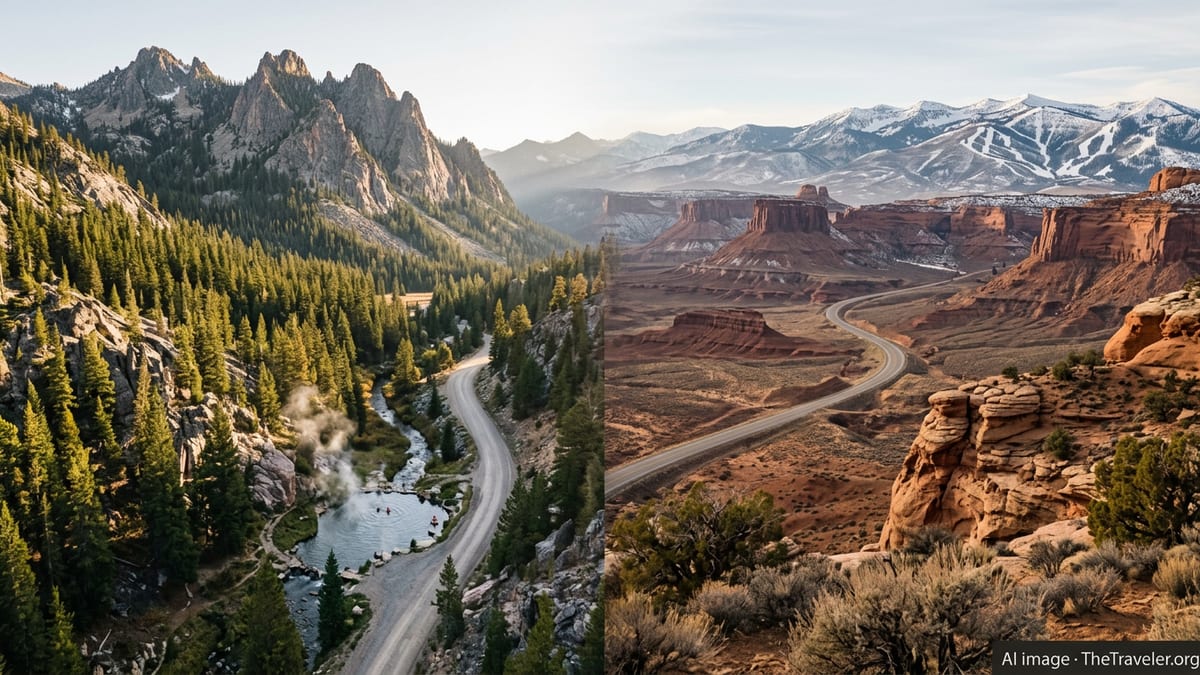
Overall Vibe: Laid-back Idaho vs Headline-making Utah
At first glance, Idaho and Utah can look similar on a map: high desert plateaus, serrated mountain ranges, deep river canyons, and plenty of snow. In reality, they deliver distinct travel personalities. Idaho tends to feel more low-key and less commercial, with smaller towns, fewer marquee brands, and road-trip style exploration between mountain valleys, river corridors, and pockets of hot springs. Utah, by contrast, has become one of the marquee outdoor destinations in the United States, drawing millions to its national parks and to ski resorts clustered around Salt Lake City and Park City.
That difference in visibility directly shapes what you encounter as a visitor. Utah’s best-known ski areas and national parks manage heavy demand, and even in shoulder seasons you should be prepared for booking windows, shuttle systems, and timed entries in some popular areas. Idaho’s core mountain regions, including the Sawtooth Mountains and central hot springs country, get busy in peak summer and on powder days but generally feel less crowded once you step away from a handful of well-known access points.
Budget is another differentiator. Independent analyses in recent seasons have continued to place major Utah resorts such as Deer Valley, Park City Mountain, and Snowbird among the most expensive in North America for a typical ski day, with lodging, lift tickets, and dining often priced at a premium compared with smaller regional hills. Idaho’s resorts usually come in at a lower price point, especially away from high-end destinations like Sun Valley, which helps stretch a ski or road-trip budget.
For many travelers, the decision is not which state is “better” but which one better matches their expectations. If you want huge infrastructure, fast lifts, and easy access to a cluster of national parks, Utah is compelling. If your dream trip involves quieter trailheads, rustic riverside camps, and finding your own hot pool at the end of a dirt road, Idaho often feels closer to that ideal.
Hot Springs Culture: Where to Soak in Idaho and Utah
Idaho has developed a reputation as one of the premier hot spring states in the American West. Dozens of springs bubble up along rivers and in forested canyons, from developed facilities with changing rooms and reservations to primitive rock pools right by the roadside. Well-known commercial spots such as those near Stanley and along the Salmon River sit within easy reach of hiking trailheads and ski touring zones, making it realistic to finish a full day outside with a soak under the stars. Primitive springs along forest roads and near river pullouts reward travelers who are willing to drive slow, pack out everything, and share space respectfully.
Central Idaho in particular combines mountain scenery with hot water. Springs in and around the Sawtooth and Boise National Forest areas sit amid pine forests and granite peaks, often in view of snow-lined ridges well into late spring. Some pools are now managed with timed sessions and online booking to control crowding, especially in peak summer and over holiday weekends, while others remain informal and can be busy on sunny days. Winter access varies; certain springs near plowed highways remain reachable, while others require snowshoes or backcountry travel skills.
Utah’s hot spring scene is more limited and more localized. There are a handful of commercial hot spring resorts scattered around the state as well as a small number of undeveloped soaking spots, but they are not as numerous as in Idaho and generally sit farther from the main national park corridors. Several springs along the Wasatch Front and in central Utah operate as family-oriented pools with set hours and admission fees, often pairing hot soaking pools with cooler swimming areas.
For travelers, that means hot springs can be a central organizing theme for an Idaho itinerary, while in Utah they are more of an occasional side trip tacked onto a ski week or a desert tour. If hot water is one of your top priorities, Idaho is the clearer choice, and you will want to research current access conditions and any seasonal closures for sensitive springs before you go. In Utah, you can certainly find a soak, but it is rarely the star attraction in the same way.
Ski Resorts Compared: Snow Quality, Terrain, and Cost
Utah’s claim to fame in winter is its deep, dry snow and resort density close to a major airport. Ski Utah and state industry reports show that the 2024 to 2025 season still drew around six and a half million skier visits, making it one of the busiest seasons on record despite slightly lower visitation than the winter before. Resorts such as Snowbird, Alta, Solitude, Brighton, Deer Valley, Park City Mountain, Snowbasin, and Powder Mountain form a cluster that gives visitors a wide choice of terrain, from steep chutes to family-friendly groomers, mostly within a few hours of Salt Lake City International Airport.
Snowfall averages remain a key selling point. Alta and Snowbird, for example, are regularly reported among the top resorts in the region for cumulative snowfall in a given winter, and the snowfall figures across the Wasatch in the past few seasons have kept Utah at or near the top of many powder-chaser lists. Terrain and lift infrastructure match that reputation: high-speed lifts, expansive linked trail networks, and dedicated beginner zones make Utah especially efficient for visitors who have limited time but want maximum skiing.
Idaho’s ski scene, while lower profile, offers strong variety. Sun Valley remains the best-known resort and has a long-standing place in North American ski culture, with wide groomers, modern lifts, and substantial snowmaking that can smooth out lower-snow periods. Elsewhere, regional mountains such as Schweitzer in northern Idaho and Bald Mountain near Boise have been gradually upgrading lifts and amenities, and they tend to see smaller crowds than Utah’s headliners. The snow is generally reliable, but many Idaho resorts sit at slightly lower elevations than the highest Utah ski areas, which can affect season length in marginal years.
Where Idaho often wins is cost and atmosphere. Independent studies over the past few years have frequently placed several Utah resorts among the priciest in the United States once lift tickets, typical lodging prices, and on-mountain spending are combined, with Deer Valley and Park City Mountain regularly appearing near the top of those rankings. By comparison, most Idaho ski hills still feel more local, with more modest day ticket prices and in-town lodging that reflects a smaller destination economy. For travelers chasing pure snowfall statistics and expert terrain, Utah is hard to beat. For those who favor a slower pace, more breathing room in lift lines, and lower overall trip costs, Idaho is appealing.
Hiking and National Parks: Utah’s Icons vs Idaho’s Quiet Classics
For trail-focused travelers, Utah is defined by its national parks and other public lands that have become household names. Zion, Bryce Canyon, Arches, Canyonlands, and Capitol Reef collectively attract millions of visitors each year, many of them coming for marquee hikes through slot canyons, to natural arches, and along narrow ridgelines with sweeping desert views. Visitor profile reports from the state’s tourism office show hiking as one of the most common activities, especially in the national and state parks, often outpacing national averages for outdoor participation.
That popularity has consequences on the ground. Several of Utah’s national parks now use timed-entry systems or daily shuttle operations in peak season. Park agencies frequently remind visitors that exposed trails come with uneven footing, shifting weather, and real fall hazards, particularly on crowded routes where experience levels vary. Travelers need to factor in earlier starts, flexible timing, and realistic route choices, especially for older hikers or those new to desert terrain.
Idaho’s hiking showcase is less about a single park and more about a series of wild mountain zones. The Sawtooth Mountains, sometimes described as the crown jewel of Idaho, offer hundreds of miles of trail to lakes, passes, and alpine basins. Popular hikes near places like Redfish Lake and trailheads outside Stanley lead to turquoise lakes and granite cirques with a fraction of the foot traffic seen on Utah’s most famous desert routes. Wilderness permits in some areas are self-issued at trailheads, underscoring how these landscapes still function as backcountry rather than theme-park-style attractions.
Outside the Sawtooths, Idaho hikers fan out into the White Cloud Mountains, the Bitterroots along the Montana border, and the river canyons of the Salmon and Snake. Signage and infrastructure can be more basic than in Utah’s marquee parks, so travelers must be more self-sufficient. In return, they often find longer stretches of solitude and more flexible options for dispersed camping. If your ideal trip centers on national park highlights and shorter, heavily documented trails, Utah is a strong fit. If you would rather piece together your own loop through quieter mountain basins, Idaho will likely feel closer to what you want.
Seasonality, Weather, and Trip Timing
In both Idaho and Utah, seasonality defines the experience, but how it feels depends on where you go within each state. During winter, Utah’s Wasatch Range tends to see frequent storms that bring powder to ski resorts while the nearby valley floor in Salt Lake City can be relatively mild. This makes it realistic to base in a city or mountain town and drive to resorts, although canyon roads occasionally close or restrict traffic during intense storms or avalanche work. The ski season at higher-elevation resorts typically stretches from late November into April or even May in strong snow years, with Utah’s tourism and ski industry trade groups pushing annual updates on opening and closing dates.
Idaho’s winter patterns vary more by region. Northern mountains near the Canadian border and along the Bitterroots can see heavy, wetter snow, while central Idaho around the Sawtooths and Salmon River tends to be colder and drier. Some hot springs remain open all year, but road conditions can change quickly with storms, and access to less-developed springs may require winter driving skills or snow travel. Smaller resorts may operate slightly shorter seasons than Utah’s biggest players, especially in marginal years or on lower-elevation terrain.
Summer and shoulder seasons tell a different story. Utah’s desert parks can be dangerously hot in midsummer, with temperatures regularly climbing into the high 90s Fahrenheit or beyond. As a result, the most comfortable hiking months in many desert zones are spring and fall, when daytime highs moderate but afternoon thunderstorms, flash floods in canyons, and crowded holiday periods can still pose challenges. High country trails in the Wasatch open later, with snow lingering into early summer on shaded aspects.
Idaho’s mountain core shines from late June through September, when high passes and alpine basins finally shed their snow. Days are long, temperatures are warm but not usually extreme in the high country, and river levels drop enough to make for safe crossings on popular loops. Mosquitoes can be intense in early summer around lakes and marshy meadows, and wildfire smoke from regional fires is an increasingly common factor across both Idaho and Utah later in the season. Building flexibility into your itinerary helps you pivot between valleys and elevations if air quality or heat becomes an issue.
Access, Crowds, and Travel Logistics
From a logistics perspective, Utah is unusually straightforward. Salt Lake City International Airport serves as a major hub with frequent flights from across the United States, and from there it is typically under an hour to reach several ski resorts in the Cottonwood canyons or the Park City cluster in winter traffic conditions. Rental cars are plentiful, and for some resorts and urban areas there are shuttle options or public transit segments that reduce the need to drive every day. For the southern Utah parks, travelers often fly into Salt Lake City, Las Vegas, or regional airports and then drive several hours to reach gateways such as Moab or Springdale.
Idaho’s key outdoor hubs are more scattered. Boise Airport anchors the southwest of the state, but getting from there to the Sawtooths, central hot springs corridors, or northern resorts such as Schweitzer often requires several hours on two-lane highways. Towns like Ketchum, McCall, and Sandpoint operate on a smaller scale than Park City, and public transit options are more limited, so most travelers will want their own vehicle. This network of long drives is part of Idaho’s appeal to many visitors, but it also demands more planning around fuel, weather windows, and daylight hours.
Those differences translate directly into how crowded each state feels. Utah’s flagship destinations are very convenient to large population centers, from the Wasatch Front itself to nearby states and international visitors, which keeps pressure high on parking lots, canyon roads, and trailheads. Industry and state visitor reports show strong participation in skiing and hiking, and locals regularly discuss congestion as a primary concern. Idaho’s remoteness from major metro areas means fewer casual visitors can show up for a spontaneous long weekend, and the result, outside of major holidays, can be more elbow room despite smaller overall infrastructure.
For travelers deciding between the two, the question is how much time you are willing to spend in transit versus on the mountain or trail. If you only have a few days and want to maximize turns or views from easily accessed lookouts, Utah’s tight clustering of resorts and parks around flights is appealing. If you have a week or more and enjoy scenic road-trip days, Idaho’s slower travel pace becomes a positive feature rather than a drawback.
Costs, Culture, and Responsible Travel
Over the past several seasons, a range of travel and business publications have noted that Utah’s marquee ski resorts are among the most expensive in North America when overall trip cost is considered, including day passes, lodging, rentals, and typical on-mountain spending. Analyses ahead of recent winters have placed resorts in Park City and at least one major Cottonwood Canyon mountain among the costliest single-day ski experiences in the country. This does not mean there are no deals, but it does mean budget-conscious travelers often rely on multi-resort passes, weekday skiing, and off-peak lodging dates to keep costs in check.
Idaho’s mountain towns generally sit at a lower price tier. Sun Valley stands out as a high-end exception, but elsewhere, smaller independent hills and local hot spring facilities often charge more modest day-use fees. Lodging in places such as McCall, Stanley, or Sandpoint can still surge during prime holidays and festival periods, yet outside those dates many visitors find better value compared with the most famous Utah destinations. Fuel, food, and gear costs will be broadly similar in both states, though rural Idaho may have fewer high-end dining options and more reliance on small groceries and cafes.
Culturally, Utah’s outdoor scene is shaped by the proximity of a large metro area to the mountains and by the global attention on its national parks. You will encounter a mix of international tourists, local weekend warriors, and seasonal workers in resort and gateway towns, along with the state’s distinct religious and social backdrop. Idaho’s mountain culture feels more rural and quieter, with a strong hunting, fishing, and ranching presence layered alongside growing communities of climbers, skiers, and remote workers.
Responsible travel is an increasingly urgent theme in both states, particularly around overuse of fragile desert and alpine environments. Land managers in Utah’s desert parks emphasize staying on durable surfaces, carrying more water than you think you need, and respecting closures in slot canyons during storm windows. In Idaho, forest and wilderness managers continue to highlight leave-no-trace principles at popular lake basins and hot spring corridors, from packing out trash to being careful about soaps and other contaminants in soak pools. Travelers who choose either state contribute to the long-term health of these landscapes by planning ahead, staying on marked routes, and traveling in smaller groups where possible.
The Takeaway
When you weigh Idaho against Utah as a travel choice, the decision comes down to your priorities. Utah offers a polished, high-intensity version of the mountain and desert vacation: big-name ski resorts with fast lifts, global attention on “bucket list” hikes in its national parks, and a transportation network that funnels you quickly from international flights to canyon roads and red rock trails. The tradeoffs are higher prices, more structured access systems, and the reality that true solitude can be hard to find near the most famous viewpoints.
Idaho, on the other hand, trades polish for breathing room. Its hot springs are central to the travel experience rather than a side note, its ski hills tend to feel more local, and its hiking highlights are embedded in broader swaths of national forest and wilderness rather than concentrated in a few headline parks. Reaching them generally takes more driving and self-reliance, but the payoff is more flexibility to shape your own route and a better chance of having a trail or pool to yourself, especially outside peak weekends.
For many travelers, the smartest move is not to crown a single winner but to match the state to the trip. If you are planning your first Western ski week or want to hit iconic desert trails with limited vacation time, Utah’s density and infrastructure are ideal. If you have a longer window, a tighter budget, or a strong desire to mix hot springs, hiking, and smaller ski hills, Idaho may feel like the discovery you were hoping for. Either way, thoughtful planning, realistic expectations, and respect for changing conditions will turn these mountain states into memorable stages for your next adventure.
FAQ
Q1. Which state is better for hot springs, Idaho or Utah?
Idaho clearly offers more variety and prominence when it comes to hot springs, with numerous developed and primitive pools across its central and northern regions. Utah has some soaking options, but they are fewer, more scattered, and generally not the primary focus of most itineraries.
Q2. Where will I find deeper, more reliable powder for skiing?
Utah’s Wasatch Range usually has the edge for deep, consistent powder, especially at higher-elevation resorts in Little and Big Cottonwood Canyons. Idaho’s snow can be excellent, particularly in northern and central mountains, but Utah’s snowfall statistics and resort density give it a slight advantage for powder-focused trips.
Q3. Is skiing generally cheaper in Idaho than in Utah?
Yes, in broad terms skiing tends to be less expensive in Idaho, especially at smaller, independent hills away from Sun Valley. Several of Utah’s marquee resorts rank among the costliest in the country for a full ski day, although using multi-resort passes and traveling midweek can help narrow the gap.
Q4. Which state is better if I am a beginner or traveling with kids?
Both states can work well, but Utah’s major resorts have particularly extensive beginner zones, ski schools, and non-ski activities in towns like Park City. Idaho’s smaller hills can be less intimidating and more affordable, yet they may have fewer off-slope diversions. Families who value extensive infrastructure often favor Utah, while those prioritizing a quieter setting may lean toward Idaho.
Q5. How do the hiking experiences differ between Idaho and Utah?
Utah’s hiking scene centers on famous national parks with marked trails to arches, canyons, and overlooks, often with large crowds and structured access. Idaho emphasizes wilder mountain hiking, especially in the Sawtooths and other alpine ranges, where trails are less crowded but also less developed and require more self-sufficiency.
Q6. Which state offers better access and shorter travel times?
Utah generally offers easier access, with multiple major ski resorts and some trailheads within an hour or so of Salt Lake City International Airport. Idaho’s highlights are more spread out, usually involving several hours of driving from Boise or regional airports, which can lengthen transit time but also reduce overall crowding.
Q7. When is the best time of year to visit each state for outdoor activities?
For skiing, both states are best from midwinter through early spring, with Utah’s highest resorts often holding snow later into the season. For hiking, southern Utah shines in spring and fall to avoid extreme heat, while Idaho’s high mountain trails are usually at their best from late June through September, once snow has melted from passes and basins.
Q8. Which destination is better for travelers seeking solitude?
Travelers seeking solitude typically find it easier to escape crowds in Idaho, especially in lesser-known mountain areas and at midweek hot springs or trailheads. In Utah, solitude is still possible, but it often requires venturing beyond the most famous national park routes or timing visits for early mornings and shoulder seasons.
Q9. Are there safety concerns unique to either state’s outdoor areas?
Utah’s desert parks bring specific hazards such as extreme heat, limited water sources, and flash floods in slot canyons, along with exposure on cliffside trails. Idaho’s mountain and hot spring regions demand careful attention to river levels, winter driving, changing alpine weather, and responsible behavior around geothermal features. In both states, understanding local conditions and your own limits is essential.
Q10. If I have one week, should I choose Idaho or Utah?
With a single week, Utah is often the better choice if your priority is maximizing skiing or visiting iconic national parks with minimal transit time. If you are more interested in a road-trip-style journey that mixes hot springs, quieter hiking, and smaller ski hills, and you do not mind extra driving, Idaho can deliver a more relaxed and exploratory experience over the same time frame.