

More news on this day
Indian Hotels Company Limited has signed a 500‑key Taj hotel in Patna, a greenfield project that is set to boost Bihar’s position as a fast‑growing destination for business travel, large events and tourism in eastern India.
Get the latest news straight to your inbox!
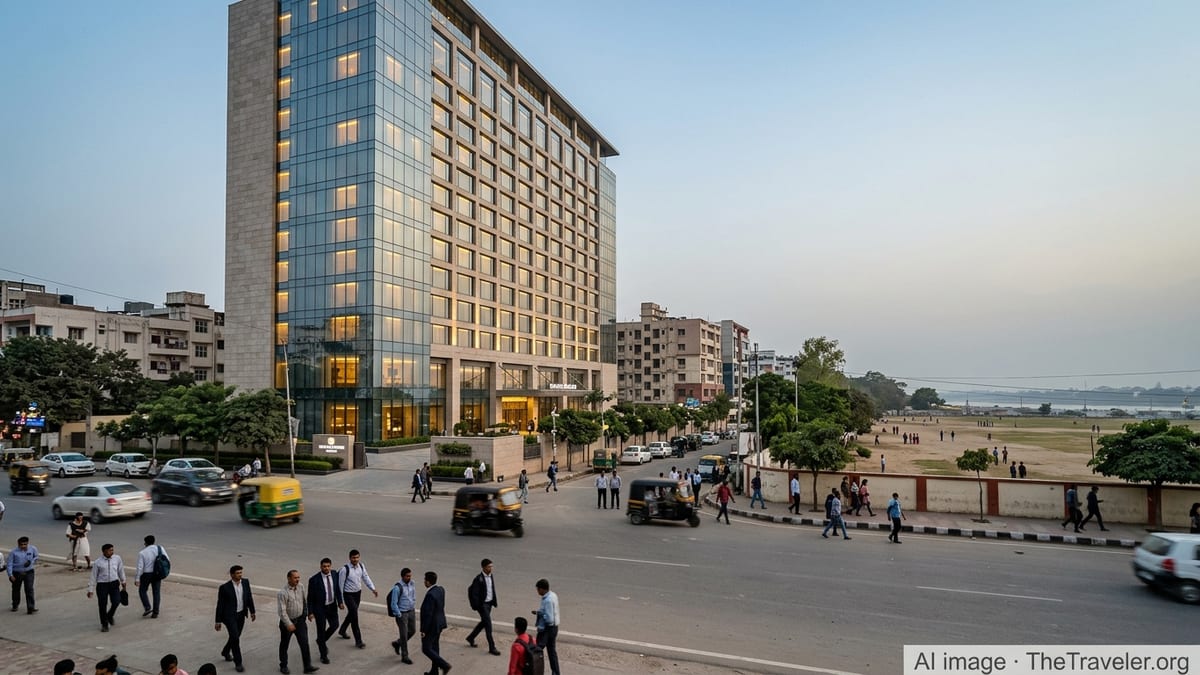
Landmark Greenfield Taj Project in Bihar’s Capital
Publicly available information shows that Indian Hotels Company Limited, India’s largest hospitality company, has entered into an agreement to develop a new Taj hotel in Patna, Bihar. The project, described as a greenfield development, will be branded as Taj Patna and is positioned as one of the largest hotel properties in the state, with 500 rooms planned at full build‑out.
The hotel site is located opposite Patna’s historic Gandhi Maidan, with the River Ganges to the north, placing the property in the heart of the city’s administrative and commercial district. Reports indicate that the location has been chosen to appeal to both corporate and leisure travelers, offering convenient access to government offices, business centers and key city landmarks.
According to published coverage, the new Taj Patna will be developed in partnership with Patliputra Palace Pvt. Ltd., part of the Shriram Ozone Group, which has a significant presence in real estate and hospitality assets across eastern India. The collaboration aligns a leading national hospitality operator with a regional developer that has experience in large‑scale projects in Bihar and neighboring states.
Industry observers note that the project adds further momentum to IHCL’s expansion in the state following the opening of Taj City Centre, Patna and other signings under its portfolio of brands. With the addition of this property, IHCL’s pipeline and operating portfolio in Bihar is expected to reach seven hotels, reinforcing the company’s long‑term commitment to the region.
Facilities Targeting Business, MICE and Premium Leisure Demand
Details available from IHCL’s announcements and trade media reports indicate that the 500‑key Taj Patna has been conceived with a strong focus on meetings, incentives, conferences and exhibitions, alongside premium leisure travel. Plans include an expansive 16,000 square foot ballroom, supported by multiple meeting rooms and flexible event spaces designed to host large conventions, corporate offsites, weddings and social celebrations.
The hotel’s facilities are expected to feature an all‑day dining restaurant, two specialty restaurants and a lobby lounge, reflecting Taj’s emphasis on destination dining. These venues are likely to cater not only to in‑house guests but also to local residents and corporate clients, adding a new high‑end food and beverage option to Patna’s hospitality landscape.
Recreational amenities are planned to include a temperature‑controlled swimming pool, a fitness centre, a salon and a range of leisure facilities aimed at both business and family travelers. The hotel is also slated to offer Taj’s signature J Wellness Circle spa, which is positioned as a holistic wellness offering combining traditional Indian therapies with contemporary treatments.
By integrating large‑scale banqueting infrastructure with extensive rooms inventory and full‑service leisure amenities, the project is expected to help Patna compete more effectively for regional and national conferences, exhibitions and destination weddings that might previously have gravitated to larger metro markets.
Strengthening Patna’s Role as an Eastern India Business Hub
Patna has been recording steady improvements in connectivity and urban infrastructure over recent years, supported by investment in highways, rail links and air capacity. According to industry commentary, these upgrades are contributing to the city’s evolution from a primarily administrative center to a wider regional hub for finance, services, education and healthcare, with growing demand for quality accommodation from domestic and international visitors.
IHCL’s decision to commit a large Taj‑branded greenfield project in the city is seen by analysts as a vote of confidence in Patna’s long‑term economic trajectory. The scale of the 500‑key development signals expectations of rising corporate travel volumes, stronger small and medium enterprise activity and increased government and public‑sector movement through the city.
The location opposite Gandhi Maidan, which regularly hosts public events, exhibitions and mass gatherings, is also viewed as strategically significant. Travel trade reports suggest that the Taj Patna could become a preferred venue for high‑profile conferences, product launches and cultural programs, enhancing the city’s visibility on the national meetings and events calendar.
By expanding its footprint in Patna, IHCL is aligning with broader trends in India’s hospitality sector, where leading hotel groups are increasingly investing in emerging state capitals and tier‑two cities. The Taj Patna is positioned to capture this shift, offering international‑standard facilities in a market that is still relatively underpenetrated at the luxury and upper‑upscale levels.
Boost to Tourism and Gateway to Bihar’s Cultural Circuit
Beyond corporate and government‑related travel, the new Taj Patna is expected to support tourism flows into Bihar’s wider cultural and spiritual circuit. Patna serves as a key access point for destinations such as Bodh Gaya, Rajgir, Nalanda, Vaishali and other historic and religious sites that attract domestic pilgrims and international visitors, particularly from Buddhist‑majority countries.
Published coverage emphasizes that enhanced premium accommodation in the state capital can help lengthen visitor stays and improve overall travel experiences, especially for high‑spending segments and international tour groups. The Taj brand’s recognition and distribution network may also help tour operators package Bihar more prominently alongside other North and East India itineraries.
Within the city itself, the hotel’s proximity to Gandhi Maidan, Bapu Sabhagar and the iconic Gol Ghar is likely to appeal to leisure travelers interested in exploring Patna’s colonial‑era and modern landmarks. As more visitors combine cultural sightseeing with short business trips or conferences, the availability of a large, full‑service luxury property could encourage mixed‑purpose travel and repeat visits.
Tourism analysts point out that the project aligns with Bihar’s efforts to build higher quality tourism infrastructure, improve visitor services and promote the state’s heritage assets more systematically. As part of a broader wave of hotel investments and public‑private partnerships in the state, the Taj Patna is being viewed as a potential anchor for future tourism growth.
Regional Investment, Jobs and Long‑Term Development
The Taj Patna project is expected to have a multi‑layered impact on the local economy, from construction through to ongoing operations. Hotel developments of this scale typically generate substantial direct employment in areas such as operations, food and beverage, engineering, sales, administration and wellness, alongside indirect jobs in supply chains, transport, maintenance and ancillary services.
According to information shared in business media, Patliputra Palace Pvt. Ltd. and its parent Shriram Ozone Group have a track record of developing malls, retail formats and hospitality projects across eastern India. Their involvement is likely to draw on established contractor and vendor networks in Bihar and neighboring states, potentially spreading the economic benefits of the development across a wider region.
In the longer term, the presence of a 500‑room Taj property is expected to enhance Patna’s attractiveness for private investment in sectors ranging from real estate and retail to logistics and professional services. Large corporates and event organizers often view high‑quality hotel infrastructure as a prerequisite for selecting a city for regional headquarters, training centers or flagship conferences.
Industry commentators also note that IHCL’s strengthened presence in Bihar, combining operating hotels with a pipeline of new projects, may encourage other domestic and international hospitality brands to evaluate opportunities in the state. This competitive dynamic could accelerate the modernization of Bihar’s tourism infrastructure, deepen its integration into national travel circuits and reinforce Patna’s role as a key node for business travel and tourism in eastern India.