

More news on this day
IHG Hotels & Resorts is accelerating a sweeping expansion across Mexico, unveiling a multi-year pipeline of premium, lifestyle and mainstream hotels that positions the country as one of the company’s most dynamic growth engines in the Americas.
Get the latest news straight to your inbox!
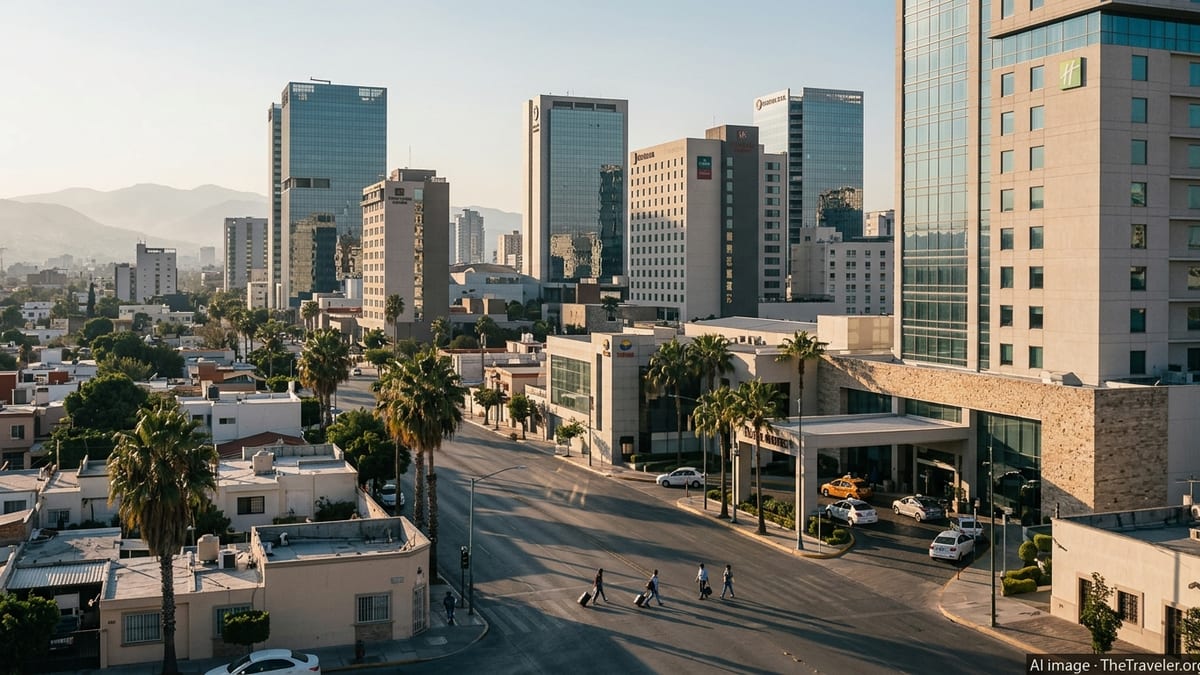
A Strategic Bet on Mexico’s Fast-Growing Travel Market
Publicly available information from recent company updates and industry coverage shows that Mexico has moved into a central role within IHG’s Americas growth strategy. The group has highlighted strong fundamentals in both leisure and business travel, with demand fueled by cross-border commerce, nearshoring-driven industrial growth and a resilient domestic tourism base.
IHG reports that its broader Mexico, Latin America and Caribbean portfolio now includes hundreds of open and pipeline properties, spanning everything from luxury coastal resorts to essential midscale hotels in secondary and tertiary cities. Within that regional picture, Mexico stands out for its mix of global gateway cities, border trade hubs and globally recognized beach destinations.
The group’s latest disclosures around signings and openings point to a deliberate effort to deepen coverage in markets where it already has a strong foothold, while also pushing into emerging corridors that are gaining relevance through new infrastructure and private investment.
For travelers, this translates into a broader range of branded choices in places where independent hotels have long dominated, as well as new options in cities that previously had only a limited international selection.
Six New Voco Hotels Signal Aggressive City-by-City Growth
One of the clearest signs of IHG’s ambition in Mexico is the rapid scale-up of its voco brand, positioned in the premium segment. Company announcements and trade-press reports indicate that IHG has signed six new voco hotels across major Mexican markets, with openings scheduled around 2027.
The planned properties are slated for Cancun, Guadalajara, Ciudad Juarez, San Luis Potosi, Torreon and Nuevo Laredo, concentrating on large commercial and industrial centers as well as high-traffic corridors. The six hotels are expected to add more than 800 rooms to IHG’s footprint in the country, on top of existing open and pipeline voco properties.
Many of the new voco sites are conversions of existing hotels, a model IHG has emphasized globally as a way to grow quickly while refreshing older assets with updated design, service standards and loyalty-program connectivity. In markets such as Guadalajara and Cancun, this strategy allows IHG to secure established locations while giving owners a path to reposition properties under an international flag.
In northern border cities including Ciudad Juarez and Nuevo Laredo, the new voco hotels are aimed at travelers linked to manufacturing, logistics and government activity along key trade corridors. The brand’s expansion is being framed as part of a wider effort to capture rising demand associated with nearshoring and cross-border supply chains.
Luxury and Lifestyle Brands Anchor High-Profile Mexican Debuts
Alongside its premium and mainstream growth, IHG is using Mexico as a showcase for its luxury and lifestyle portfolio. Recent coverage of the company’s development activity highlights headline properties that are reshaping Mexico’s high-end offering under brands such as Kimpton and Six Senses.
In Baja California Sur, Kimpton Mas Olas Resort & Spa opened in the coastal town of Todos Santos, adding a design-forward, wellness-focused option to a stretch of the Pacific that has attracted upscale independent retreats. In Mexico City, Kimpton Virgilio debuted in the Polanquito district, underscoring the capital’s appeal for boutique lifestyle concepts that blend neighborhood character with international service standards.
Looking ahead, Kimpton Monterrey is slated to bring the brand to Mexico’s industrial powerhouse in the north. According to published reports, the project is planned as part of a landmark mixed-use tower with branded residences, signaling IHG’s intention to participate in the country’s growing high-rise residential and mixed-use pipeline.
These moves are complemented by continued development under the InterContinental and Hotel Indigo flags across the wider Mexico, Latin America and Caribbean region, positioning Mexico as both a testing ground and a showcase for how IHG’s top-tier brands can combine resort, urban and residential components.
Pipeline Data Underscores Long-Term Commitment
IHG’s recent financial and development disclosures provide numerical backing for its expansion narrative in Mexico. The company’s latest results materials point to a global pipeline of more than two thousand properties, with the Americas and the Mexico, Latin America and Caribbean region identified as key contributors to future room growth.
Within that framework, Mexico has seen a steady run of signings across multiple brands, including Holiday Inn, Holiday Inn Express, Crowne Plaza and emerging concepts such as Garner and avid in the broader region. Analysts tracking the market note that mainstream and upper-midscale hotels remain in high demand in Mexico’s fast-growing industrial cities and secondary destinations, where international-standard supply often lags demand.
Industry reports also highlight conversions as a particularly important driver of growth for IHG in Mexico. By bringing existing properties into the system and upgrading them to meet brand standards, the company can increase distribution relatively quickly while allowing owners to tap into global sales and the IHG One Rewards loyalty platform.
The combination of new-build signings in strategic locations and conversion-led growth suggests that IHG is planning for a sustained, rather than short-term, expansion cycle in the country, closely tied to broader economic trends and infrastructure development.
Implications for Travelers, Owners and Rival Brands
For travelers, IHG’s ambitious expansion means more branded choice across Mexico’s most traveled routes. Business guests are likely to see additional options near industrial parks, border crossings and convention venues, while leisure travelers can expect more variety among beachfront resorts and lifestyle-focused hotels in both classic and emerging vacation spots.
For local and regional hotel owners, the pipeline illustrates how major global groups are competing more actively for Mexican partnerships. IHG’s emphasis on flexible conversion pathways and multi-brand coverage gives owners a menu of positioning options, whether they target value-driven domestic guests, international corporate accounts or high-end resort travelers.
The build-out also has competitive implications. As IHG increases its share of rooms and key sites, rival global chains are likely to accelerate their own development efforts in Mexico’s top-performing markets, further raising the bar on design, amenities and loyalty-driven value propositions.
Across the board, the visible momentum behind IHG’s Mexico strategy signals that the country is now a priority arena for global hospitality investment, with the potential to reshape how both domestic and international travelers experience its cities, coasts and emerging corridors over the next several years.