

More news on this day
As geopolitical shocks, inflation and shifting travel patterns unsettle global tourism, the International Hospitality Investment Forum EMEA 2026 in Berlin is positioning Southern Europe’s resort, leisure and living assets as a critical shock absorber for hospitality investors.
Get the latest news straight to your inbox!
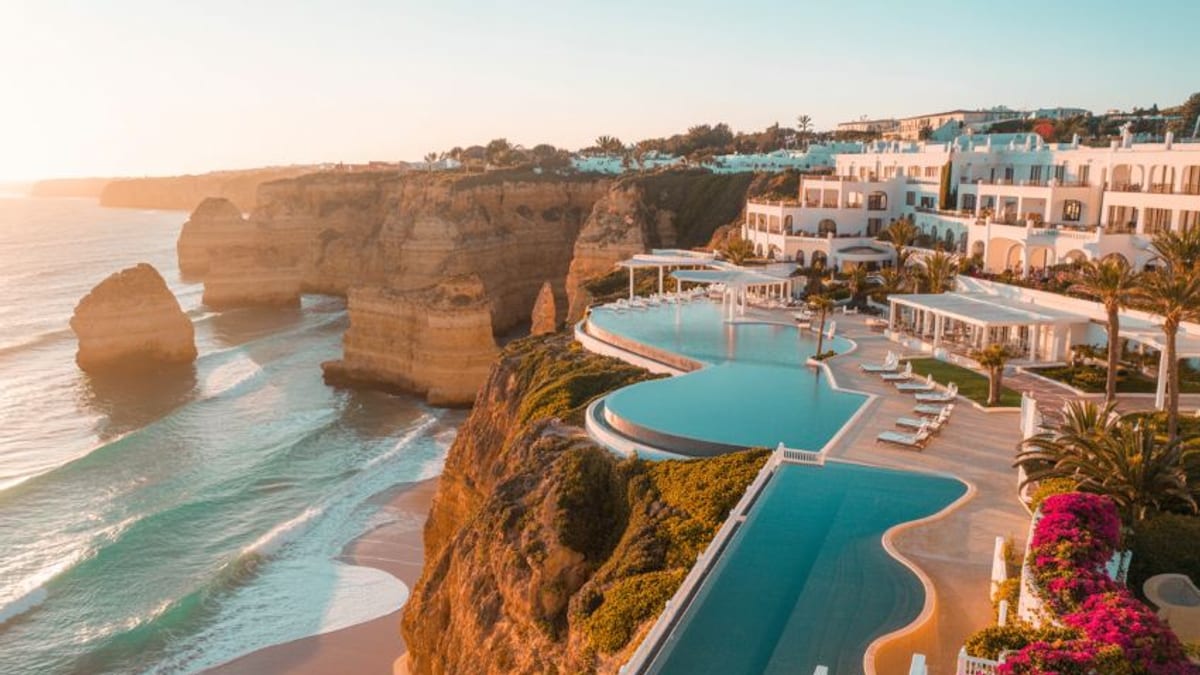
Image by Travel And Tour World
IHIF EMEA 2026 Sets the Stage for a New Investment Cycle
IHIF EMEA 2026 is scheduled to run from 23 to 25 March 2026 at the InterContinental Berlin and the neighboring Pullman Berlin Schweizerhof, bringing together thousands of hotel owners, operators, financiers and advisors from across Europe, the Middle East and Africa. Publicly available information from the event organizer describes the forum as one of the largest gatherings of hospitality capital in the region, with more than 2,500 delegates, over 700 global investors and hundreds of senior executives expected to attend.
The 2026 edition is framed around the theme “Returns Redefined. Value Reimagined,” reflecting how hospitality has evolved into an institutional-grade asset class that increasingly influences adjacent sectors such as branded residences, student housing and mixed-use lifestyle destinations. Organizers highlight that this year’s agenda is designed to move beyond cyclical recovery and toward structural repositioning, using data-led sessions to examine how investors can protect returns in a decade marked by volatility.
Against that backdrop, Southern Europe is emerging as a focal point. From coastal Spain and Portugal to Italy, Greece and Croatia, resort-heavy markets that once appeared risky for their seasonality are now being discussed as diversification tools for global portfolios, particularly as long-stay, work-from-anywhere and lifestyle-led travel lengthen high seasons and deepen demand.
Southern Europe’s Resort Belt Becomes a Strategic Hedge
Recent coverage of European tourism trends indicates that Southern Europe continues to outperform many northern markets in terms of international arrivals and overnight stays, helped by a combination of climate, air connectivity and relatively competitive pricing. For investors convening in Berlin, that performance is shifting the narrative around the region’s coastal and island destinations from opportunistic bets to long-term strategic holdings.
Resort and leisure assets in Spain’s Balearic and Canary Islands, Portugal’s Algarve, Italy’s southern coastline and the Greek islands are drawing particular interest as inflation-resistant products. Many of these markets benefit from diversified source demand across the United Kingdom, Germany, France and increasingly the United States, offering a buffer when any single feeder market slows. IHIF EMEA 2026 sessions are expected to explore how this diversified demand profile can help portfolios absorb turbulence stemming from currency swings or domestic slowdowns in key origin countries.
Institutional money is also tracking the maturation of resort operations in Southern Europe. Where assets were historically fragmented and family-owned, recent years have seen the arrival of global brands, professionalized management platforms and asset-light operating structures. Conference materials and partner commentary around IHIF EMEA 2026 suggest that panel discussions will cover how these operational upgrades allow investors to scale efficiently across multiple Mediterranean jurisdictions while improving risk management and governance.
From Hotels to Branded Living: The ‘Secret Weapon’ Expands
One of the clearest signals coming into IHIF EMEA 2026 is the acceleration of hospitality concepts into broader living products in Southern Europe. Organizers describe hospitality and living sectors as “top investment choices,” noting a growing overlap between resorts, branded residences, serviced apartments and senior or student living. This convergence is particularly visible in Mediterranean markets where lifestyle and second-home demand intersect with tourism.
Publicly available promotional material for IHIF EMEA 2026 highlights dedicated content streams on branded residential, indicating that investors are seeking to monetize demand for flexible ownership and long-stay accommodation tied to resort brands. In Southern Europe, this translates into mixed-use schemes where a traditional beach or golf resort is combined with branded residences, co-working spaces and wellness infrastructure, generating multiple revenue lines and smoothing seasonal volatility.
Investor communications ahead of the forum also point to increased interest in “hotelised” living products in cities such as Lisbon, Barcelona, Milan and Athens. These assets apply hospitality-style service and yield management to residential stock, targeting digital nomads, remote professionals and affluent retirees. In times of travel disruption, such as air-capacity cuts or sudden shifts in long-haul demand, these hybrid models can pivot more quickly toward domestic or regional segments, reinforcing their role as a stabilizing element in diversified portfolios.
Climate, Connectivity and the Sustainability Test
While Southern Europe’s climate advantage has historically underpinned its tourism strength, climate risk is now at the center of investor due diligence. Recent summers of extreme heat and wildfires across the Mediterranean have drawn attention to the vulnerability of coastal assets. Industry commentary around IHIF EMEA 2026 indicates that environmental resilience, water management and energy efficiency will feature prominently in sessions focused on the region.
Public information on European policy developments shows growing regulatory pressure around emissions, building performance and coastal protection, which directly affects resort-heavy markets. For investors meeting in Berlin, compliance and adaptation are no longer optional. Southern European destinations that can demonstrate credible decarbonization plans, robust infrastructure and diversified seasonality are more likely to be viewed as safe havens rather than risk hotspots.
Connectivity is another pillar of resilience. Aviation and rail data for 2025 and early 2026 reveal that many Southern European hubs have restored or exceeded pre-pandemic capacity on key intra-European routes, while several low-cost carriers are expanding their Mediterranean networks. This transportation depth, alongside improved high-speed rail links within Spain, Italy and France, is being interpreted by analysts as a cushion against localized disruption. IHIF EMEA 2026 sessions focused on macro risk are expected to examine how this connectivity underpins the region’s status as a reliable short- and medium-haul destination when long-haul flows are volatile.
Opportunity and Risk in a More Competitive Landscape
Despite the optimistic narrative, publicly available research and market commentary underline that Southern Europe is not a one-way bet. Rising construction and financing costs, regulatory uncertainty around short-term rentals and community pushback against overtourism in cities such as Barcelona and Venice are all shaping the opportunity set that investors will debate at IHIF EMEA 2026.
Analysts note that yield compression in prime coastal locations, combined with stricter planning frameworks, is pushing capital to look at secondary and emerging destinations, from the Adriatic coast to inland wine and wellness regions. For international buyers, understanding local political dynamics and tourism-management strategies is becoming as important as traditional site selection and brand affiliation.
As delegates converge on Berlin in March 2026, the core question is how to deploy capital into Southern Europe in a way that enhances, rather than erodes, its resilience. The emphasis on “Returns Redefined. Value Reimagined” suggests the discussion will focus on long-term alignment between investors, destinations and communities. In that context, Southern Europe’s mix of diversified demand, maturing operating platforms and expanding hospitality-living hybrids is being framed as a potential secret weapon against travel turmoil, provided that sustainability and local impacts are built into every new deal.