

Driving Route 66 from Chicago through Illinois is one of the most evocative road trips in the United States. Neon motel signs, mom-and-pop diners, once-bustling filling stations and tidy Midwestern towns line this first stretch of the Mother Road, tracing nearly 300 miles between downtown Chicago and the Mississippi River near St. Louis. Whether you have 3, 5 or 7 days, you can shape a memorable journey that blends roadside Americana with lived-in local culture, from lakefront skyscrapers to cornfields and courthouse squares.
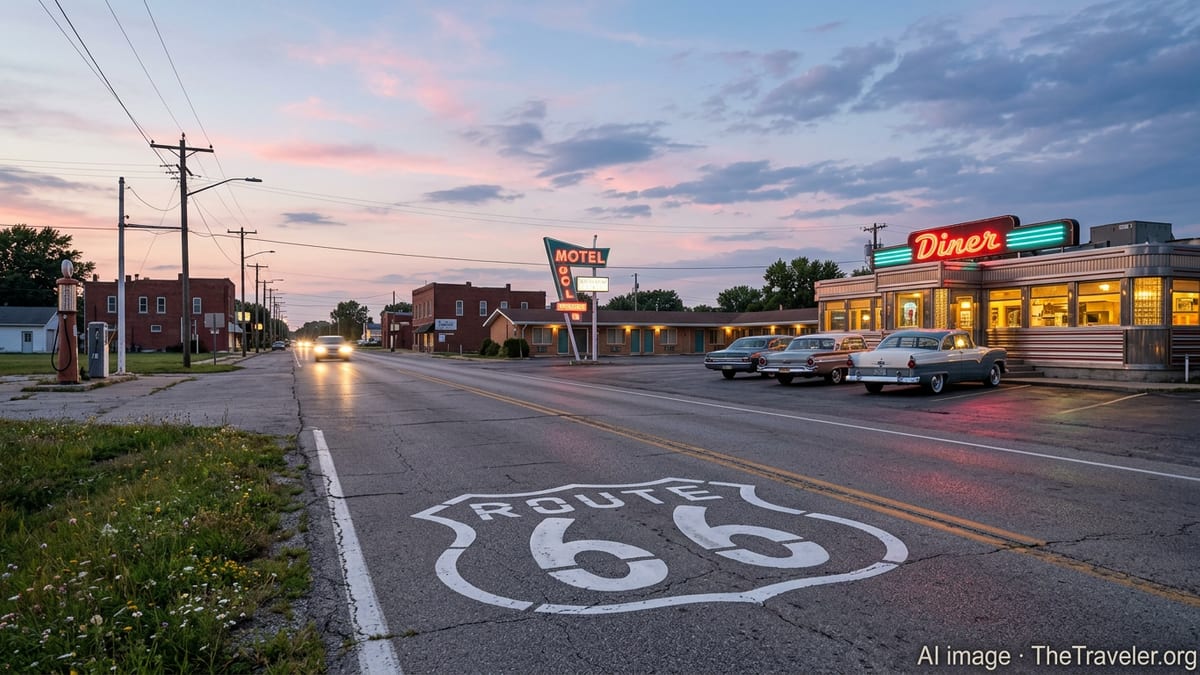
Understanding Illinois Route 66 From Chicago
Illinois is where Route 66 begins, and the state has embraced that role with restoration projects, visitor centers and interpretive signs along what is now known as the Illinois Route 66 Scenic Byway. From Chicago to the Mississippi River opposite St. Louis, the route runs roughly parallel to Interstate 55, weaving through suburbs, industrial corridors, small farming communities and historic county seats. For most travelers, Chicago serves as the starting point, with the symbolic “Begin Route 66” sign near the intersection of Adams Street and Michigan Avenue in the Loop.
Although U.S. Route 66 was removed from the federal highway system in 1985, large sections of the original road surface survive in Illinois, especially south of Joliet. Some segments are frontage roads beside the interstate, others loop through town centers before rejoining modern highways. The appeal is not speed but atmosphere: vintage gas stations preserved as museums, classic diners serving pie and coffee, retro motels and exuberant roadside art. Illinois tourism authorities and local communities have worked to keep these experiences accessible, though opening hours can be seasonal and many attractions are small, locally run operations.
Distances between major Route 66 towns in Illinois are modest by Western standards, often 30 to 60 miles apart. That makes the drive easy to adapt into 3, 5 or 7 day itineraries, depending on how much time you want in Chicago and how slowly you would like to explore the byway. The classic end point on the Illinois stretch is the Mississippi River on the edge of St. Louis, though some travelers choose to pause in Springfield, the state capital, and return to Chicago from there. Others cross into Missouri to continue west toward Oklahoma, New Mexico and beyond.
This article organizes the trip into three flexible plans. The 3 day version focuses on the highlights between Chicago and St. Louis. The 5 day version adds more depth in central Illinois, especially Springfield and nearby small towns. The 7 day journey allows for slower mornings, evening walks in multiple towns and detours into nature or local history sites slightly off the main route.
When To Go and How To Plan Your Drive
Illinois Route 66 can be driven year-round, but road conditions, opening hours and overall enjoyment vary by season. Late spring through early fall generally offers the most pleasant combination of weather and operations, with many small museums, ice cream stands and seasonal attractions opening on weekends by April or May and staying active into October. High summer brings stronger heat and humidity in central Illinois, but also lively festivals, cruise-in car shows and longer daylight hours that make it easier to cover ground at a relaxed pace.
Winter travel along Route 66 in Illinois is possible, though snow, ice and occasional storms can complicate plans, especially on older two-lane sections. Some roadside attractions close or reduce hours in the colder months, and evening driving can feel less rewarding when daylight ends early. If you travel between November and March, it helps to build more flexibility into your itinerary and confirm key stops such as museums or visitor centers before arrival. Wearing layers and planning more time in indoor exhibits, diners and coffee shops can keep the trip comfortable despite the weather.
You can drive Illinois Route 66 in almost any vehicle, from compact rental cars to family SUVs. The entire stretch between Chicago and St. Louis is also roughly paralleled by Interstate 55, providing a faster fallback in case of construction or tight timetables. Fuel, food and lodging are readily available in larger towns such as Joliet, Bloomington-Normal and Springfield, but some smaller communities have more limited options, particularly late at night. If you drive an electric vehicle, you will find charging points clustered in larger centers; planning ahead using current maps and apps is essential since infrastructure continues to evolve.
Most travelers either begin and end in Chicago using a round-trip rental car or treat the Illinois stretch as one leg of a longer cross-country journey. If you plan to return to Chicago, consider dropping the car in downtown St. Louis or at the airport there, then taking Amtrak back to Chicago, which can reduce backtracking and offer a different view of the landscape. Regardless of your direction, allow extra time in your schedule for spontaneous stops. Some of the best Route 66 memories happen when an intriguing neon sign, a local festival or a classic car gathering prompts an unplanned detour.
Three-Day Illinois Route 66 Itinerary: Chicago to St. Louis Highlights
A three-day schedule suits travelers who want a taste of Route 66 in Illinois without taking too much time away from other plans. This version prioritizes major towns and a curated set of iconic roadside experiences, with each day covering around 100 miles of driving. It begins with urban exploration in Chicago, continues through historic industrial and riverfront communities, then shifts into classic small-town Midwest landscapes before culminating at the Mississippi River and St. Louis skyline.
On Day 1, spend the morning in Chicago before picking up your car. Walk around the Loop to see the “Begin Route 66” sign on Adams Street, admire the canyon of architecture along LaSalle Street and, if time allows, enjoy a quick loop past Grant Park or the lakefront. Leaving downtown, follow the historic route through neighborhoods and into the near western suburbs, then continue to Joliet. There, you can explore Route 66 themed exhibits, public art and riverfront paths. Depending on your pace, continue on to nearby communities such as Wilmington or Braidwood for a first taste of classic roadside diners, fiberglass giants and mid-century signage.
Day 2 carries you deeper into central Illinois. Travel through towns like Dwight and Odell, where restored service stations and small museums speak to the automobile boom era. The twin cities of Bloomington-Normal provide a convenient midday break, with a concentration of restaurants and a Route 66 focused museum that often highlights local contributions to the road’s culture. In the afternoon, press on to Springfield, where you can arrive early enough to see some of the city’s Route 66 landmarks and, perhaps, catch sunset views near the historic downtown or the city’s lakeside parks. Overnight in Springfield to position yourself for a lighter final day.
On Day 3, divide your time between Springfield and the final run toward St. Louis. Springfield is rich in both Route 66 heritage and Abraham Lincoln history, with museums, preserved homes and interpretive centers. Even a few hours can give you a sense of how the Mother Road intersected with civic life here. South of Springfield, stop in communities such as Litchfield, known for long-running Route 66 eateries, or smaller towns where historic motels and diners still serve travelers. As you near the Mississippi River, decide whether to end your trip on the Illinois side with views of St. Louis or cross into Missouri to stand beneath the Gateway Arch before looping back. Either way, you will have sampled the core flavors of Illinois Route 66.
Five-Day Itinerary: Slowing Down in Central Illinois
With five days, you can keep the same overall route between Chicago and St. Louis but travel at a more relaxed pace, adding extra stops and evening strolls in several towns. This version distributes the first 300 miles into shorter driving segments, turning the trip into a chain of half-day drives and half-day explorations. It works especially well for travelers who enjoy small museums, independent restaurants, vintage architecture and opportunities to chat with locals who care about preserving Route 66 stories.
Day 1 mirrors the three-day itinerary’s focus on Chicago and Joliet, but rather than pushing farther south, consider spending the night near Joliet or in another nearby community. This allows time for a late-afternoon walk along local riverfront trails or through historic downtown streets with brick storefronts and theaters that once served highway travelers. You might also have more flexibility to visit specialized museums or seasonal attractions that keep limited hours, such as smaller Route 66 displays, local history centers or art spaces tucked into former industrial buildings.
On Day 2, drive from Joliet into the heart of small-town Route 66 country, taking your time in places like Wilmington, Braidwood, Dwight and Odell. Spreading this stretch across most of a day gives you the opportunity to linger over lunch in a hometown diner, browse antique shops in a courthouse square or pause for photographs of imaginative roadside sculptures and murals. Overnight in Bloomington-Normal or a nearby community, where you can experience both the Route 66 legacy and the contemporary energy of a college town with live music, breweries and coffee shops.
Day 3 focuses on the run from Bloomington-Normal to Springfield, with stops in smaller communities such as Atlanta and Lincoln. These towns often host murals, restored grain elevators, quirky statues and streamlined mid-century buildings that capture the spirit of the open road. In Springfield, consider building in two nights instead of one to fully appreciate both Route 66 sites and the city’s deep connections to Abraham Lincoln. With extra time, you can visit the presidential library, tour the statehouse and discover neighborhood cafes that draw both locals and travelers.
On Day 4, use Springfield as your base for a leisurely day trip. South and west of the city, short detours lead to historic mills, rural churches, small lakes and farm communities where life still moves at a measured pace. You can also seek out surviving segments of old pavement, some preserved as walking or biking paths. Returning to Springfield in the late afternoon, enjoy a relaxed dinner in the revitalized downtown or in a classic Route 66 diner that has hosted generations of drivers. The slower rhythm helps you feel the continuity between past and present along this corridor.
Day 5 brings you from Springfield toward the Missouri border, with planned pauses in Litchfield, Staunton and other communities that showcase traditional motor-court motels, neon signs and enduring family restaurants. Some of the most atmospheric Route 66 photographs in Illinois come from these last miles, especially when taken in the soft light of morning or late afternoon. You can choose to end your journey on the Illinois side with views across the Mississippi River or continue into St. Louis for a final urban interlude before your onward travels.
Seven-Day Immersive Journey: Heritage, Nature and Small-Town Life
A full week on Illinois Route 66 turns the road trip into a deep dive into Midwestern culture, opening space for museum visits, local festivals, scenic hikes and conversations with the people who keep the road’s memory alive. This slower itinerary is ideal for travelers who value unstructured time and want to feel less like they are “checking off” sights and more like they are temporarily inhabiting the communities along the byway. It also suits families, photographers and international visitors coping with jet lag or time zone changes.
Over seven days, you can divide the route into short daily drives of 50 to 80 miles, with overnight stays in Chicago, Joliet, Bloomington-Normal, Springfield and one or two smaller towns in between. This approach allows free mornings for wandering local farmers markets, public art installations and neighborhood bakeries, plus afternoons devoted to specific attractions such as county museums, historic homes or heritage centers that interpret the Mother Road era. Many towns schedule car shows, parades and street fairs in warmer months, so a flexible calendar increases your chances of encountering something spontaneous and memorable.
With extra time, consider adding nature stops slightly off Route 66. Illinois is best known for its fields and gentle rolling landscapes, but nearby river valleys host state parks, forest preserves and wildlife areas where you can walk among bluffs, wetlands and woodlands. These green pauses contrast nicely with the asphalt and neon of Route 66 towns, and they highlight how the highway stitched together not just cities and gas stations but also the everyday environments that Midwestern residents have long called home. Short hikes, picnic lunches and birdwatching sessions can easily fit between driving segments.
Another advantage of a seven-day schedule is the ability to build in full rest days. You might, for instance, devote an entire day to Springfield, taking in both Lincoln-related sites and Route 66 history, followed by an unhurried evening at a local restaurant or bar with live music. Similarly, an overnight in a smaller town gives you a window into local rhythms as shops close, porch lights flicker on and old automobiles rumble past in the twilight. These moments, as much as the postcard-ready landmarks, define the character of a Route 66 road trip.
Finally, a week-long journey makes practical planning easier. You can respond calmly to weather changes, detours or unanticipated closures, and you have more freedom to pursue recommendations from locals you meet along the way. If someone in a diner suggests a particular mural, hiking trail or seasonal attraction a few miles off the main route, your flexible schedule can accommodate the extra miles. By the time you reach the Mississippi River and glimpse the arches and bridges beyond, you will likely feel that Illinois has shifted from a place you drove through to a landscape you genuinely experienced.
Essential Stops and Classic Experiences Along the Route
Regardless of whether you follow a 3, 5 or 7 day plan, several Illinois Route 66 experiences belong on almost every itinerary. At the broadest level, these include historic service stations and garages, local museums and visitor centers that interpret the Mother Road, classic diners and cafes, vintage motels, roadside art installations and town centers that embraced Route 66 during its peak decades. Many of these sites are modest in scale, but together they create the collage that travelers remember long after the trip ends.
Chicago itself offers several starting experiences, from the ceremonial route marker downtown to architectural walking tours that set the stage for the rest of the journey. As you move into the collar communities and beyond, look out for small Route 66 museums and welcome centers, often run by volunteers and open on set days of the week. In Joliet and surrounding areas, interpretive displays, murals and local history exhibits help connect the industrial and working-class heritage of the region with the broader story of American road travel.
Farther south, classic roadside eateries and restored filling stations become more common. Many communities feature at least one long-running diner, drive-in, or family restaurant that has served travelers for decades, sometimes with menus that have changed little over the years. While it is not necessary to visit every famous name along the road, picking a few places that resonate with you, whether for their architecture, neon signs or community stories, can anchor each day’s drive. Likewise, walking the main streets of midsize towns reveals theaters, courthouses, banks and commercial blocks that picked up business when Route 66 was built and had to adapt again when interstates bypassed them.
In Springfield and the region south toward St. Louis, the density of Route 66 sites increases. Here, you can combine state capital landmarks with specialized Route 66 exhibits, photo-friendly motel facades, classic city diners and modern interpretive centers that weave together history, pop culture and transportation. This stretch also includes several well-known roadside icons, from large sculptural figures to brightly lit signs that come alive at dusk. Many visitors find that the final evening in Illinois, spent photographing neon reflections on wet pavement or chatting with locals at a counter, becomes one of the most atmospheric memories of the trip.
Practical Tips: Driving, Lodging and Staying Safe
Planning an Illinois Route 66 itinerary is straightforward, but a few practical considerations can help the journey unfold smoothly. Navigation is generally easy, yet the route occasionally jogs through town centers or follows one-way streets, especially near Chicago. State and local agencies have installed “Historic Route 66” signs to guide drivers, but in busy urban or suburban areas, it is possible to miss a turn. Using a current map or navigation app specifically referencing the historic alignment can reduce confusion. Downloading offline maps can be useful in rural patches where phone reception is weaker.
Lodging choices range from major chain hotels on the edges of larger towns to independent motels and inns, some of which deliberately maintain a retro aesthetic. Booking ahead during summer weekends or around special events helps secure preferred options, particularly in popular stops like Springfield or during car festivals that draw enthusiasts along the Mother Road. Travelers seeking the most nostalgic experience often mix nights at restored motor courts or older motels with stays at modern properties that offer expanded amenities, ensuring both atmosphere and comfort.
Food along Illinois Route 66 is a highlight in its own right. Expect generous portions, classic Midwestern comfort dishes, and an emphasis on hearty breakfasts, burgers, tenderloins and pies. Many visitors plan at least one meal per day at a locally owned diner or cafe with ties to the road’s history. It is wise to carry water and light snacks in the car, since some smaller communities do not have late-night options and winter travel can coincide with shorter opening hours. If you have dietary restrictions, larger towns such as Bloomington-Normal and Springfield offer a wider range of menus.
Safety considerations are mostly common sense. Traffic volumes can be moderate on some sections and very light on older side roads, so stay alert for changing speed limits as you move between open countryside and town limits. Watch for pedestrians and cyclists, especially where Route 66 routes share space with local streets or trails. When stopping for photos, always pull completely off the pavement into designated parking areas or side turnouts rather than the shoulder of narrow two-lane roads. Weather can change quickly in spring and late summer, bringing thunderstorms or heavy rain, so check forecasts regularly and be ready to pause driving if conditions deteriorate.
The Takeaway
Illinois offers one of the most accessible and rewarding stretches of Route 66, compressing a powerful sense of American road culture into a few hundred miles between Chicago and the Mississippi River. By shaping your time into 3, 5 or 7 day itineraries, you can match the route to your interests, whether that means capturing as many neon signs and vintage gas stations as possible or settling into small-town rhythms where the highway’s heyday still echoes.
More than a collection of nostalgic sights, the Illinois Route 66 experience is a living corridor, supported by local volunteers, business owners, museum curators and city planners who continue to interpret and adapt the Mother Road for contemporary travelers. Approached with curiosity, respect for communities and a willingness to linger, this journey offers insight into both the past and present of the Midwest. When you finally roll up to the Mississippi River and the silhouette of St. Louis, it will feel less like the end of a road and more like the closing chapter of a story you will keep telling long after you return home.
FAQ
Q1. How long does it take to drive Route 66 across Illinois from Chicago to St. Louis?
The driving distance between Chicago and the St. Louis area along the general Route 66 corridor is roughly 300 miles, which can be covered in about 5 to 6 hours of pure driving. Most travelers, however, spread the trip over several days to allow for stops, meals and exploration in towns along the way.
Q2. Is it easy to follow the historic Route 66 alignment in Illinois?
In most areas, it is reasonably straightforward, thanks to “Historic Route 66” signs and local maps, but the route can be confusing near Chicago and through some towns. Using a current map or navigation app that highlights the historic alignment, and being prepared for occasional detours or one-way streets, makes the experience smoother.
Q3. Do I need a special type of vehicle to drive Illinois Route 66?
No special vehicle is required. Any roadworthy car or small RV can manage the route, as most sections are paved two-lane roads or modern highways. Drivers of electric vehicles should plan charging stops ahead of time, focusing on larger towns where infrastructure is more developed.
Q4. What is the best time of year to drive Route 66 in Illinois?
Late spring through early fall is generally the most comfortable, with milder weather and more consistent opening hours at small museums, diners and attractions. Winter travel is possible, but snow, ice and reduced daylight can limit sightseeing, and some seasonal businesses may close or reduce hours.
Q5. Can I do a day trip from Chicago on Route 66 instead of a full multi-day itinerary?
Yes. Many travelers make a day trip that covers Chicago to Joliet and nearby towns, experiencing a handful of museums, diners and photo stops before returning to the city. While you will only sample a portion of the route, it still offers a strong taste of Route 66 culture without committing to an overnight journey.
Q6. Is Illinois Route 66 suitable for families with children?
Yes, the route can be very family-friendly. The relatively short distances between towns, frequent chances to stop, and colorful roadside attractions tend to hold children’s interest. Planning outdoor breaks, picnic stops and kid-friendly museums helps keep younger travelers engaged and comfortable.
Q7. How far in advance should I book lodging along Illinois Route 66?
In quieter seasons, you can often book lodging a few days in advance or even the same day in larger towns. During summer weekends, holidays or special Route 66 events, popular motels and hotels may fill quickly, so booking a week or more ahead is a safer choice, especially if you want specific historic properties.
Q8. Are there guided tours available along Illinois Route 66?
Yes, a mix of guided options exists, ranging from short walking tours in cities like Chicago and Springfield to occasional bus or small-group tours that follow larger portions of the route. Availability varies by season, so checking current offerings with local visitor centers before your trip is helpful if you prefer guided experiences.
Q9. Can I combine Illinois Route 66 with other scenic drives in the region?
Yes. Many travelers link the Illinois stretch of Route 66 with other scenic byways and river roads in the state, or with drives in neighboring states once they reach St. Louis. With a week or more, it is easy to incorporate side trips to state parks, river towns or additional historic routes before or after your Route 66 segment.
Q10. Is it safe to drive Route 66 in Illinois at night?
In general, yes, but driving during daylight is more rewarding and usually safer, especially on older two-lane sections with limited lighting. If you must drive at night, reduce speed, watch closely for changing speed limits near towns and use extra caution when pulling off the road for photos or stops.