

More news on this day
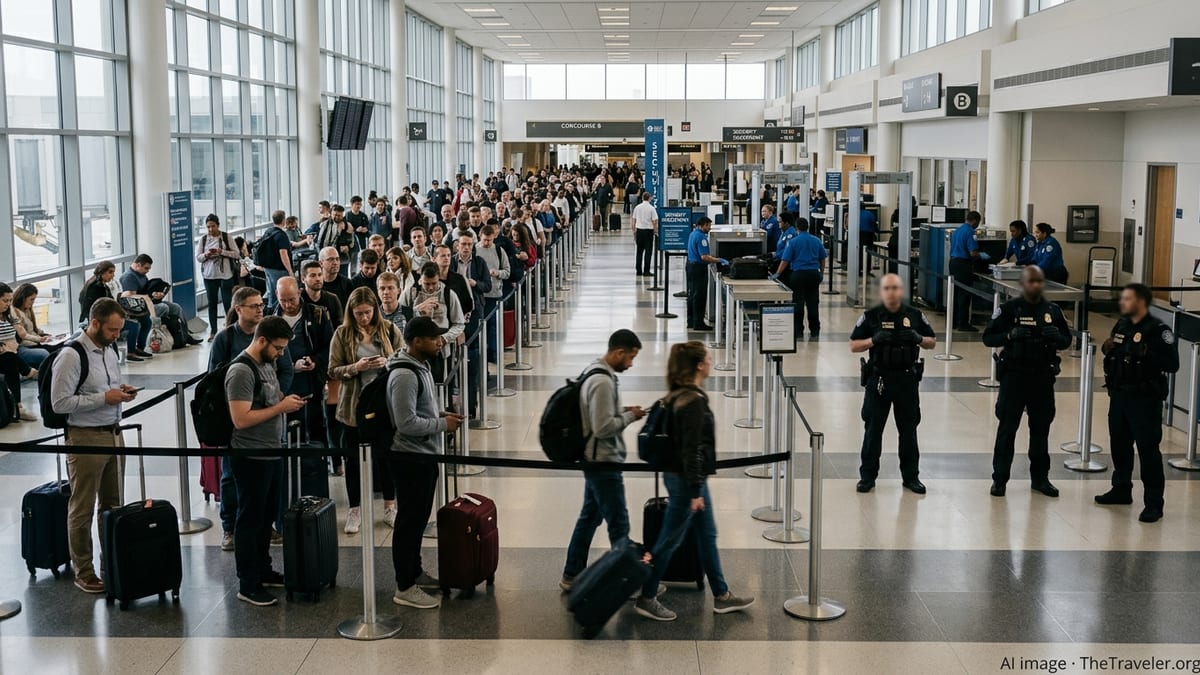
Armed immigration officers have begun appearing at security checkpoints in major US airports as a partial Department of Homeland Security shutdown strains staff and sends already long lines and spring break crowds into new uncertainty.
Get the latest news straight to your inbox!
Shutdown Pushes Immigration Officers Into Airport Front Lines
Published coverage indicates that Immigration and Customs Enforcement personnel in tactical gear are now moving through terminals and stationing themselves near Transportation Security Administration checkpoints at some of the country’s busiest airports, including Atlanta’s Hartsfield-Jackson and New York-area hubs. The deployments follow an order from the White House directing immigration officers to supplement TSA staffing as the shutdown drags on and more security screeners call out or seek other work.
The partial shutdown, rooted in a funding standoff over immigration enforcement reforms, has lasted more than a month and halted regular pay for tens of thousands of airport security employees. TSA officers are considered essential and must report to work, but reports of rising sick calls, low morale, and financial strain have raised alarms about the sustainability of operations just as peak spring break traffic builds.
While the administration portrays the arrival of immigration officers as a measure to stabilize airport security, publicly available information shows that their exact responsibilities at checkpoints remain loosely defined. Civil liberties groups and some travel advocates are warning that the move risks blurring the line between aviation security and immigration enforcement at the very point where travelers are most vulnerable to delays and confusion.
Published analysis of previous shutdowns suggests that even modest reductions in TSA staffing can ripple quickly through the system, turning routine screening into hours-long bottlenecks. With immigration officers now sharing that space, questions are multiplying about what happens when their traditional enforcement duties intersect with efforts to keep lines moving.
Lines Stretch As TSA Staffing Falters
Reports from across the United States describe a patchwork of conditions that can swing from near normal to chaotic over the course of a single day. According to recent coverage of Houston’s Bush Intercontinental Airport, some travelers have faced waits of three hours or more during peak periods, only for queues to shrink dramatically later when additional officers became available.
At Atlanta, which remains one of the world’s busiest passenger hubs, media accounts over the past week have chronicled scenes of anxious crowds snaking through concourses, with screening times fluctuating based on how many TSA officers report for duty. Similar stories are emerging from Chicago’s O’Hare and Philadelphia International Airport, where multiple checkpoints have been temporarily closed because there are not enough screeners to staff every lane.
Industry observers note that these disruptions are colliding with one of the busiest travel windows of the year. Transportation data cited in recent reporting suggests that nearly 2.8 million passengers are passing through TSA checkpoints on many days this month, leaving little margin for any further staffing shocks. When a handful of officers at a given checkpoint are absent, lines can back up quickly, increasing the risk of missed flights and missed connections down the line.
Travel forums and social media are filled with accounts of passengers arriving four to six hours before departure, abandoning checked baggage to speed their path through the terminal, or rerouting altogether through smaller airports in search of shorter lines. Even frequent fliers with trusted traveler status report that the suspension or curtailment of some expedited programs during the shutdown has erased their usual time savings.
Confusion Over Roles, Rights, and Responsibilities
The sudden visibility of immigration officers at domestic security checkpoints is raising new questions about what travelers may be asked, and what they are required to answer, while they shuffle through security lanes. Advocacy organizations and legal experts quoted in recent coverage stress that TSA’s core mission is aviation security screening, not immigration enforcement, and that those functions carry different legal authorities and constraints.
Publicly available documents on past DHS operations indicate that agency watchdogs have previously urged clearer boundaries between components such as TSA, Customs and Border Protection, and Immigration and Customs Enforcement at transportation hubs. Those concerns are resurfacing as images circulate of officers in tactical gear standing within sight of families, students, and business travelers simply trying to clear security.
For international arrivals, the shutdown-triggered strains come on top of routine passport control and customs inspections. Travel reports describe longer lines at immigration counters in some gateways, alongside the partial suspension of programs such as Global Entry interviews and some TSA PreCheck enrollments. That combination is further eroding the once-predictable advantage enjoyed by preapproved low-risk travelers who built their itineraries around expedited clearance.
Airports and airlines, bound by federal security requirements but largely shut out of the underlying political dispute, are left trying to reassure passengers with real-time alerts and wait-time dashboards that may themselves be out of date. In several cases, publicly available information shows that TSA has acknowledged it is not actively managing some of its online communications during the shutdown, adding another layer of uncertainty for travelers trying to plan their arrival times.
Risk of Wider Flight Disruptions Grows
While the most visible impact of the shutdown has focused on security lines, transportation officials have also begun to warn of broader disruptions if the stalemate continues. Recent coverage citing the US transportation secretary notes that small and regional airports could be forced to curtail operations or close security checkpoints altogether if enough TSA officers stop reporting to work.
Any closures or capacity cuts at those airports would come on top of earlier warnings from the Federal Aviation Administration about pressure on air traffic control staffing and training. Aviation analysts point to the experience of previous shutdowns, when even limited reductions in controllers or inspectors forced ground stops at major hubs and contributed to cascading delays nationwide.
For now, most major US airports remain open, and many travelers are still clearing security in under an hour during off-peak periods. But the spread of immigration officers into checkpoint areas, combined with unstable TSA staffing and record passenger volumes, has created a fragile system in which conditions can deteriorate quickly with little warning.
Travel industry groups and tourism organizations are tracking the situation closely, noting that prolonged instability at airports can discourage discretionary trips, undermine international visitor confidence, and shift bookings away from the United States. With no clear timeline for resolving the shutdown, the prospect of an extended season of delays, diversions, and frayed tempers now looms over the spring and summer travel calendar.