

More news on this day
Flight operations at Incheon International Airport in South Korea faced fresh disruption as a key service to Kuala Lumpur was cancelled, leaving dozens of passengers stranded and triggering knock-on delays across multiple international routes, according to early reports from airline trackers and local media.
Get the latest news straight to your inbox!
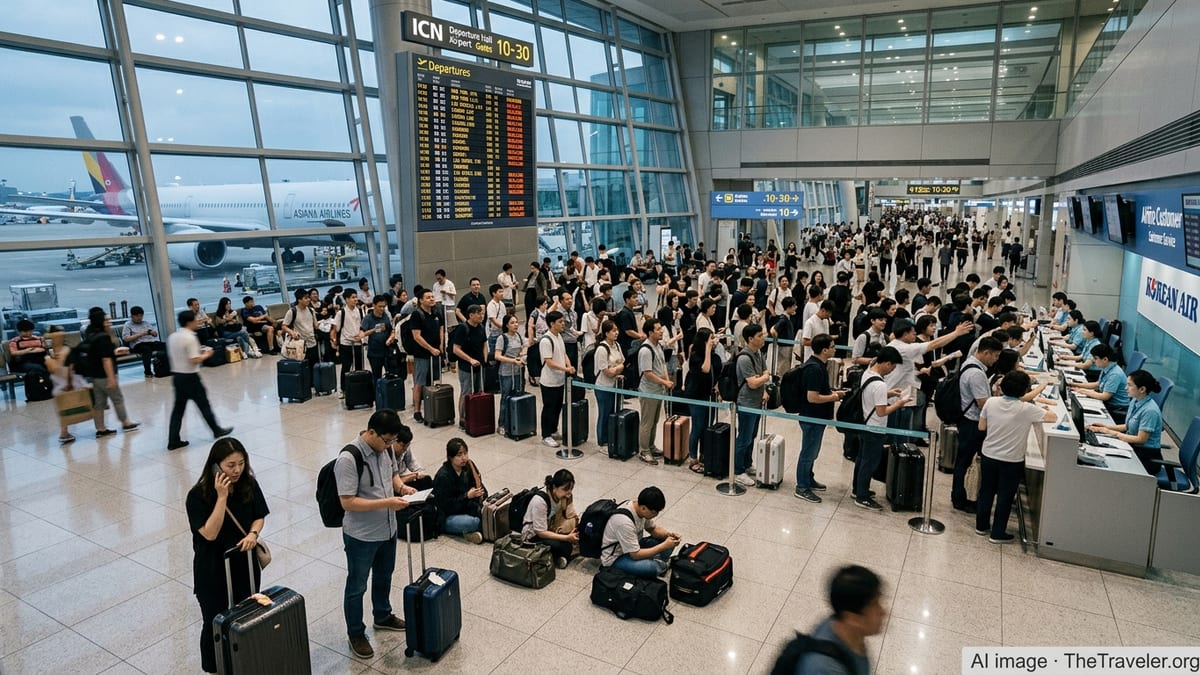
Cancellation Hits Incheon–Kuala Lumpur Passengers
Initial reports from live flight-tracking services and local news outlets on Sunday indicated that at least one key flight between Seoul Incheon and Kuala Lumpur was cancelled at short notice, forcing passengers to rebook or wait for later departures. The affected service formed part of a busy weekend schedule linking the South Korean hub with Malaysia’s main international gateway, amplifying the disruption.
Passengers reported waiting in departure halls and gate areas as airline staff worked through rebooking queues and standby lists. The cancellation came during a period when travel demand on the Incheon–Kuala Lumpur corridor has been recovering, reflecting broader growth in leisure and business traffic between Northeast and Southeast Asia.
Published timetables for March 2026 show a dense pattern of services on the route operated by several carriers, meaning that a single cancellation can quickly spill over into connecting banks of flights. Seat capacity analyses released by aviation consultancies over recent months have also highlighted the strategic role of Kuala Lumpur as a transfer point for traffic moving between South Korea, Southeast Asia and beyond.
Specific details on the exact number of affected services and passengers were still emerging at the time of writing, but early indications suggested a mix of outright cancellations and significant delays, particularly on southbound departures from Incheon.
Knock-on Delays for Regional and Long-Haul Connections
The disruption at Incheon did not only affect point-to-point travellers headed for Kuala Lumpur. Because both airports act as regional transfer hubs, delays quickly cascaded into missed connections and revised itineraries for passengers bound for other destinations in Southeast Asia, South Asia, Australia and Europe.
Publicly available schedule data show that Incheon and Kuala Lumpur support a network of onward flights operated by regional and long-haul carriers. When a single trunk route between the two hubs is interrupted, passengers connecting through Kuala Lumpur to cities such as Singapore, Jakarta, Sydney or London may be forced to reroute or endure extended layovers.
Operational updates shared through airline channels and airport information boards indicated that crews and aircraft scheduled to operate subsequent legs were also affected by the disruption. In some cases, aircraft and crew rotations needed to be adjusted, contributing to further delays on unrelated routes later in the day.
Travel industry analysts have previously noted that this kind of hub-to-hub disruption can have an outsized effect on regional connectivity, particularly when it occurs on weekends or holiday periods when flights often operate close to capacity and spare seats on alternative services are limited.
Stranded Travellers Face Long Queues and Limited Options
Accounts circulating on social media and in local coverage described long queues at transfer desks in Incheon’s terminals as travellers sought rebooking options, meal vouchers or overnight accommodation. Some passengers reported waiting extended periods for updated information on revised departure times and available seats to Kuala Lumpur or alternative destinations.
Industry data and recent traveller commentary have already highlighted strains across parts of Incheon’s passenger experience, including longer-than-usual security and immigration queues during peak periods. Against that backdrop, a wave of disrupted flights further increased pressure on staff and facilities, particularly in departure and transfer zones.
For some travellers, the cancellation meant missing events or business commitments scheduled in Kuala Lumpur or onward destinations. Others opted to accept rerouting through alternate hubs in the region, adding extra flight segments or overnight stops to itineraries originally planned as same-day connections.
Consumer guidance published by travel agencies and aviation regulators generally advises passengers in such situations to remain in close contact with their airline, monitor departure boards frequently and document any reasonable expenses incurred while awaiting rebooking, subject to the specific conditions of each carrier’s contract of carriage and applicable local regulations.
Operational Pressures at Major Asian Hubs
The disruption on the Incheon–Kuala Lumpur corridor comes at a time when both airports are balancing strong travel demand with evolving operational challenges. Incheon has been managing high passenger volumes alongside reports of occasional congestion at security and immigration, especially at peak holiday times, while continuing to expand its role as a gateway between Northeast Asia, North America and Europe.
Kuala Lumpur International Airport, for its part, has been progressing through a period of infrastructure upgrades and service adjustments, including changes to internal transport links and terminal operations in recent years. Publicly available information from Malaysian aviation authorities has described efforts to modernise facilities while maintaining stable flight operations through the main terminal complex serving international routes.
Aviation analysts note that as Asian air traffic returns to or exceeds pre-pandemic levels on some corridors, even minor disruptions can expose operational bottlenecks. Factors such as aircraft availability, crew scheduling, ground handling capacity and air traffic flow management all play a role in how quickly airports and airlines can recover from an unexpected cancellation or delay.
While there was no immediate indication of a widespread systemic failure at either Incheon or Kuala Lumpur, the latest disruption underlined the sensitivity of key routes to localized operational issues, weather conditions or technical problems that may affect a single flight but ripple outward through a complex network.
Advice for Travellers on the Incheon–Kuala Lumpur Route
Travel agencies and airline advisories commonly recommend that passengers on busy international routes, including Incheon to Kuala Lumpur, allow extra buffer time for check-in, security and immigration, particularly during weekends or peak travel seasons. In the event of cancellations or extended delays, travellers are generally encouraged to use official airline apps, messaging channels and airport information counters for the most current guidance.
Passengers with tight onward connections through Kuala Lumpur may wish to review their itineraries and, where possible, schedule longer layovers to reduce the risk of misconnecting if a feeder flight from Incheon is delayed. Travel insurance policies that include disruption coverage can also offer some financial protection for unexpected hotel stays, missed tours or rebooking fees, subject to each policy’s terms.
For now, the latest disruption serves as a reminder that even well-connected and highly rated hubs such as Incheon and Kuala Lumpur remain vulnerable to operational shocks. As airlines and airports continue to adjust schedules and capacity in response to fluctuating demand, travellers on this busy corridor are likely to benefit from close monitoring of flight status updates and flexible planning where possible.