

More news on this day
Millions of passengers flying in and out of Spain for Easter are being warned to brace for disruption, as an indefinite strike by airport ground staff begins just as the holiday rush reaches its peak.
Get the latest news straight to your inbox!
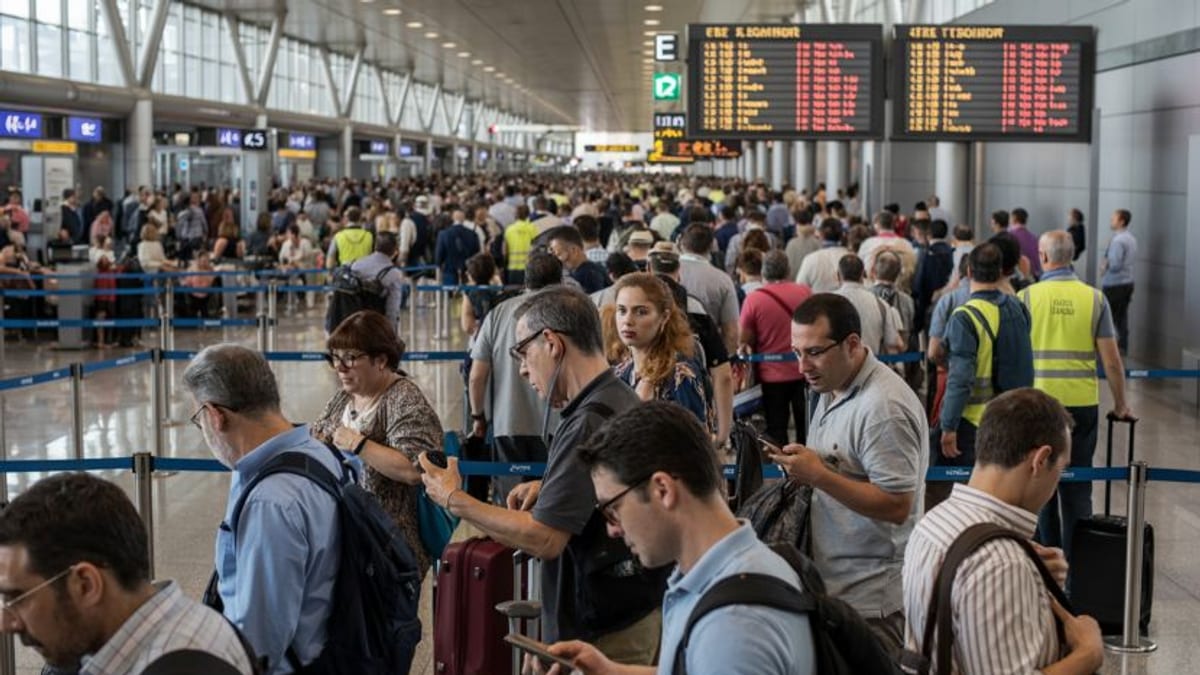
Image by Travel And Tour World
Groundforce Walkout Targets Key Spanish Hubs
Ground handling company Groundforce is at the centre of the latest aviation unrest in Spain, with unions representing around 3,000 workers launching an indefinite strike from Monday 30 March. According to published coverage in national Spanish media, the action will initially take the form of partial walkouts across several peak operating periods each day, directly overlapping with some of the busiest hours for Easter departures and arrivals.
The dispute focuses on pay and conditions, with union statements cited in local reports highlighting concerns over loss of purchasing power and the implementation of wage agreements since inflation began to climb in 2022. The strike affects staff who provide a range of services on the ground, including check in, baggage handling, ramp operations and aircraft turnaround support, functions that are critical to keeping flight schedules on time.
Reports indicate that Groundforce operates at a dozen major airports across the Aena network, including Madrid Barajas, Barcelona El Prat, Palma de Mallorca, Málaga Costa del Sol, Alicante, Valencia, Bilbao, Ibiza and several airports in the Canary Islands. These locations account for a substantial share of Spain’s Easter traffic, particularly from northern Europe and the UK, where school holidays and the Christian calendar drive a sharp spike in leisure travel.
Industry news outlets note that the strike has been called on an open ended basis, meaning there is no formal end date and the walkouts could stretch well beyond Easter week if no agreement is reached. While Spanish legislation on minimum service levels is expected to keep a portion of flights operating, the indefinite nature of the action increases the risk of compounding delays as the holiday period progresses.
Aena Braces for Record Easter Traffic Under Strike Pressure
The timing of the dispute coincides with one of the busiest travel windows of the year for Spain’s airports. Publicly available planning documents and media summaries of Aena forecasts suggest that more than 70,000 flights are scheduled across the Spanish network between the Friday before Palm Sunday and the Monday after Easter, reflecting strong demand for both domestic and international routes.
Spain remains one of Europe’s most popular Easter destinations for sun seeking tourists, religious pilgrims and city break travelers. Airports serving traditional hotspots such as the Balearic Islands, Costa del Sol and the Canary Islands typically operate at or near capacity through the Semana Santa period, with load factors on many leisure routes running high. Any slowdown in ground operations during this stretch can quickly cascade into long queues and knock on delays.
Media coverage of the strike notes that, although air traffic control and cabin crew are not directly involved in the current action, ground staff shortages can still force airlines to adjust timetables, consolidate services or reroute aircraft to less affected airports. Even where flights are able to depart, reduced staffing at check in, security support points and baggage halls may lengthen processing times for passengers.
Travel industry analysts quoted across European outlets point out that Aena’s infrastructure has already been under pressure due to strong post pandemic demand and tight staffing across aviation. The addition of an indefinite walkout at Groundforce during a peak season increases operational complexity for airlines, particularly those with dense schedules at Madrid and Barcelona that rely on rapid turnarounds.
What Easter Passengers Should Expect at the Airport
For travelers heading to or from Spain over the Easter period, the most immediate impact is likely to be longer waits at several stages of the journey. Check in and bag drop counters could move more slowly if staffing is reduced, and queues at boarding gates may stretch as ground teams juggle multiple flights with fewer personnel. Delays in loading and unloading baggage on busy rotations are also possible, especially at large hubs where aircraft share limited ramp resources.
According to travel advisory services monitoring the situation, same day connections through Spain may be particularly vulnerable. Tight transfer windows at Madrid Barajas and Barcelona El Prat could become more difficult to meet if inbound flights arrive late or if passengers face congestion at passport control, security re screening or terminal transfer points. Travellers connecting to long haul services may want to adjust their plans where possible to allow additional buffer time.
While full scale cancellations are not expected to be universal, disruption patterns are likely to be uneven, varying by airline, airport and time of day. Some carriers with larger in house or alternative handling arrangements may be able to mitigate the impact at specific stations, while others that rely heavily on Groundforce could see more extensive rescheduling. Media reports suggest that early morning and midday waves are most exposed, given the concentration of strike hours around typical departure peaks.
Travel insurance specialists point out that passengers should carefully review policy wording to understand what level of compensation or assistance is available when disruption is linked to industrial action. Under European air passenger regulations, eligibility for airline compensation depends on whether the disruption is considered to be within the carrier’s control, a classification that can vary with the circumstances of each strike.
How to Prepare if You Are Flying Through Spain
Given the uncertainty created by an open ended strike, passenger organisations and consumer advice columns in Spain are encouraging travelers to plan for disruption even if their specific flight is still scheduled. The most consistent recommendation is to maintain close, direct contact with airlines through official apps and channels, where operational updates and rebooking options are usually posted first when schedules begin to shift.
Experts also advise allowing significantly more time than usual at the airport. For Easter departures through the affected hubs, some European travel portals are suggesting that passengers arrive at least three hours ahead for short haul flights and four hours or more for long haul itineraries, especially at Madrid, Barcelona, Málaga and Palma de Mallorca. This additional margin can help offset slower check in and security processing.
Checking in online as early as permitted, travelling with hand luggage only where practical, and consolidating bookings under a single ticket can all reduce vulnerability to disruption. Passengers connecting on separate tickets through Spain may wish to consider proactive changes, such as overnighting at the transfer point or moving flights to days or times less exposed to the announced strike windows.
For those yet to book travel, some industry commentary suggests considering alternative routings during the peak Easter days, including flying to nearby airports with less dependence on Groundforce or routing through other European hubs. However, capacity on such alternatives may be limited given the short notice and the broader holiday rush across the continent.
Your Rights if Your Easter Flight Is Delayed or Canceled
Travellers affected by delays or cancellations linked to the Spanish airport strikes retain a number of protections under European air passenger rules. Legal and consumer guides circulating in the wake of the announcement emphasise that airlines remain responsible for providing care, such as meals and accommodation, when passengers are stranded for extended periods, regardless of the underlying cause of disruption.
Whether passengers are entitled to financial compensation is more complex and depends on the interpretation of industrial action at third party service providers. Case law has varied across the bloc, with some decisions treating certain strikes as extraordinary circumstances outside the airline’s control, while others have found that carriers could have taken steps to mitigate risk. As a result, many advisors encourage passengers to file claims with airlines in any case and to escalate disputes through national enforcement bodies if requests are rejected.
Travel law specialists generally recommend that passengers keep detailed records if their Easter trip is affected. Boarding passes, booking confirmations, written notices from airlines about delays or cancellations, and receipts for out of pocket expenses such as meals or hotels can all be useful when seeking reimbursement. In some cases, additional cover from comprehensive travel insurance policies may offer quicker or broader compensation than statutory schemes alone.
With the Groundforce strike described as indefinite in union communications, there is a possibility that disruption could continue beyond the core Easter days and into April schedules. Passengers planning spring travel to or from Spain in the coming weeks are therefore being urged to monitor developments closely and to remain flexible where possible as airlines and airport operators adjust to the evolving situation.