

More news on this day
India and Sri Lanka are stepping up efforts to turn centuries-old Buddhist connections into a modern tourism corridor, tying together sacred cities, new flight routes and joint marketing aimed at millions of regional pilgrims.
Get the latest news straight to your inbox!
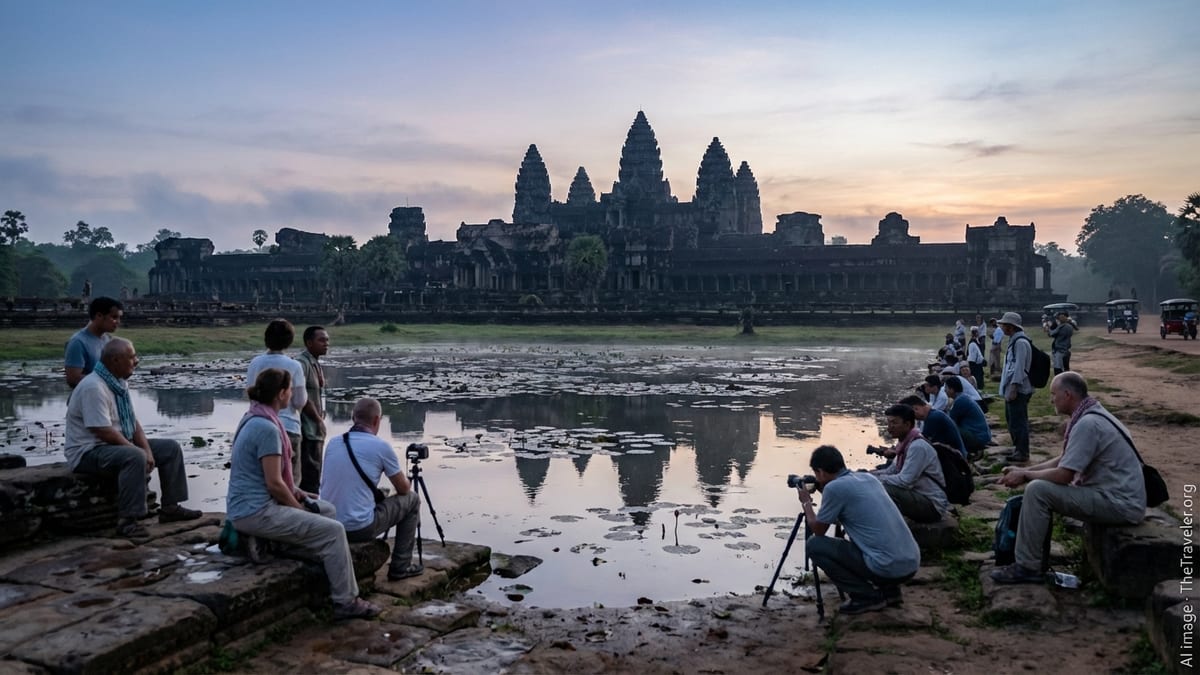
Ancient Pilgrimage Ties Shape a Modern Tourism Strategy
Publicly available data shows that India has emerged as Sri Lanka’s leading source market for visitors, accounting for roughly one quarter of total arrivals in 2025. Tourism statistics compiled by Sri Lankan authorities indicate that more than 2.3 million international visitors reached the island in 2025, with over half a million arriving from India. Analysts describe this flow as both commercial and cultural, rooted in shared Theravada traditions and long-standing pilgrimage circuits.
Across South Asia, governments and tourism bodies are increasingly presenting Buddhist heritage not only as a spiritual asset but also as an economic engine. Indian tourism campaigns highlight sites such as Bodh Gaya, Sarnath and Kushinagar, while Sri Lanka promotes its ancient capitals of Anuradhapura and Polonnaruwa and the temple city of Kandy. Regional initiatives reported by South Asian media describe efforts to knit these destinations into a cross-border “Buddhist trail” that can support longer, multi-country journeys.
In this context, the relationship between India and Sri Lanka is gaining prominence. Travel industry commentary notes that Indian pilgrims are combining visits to the Indian heartland of Buddhism with trips to Lanka’s sacred bodhi trees, stupas and relic shrines. Sector observers say this layered motivation, blending faith with leisure, is encouraging both countries to prioritize Buddhist tourism in broader bilateral cooperation.
Policy documents and tourism projections from Colombo frame Buddhist tourism as part of a post-crisis recovery plan that seeks higher-yield visitors and more geographically diverse markets. The prominence of Indian travellers, many of whom travel in organized groups, makes this segment especially important as Sri Lanka looks to stabilize earnings from its visitor economy.
New Air Links and Easier Travel Between Sacred Cities
Transport developments are underpinning the shift from symbolic religious ties to practical pilgrimage circuits. According to aviation sector reports, Indian low-cost carriers have significantly expanded services to Sri Lanka, with dozens of weekly flights connecting Colombo to major Indian cities including Chennai, Bengaluru, Hyderabad and Mumbai. Industry coverage notes that Indian airlines now rank among the largest foreign operators in the Sri Lankan market.
One of the most closely watched moves has been the resumption of commercial flights to Jaffna’s Palaly airport from cities in southern India. Media coverage describes the reopening of this route after several decades as a key step in restoring historical movement across the Palk Strait. Travel specialists say these short-hop connections can support both Buddhist pilgrimages and broader cultural tourism across Tamil-speaking regions.
Visa policies are also being recalibrated in ways that could benefit cross-border religious travel. Public notices from Sri Lankan authorities in late 2024 indicated a shift toward visa-free or simplified entry for several markets, including India, for short stays. While implementation details continue to evolve, travel trade publications describe these changes as an attempt to keep Sri Lanka competitive with nearby destinations that already offer streamlined access to Indian travellers.
On the Indian side, improved domestic connectivity to Buddhist sites is making it easier to integrate international legs. Rail and regional aviation projects have focused on linking hubs such as Bodh Gaya and Kushinagar with major metros, a trend that outbound tour operators say allows them to package India–Sri Lanka circuits that follow the life of the Buddha across borders.
Coordinated Marketing of a Transnational Buddhist Circuit
Tourism boards and private operators are increasingly coordinating messaging around a broader South Asian Buddhist circuit that prominently features both India and Sri Lanka. Coverage in regional travel publications describes joint roadshows, trade fairs and familiarization trips designed to position the two countries as complementary rather than competing destinations for Buddhist travellers.
Promotional material circulated in key Asian markets highlights a narrative arc in which pilgrims might begin at birth and enlightenment sites in Nepal and India, then proceed to locations associated with the spread of Buddhism to Sri Lanka. In this emerging story, Sri Lanka’s ancient monasteries, relic temples and ritual festivals are presented as the living continuation of a tradition that originated on the Indian subcontinent.
Industry briefings note that this coordinated approach is particularly targeted at high-potential source markets such as Thailand, Japan and other Buddhist-majority countries, where travellers may be inclined to undertake multi-country spiritual journeys. At the same time, the large and growing middle class in India remains a central audience, with tour operators marketing short itineraries that combine shopping and beach stays with visits to revered shrines.
Analysts who track regional tourism patterns say that branding an integrated Buddhist circuit allows smaller destinations and secondary cities to benefit from increased visibility. In Sri Lanka, for example, historic temple sites outside the traditional beach belt are seeing renewed interest as operators design itineraries that move inland from Colombo toward Kandy and the so-called cultural triangle.
Economic Stakes and Community Impacts on Both Sides of the Strait
For both India and Sri Lanka, the economic rationale for deepening Buddhist tourism ties is considerable. Tourism sector reports show that visitor spending supports a wide range of services, from airlines and hotels to local guides, craftspeople and small restaurants. In Sri Lanka, where tourism is a major foreign-exchange earner, the steady flow of Indian visitors is seen as an important buffer against external shocks affecting long-haul markets.
Evidence from recent tourism statistics suggests that Indian arrivals tend to be resilient, rebounding quickly after periods of political or economic uncertainty. This pattern, reported by Sri Lankan economic and tourism analysts, has encouraged authorities to treat the Indian market as a strategic pillar of recovery planning. Buddhist pilgrimage traffic, often organized through social and religious networks, is viewed as particularly stable.
On the Indian side, outbound Buddhist tourism generates business for regional airports, rail hubs and hospitality clusters near sacred sites. State-level tourism agencies in regions such as Bihar and Uttar Pradesh have launched campaigns to attract pilgrims before and after they travel overseas, positioning their cities as natural gateways to international circuits that include Sri Lanka.
At the local level, community impacts are becoming more visible in both countries. Observers note that temple towns are experiencing rising demand for budget guesthouses, vegetarian dining options and language services in Sinhala, Tamil and a range of Indian languages. This shift is prompting conversations about infrastructure capacity, heritage conservation and how to ensure that tourism revenues benefit resident communities as well as national economies.
Balancing Heritage Conservation With Growing Visitor Numbers
The strategic expansion of Buddhist tourism is unfolding against a backdrop of concern about pressure on fragile heritage sites. Conservation specialists and cultural commentators in both India and Sri Lanka have raised questions about visitor management, especially at ancient stupas, rock temples and archaeological reserves that are central to the joint Buddhist narrative.
In Sri Lanka’s historic cities, publicly available planning documents refer to the need for upgraded pathways, interpretation centers and waste management systems to cope with higher volumes of pilgrims. Similar discussions are underway around major Indian Buddhist sites, where authorities are weighing infrastructure improvements against the risk of over-commercialization.
Regional initiatives tying together Buddhist locations in Nepal, India and Sri Lanka emphasize sustainable development principles, according to reports on multilateral cultural projects. These programs encourage coordinated visitor caps, zoning rules around sacred precincts and training for local stakeholders in responsible tourism practices.
As India and Sri Lanka continue to foreground Buddhist heritage in their tourism strategies, sector analysts suggest that long-term success will depend on careful calibration. The challenge, they argue, lies in welcoming more pilgrims and cultural travellers while preserving the serenity and authenticity that draw visitors to these ancient paths in the first place.