

More news on this day
Tourism flows between India and China are entering a new phase of recovery as direct commercial flights resume after a five year halt, new aviation capacity comes online and both countries court international visitors to revive post pandemic travel.
Get the latest news straight to your inbox!
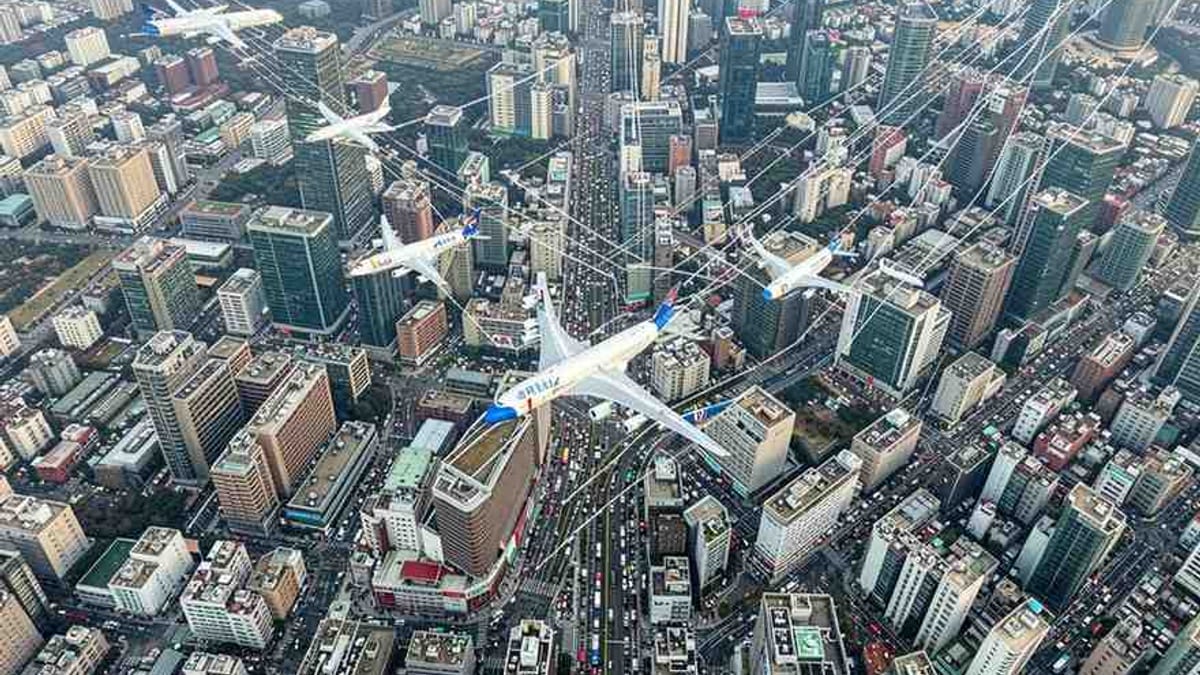
Direct Flights Return After Five Years
The most visible sign of the thaw in cross border travel is the restoration of nonstop air links. Direct flights between India and mainland China were suspended in early 2020, cutting a key corridor for business travellers, students and tourists. Published coverage shows that after a series of diplomatic contacts in 2024 and 2025, aviation regulators cleared the way for routes to restart in late 2025.
Indian low cost carrier IndiGo became the first to reconnect the skies, launching a nonstop service between Kolkata and Guangzhou on 26 October 2025. Industry reports describe the route as operating daily with Airbus A320 aircraft and strong initial loads, reflecting pent up demand from traders, textile buyers and leisure travellers on both sides.
Within weeks, China Eastern Airlines followed by resuming flights between Shanghai Pudong and Delhi. Schedules published by the airline and aviation analysts show the wide body Airbus A330 route operating several times a week, with plans to increase frequency in early 2026 as demand builds. The restoration of these two city pairs has effectively reopened a long dormant air bridge between two of Asia’s largest economies.
Aviation data shared in recent months indicates that more routes are under consideration as airlines test the market with limited capacity and then add frequencies. Travel analysts expect additional Indian and Chinese carriers to reenter the market if load factors remain high through the 2026 summer season.
Tourist Demand Surges On Both Sides
The resumption of flights coincides with a broader revival in tourism. India reopened its tourism market to Chinese visitors in 2025, reinstating visa processing in major Chinese cities after a five year interruption linked to border tensions. Industry briefings focusing on inbound travel note that Chinese arrivals, which reached roughly 340,000 in 2019, are beginning to climb back from near zero.
On the Chinese side, a sweeping expansion of visa free entry has become a cornerstone of efforts to rebuild foreign tourism. Public immigration statistics cited in international coverage show that more than 20 million foreign visitors entered China without a visa in 2024, more than double the figure a year earlier. Although India is not among the largest visa exempt markets, the looser policy has simplified multi country itineraries that combine China with other Asian destinations, making it easier for Indian travellers to route through Chinese hubs.
Travel platforms report that booking volumes for China bound trips from South Asia have strengthened in step with these policy shifts. While domestic tourism still dominates in both countries, outbound leisure travel from India is growing quickly as household incomes rise, and China is regaining its position as a preferred destination for shopping, culture and theme park holidays. The reopened air links provide shorter journey times compared with indirect routings through Southeast Asia or the Gulf.
Analysts caution that full recovery to pre 2020 tourist numbers will take time, given that group tours and corporate travel policies often lag behind aviation changes. Even so, early indicators such as high load factors on the new India China flights, rising search interest and longer lead time bookings suggest that a sustained rebound is underway.
Aviation Capacity and Infrastructure Race Ahead
The rapid build out of aviation infrastructure in India is reinforcing the travel boom. Recent reporting on the sector notes that the country has nearly doubled its number of operational airports over the past decade, and that passenger traffic reached well over 170 million in 2024. India has emerged as one of the world’s largest aviation markets by total passengers, second only to the United States and China.
New facilities are designed to serve as regional hubs for long haul and intra Asian routes. Navi Mumbai International Airport, inaugurated in late 2025, is one of the most prominent examples, with an initial capacity of 20 million passengers a year and long term plans for more than four times that volume. Industry observers see such hubs as natural gateways for future services to Chinese coastal and inland cities as demand for both tourism and business travel grows.
China’s own aviation network remains the largest in Asia, and regional airports have been ramping up schedules as travel recovers. Data from provincial hubs show record passenger throughput during recent holiday periods and expanded winter and summer season timetables. For India bound travellers, this translates into more convenient domestic connections inside China to feed the resumed international routes.
Aircraft orders and fleet expansion across Asian carriers point to continued capacity growth into the late 2020s. Market analyses from aviation consultancies frequently highlight India and mainland China as the primary engines of passenger growth in the region, with cross border travel between the two increasingly seen as a core traffic stream rather than a niche segment.
Business, Students and VFR Travel Drive Early Recovery
While leisure tourism garners much of the attention, early traffic patterns on the restored India China flights appear to be led by business travellers, students and people visiting friends and relatives. Travel trade reports describe strong demand from traders and small business owners in Kolkata and Guangzhou who had relied on informal supply chains before 2020 and are now regular users of the new nonstop connection.
Education related travel is emerging as another key driver. Before the pandemic, tens of thousands of Indian students were enrolled in Chinese universities, particularly in medical programs. Publicly available information from universities and student agencies suggests that many have been gradually returning since China loosened entry rules, and the reintroduction of direct flights is reducing travel times and costs for new cohorts.
There is also a steady flow of VFR traffic as Indian and Chinese diaspora communities use the new routes to reconnect with family members after long separations. Airlines are tailoring schedules and fare promotions around major festivals, academic calendars and trade events, which travel agents say is helping to smooth demand throughout the year rather than concentrating it solely in peak seasons.
Tour operators on both sides are beginning to package city breaks and multi destination tours that link historical sites, religious circuits and modern shopping districts. These products are designed to appeal to first time visitors who may be hesitant about language and logistics, making use of the renewed air connectivity and improving digital payment interoperability between the two markets.
Outlook: From Tentative Reopening to Structural Corridor
Industry observers view the current phase of India China travel as a tentative but important reopening that could evolve into a major structural corridor within Asian aviation. The limited number of direct routes and frequencies is expected to expand if political relations remain stable and demand stays strong, with secondary cities in western China and India’s tier two metros identified as likely contenders for future services.
Tourism boards and private sector stakeholders are also experimenting with campaigns that position cross border travel as part of wider regional circuits, connecting India and China to destinations in Southeast Asia and the Middle East. This multi stop approach aligns with changing traveller preferences, especially among younger tourists who seek longer, more varied itineraries built around food, culture and nature.
Challenges remain, including lingering safety perceptions, currency volatility and the need for clearer information on entry procedures and digital payment options for visitors from each country. However, the combination of restored air links, rising middle class incomes and policy support for tourism is gradually lowering barriers.
If current trends hold through 2026, analysts expect India and China to consolidate their positions as the twin anchors of Asian travel, with the revitalized corridor between them functioning not only as a bridge for tourists, but also as a vital channel for trade, education and cultural exchange.