

India is exhilarating, layered, and deeply traditional, and a little cultural awareness goes a very long way. From temple visits at dawn to bargaining in crowded bazaars and sharing chai in a family home, the way you dress, move, and speak shapes how welcome you feel. This guide walks you through India’s most important cultural norms and etiquette, with a particular focus on religious sites, dress codes, and local customs, so you can travel respectfully and confidently.
Understanding India’s Cultural Landscape
India is not a single culture but a patchwork of languages, religions, and regional identities. Hinduism is the majority faith, but Islam, Christianity, Sikhism, Buddhism, Jainism and many other traditions are woven into daily life. Customs can vary dramatically between a temple town in Tamil Nadu, a Sikh gurdwara in Punjab, and a modern business district in Bengaluru. What is considered conservative in one region may be entirely normal in another, so approach each new place with curiosity and a willingness to observe quietly before jumping in.
Despite this diversity, some themes are remarkably consistent. Respect for elders, modest dress in religious and family environments, and a strong sense of hospitality cut across most communities. Public spaces can be crowded and noisy, but personal honor and dignity are taken seriously. Visitors who show humility, ask before photographing people, and adapt to local expectations tend to be treated with warmth and generosity.
Religion frames many aspects of etiquette. You will see people stopping to fold their hands in a namaste gesture as they pass a roadside shrine, removing shoes before entering homes and places of worship, fasting on specific days, or avoiding certain foods. Even if you are not religious, acknowledging that these practices are deeply meaningful to others is key to being a considerate guest in India.
Urban India is changing quickly, with younger generations influenced by global fashion and media. You may see short dresses in upscale neighborhoods or couples holding hands in parks. At the same time, attitudes toward modesty, alcohol, and public affection remain more conservative than in much of the West. When in doubt, err on the side of caution, especially outside big-city centers and nightlife districts.
Dress Codes and Everyday Appearance
Packing for India is not just about staying cool in the heat but also about fitting comfortably within social norms. In most parts of the country, both men and women are expected to dress modestly in public, particularly outside high-end bars, clubs, and certain beach areas. For travelers, this usually means covering shoulders and knees, avoiding low-cut tops, very tight clothing, or extremely short shorts in everyday settings.
Lightweight, breathable fabrics such as cotton and linen are ideal for the climate and blend in well with what locals wear. Women often feel more at ease in loose trousers with tunic-style tops, maxi dresses with a light scarf, or locally bought salwar kameez sets. Men typically choose long trousers or jeans with shirts or polos. In more relaxed tourist hubs you will see exceptions, but conservative clothing generally attracts less unwanted attention and is considered more respectful, especially around families.
Beach destinations like Goa and parts of Kerala are more relaxed, and swimwear on the beach is widely accepted in tourist zones. However, even in coastal areas it is courteous to cover up when leaving the sand and walking through villages, shops, or religious sites. Walking through a town in a bikini or shirtless is likely to be seen as disrespectful.
Footwear also carries expectations. Closed shoes or sturdy sandals are practical for cities, but you will be removing them often when entering temples, mosques, gurdwaras, smaller shrines and many private homes. For this reason, shoes that slip on and off easily are helpful. Socks are generally acceptable inside religious spaces when shoes are removed, but they may get dusty or damp, so pack accordingly.
Temple Etiquette: Hindu, Sikh, Jain, Muslim and Christian Sites
India’s religious sites are some of its greatest treasures, but they are living places of worship rather than museums. Each tradition has its own expectations, so read posted signs, follow instructions from staff, and watch what local devotees do. A quiet, observant approach is the safest way to avoid causing offense.
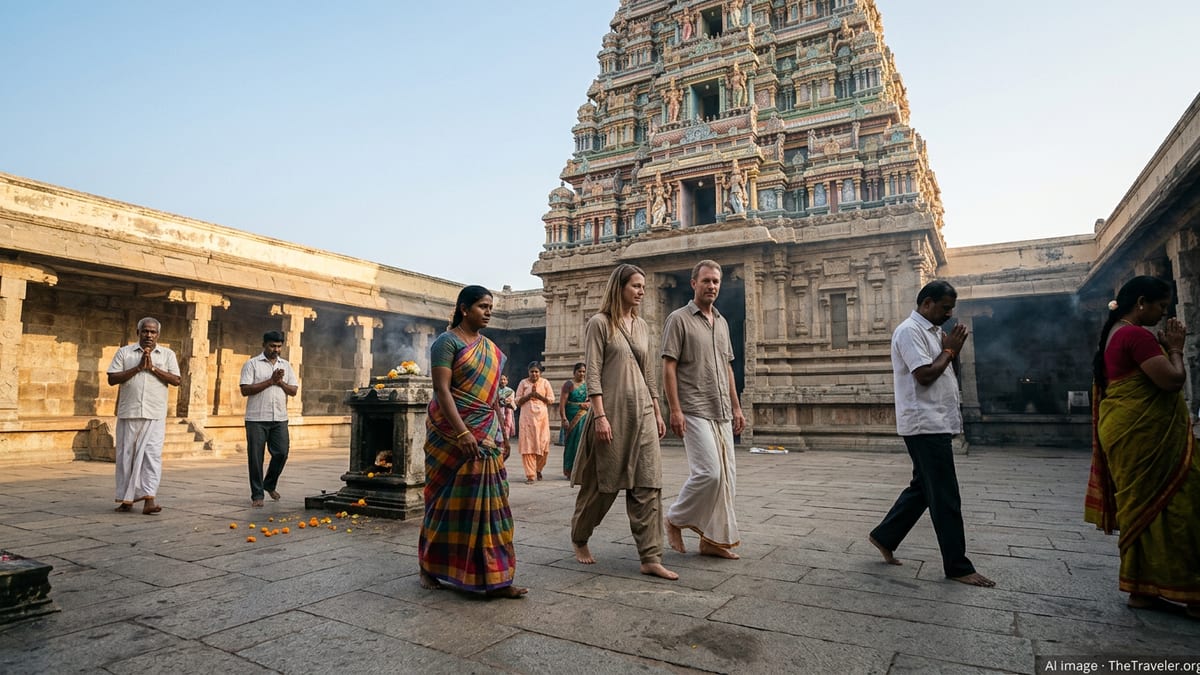
At Hindu temples, you will almost always remove your shoes before entering the main complex or inner sanctum. Modest clothing is essential: shoulders and knees covered for everyone, and in more traditional temples, women may be expected to wear a sari, salwar kameez or long skirt, while men may be asked to avoid shorts and, in some temples, to wear dhoti-style garments. Photography is often restricted, especially near the central deity, and mobile phones may be prohibited in some famous temples. If a priest offers a blessing, prasad sweets, or a mark of kumkum on your forehead, you may accept politely or decline with a gentle smile and a namaste.
Sikh gurdwaras have two universal rules: everyone covers their head and removes their shoes. Scarves or head coverings are usually available at the entrance, and both men and women should use them, ensuring hair is fully covered. Modest dress is expected, and smoking, alcohol, and drugs are strictly forbidden in and around the premises. Visitors are often invited to sit on the floor in the main hall and to share the communal meal, or langar, where people of all backgrounds eat together as equals. Accepting langar and sitting with others on the floor is a meaningful sign of respect.
At mosques and Sufi shrines, conservative attire is non-negotiable. Women should cover arms and legs, and in many places also cover their head with a scarf, while men should avoid shorts and sleeveless tops. As in other religious sites, shoes come off at the entrance. Prayer times are busy and may not be ideal for casual visiting, so ask a caretaker or guide when it is appropriate to look around. Photographs in prayer areas, especially of people praying, can be unwelcome. Modest behavior, lowered voices, and avoiding physical contact with worshippers are essential.
Churches and cathedrals in India generally welcome visitors of all faiths, and dress codes can be more relaxed, but modest clothing remains a sign of courtesy. Hats are usually removed inside. During services, sit or stand quietly at the back if you are only observing, and avoid wandering around or taking photographs. Jain temples are among the most stringent about cleanliness and nonviolence; leather items may be restricted, and visitors are expected to dress conservatively and behave with great care around statues and offerings.
Greeting, Body Language, and Social Interactions
The most widely understood formal greeting in India is the namaste, performed by pressing your palms together at your chest and giving a slight bow. It is suitable in almost any social situation, from meeting a street vendor to greeting an elder or a religious leader. Handshakes are common in business and urban settings, especially among men, but namaste remains a safe, respectful default across regions.
Physical contact in public between men and women is generally more restrained than in many Western countries. A hug or kiss on the cheek may be appropriate among close friends in cosmopolitan circles, but for new acquaintances, especially of the opposite sex, it is better to wait for the other person to initiate any physical contact. Public displays of affection such as kissing, embracing, or intense flirting can draw disapproving looks and may even attract unwanted attention from bystanders or authorities in more conservative areas.
Within families and traditional communities, respect for elders is deeply ingrained. You may see younger people touching the feet of grandparents or religious teachers as a sign of reverence. As a guest, you are not expected to do this, but you should be attentive and polite: stand when an older person enters the room, offer them the most comfortable seat, and avoid interrupting. Using respectful forms of address such as “aunty,” “uncle,” “sir,” or “madam” for older strangers is common and can help you connect more easily.
Body language also carries meaning. Pointing directly at people, placing your feet up on chairs, or stepping over someone sitting on the floor can be interpreted as rude. The left hand is often associated with personal hygiene and is traditionally avoided for eating or passing food. In many settings, especially when food is involved, try to use your right hand to pass dishes, receive offerings, or pay small amounts of cash. In crowded markets and buses, unintentional jostling is normal, but purposeful touching or staring is not; if you feel uncomfortable, step away, speak up clearly, or seek help from families or staff nearby.
Food, Eating Customs, and Dietary Sensitivities
Food is central to Indian hospitality, and sharing a meal is one of the surest ways to understand local culture. At the same time, dietary rules are often tied to religion and tradition, so extra sensitivity is essential. Many Hindus avoid beef, many Muslims avoid pork, and substantial numbers of people across communities follow vegetarian or mostly vegetarian diets. Some devout Jains eat strictly vegetarian food and may also avoid root vegetables and eating after dark.
As a guest, you are not expected to adopt local dietary rules fully, but it is considerate to be aware of them. Avoid making jokes about sacred animals or religious fasting practices, and be tactful when discussing meat, alcohol, or taboos. If you are invited to someone’s home, it is polite to eat what is served unless you have clear medical or ethical restrictions, which hosts generally respect if explained quietly and in advance. Bringing a box of sweets or fruit as a small gift is widely appreciated.
In many traditional households and smaller eateries, people eat with their right hand instead of cutlery. If you choose to do the same, wash your hands thoroughly beforehand and use only your right hand to touch the food and your plate. The left hand may rest on your lap or help only with tasks that do not involve touching shared dishes. It is usual to accept second helpings, but you can gently decline further food by placing your hand over your plate and saying you are full.
Alcohol etiquette varies sharply by region and context. Some Indian states have strict controls on the sale of alcohol, and in many religious communities it is frowned upon or forbidden. Drinking is more accepted in urban bars, clubs, and certain social circles, but arriving at temples or family gatherings smelling strongly of alcohol will be noticed and disapproved of. If you are unsure whether alcohol is appropriate, ask discreetly or wait for your host’s lead.
Homes, Hospitality, and Everyday Courtesy
Being invited into an Indian home is a sign of trust and welcome. The first rule is almost always to remove your shoes at the door, unless your host explicitly says otherwise. You will usually be offered water, tea, or a snack shortly after arriving; accepting at least a small portion is part of the rhythm of hospitality. Refusing everything repeatedly can be seen as cold or unfriendly, even if it is not intended that way.
Modest dress is expected in private homes, particularly where multiple generations live together. Avoid extremely revealing outfits, and bring a light scarf or shawl if you are unsure of the household’s norms. Conversation may range from family and work to cricket, Bollywood films, and local politics. While many people are happy to discuss serious issues, it is wise to listen more than you speak at first, and to avoid making sweeping negative statements about religion, caste, or national identity.
Gift-giving is not mandatory but can be a gracious touch. Small, thoughtful items such as chocolates, regional specialties from your home country, or children’s books for young family members usually go down well. Large or expensive gifts can be awkward and may be refused. When giving or receiving anything, use your right hand or both hands together as a sign of respect.
In everyday public encounters, patience is your best asset. Queues may feel less orderly than you are used to, and bargaining is a standard part of shopping in markets and at small stalls. Negotiating firmly but politely is expected, and a smile combined with a clear sense of your budget helps transactions stay friendly. Raising your voice or publicly shaming a worker is considered extremely rude and is unlikely to resolve disputes in your favor.
Gender, Safety, and Sensitive Topics
India is generally welcoming to visitors, but gender norms and ideas of modesty remain more conservative than in many Western countries. Female travelers often report that dressing modestly, moving confidently, and staying aware of their surroundings improves daily comfort. Solo women may face unwanted attention such as stares or attempts at conversation; often, ignoring or responding briefly and firmly is enough to end it. Seeking out family compartments on trains where available, sitting near other women or families on buses, and using reputable taxis or ride-hailing services can add an extra layer of security.
Public displays of affection between couples can be contentious. Holding hands is common among friends of the same gender and increasingly among couples in big cities, but kissing or hugging romantically in public parks or near religious or government buildings can attract negative attention. Many Indians associate sexual behavior with privacy and family honor, so err on the side of discretion.
Topics like religion, caste, and national politics are often passionately debated within India and can be highly sensitive when raised by outsiders. Some people will invite you into frank political conversations, while others may find direct criticism from a foreign visitor offensive. If you choose to discuss such issues, do so with humility and a willingness to listen, and avoid presenting your views as superior or definitive. Jokes about poverty, corruption, or historical events can easily be misinterpreted.
Photography also requires sensitivity. Always ask before taking close-up photos of people, especially women, children, and anyone engaged in religious activities. In rural areas, some people may be shy or suspicious of cameras, while in popular tourist spots others may actively ask for selfies with visitors. Where security forces, military installations, or certain government buildings are present, photography may be restricted, and ignoring rules can lead to questioning or fines.
The Takeaway
Traveling in India is as much about attitude as it is about logistics. A respectful traveler observes first, asks questions, and adapts to local expectations, whether that means slipping off shoes at a temple entrance, using a namaste instead of a handshake, or choosing clothing that aligns with community norms. Small gestures of courtesy signal that you understand you are not just a consumer of experiences but a temporary participant in a living culture.
India’s complexity can feel challenging at times, yet that same richness is what makes a journey here so rewarding. When you move through its temples, streets, and homes with humility, you open doors to genuine connection: a priest sharing the story of a deity, a market vendor insisting you try a new snack, or a family inviting you in for chai. By honoring local customs around dress, behavior, and belief, you help ensure that these moments of hospitality continue to be offered to travelers from around the world.
FAQ
Q1. Do I always need to cover my head in Indian temples?
In most Hindu temples, head covering is optional but modest clothing is essential. In Sikh gurdwaras and many mosques, covering your head is required for everyone.
Q2. Are short sleeves acceptable, or should I wear long sleeves everywhere?
Short sleeves are generally fine in most public spaces, but sleeveless tops may feel out of place in small towns and religious sites. Covering shoulders is a good guideline when in doubt.
Q3. Can I wear shorts in India?
In big cities and beach areas, knee-length shorts are common, especially for men. For temple visits, rural areas, and family settings, long trousers or skirts are more respectful.
Q4. Is it rude to decline food or drinks when visiting someone’s home?
Hosts take pride in offering refreshments, so refusing everything can seem unfriendly. If you are not hungry, accept a small portion or a cup of tea and explain politely.
Q5. How should I behave if someone offers a religious blessing?
Accepting quietly with a namaste is usually appreciated, but you can also decline gently with a smile. The key is to respond with visible respect, not discomfort or mockery.
Q6. Is it safe and appropriate for solo women to visit temples and other religious sites?
Yes, solo women regularly visit temples and shrines. Dressing modestly, avoiding isolated areas after dark, and following posted rules will help ensure you feel comfortable and welcome.
Q7. What should I do if I accidentally break a cultural rule?
A sincere apology and a quick adjustment usually resolve the situation. Most people understand that visitors are learning and appreciate visible efforts to be respectful.
Q8. Can I discuss politics and religion with locals?
Many Indians enjoy deep conversations, but these topics can be sensitive. Listen more than you speak at first, avoid sweeping judgments, and be prepared to change the subject if tension rises.
Q9. Is tipping expected in temples or at religious ceremonies?
Small donations at temples are common and help support maintenance and rituals. However, tipping individual priests or staff can be sensitive; follow local practice or ask a trusted guide.
Q10. How can I show respect if I am not religious myself?
You do not need to share the beliefs to honor them. Dress modestly, observe rituals quietly, avoid disruptive behavior, and treat sacred spaces as you would a revered cultural monument.