

More news on this day
India’s Ministry of External Affairs has escalated travel guidance for West Asia in early 2026, urging citizens to avoid non-essential journeys through parts of the Middle East as widening airspace closures and rolling flight cancellations disrupt key Gulf hubs and leave passengers stranded across the region.
Get the latest news straight to your inbox!
Heightened Conflict Triggers Wave of Airspace Closures
Published coverage on the 2026 Iran war and related regional hostilities indicates that a series of missile strikes and military actions since late February has pushed aviation risk levels sharply higher across the Gulf and Levant. Several Middle Eastern states, including Iran, Iraq, Israel, Syria and parts of the Gulf, have either fully or partially closed their airspace to routine civil traffic, forcing airlines to cancel or reroute thousands of services between Asia, Europe and Africa.
Industry trackers cited in recent aviation risk bulletins report cumulative cancellations running into the tens of thousands since 28 February, with disruption described as the most extensive to affect the region since the pandemic. Dubai, Abu Dhabi, Doha, Riyadh, Manama and Kuwait City have all experienced extended periods of halted or heavily curtailed operations as missile alerts and air defence activity periodically shut down departure and arrival banks.
Specialist advisories circulating among airlines and corporate travel managers classify significant portions of Middle Eastern airspace as high risk, warning of potential short-notice closures, GPS interference and the possibility of debris or interception activity near major flight corridors. These constraints have led many carriers to redraw long-haul routings, pushing traffic over the Red Sea, Central Asia or southern Indian Ocean instead of the traditional Gulf bridge.
Analyses of the economic impact of the conflict underline how central Gulf hubs are to global connectivity, noting that the combination of airspace restrictions and the parallel disruption in the Strait of Hormuz has magnified the shock to aviation, fuel markets and wider trade flows.
MEA Advisories Urge Caution for Indians in and Transiting the Gulf
Against this backdrop, India’s Ministry of External Affairs has issued and updated a series of country-specific advisories covering Iran, Iraq, Lebanon and other conflict-affected jurisdictions, as reflected on its public travel advisory portal and annexed consular circulars. These documents highlight elevated security risks, significant aviation disruption and the possibility of rapid changes in local regulations affecting foreign residents and visitors.
Separate notices from Indian embassies in Gulf states, including an early March communication from the mission in the United Arab Emirates, draw attention to the volatile security environment and urge Indian nationals to closely follow airline announcements and local guidance. The embassy advisory in the UAE context notes that repatriation and relief flights may be organized in coordination with local authorities where commercial capacity is insufficient or repeatedly interrupted.
Official compilations of emergency contact numbers released by the ministry list 24x7 control rooms and dedicated consular helplines for missions in Tehran, Baghdad, Beirut and other regional capitals. Publicly available information shows that these channels are intended to assist Indian nationals facing cancellation, loss of documents, immigration issues or difficulty accessing onward travel in the crisis zone.
Indian authorities have also emphasized the need for citizens to register with nearby embassies and consulates when residing or working in affected countries, so that outreach, alerts and potential evacuation planning can be managed more efficiently if the conflict escalates further.
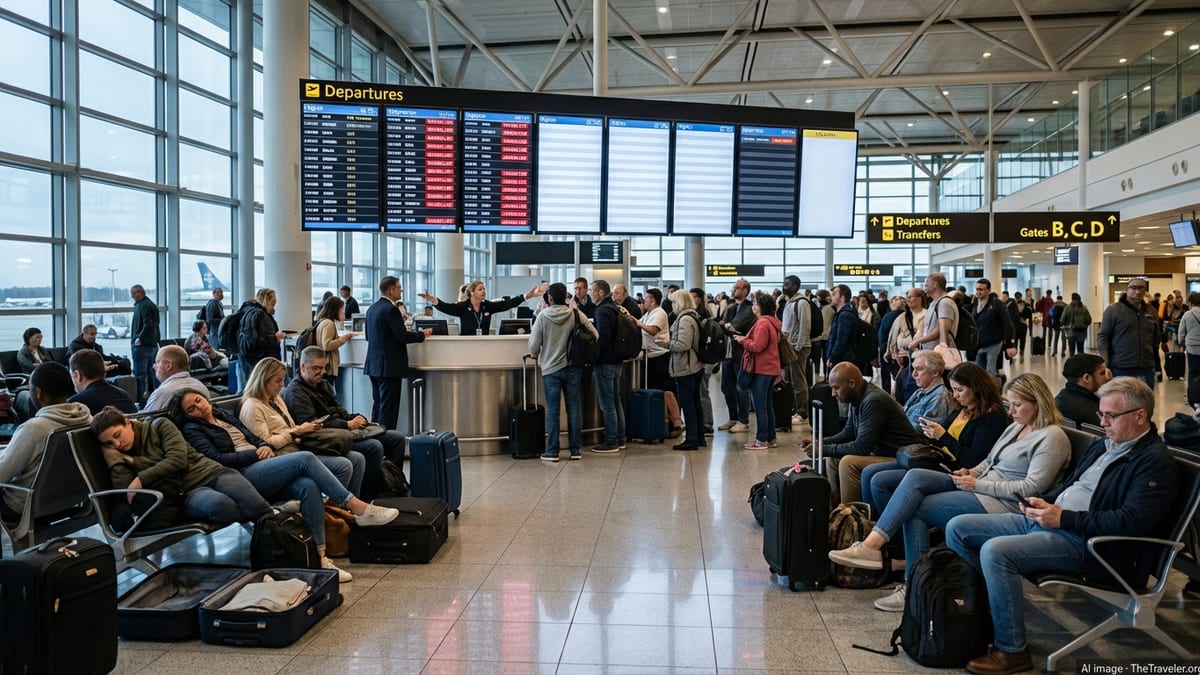
Mass Flight Cancellations and Stranded Passengers Across Gulf Hubs
Reporting from aviation analytics firms and travel industry outlets indicates that Gulf hubs, normally among the busiest connectors between Asia and Europe, have seen unprecedented disruption. Airspace closures in Iran, Iraq and several Gulf states have forced airlines to suspend or significantly curtail services into Doha, Dubai, Abu Dhabi, Manama and Kuwait City at various points since the end of February.
Travel operations updates issued by online agencies and corporate travel platforms in early April describe an aviation system still in crisis mode, with some Saudi Arabian airports operating reduced schedules while Kuwait and Qatar continue to experience widespread suspensions by foreign carriers. Many international airlines, including large European and Asian brands, have temporarily halted direct services to the most affected Gulf destinations, relying instead on distant hubs or circuitous routings.
Consumer-rights portals tracking cancellations estimate that more than ten thousand flights touching the Middle East have been cancelled since hostilities intensified, stranding passengers in terminals across the region and forcing lengthy rebookings. Some Gulf carriers have operated limited special services to repatriate stranded travellers, while others maintain only skeleton schedules subject to rapid change depending on threat assessments.
Passengers on India–Europe and India–North America routes have been particularly affected, as many itineraries had been structured around convenient overnight connections through the Gulf. With those options constrained, travellers are being pushed to alternative routings via Istanbul, Central Asia or Southeast Asian hubs, often at higher fares and with substantially extended journey times.
India Balances Gulf Connectivity With Safety Precautions
In contrast to some states that have fully suspended passenger operations to the region, India has sought to keep limited connectivity open while layering on safety and contingency measures. According to recent coverage of civil aviation bulletins, Indian carriers including Air India, Air India Express, IndiGo, SpiceJet and Akasa Air have continued to operate selected services to Dubai, Abu Dhabi, Muscat, Jeddah and other relatively stable destinations, subject to dynamic risk monitoring.
Reports on these bulletins describe a dedicated war-room within India’s Ministry of Civil Aviation meeting multiple times a day to review threat maps, notices to airmen and risk assessments issued by Gulf regulators. Route planners are understood to be adjusting flight paths to avoid closed sectors and known conflict zones, sometimes adding two to four hours to sector times to maintain separation from high-risk airspace.
At major Indian gateways such as Delhi and Mumbai, travel-industry accounts indicate that liaison officers have been positioned at arrival and departure halls handling Gulf traffic to assist with transit complications, expired visas and rebooking queries. Airport authorities have also been advising passengers bound for the region to arrive early, stay in close contact with airlines and expect rolling schedule changes.
Public information from charter operators and online booking platforms shows a spike in demand for indirect routings that avoid the Middle East entirely, with travellers willing to connect via Colombo, Singapore, Kuala Lumpur or European points to sidestep the Gulf bottleneck. This has contributed to rising fares and tighter seat availability on unaffected corridors.
Guidance for Indian Travellers Navigating the 2026 Gulf Disruptions
In light of the evolving situation, India’s travel advisories consistently stress the importance of deferring non-essential journeys to high-risk countries and avoiding conflict-adjacent transit points wherever alternatives exist. Travellers are urged, through publicly posted guidance, to monitor the Ministry of External Affairs website, social media feeds of Indian embassies and airline operational alerts before departure.
Travel-insurance specialists note in recent briefings that passengers should review policy terms carefully, as cover for conflicts, war-related disruptions or airspace closures may be limited or require specific add-ons. They recommend keeping meticulous records of cancellation notices, boarding passes and receipts to support any future claims for refunds or rerouting costs.
Airline and consumer-advocacy resources further advise Indian passengers to confirm whether tickets were issued under jurisdictions that provide statutory compensation for long delays or cancellations, such as European or British regulation, although force-majeure clauses linked to armed conflict may complicate entitlements. Many carriers are currently offering flexible date changes, waiver of change fees and vouchers, but these arrangements vary widely.
For Indian nationals already resident in Gulf states, MEA and mission advisories emphasize basic preparedness, including keeping travel documents accessible, maintaining a supply of essential medicines and staying attuned to local broadcast and SMS alert systems. While widespread evacuations are not underway in all countries, past experience suggests that conditions can shift quickly, making early registration with consular services a critical step for anyone living or working in the region.